
Article Summary
There are two main types of decaffeination processing, indirect and direct solvent. Indirect solvent method uses Green Coffee Extract (GCE) which draws out caffeine through diffusion. GCE molecules then become saturated with caffeine while the green coffee is essentially free of caffeine. Filters remove the caffeine from the solution and then it is dried out. Direct solvent process is when the coffee is pre-soaked to expand the bean and directly placed in a solvent to extract the caffeine. The coffee is then dried out, re-bagged and either sold to roasters or sent back to an importers’ warehouse.
- Two main types of processing, indirect and direct solvent methods
- Discoloration is normal in decaffeinated coffees
- Coffee is chosen based on flavor profile or price to become a coffee
- Decaf companies can hold coffees in their position to sell, or importers can pay to process their coffee and have it shipped back to their warehouses.
Understanding Decaffeination: Methods, Logistics & Quality Impacts
Types of Decaf Processing
There are two main types of decaffeination methods – indirect solvent and direct solvent process. Coffee is decaffeinated before the coffee is roasted and is typically sent to our main decaffeination supplier facilities in Canada or Mexico before landing in North American ports.
Both methods pre-soak green coffee. Due to the soaking and re-drying of the coffee beans, it causes discoloration in the unroasted coffee, a completely normal outcome of the process. Different methods tend to have different color shifts; for example, Swiss Water is typically gray-green, while Methylene Chloride and Mountain Water is usually brownish, and Ethyl Acetate can appear a little washed out in color.
Indirect Method
Indirect solvent process is when green coffee is pre-soaked to expand the bean, then soaked in caffeine-free green coffee extract (GCE). This causes caffeine to draw out of the coffee via diffusion. GCE molecules then become saturated with caffeine while green coffee is virtually free of caffeine. During this process, carbon filters remove the GCE and the carbon is sent to a furnace to burn off caffeine and reused. Now that the caffeine has been removed, the coffee is redried, bagged and sold to an importer/roaster.
Water process is a type of indirect process in which coffee solids are used to remove caffeine, but the caffeinated liquid simply passed through filters rather than burned off. In the instance of Swiss Water, they used activated charcoal as a filter. When facilities make the decision to not burn off the caffeine, it means they can resell this caffeine to energy drink companies to increase profit margins.
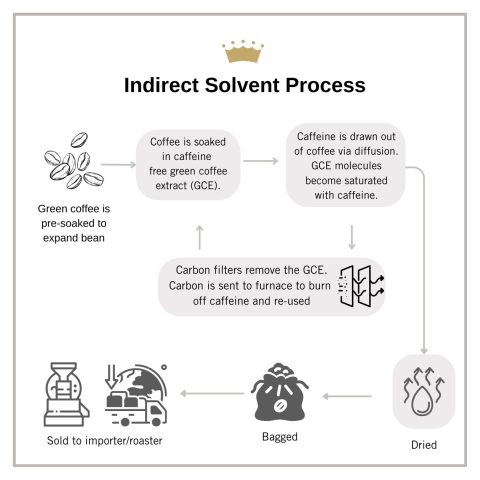
Types of indirect solvent processes:
- Liquid CO2
- Swiss Water/ Mountain Water
- Ethyl Acetate or Methylene Chloride – when applied only to GCE rather than green coffee
Direct Method
Direct solvent process is another method where green coffee is pre-soaked to expand the bean, coffee is directly placed into a solvent and soaked for eight hours to extract caffeine. The green coffee experiences a final steam to remove any leftover solvent, and the coffee is dried out to 9-11% moisture, bagged, and then distributed to an importer/roaster.
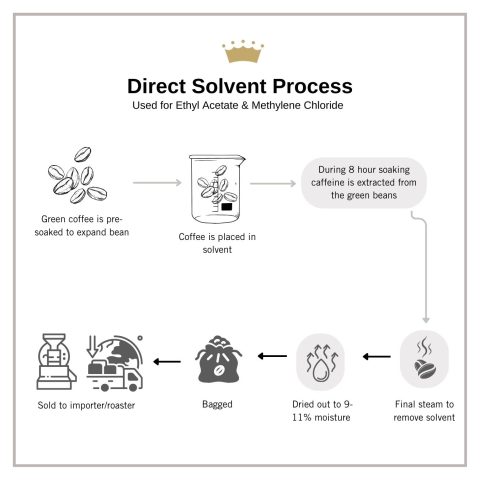
Types of direct solvent processes:
- Ethyl Acetate (sugarcane method)
- Methylene Chloride
Logistics
There are a couple of avenues through which a coffee can become decaffeinated. A decaf company can have coffees in their position ready to sell to importers or a roaster, just like purchasing spot coffee from any other warehouse.
Tolling is another way for an importer or roaster to pick out and purchase their own lots directly from producers, and then send a portion to the decaffeination facility. After decaffeination, the coffee will be sent back to their warehouse to sell, roast and/or distribute. (Royal Select Decaf coffees are purchased in this way.)
Coffees are selected by price and flavor profile to become decaffeinated. There are certain flavors that can cover up decaf flavors that are favored to used for this method. Traditionally, cheaper coffee has been used for decaffeination because consumers either have a low expectation for it or it will brunt the additional cost of processing and shipping. More and more though, roasters and importers are exploring taking microlots and making them decaf, and the results are fantastic.
Methylene Chloride
Methylene Chloride (sometimes abbreviated MC in decaf terminology, and known to scientists by its official compound name Dichloromethane or DCM) was in the news early 2024 with the decision of the FDA submitting to amend food additive regulations to remove solvents, including Methyl Chloride from public consumption. A suspected carcinogen, Royal Coffee stopped distributing this processing method in 2016. You can read more up on this regulatory decision or learn more about the history of decaf coffee.
Chek out Royal’s decaf options here.

Latest Articles by Isabella Vitaliano
What is microlot coffee?
Article Summary: Microlot is a third wave term and represents highly traceable coffee in the 7-50 bag range. Elevation, processing techniques, cultivar, farm name, region, farm size producer name, producer story and more are all elements that...
Trending Downwards, Coffee Upcycling
Coffee pulp is one of the industry's most overlooked byproducts and with the right infrastructure, one of its most recoverable.
Is Frozen Coffee the New Fresh?
Editor’s note: This article in its entirety is published in the January/February 2026 issue of Roast magazine. Below is the author’s expanded cut of the introductory paragraphs, plus a short summary of the research project. Chris and Isabella also recorded a podcast on our...