
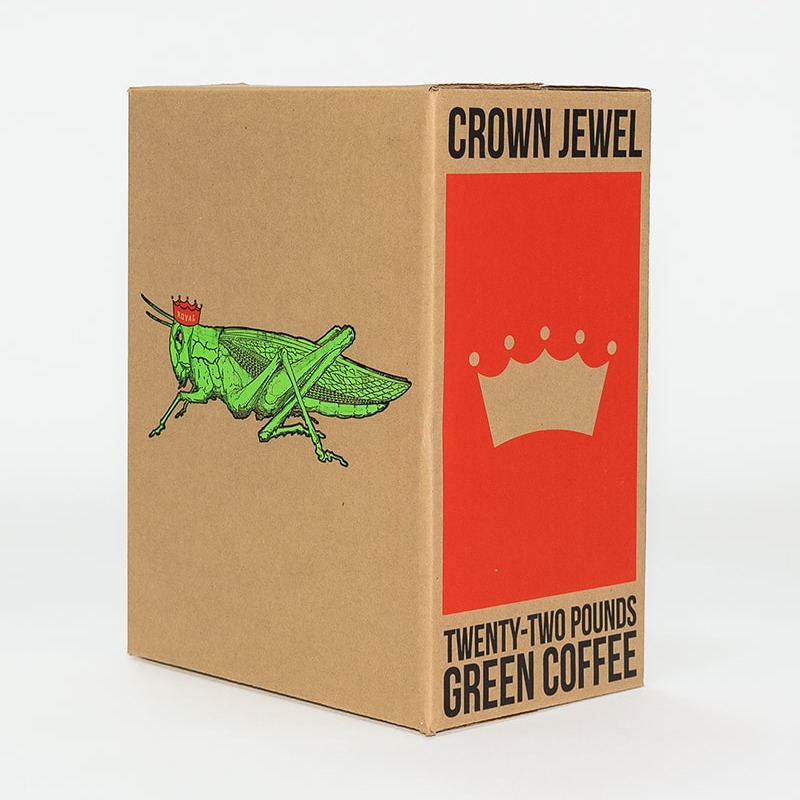
Crown Jewel Honduras Organic Washed Parainema Silvia Lizeth Ventura Urias Mercedes
36797-1 – SPOT RCWHSE
Boxes 0
Warehouses Oakland
Flavor Profile Cherry, lemon, lemongrass, oolong, and chocolate
Out of stock
Overview
Overview
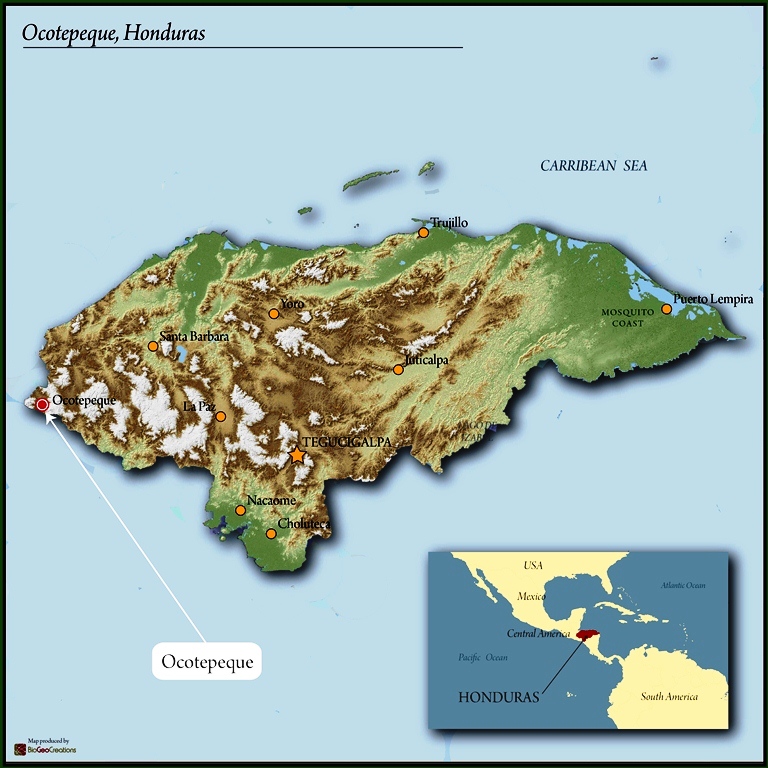
This is a depulped and demucilaged washed coffee from Ocotepeque, Honduras, produced by Silvia Lizeth Ventura Urias on her farm, Finca La Balastrera.
The flavor profile is bright, crisp and clean with fresh flavors of cherry, orange, and lemongrass, supported by notes of milk chocolate, grilled peach, and oolong tea.
Our roasters found the coffee a little chaffy, but to color nicely at Maillard reactions and roast easily.
When brewed, we liked flat-bottomed pour-overs with moderate up-doses and finer grinds.
Taste
Taste Analysis by Isabella Vitaliano
CAFESMO is a long-standing cooperative operation in Honduras. The producer of this coffee, Silvia, has a small bit of land and also includes cherry from her dad’s nearby farm during processing. Clean and crisp with tangy notes of yogurt and sherry vinegar, this coffee is a perfect candidate for your next daily driver. Accompanying the tanginess are flavors of orange, milk chocolate, grilled peach, and lemongrass.
Straightforward and sweet, with lots of clarity, this coffee really is meant to please the masses. It is not the loudest coffee in the world, but with notes like caramel, apple, peach and plum, you really can’t go wrong. Silvia has been working with coffee since she was very young and has had ample time to explore, perfect, and systemize her ideal operational practices. Her farm is located on the western region of Honduras, in the Ocotepeque department, where the altitude reaches up to 1500m and has a wide range of humidity and temperature. The results of her long experience are evident in the quality of the cup; you can expect a truly wonderful cup.
Source
Source Analysis by Charlie Habegger
The parainema cultivar is still mysterious to many. It has a humble origin as a very specific hybrid developed by Honduras’ national coffee organization, IHCAFE. The name itself is a portmanteau of its purposes: “Parai-” for the southern department of El Paraíso, where it was designed to be cultivated, and “-nema” for the nematodes it was designed to withstand. But seeds made their way around. In 2015 a group of mature parainema trees inexplicably grown in the Santa Bárbara department produced a batch of coffee that won the Cup of Excellence competition, astonishing many judges with intense, perfumey cups (I was one of them). Growers ever since have been planting the cultivar in farms all over the country with quality in mind. And there have been a lot of really nice results.
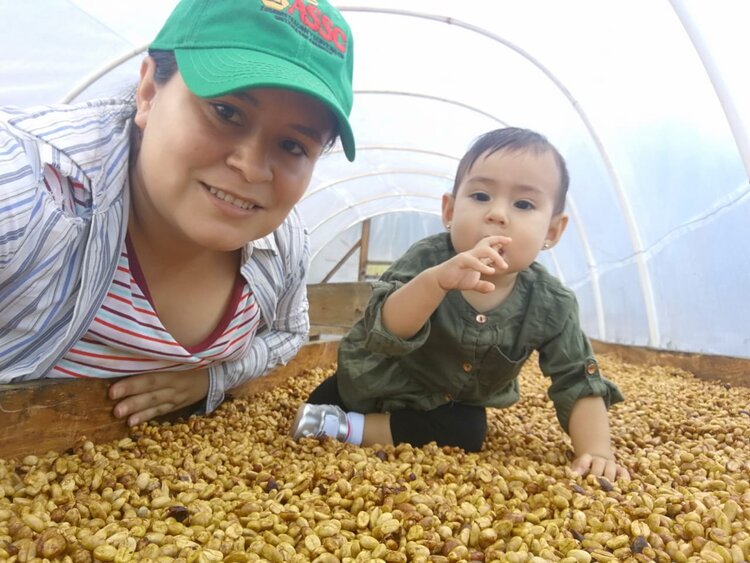
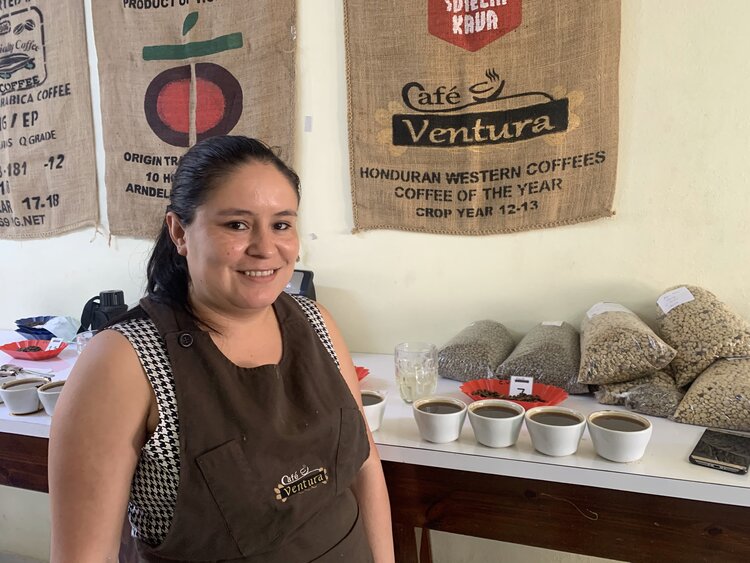
Silvia, the producer of this coffee, is an only child who has worked closely with her dad on the farm since she was very young. She has her own small parcel of coffee, about 0.7 hectares, but she includes her dad’s cherry in her processing a lot of the time. Her dad’s farm, Finca La Balastrera (“the ballast”), is 3.5 hectares in size and is entirely planted with coffee. The parainema for this lot came from La Balastrera and was sorted and processed by Silvia. Silvia is also a Q-grader and avid cupper, which has helped her greatly in dialing in her processing. This particular microlot was depulped and mechanically demucilaged, then fermented for a short period overnight in open tanks and dried mechanically for about 30 hours.
Silvia and her dad are members of CAFESMO, a 9-year-old cooperative in Ocotepeque that puts a huge effort into microlot differentiation, giving motivated processors like her the chance to sell their best work directly to international buyers. CAFESMO stands for Cafés Especiales Mercedes Ocotepeque. The organization started in 2016 with some very generous grant money from the World Bank. It was, and still is, a totally home-grown business in Mercedes, a tiny but beautiful mountain town in remote Ocotepeque, right on Honduras’ border with El Salvador.
CAFESMO produces about 75 containers a year but only exports about 15. The first 60 are sold domestically, which is actually pretty common for smaller coops without their own dry mill. And, if you think about it, with the C market being so high this year, and considering that domestically you can sell with more defects and get paid immediately, this is actually a pretty great business model. With so much of their volume committed locally, they can focus on exporting just the best of the best: a few FTO-certified washed bulk containers, another couple containers of blended naturals, and finally, a few containers of single-farm lots like this one. Most of their buyers are European. To my knowledge Royal is one of only two CAFESMO buyers in the United States.
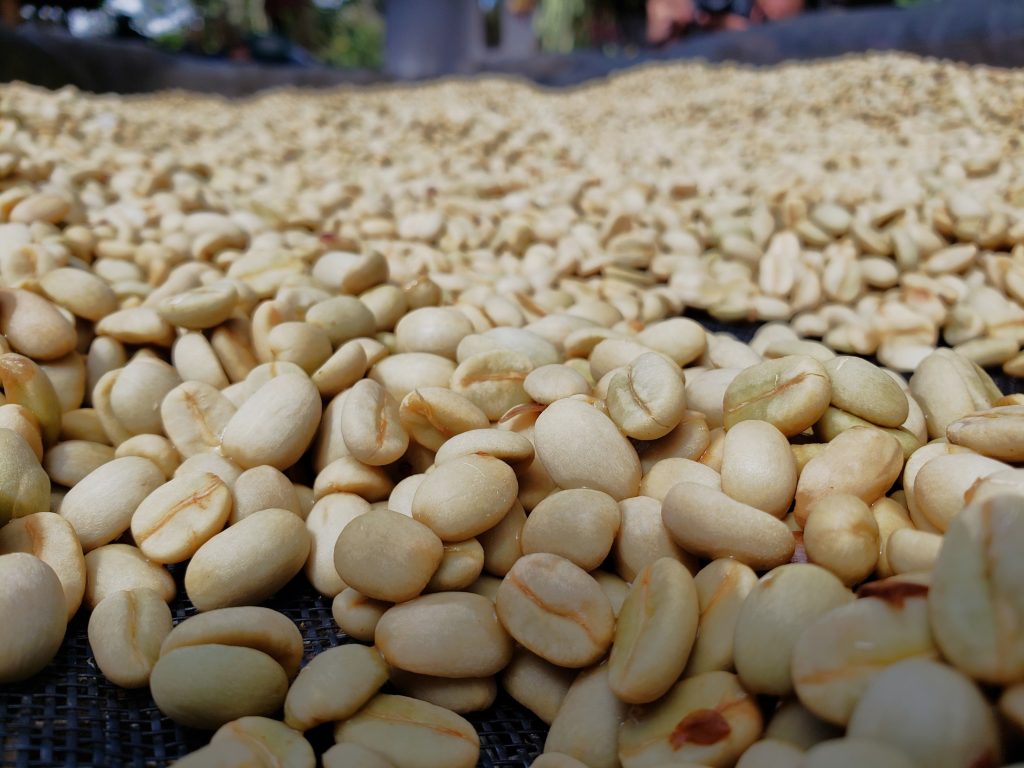
Fully washed Centrals are rarely Crown Jewels. Which is funny if you think about it, since nearly all coffee in Central America is washed. The circumstances of this are that any one coffee’s individuality just isn’t as obvious. Naturals and anaerobics are still pretty rare in the region, so they seem worth highlighting. I personally am really happy that this one made the cut. It doesn’t push the boundaries of coffee, but who says a Crown Jewel needs to? Doris and I loved the clarity of the cups in Silvia’s parainema—that it’s buttery and also candy-like in structure. The aromatics of lemon verbena and ripe peach most definitely would have been altered as a natural. The green coffee also has a nice narrow, pointed shape to it, which parainemas are known for, but like many “geshas”, not all of them have. It’s fun to look at, fun to roast, and very lemony and grapey in flavor.
If you’re a naturals-only kind of person, we have a natural parainema lot from another CAFESMO farmer, Hidardo, who is also the founder of the coop. That one’s pretty great too.
Green
Green Analysis by Isabella Vitaliano
On the green, this coffee is on the lower end of density, with a moisture content in the slightly above–average range. Water activity is a little bit above average as well. This lot is solely made up of Parainema, a cultivar that is a bit rarer than your average coffee. Despite its Sarchimor heritage, it is often compared to Geshas in size and shape, and it is known for its very lemon–forward and grape–like flavors.
Diedrich
Diedrich IR5 Analysis by Doris Garrido
A truly expressive coffee, this excellent Parainema cultivar, produced by Silvia Ventura Urias from Honduras, presents a delicate yet tart profile with a touch of malic acidity, beautifully complemented by a clean sweetness.
I was highly intrigued by this coffee from the moment I first tasted the offer, and I’m thrilled to have it in our Crown Jewel program.
For the roast, I aimed for an extended drying phase, lasting over five minutes. I started at a charge temperature of 396°F, adding gas during the turning point and maintaining full gas for nearly three minutes. I then reduced the gas, working the yellowing phase with the remaining energy in the drum. On this particular roast, I initiated full airflow after six minutes, intending to maximize time spent on caramelization. The coffee began cracking at 9:03 minutes, and I allowed it to develop for 1 minute and 20 seconds before dropping at 403°F. I observed that the coffee maintained significant energy through the final roasting phases, leading me to turn off the pilot light just a few seconds before the drop.
The overall roast time was 10 minutes and 23 seconds, broken down as drying: 5 minutes 28 seconds, yellowing: 3 minutes 38 seconds and post-development: 1 minute 20 seconds
The results were truly delightful. The acidity, which is always the first characteristic I catch while cupping, ended up to me as a delicate green apple, plum, yogurt, mandarin and sherry vinegar. For sweetness, I was particularly amazed to find some of my favorite notes: palm sugar, grilled peach, apricot Danish, Tootsie Roll, toffee, milk chocolate.
This is an excellent offering from Silvia Ventura Urias – superb quality and exceptional taste. I’m thoroughly impressed with the Parainema cultivar and the dedicated work of this producer.
Aillio
Aillio Bullet R1 IBTS Analysis by Chris Kornman
We use the RoasTime app and roast.world site to document our roasts on the Bullet. You can find our roast documentation below by searching on roast.world, or by clicking on the link below.
Take a look at our roast profiles below, as they are constantly changing!
Back on the sticks this week, your slightly rusty roasting copilot is here to say that I was really happy with how this coffee tasted out of the Bullet on my first try. It’s an easy bean to roast aside from a little chaff, colors bright yellow at the beginning of Maillard reactions, and pops quite vocally.
Much like with my roast for the Double Fermented Java from Colombia, I opted to try for a slightly faster roast, charging with a hot temp (482F IBTS / 350F standard thermocouple) and P9 / F2 / D4 starting spec for this 500g batch. I kept the drum speed steady throughout the roast, dropped to P7 at color change, raised the fan to F5 halfway through Maillard, P5 at first crack, and slowly stepped down to P1 and up to F9 just before dropping the batch – first crack was really rolling and I felt confident that a quick “pre-cool” in the roaster would help finish the caramelization without comprimsing the flavor.
On the cupping table, I tasted butterscotch, praline, breakfast tea, white grape, and cardamom. Enough acidity was there to please me without being aggressive at all, and the softer sweet tones really shone through as it cooled. Delicious! 10/10 no notes.
You can follow along with my roast here at roast.world:
https://roast.world/ckornman.wnD2/roasts/KPHrfNVZjCpj_bgeIaLTT
Brew
Brew Analysis by Joshua Wismans
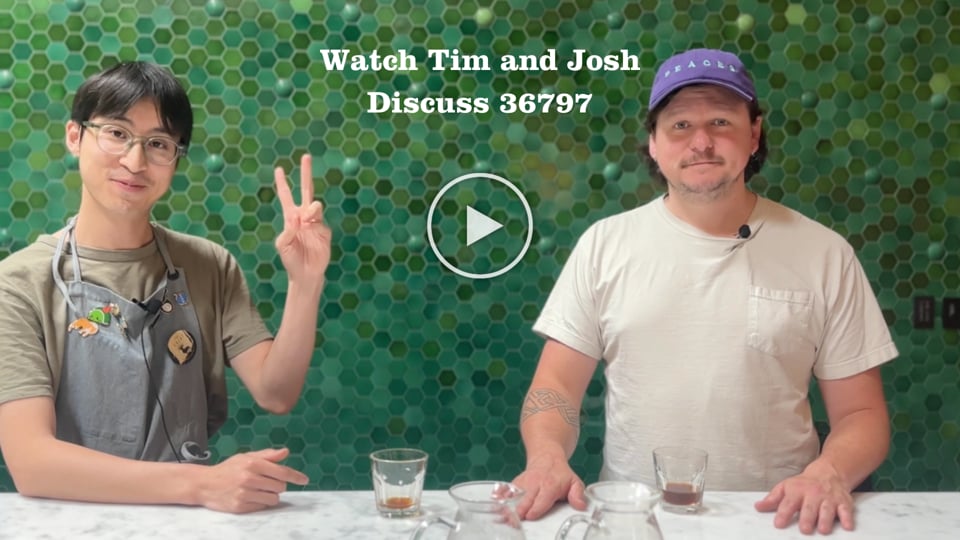
It’s always a joy to present coffee that subverts expectations. The traditional flavor profile of washed Honduran coffee is sweet, with notes of nougat and pommes. This Parainema from Silvia shows that Honduran coffee is able to hang with the brightest and best. And I mean it when I say brightest. While here is really nice sweetness to this coffee, ultimately, it’s the acidity that steals the show. Citrus, lemon verbena, and stone fruit all sparkle in this electric coffee.
Our first recommended brew leans into the effervescence of this unique varietal. This coffee is a touch more insoluble, meaning a bit finer grind is needed to get proper extraction. We also used the Kalita Wave to bring a bit more roundness to the cup to help balance the acidity. However, this cup by no means shies away from those bright flavors. With a moderate dose, you’ll get an exciting cup with notes of lemon zest, mandarin, pomegranate, and raw sugar.
Our second brew leans more into the sweeter aspects of this coffee. Keeping with the Kalita Wave, we dosed up and made the grind a bit coarser. This gave a slightly higher TDS, but the coarser grind kept the brew from being bitter. This brew had more toffee, cherry, chocolate, and red licorice.
For our recommended brews, we suggest a flat bottom brewer, a slightly finer grind, and a moderate to high dose. The brews tasted best at an extraction percentage of 18.32. Enjoy this unique cultivar from a brilliant farmer!
Related Coffee
Cherry, grapefruit, apricot, floral, and lime
Oakland 17 Boxes
Crown Jewel Colombia Washed SL-28 Juliana Guevara & Wbeimar Lasso
38868-1 – SPOT RCWHSE
Cherry, grapefruit, apricot, floral, and lime
Spot
17 Boxes
$259.91 per box

Lime, raspberry, peach tea, honey, sweet, clean
Oakland 10 Boxes
Crown Jewel Rwanda Natural Busanze Washing Station
Lot 3 – 38186-1 – SPOT RCWHSE
Lime, raspberry, peach tea, honey, sweet, clean
Spot
10 Boxes
$206.66 per box

Orange blossom, ruby red grapefruit, cherry juice, bright, clean
Oakland 16 Boxes
Crown Jewel Rwanda Washed Rwamiko Washing Station
Lot 1 – 38183-1 – SPOT RCWHSE
Orange blossom, ruby red grapefruit, cherry juice, bright, clean
Spot
16 Boxes
$204.39 per box
Black Tea, caramel, lemongrass, passion Fruit, apricot
Oakland 45 Boxes
Crown Jewel Burundi Honey Peaberry Heza Washing Station
38863-1 – SPOT RCWHSE
Black Tea, caramel, lemongrass, passion Fruit, apricot
Spot
45 Boxes
$255.49 per box