
Crown Jewel Rwanda Natural Busanze Washing Station
Lot 3 – 38186-1 – SPOT RCWHSE$206.66 per box
Boxes 16
Warehouses Oakland
Flavor Profile Lime, raspberry, peach tea, honey, sweet, clean
Add to your artisan.plus account: 
 Download PDF
Sourcing Details: The bulk of Rwanda’s coffee processing is based on a centralized washing station system.
22lb Boxes
Spot

Overview
Overview
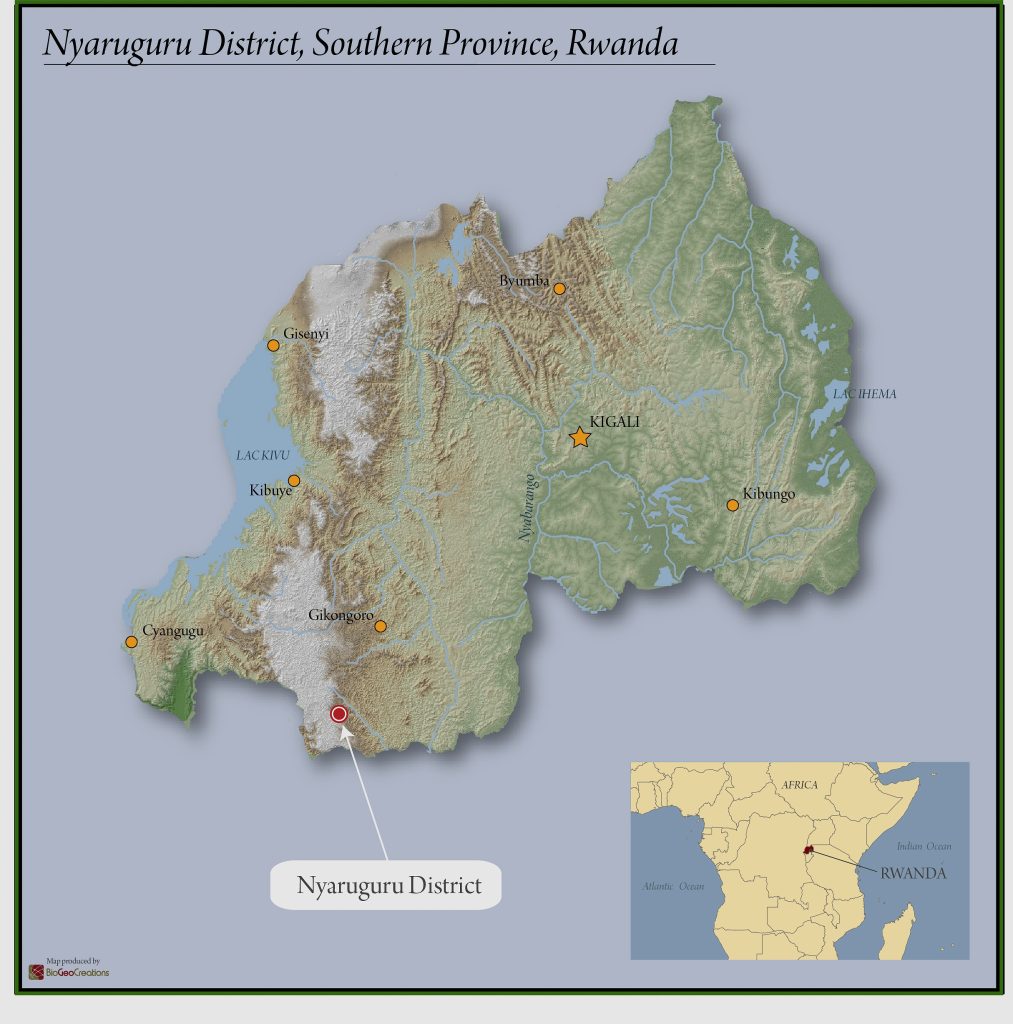
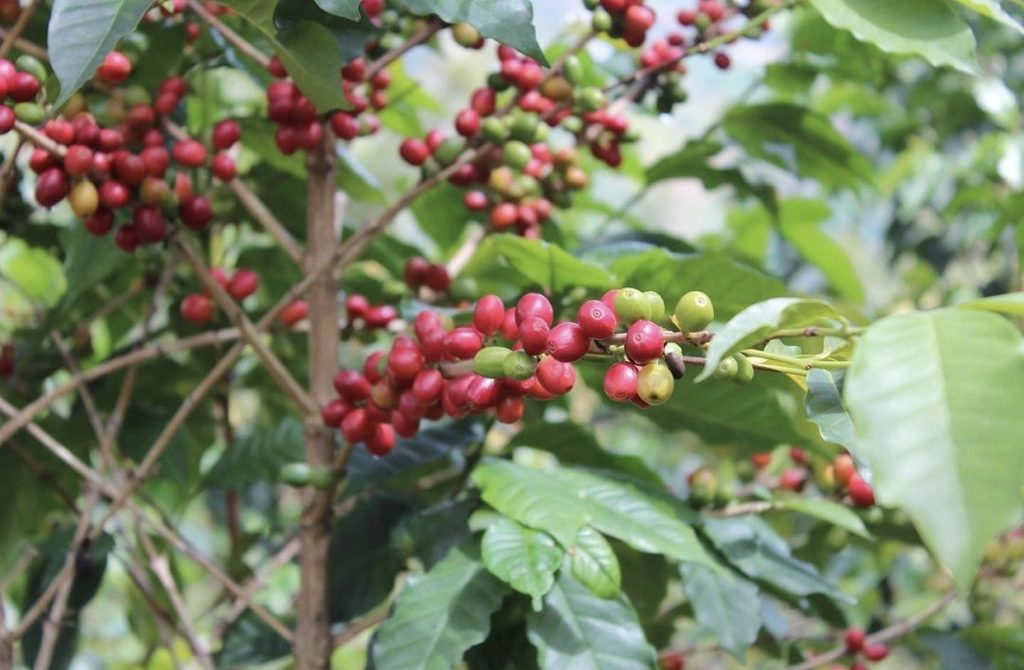
This is a minimal intervention natural coffee from Nyaruguru, Southern Rwanda, produced by cooperative members of the Busanze Washing Station.
The flavor profile is sweet and deeply fruited, strawberry shortcake, watermelon, and Ferrero Rocher, with that classic Rwandan black tea grounding it all in a rich, grape-candy finish.
Our roasters found this coffee is best approached by slowing development to build body and fruitiness, and for espresso, easing off heat after first crack to keep acidity in check.
When brewed, the team recommends a slightly higher dose and coarser grind for this coffee to really bring out the sweet fruitiness.
Taste
Taste Analysis by Isabella Vitaliano
Deep berries, dark purple, grape candy – this coffee is everything purple and more. You don’t need synthesis to taste purple in this coffee, it has every classic natural flavor but with a slight edge to it. Strawberry shortcake, watermelon, Ferrero Rocher the mix of sweet pastry, fresh fruit and milk chocolate delight form a profile that is sure to be a crowd pleaser.
Black tea is often a staple note of Rwandan coffee but paired with processing that encourage those fruity flavors, you get a dream of a coffee. This is headed to our espresso bar and I’m thrilled to see how this turns out in a shot. From light to dark roast, you can either nurture those sweet berry notes or bring out acai covered in dark chocolate. It has range and you won’t be at a loss for how to sell this, just use the flavor note purple and it’ll be sure to fly off the shelves. This is not a bombastic coffee but rather, a good entry point for all types of coffee drinkers to enjoy a natural coffee. And for those that are familiar, they will appreciate the amount of control the Busanze Washing Station has over its fermentation techniques.
Natural Rwanda’s a bit of a rarity and one of this caliber even more so. If you are interested, snap this up quickly because it’s sure to be gone very soon.
Source
Source Analysis by Chris Kornman
Twenty-plus years of coffee sourcing history led to this coffee. When I was just getting started in coffee buying, one of the first and primary contacts in Rwanda was a woman named Laetitia Mukandahiro. My first trip to Kigali in 2013 involved a cupping of nearly 100 samples in one sitting, hosted by Uzziel Habimana. Together, their history in Rwandan coffee spans decades, spurred by early training programs for cuppers beginning around 2004. I doubt there’s anyone’s cup notes and scores I trust more in the world.
In 2019, after years in practice for recognizable brands such as Starbucks, Dukunde Kawa, and Rwashoscco, Uzziel and Laetitia joined forces to found Ikawa House, an independent training facility, export office, and quality control powerhouse. Among their clients are regular Royal Coffee supply partners, Kivu Belt coffee.
On visiting their lab in Kigali in 2023, I was impressed at the depth of their connections to coffees from all over the country, and when, in late 2025, we foresaw a need for an additional supply partner in Rwanda, it was a no-brainer to ask for Laetitia and Uzziel’s sourcing and qc expertise.
The result was a mixed container of coffees from across the small nation, representing some of the finest coffees we’ve seen all season. From these lots, we selected two to become Crown Jewels.
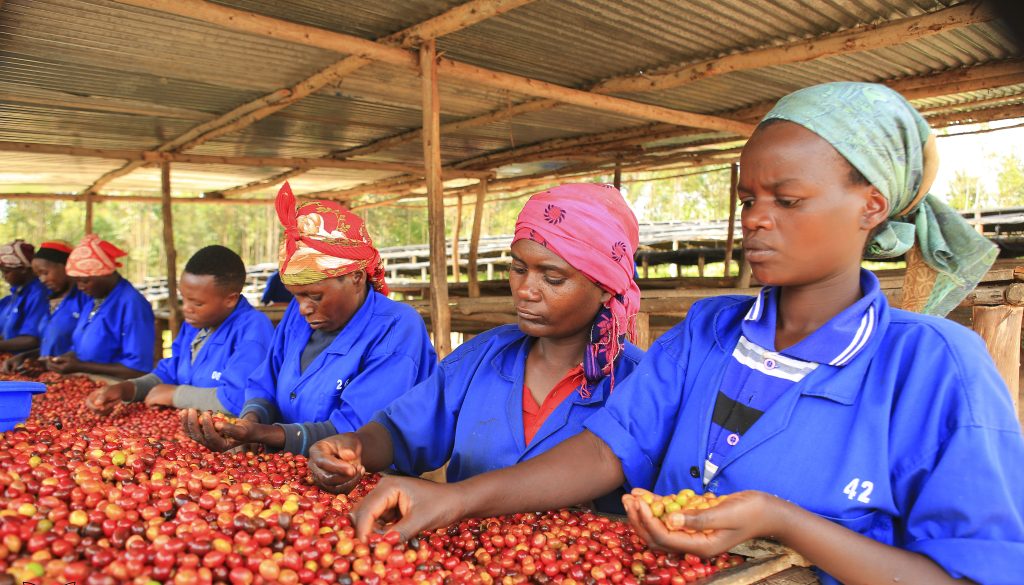
This natural coffee, the first such Rwandan selection for Crown Jewels, hails from the Nyaruguru district of Southern Rwanda, near the border of Kayanza, Burundi. The name of the coffee collection site and washing station is Busanze, and it is a unique partnership between a private enterprise and a local cooperative, sharing responsibilities and ownership over the facility. Much like other such locations in Rwanda, the station is reliant almost exclusively on local smallholders contributing their coffee cherry. The cooperative, called KUN, is just 81-members deep of whom 51 are women, and has the distinction of a top-ten placement in 2018’s Cup of Excellence competition.
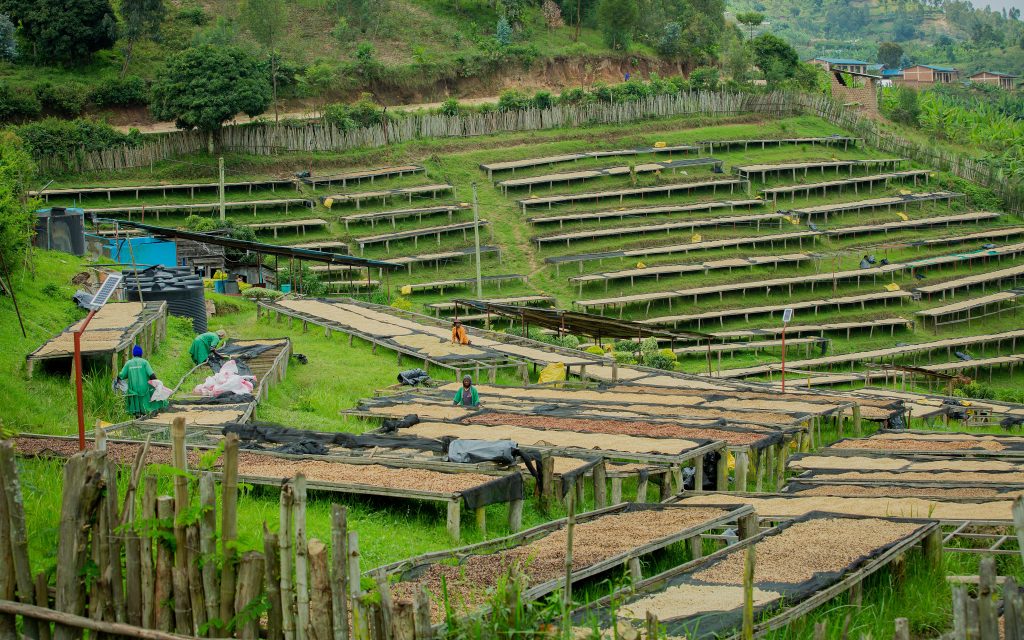
This is a classic, minimal intervention natural. Coffee cherries are floated on delivery to remove imperfections, underripe and overripe cherries, and defects, and then simply dried in the sun (with ample workforce to tend to both sorting and turning the coffee to ensure even drying).
The result is a deliciously bright and sweet coffee, showcasing the juicy acidity of Rwanda’s extraordinary elevations and classic Bourbon-related trees, and the sweet undertones from perfectly ripe coffees selected and hand-sorted again and again and again by some of the world’s most dedicated coffee farmers and producers, with its quality vetted not just by the Crown Jewel team, but by the inimitable experts at Ikawa House.
Green
Green Analysis by Isabella Vitaliano
This Natural Rwandan coffee is higher in density than your average coffee with ideal moisture content and water activity. A screen size that is mildly condensed in the 18-16 range which allows for even roasting.
Red bourbon is the parent of two sub cultivars, yellow and pink Bourbon. Bourbon was introduced to Bourbon Island from Yemen in the ealry 1700s but didn’t leave the island until the mid-19th century. The cultivar spread to other parts of the world as missionaries moved from Africa and the Americas. Still a common cultivar for parts of East Africa, you see it coming out from Burundi as well as Tanzania and Rwanda.
Loring
Loring Falcon 15 Analysis by Doris Garrido
Rwanda coffees have finally arrived, and I am thrilled to get my hands on them! The first one we are launching (which is about to become our featured espresso here at The Crown) is a Rwanda Natural. It is a bit of a funky coffee, yet surprisingly clean; it delighted us with a subtle chocolate sweetness, great texture, and soft zestiness that makes us truly appreciate this lot.
My approach to this coffee was driven by its body (I found bourbon coffees great for this purpose, but this natural red bourbon nailed perfectly) while carefully preserving its fruity characteristics.
I roasted this batch on the crown Loring Falcon 15, using an 18 lb. batch size (approximately 54% of the roaster capacity). On the Loring I started with a charge temperature of 450F, waited a few seconds, and then applied 100% gas power. I should note that I prefer to roast on the Loring manually. I don’t automate either my charge or any other stage of the roast. Because my production volume allows for it, I enjoy the space to roast manually, so I can craft each of my profiles.
Color change happens faster in this machine, because of its high convection environment that transfers heat to the beans more efficiently. The magic started faster, in this case at 3:14 minutes I was marking it while the bean temperature was reaching 310F. For the remaining part of the roast, I was looking to develop the fruitiness, the sweetness and the chocolate mouthfeel I knew we could have from this coffee. For that, I was required to slow the pace down. At 320F, I dropped the gas to 80%, then to 60% at 360F. By 390F, I was at 40% power, and I marked first crack at 397F
I spent 4:12 minutes in the yellowing phase, which I felt was the right move for this natural. During post-development, I wanted to push the coffee a bit further without reaching higher temperatures. Since this is destined for espresso, I didn’t want the acidity to become too sharp, so I dropped all the power and carefully observed the development time, dropping the coffee at 407F for a total roast time of 9:04.
Chocolate is one of my favorite things to enjoy, and the taste of cacao nibs in this natural coffee was one of my favorites, not just chocolate but a complex cacao flavor. Among the tasting notes we got, we have golden raisin star anise roasted beet, and watermelon. It ended up fruity, slightly funky, and overall sweet and chocolaty. Stop by and enjoy it at the bar; it will hit the espresso menu in a few days.
IKawa
Ikawa Pro V3 Analysis by Isabella Vitaliano
Our current Ikawa practice compares two sample roast profiles, originally designed for different densities of green coffee. The two roasts differ slightly in total length, charge temperature, and time spent between color change in first crack. You can learn more about the profiles here.
On the light density roast of this coffee, we found that it was round, sweet and had some fruit flavors like blackberry as well as lemon tea notes. The high-density roast of this coffee had more fullness, roundness and more complex notes like watermelon and Ferrero Rocher. I recommend trying out the high-density roast of this coffee when sampling! It will give you an idea of range and baseline flavors that this coffee has to offer.
You can roast your own by linking to our profiles in the Ikawa Pro app here:
- Roast 1: Low Density Sample Roast
- Roast 2: High Density Sample Roast
Brew
Brew Analysis by Katie Briggs
Rwanda coffees have started coming in and I was excited to get to brew up this natural! I started with a dose of 19 grams, at a grind of 10 and on the V60 cone brewer. I did an initial 50-gram pulse of water and let it bloom for 40 seconds. I then did a second pulse of water to bring it up to 200 grams, and then a final pulse of water to get to my final 300 grams. I really liked this initial brew! We got notes of strawberry, dark chocolate, hibiscus, with a little bitterness of watermelon rind. I thought this brew was so close but wanted to try and get rid of the touch of bitterness.
So, for the next brew I essentially did the same thing, I just coarsened the grind to an 11. Doing the same water pulses, making my final water volume 300 grams. Making this small tweak made a big difference! This brew was so sweet and fruity. We got notes of strawberry shortcake, black tea, jasmine, and vanilla. This is definitely the brew I would go with, but I wanted to see how it would taste on a different brew device. So, I did the same brew as my last, but on the Kalita Wave flatbed brewer. This brew wasn’t my favorite. It brought out a vegetal note that I didn’t love. We got notes of black tea, lemon, and rosemary.
I would recommend a slightly higher dose and coarser grind for this coffee to really bring out the sweet fruitiness! Come give it a try on our pour over bar at the Crown! Enjoy!
Related Coffee
Tomato, caramel, orange, lime, and tropical fruit
Oakland 8 Boxes
Crown Jewel Kenya Washed Ngomano Factory
45KF0153 – 38302-1 – SPOT RCWHSE
Tomato, caramel, orange, lime, and tropical fruit
Spot
8 Boxes
$207.57 per box

Orange blossom, ruby red grapefruit, cherry juice, bright, clean
Oakland 22 Boxes
Crown Jewel Rwanda Washed Rwamiko Washing Station
Lot 1 – 38183-1 – SPOT RCWHSE
Orange blossom, ruby red grapefruit, cherry juice, bright, clean
Spot
22 Boxes
$204.39 per box

Black Tea, caramel, lemongrass, passion Fruit, apricot
Oakland 50 Boxes
Crown Jewel Burundi Honey Peaberry Heza Washing Station
38863-1 – SPOT RCWHSE
Black Tea, caramel, lemongrass, passion Fruit, apricot
Spot
50 Boxes
$255.49 per box
Banana Bread, plum, rosemary, cocoa Nib, and toffee
Oakland 62 Boxes
Crown Jewel Yemen Anaerobic Natural Sharqi Haraz Cooperative
39818-1 – SPOT RCWHSE
Banana Bread, plum, rosemary, cocoa Nib, and toffee
Spot
62 Boxes
$710.39 per box