
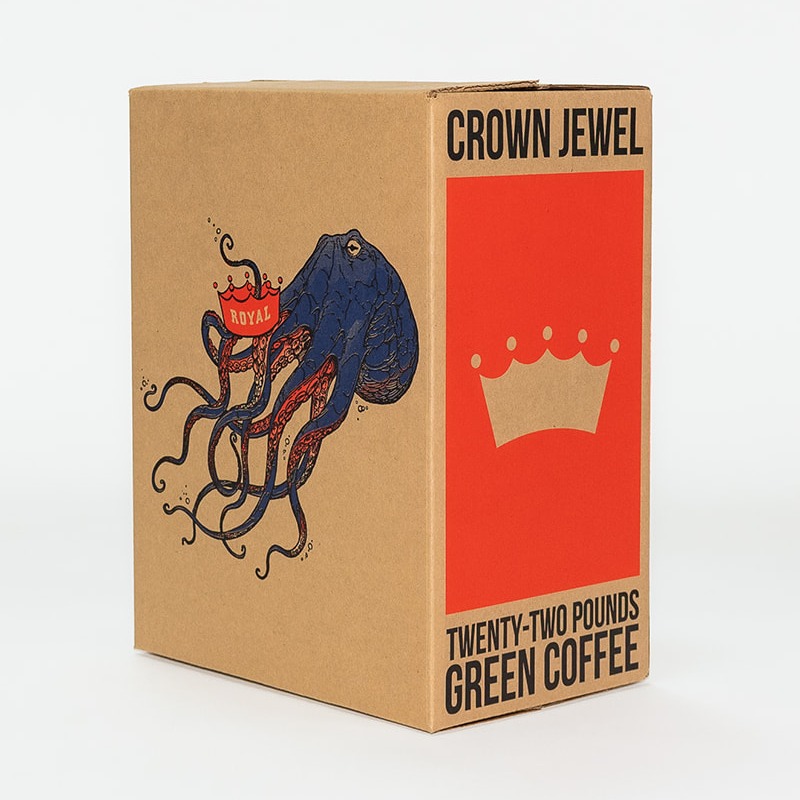
Crown Jewel Colombia Washed SL-28 Juliana Guevara & Wbeimar Lasso
38868-1 – SPOT RCWHSE$0.00 per box
Boxes
Warehouses Oakland
Flavor Profile Cherry, grapefruit, apricot, floral, and lime


Overview
Overview
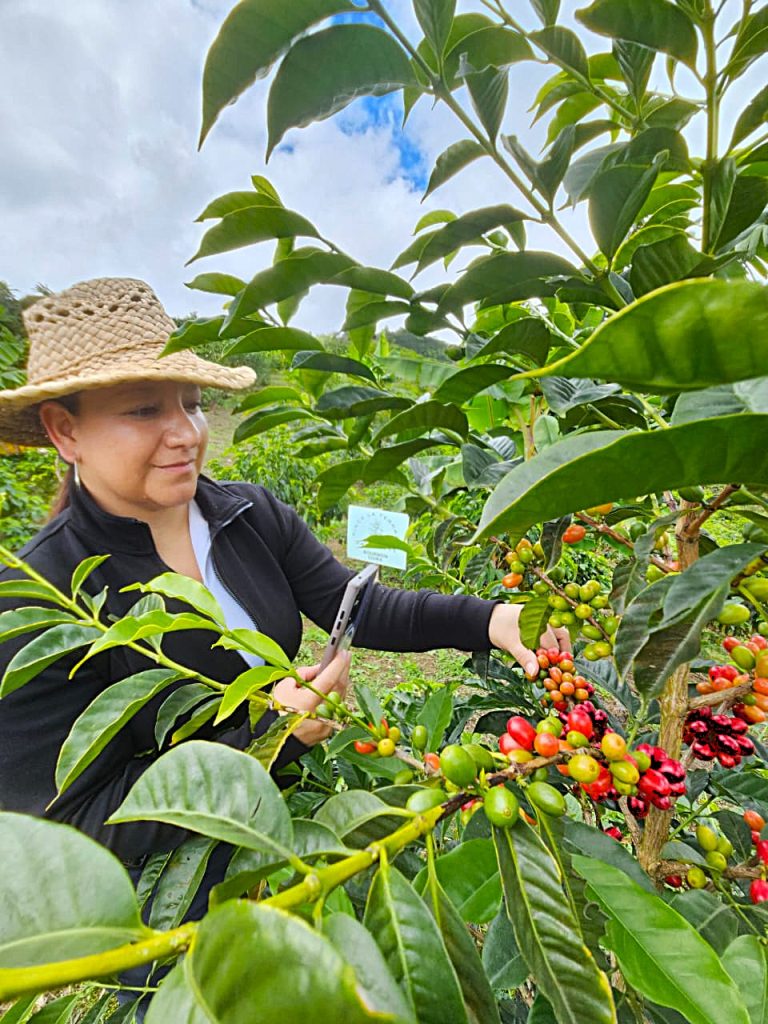
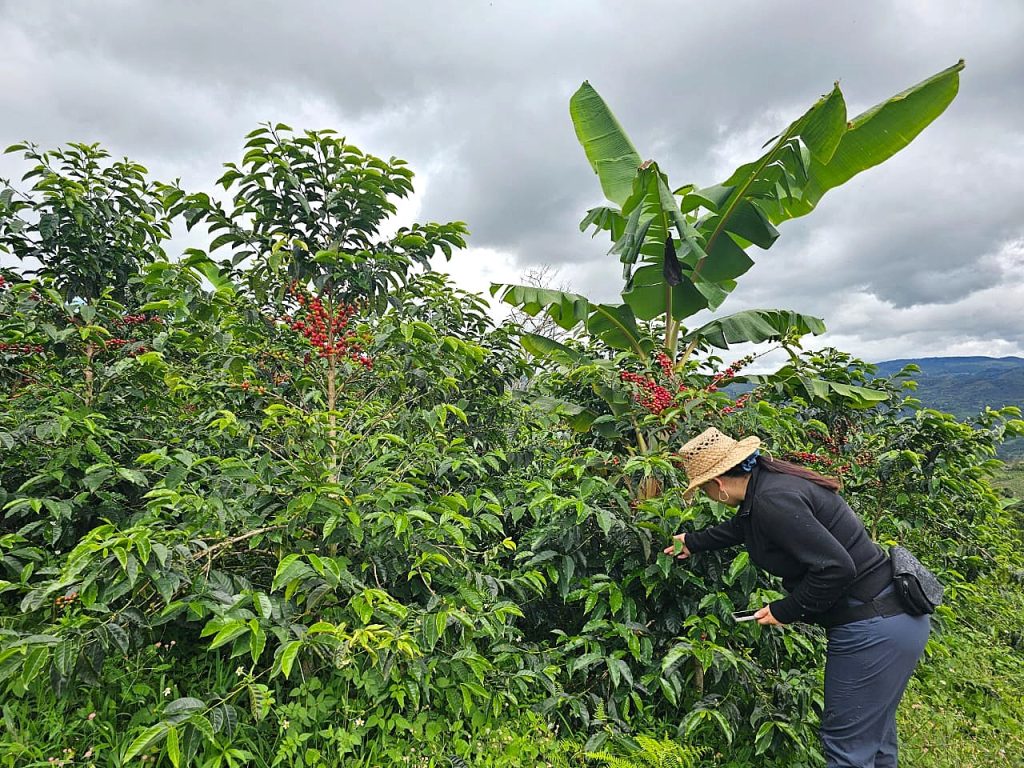
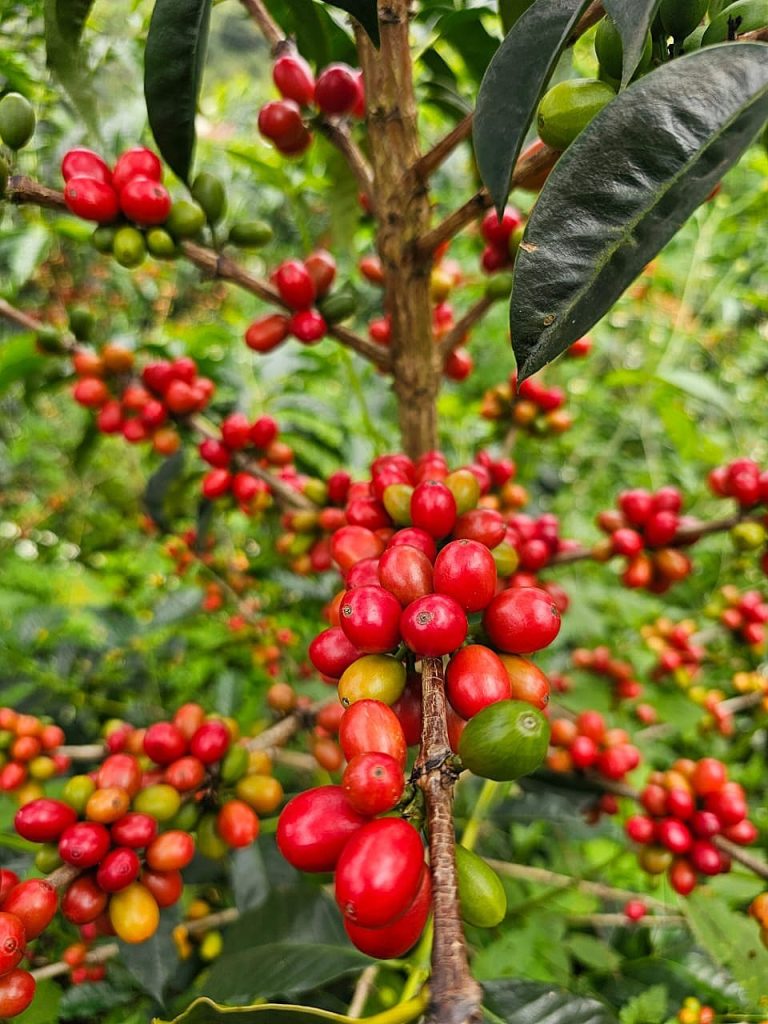
This is a low intervention washed SL28 variety coffee from Huila, Colombia, produced by Juliana Guevara and Wbeimar Lasso on their farm, La Terraza.
The flavor profile is a lovely marriage of southern Colombian terroir and east African genetics. We taste apricot, salted caramel, delicate aromatic florality, and bright citrusy acids.
Our roasters recommend approaching it with steady early heat and gentle development to highlight its vibrant fruit, florals, and balanced sweetness.
When brewed, we were surprised at the expressive flavors in low TDS brews, favoring a coarse grind and low dose in flat bottomed brewers.
Taste
Taste Analysis by Isabella Vitaliano
La Terazza is one of the producers that has consistently high marks and is a guaranteed buy for the Crown Jewel program year after year. Due to the diverse microclimate of the Huila department and the perfect weather patterns, coffee is available almost year around without any decrease in quality.
In September of 2025, the Crown team got the chance to meet with Juliana and Wbeimar during Development Stage, a 2-day event held at The Crown. The duo visited Oakland to discuss the intersection of the global coffee market and coffees sold in tiny quantities. While these coffees are not available by the ton, they do have impact. Impact to the communities that they serve, the roasters that sell them, and the consumers that drink them. Both of them are fiercely passionate and proud of the work they do, and it is obvious to anyone that speaks to them. After meeting them, it was even more exciting to receive offer samples from them, putting a name to the coffee and the personal investment that they feel in the lots they offer.
While SL-28 lacks natural protections against pests and fungi, it is favored by buyers because of its creamy, savory, and bright profile. Pristine cultivar selection paired with La Terraza expertise is: a match made in heaven. Aromatic, salted caramel, fresh fig and loads of apricot – you get the best of every aspect this coffee has to offer. Nurtien Colombian microclimate, SL-28 profile and the exceptional work of the Juiliana and Webimar. Apricot was noted by multiple folks at the cupping table along with herbal notes of tarragon, basil and sage.
Source
Source Analysis by Charlie Habegger
In a world of process-forward microlots we have started referring to classically washed coffees as “low intervention” at the Crown. This is a wine world term that, in wine, tends to be associated with wilder, more spontaneous fermentation flavors and a departure from the tradition of safe, controlled flavors. In coffee, however, we use it to mean the opposite—low intervention coffees are the traditionally washed or sundried with more nuanced, predictable results that used to be dominant in specialty standards. Washed milds, full naturals, passive honey processes…remember these?
It’s easy to relegate the previous flavor wave in favor of the current one, especially when manipulated fermentations make coffee so new and challenging. We can also be quick to forget how ego-melting straight washed coffee can be. How it’s like drinking the very genetics of the plant, how it inspires the worship of nature. Whenever we need a reminder, Finca La Terraza is here.
The SL-28 cultivar doesn’t need much of an introduction. It’s rarely grown anywhere in Latin America except on farms like La Terraza, but it’s been the backbone of Kenya’s coffee industry for almost 100 years, and it’s very well-understood in its fully washed form. Juliana and Weimar of Finca La Terraza have a small plot of it, which recently arrived tasting incredibly good. There are whiffs of Kenya in the cup (umami sungold tomato, citric blood orange) and also impressively fragrant tarragon, basil, roasted pistachio and sage. The body has a dense sugary cling, and the flavors are wonderfully tart, evoking peach and pineapple. An amazing “low intervention” result.
Southern Huila
Huila is arguably Colombia’s best-known department for top microlots. Huila’s geographical accessibility, dense population of knowledgeable farmers, warm and subtropical forests, high elevations, and microclimate diversity have for many years sustained one of specialty coffee’s most beloved regions. The fact that most of the department is harvesting coffee almost every month of the year means that fresh coffee is always available.
Huila is a long and narrow valley that follows a winding gap between two large cordilleras of the Andes. Colombia’s 950-mile long Magdalena river has its source in southern Huila and has shaped the agriculture here for centuries. Uphill from the valley’s lush and picturesque lower slopes are a diverse array of coffee producing communities, often dramatically steep, and each with their own unique climate and history.
Finca La Terraza
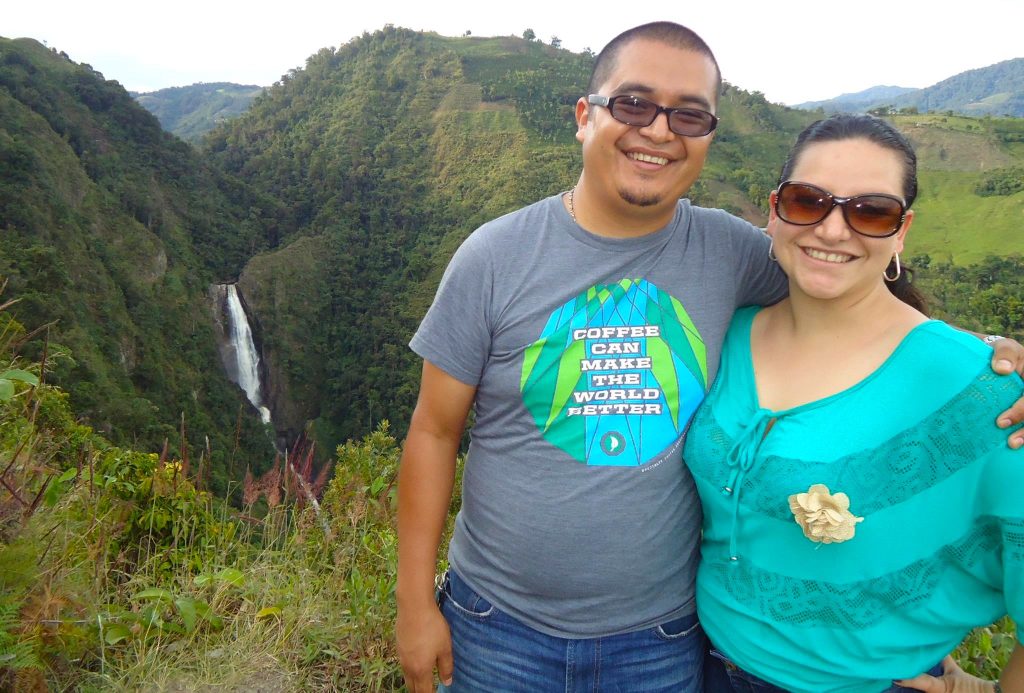
Terraza is the name for the farm owned and managed by Juliana Guevara and Wbeimar Lasso, the duo behind the processor group Terra Coffee. The farm is very passionately run (with a delightful and educational Instagram account no less, @Fincalaterraza). Finca La Terraza resembles countless farms in this part of Colombia, being only a few hectares in size and in a very specific microclimate that encourages coffee trees to fruit nearly the full calendar year—requiring constant monitoring and harvesting in small quantities. They have become a staple supplier of Crown Jewels over the past few years.
Wbeimar Lasso, a Colombian Cup Tasters Champion, agro-industrial engineer and third generation coffee producer, is also a bit of a tinkerer with processing. He has become notorious at Royal for multi-fermentation stages coordinated across small farms in Huila, delivering us some of our most unique and interesting coffees from this area.
La Terraza has a number of separated varieties, including Pacamara, Yellow Colombia, and Gesha. The farm’s elevation means a cool climate with particularly frigid nights, which retards everything in coffee production that is temperature dependent, including the maturation of cherry on the tree, fermentation, and the drying of parchment.
Processing Detail
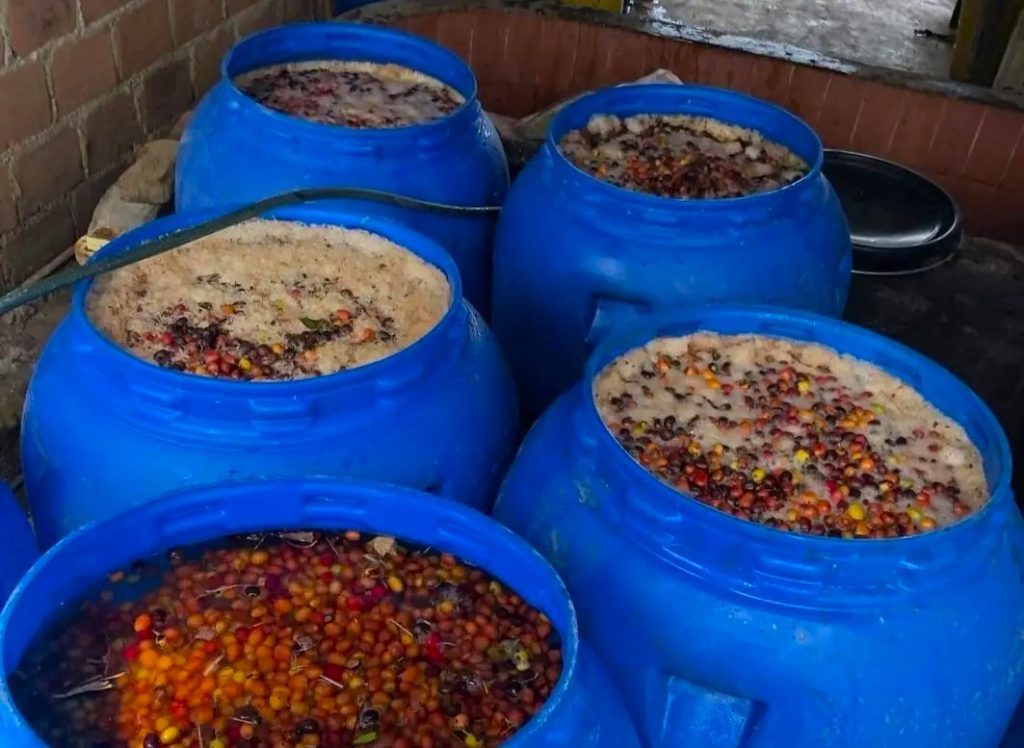
This washed SL-28 microlot was hand-picked by La Terraza’s permanent labor force, who are considered by Juliana and Weimar to be calibrated to each cultivar’s unique ripening patterns. Once picked, the coffee was depulped and fermented for 40-56 hours in concrete tanks. After fermentation the parchment was washed completely clean and sundried on a combination of patios and toldos, a traditional Colombian rooftop awning designed especially for coffee drying. Drying took between 16-24 days for each day lot to complete.
Green
Green Analysis by Isabella Vitaliano
There is a fairly wide spread in terms of screen size in this coffee, mostly concentrated in the 19-16 range. The density is a little bit below average with slightly above average moisture content and water activity. All specs are in the normal range and are indicative of thorough processing techniques.
SL-28 is a well-known cultivar in Africa and has a very good reputation for cup quality and resistance to drought. It does not fare well against major diseases in coffee but for the most part it is durable and notable for its rusticity. The plant can be left alone for a few years but return to successful harvest production levels. Scott Agricultural Laboratories initially selected the cultivars and was a Laboratory that was established by the British government in Kenya in 1920’s.
This cultivar is not as common in Colombia as it is in Africa but because of its reputation more producers are making the effort to source it as it is a good marketing point in the specialty coffee world.
Diedrich
Diedrich IR5 Analysis by Doris Garrido
Originating from three selections in Kenya, this cultivar has a fascinating history; it is resilient during the dry season and boasts a delicious tasting profile. While it is very popular in Kenya, it remains not that popular in Colombia, However, the Terraza farm has found a unique way to apply its personal signature to this variety, creating an exceptional coffee. Cupping this coffee for the first time at the traders’ table, I was surprised; I expected high tangy acidity to be the primary note, but I was delighted to find delicate florals and candied sweetness instead. As with previous coffees from La Terraza, I am intrigued by their methodical work, which has consistently brought some of the most delicate offerings to our “Crown Jewel” selection.
As a major fan of roasting Kenyan coffees, I approached this SL28 with a similar minimalistic style. Utilizing the heat retention of the Diedrich, I charged the drum at 440F. Thirty seconds into the roast, I increased the gas to 100%. I maintained that setting for three and a half minutes before dropping to 30% of the gas. At this point, I was very close to the color change, which I marked at 297F; a few seconds later, I opened the airflow completely. For the remainder of the roast, I just waited for the first crack, which happened at 383F and developed the coffee for 1:31 minutes with a steady dropping of the rate of change from 13 degrees per minute to finally 4, and an end temperature of 393F.
Overall, it was a straightforward roast, and the beans handled the heat well. On the cupping table, I did find tangy notes this time, apricot, tart cranberry, and florals, alongside subtle ginger, and creamy sweetness. This is a truly delightful coffee to roast and taste. It stands up to the heat if you want to highlight the tangy acidity, but it will remain incredibly fruity and sweet, for next time I am planning to decelerate drying a bit to extend Maillard just to see what other complexities I can uncover.
Aillio
Aillio Bullet R1 IBTS Analysis by Evan Gilman
We use the RoasTime app and roast.world site to document our roasts on the Bullet. You can find our roast documentation below by searching on roast.world, or by clicking on the link below. Take a look at our roast profiles below, as they are constantly changing!
It’s always a pleasure to roast an SL-28 from somewhere other than Kenya, especially as it gives confirmation that not all of a coffee’s roast and flavor characteristics are based on terroir or region-specific processing techniques. The truly genotypic aspects of this coffee to me are its hallmark flavor profile which effortlessly combines the bright and the herbal, and the propensity to reach crack at lower temperatures.
While I have seen many Kenyan coffees exhibit this early crack in the roaster — sometimes attributed to screen size consistency and good milling practices — the trend of early crack for this cultivar was apparent here due to this Colombian lot’s wider screen size distribution and its decided lack of Kenyanness (if it wasn’t a word before, it’s a word now, folks).
This roast started off with a relatively gentle 446F charge temperature, P6 power, and F3 fan. Admittedly, this is significantly less heat than I’d push on a denser, more sorted Kenyan SL-28. At turning point, I ramped up power to P8, then adjusted downward to P7 as the peak rate of change came about. My only other move regarding heat application was to move to P6 at 7:00 / 361F, also adjusting fan to F4 a few moments before. I hit F5 a touch after first crack and allowed this coffee to develop in the roaster for a scant 1:25, dropping the roast at 9:58 / 394.2F. Pretty low intervention in the roast, as well!
In the cup, this coffee didn’t disappoint. While my initial notes focused on the bright chocolatiness of this coffee (Madagascar chocolate anyone?), as it cooled some phenomenal orangey syrup notes came through, backed by a brightly herbal finish of tarragon, sage, and lemon verbena. This coffee had abundant tartness, but never in a cloying way.
Excellent coffee, and an excellent choice for single origin drip, a zippy espresso, or just drinking straight from the cup at the cupping table.
You can follow along with my roast here at roast.world: https://roast.world/egilman/roasts/MYkRlsiqh6riY1R6Q2GEt
IKAWA
Ikawa Pro V3 Analysis by Isabella Vitaliano
Our current Ikawa practice compares two sample roast profiles, originally designed for different densities of green coffee. The two roasts differ slightly in total length, charge temperature, and time spent between color change in first crack. You can learn more about the profiles here.
On the low density roast of this coffee we found notes like oatmeal and dark chocolate. The high density roast was really sweet, and dense with milk chocolate and maple syrup. While the low density roast was good and improved as it cooled, the high density was significantly better in both flavor and body. I highly recommend trying out the high density roast for this coffee.
You can roast your own by linking to our profiles in the Ikawa Pro app here:
- Roast 1: Low Density Sample Roast
- Roast 2: High Density Sample Roast
Brew
Brew Analysis by Joshua Wismans
Specificity and articulation are hallmarks of the Lasso’s coffee. Whether it’s nuanced process-forward coffees or crisp single varieties like this SL-28, you’ll find what makes these coffees sing come bursting out of the cup.
SL-28 is known for being a relatively soluble varietal, so I started with a fairly coarse grind. Expecting a fairly normal TDS, I was surprised to find a relatively low TDS. My initial brews on a conical brewer brought out more bitterness that I was hoping for, so switched to a flat bottom brewer (Kalita Wave)
I found some really magical flavors when I really thinned this coffee out. With a TDS of 1.19, a very coarse grind, and a ratio of 16.22 notes of apricot, cherry, marshmallow, and umami rounded out a beautifully delicate cup.
When I lowered my dose even further but made the grind significantly finer, I found a really nice sweet cup with more body that brought out fig and Nutella. The TDS was also really low at 1.18.
Usually, I wouldn’t recommend using a TDS so low, but when it works, it works. The palate is the ultimate tell. Use a flat bottom brewer, a low dose, and a coarse grind to find some really unique flavors in this SL-28.
Related Coffee
White Tea, basil, biscoff cookie, cacao, candied fruits
Oakland 37 Boxes
Crown Jewel Bolivia Organic Washed Yulissa Chambi
39122-1 – SPOT RCWHSE
White Tea, basil, biscoff cookie, cacao, candied fruits
Spot
37 Boxes
$220.94 per box
Chamomile, toffee, mandarin, cane sugar, caramel
Oakland 9 Boxes
Crown Jewel Ecuador Washed Sidra Juan Peña
40303-2 – SPOT RCWHSE
Chamomile, toffee, mandarin, cane sugar, caramel
Spot
9 Boxes
$319.05 per box

Chamomile, toffee, mandarin, cane sugar, caramel
Oakland 2 Boxes
Crown Jewel Ecuador Washed Sidra Juan Peña
40303-3 – SPOT RCWHSE
Chamomile, toffee, mandarin, cane sugar, caramel
Spot
2 Boxes
$319.05 per box

Green apple, jolly rancher, apple, mojito, apple cider
Oakland 27 Boxes
Crown Jewel Colombia Carbonic Honey Green Apple Co-Ferment Edwin Noreña
38642-1 – SPOT RCWHSE
Green apple, jolly rancher, apple, mojito, apple cider
Spot
27 Boxes
$368.24 per box