
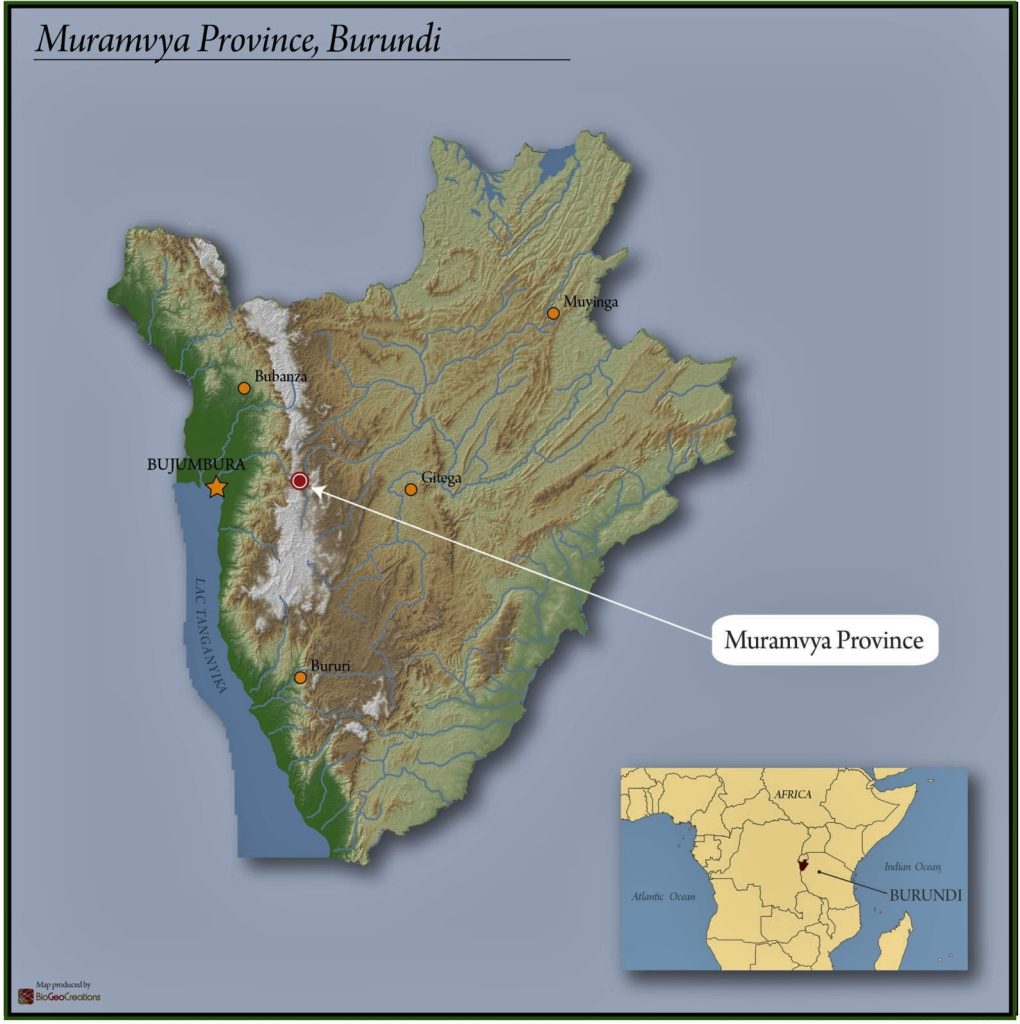
Crown Jewel Burundi Natural Bukeye Muramvya Province
36164-1 – SPOT RCWHSE
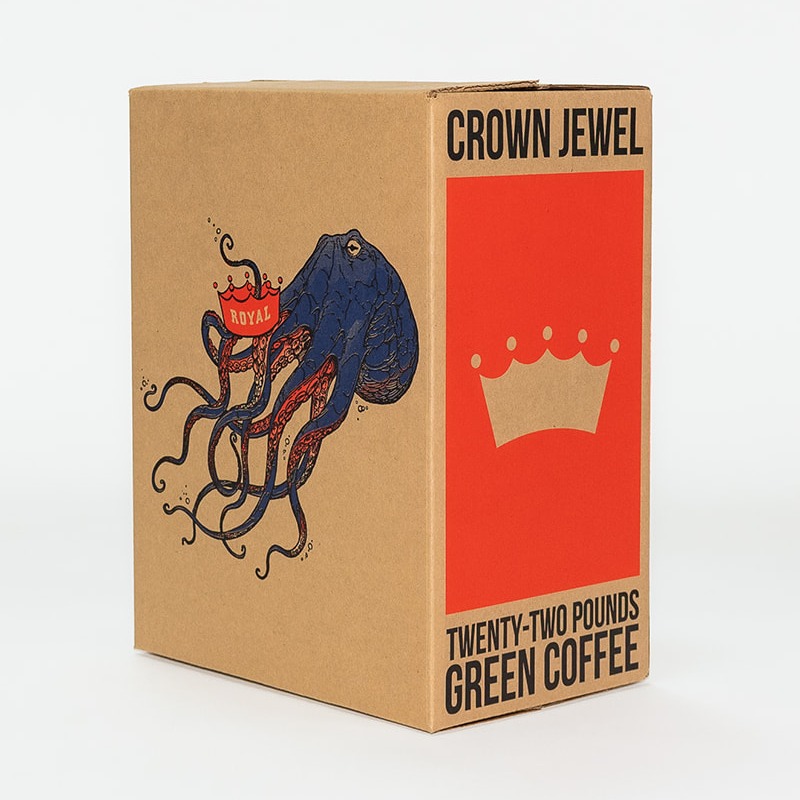
Boxes
Warehouses Oakland
Flavor Profile Grape, plum, apple, honey, and pineapple
Overview
Overview
This is a minimal intervention natural coffee from Muramvya Province, Burundi, produced by smallholder farmers organized around the Bukeye Washing Station and the Long Miles Coffee Project.
The flavor profile is decadent, yet delicate, and fruit-forwardly sweet. We taste loads of plum and red grape, with support from papaya, lemongrass, and honey.
Our roasters liked balanced approaches with slightly drawn-out Maillard reactions to emphasize sweetness.
When brewed, the team found that a moderate grind and slightly lower dose on a conical brewer produced a clean, fruit-forward cup. A coarser grind, higher dose, and flat-bottom brewer yielded a fuller-bodied brew with enhanced sweetness.
Taste
Taste Analysis by Isabella Vitaliano
Decadent and everything you want from a coffee, you’ll be sure to love this Burundi Natural. I find it rare to see really fruity flavors paired with sharp clarity in a coffee profile. Fruit flavors often are accompanied by a roundness and fullness due to the processing.
This lot is an interesting display of both processing and origin. Although it is very fruity, with notes like papaya, dried mango, blueberry gummies, and plum jam, it also has a distinct sharpness that cuts through. In its completed form, it takes on a complexity and showcases flavors like sweet olive oil cake, rosehips, tree tomato, cotton candy, cascara, and cherries. Sharp, sweet, and crisp, this coffee is an excellent addition to any summer menu and beyond.
Burundi has biannual harvest cycles in terms of volume. As part of the 2024 harvest cycle, this lot represents a larger volume output. In the 2025 crop, we can except to see a smaller yield. Bukeye is the washing station that processes these coffees, with infrastructure that support both cup quality and supply chain efficiency. Another key player is LCMP, an exporting group that supports coffee growing communities by providing infrastructure, education, and communication throughout Burundi. They specialize in microlots and, in addition to being an exporter, own and operate several washing stations in Burundi.
Iced pour over, espresso, drip – you name it, and this coffee will taste good in any brew style. It’s headed to the bar here at The Crown on espresso, and I have a feeling we are going to run out of it quicker than expected.
Source
Source Analysis by Charlie Habegger
Every detail of Bukeye (bu-KAY-yay) washing station was designed with microlots in mind. Fermentation tanks are small, drying beds are multi-level with varying degrees of shade, and there are salaried processing managers on site. If you wanted to deconstruct a microregion’s coffee for maximum quality discovery, this is the kind of DIY place you would build.
Now, after more than 10 years of iterative processing, Bukeye is a kind of grandfather model to many other washing stations in the highlands, having proved that the world is genuinely interested in what farmers here can accomplish with their cherry.
And Bukeye is still producing enviable naturals. This lot, from Munyinya “hill” growers nearby, is full of flavors of ripe stone fruit and white grape, with a butterscotch sweetness and the crisp, cool herbaceousness of lemongrass tea. The cup is lush, full, and completely clean at the same time. There is hardly any of the typical heavy, brandy-like flavors common to Burundi naturals. Instead the emphasis is on the brightness and flavor clarity intrinsic to the genetics of the area.
Welcome to Bukeye
Bukeye Coffee Washing Station is the first processing site built by Long Miles Coffee Project (LMCP) in 2013. Originally starting with only 182 nearby families, the station’s small concrete tanks were sculpted, drying beds were thatched together, and a bore hole was made deep into the ground as a source of fresh water. 12 years later the station is still modest in size and appearance, but it accommodates coffee from over 1,700 families across 15 local “hills” in the surrounding area. Instead of 10 seasonal employees, it now has 200, and an additional permanent staff of 31. It produces hundreds of small, individual, lots of coffee every harvest.
It is common for processors in Burundi to use the consistently dense and steep, hilly landscape as a natural organizational tool for their supplying farmers. They buy cherry from one single geographical peak at a time, or using the term “hill” to refer to a micro-geography of coffee farmers. Munyinya, a widespread community consisting of multiple actual hills and hundreds of farmers, is one of the contributing “hills” to Bukeye and one of its most prominent for quality.
Long Miles – Microlot Burundi
LMCP is a microlot business. All of their infrastructure, systems, employees, and marketing are designed to support large numbers of specific, unique and fully traceable coffees. Doing so in Burundi is especially difficult because farms produce very little cherry and are scattered across broad landscapes. Farms, because they are miniscule, are also numerous, requiring the successful coordination of hundreds of farmers and processing staff just to produce a single differentiated lot. Invariably, such an effort requires good prices to support, so the coffee itself needs to be as delicious as possible. LMCP pays very well and excels at identifying landscapes and communities with potential and investing heavily in farmer livelihood. With this formula they are easily producing many of the country’s best coffees each year.
Unlike most processors, LMCP separates every hill and delivery day until processing is complete and a quality assessment has been made, at which point certain day lots may be combined. Farmers across Munyinya “hill” are registered partners with LMCP and receive not only highly competitive prices and post-harvest premiums for their cherry but also farm-level trainings covering canopy and fertilizer development, pruning, harvesting for quality, and integrated pest management. Training is all executed by local “Coffee Scouts”, LMCP’s team of community-based educators who spend most of their time in the field hosting workshops and visiting farmers in their homes.
The education and high prices combined have helped many of LMCP’s farmers renew their faith in coffee as a long-term livelihood. Long Miles works with a total of 7,000 farmers between their 3 washing stations.
Natural Processing at Bukeye
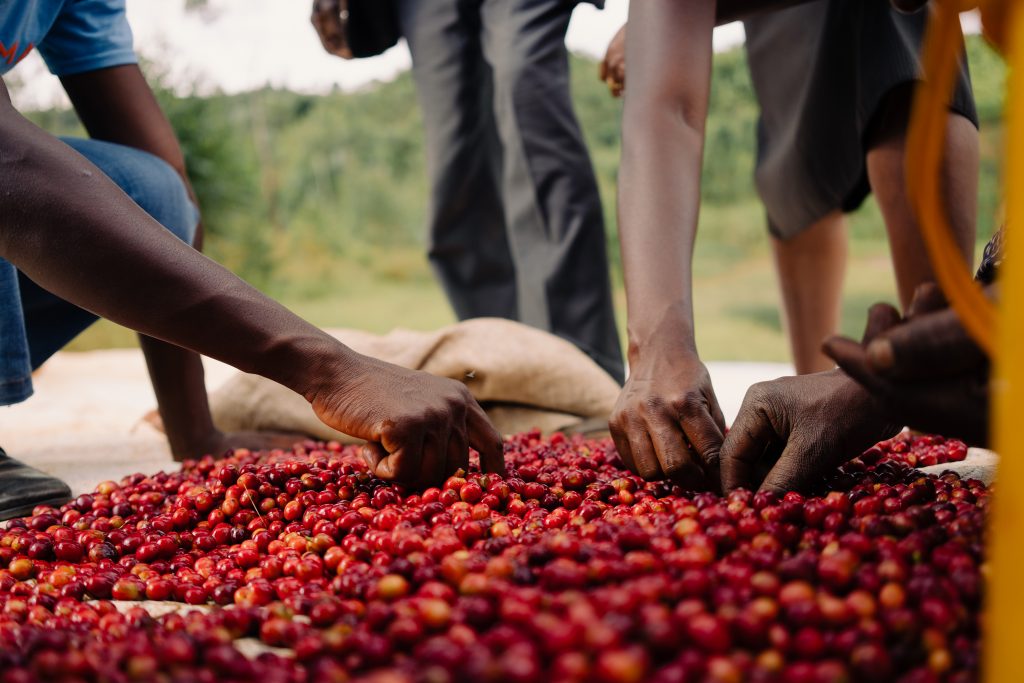
Cherry from Munyinya farmers is floated and hand-sorted for maximum ripeness upon delivery to Bukeye. The best overall cherry is accepted for natural processing and is moved to shaded drying beds to allow residual surface water to evaporate, during which it is hand-sorted for any insect damage and visual imperfections.
Skin-dry cherry is then moved again to the larger beds with no shade to dry completely in the sun, a process that typically takes 4 or more weeks to complete. Occasionally cherry is piled into small pyramids to keep the total temperature lower than the surrounding air, and maintain a slow and even dehydration process.
Once drying is complete, cherry is moved to storage for a rest period, after which it can be assessed for quality and blended with other day lots or marketed on its own.
Great naturals from Burundi are far less rare now compared to just 10 years ago, when “natural” was most often synonymous with “undergrades”. In Burundi’s chilly and mountainous highland climates, producing naturals is a painstaking process. It requires space, time, and constant attention to prevent overfermentation. But when it’s done with enough labor and know-how, the results are incredible.
Green
Green Analysis by Isabella Vitaliano
This Burundi natural is an excellent display of the intersection of origin and processing type. East African countries like Kenya and Ethiopia often have a plethora of washed coffees, but it is rare to see other processing methods from these regions and have them be really great. Burundi is one of those East African countries that has picked up the slack, with a decent range of natural and honey processes now coming out of the region.
The coffee tastes delicious and has the specs to match. The density is about average, and the water activity is a little bit below average. We see a wider range in screen size, mostly concentrated in the 15-18 range. These beans are a bit larger, which tracks with the slightly lower density. Make sure to be a little bit gentle in the roaster and be sure to check the roasters’ notes for more suggestions.
Loring
Loring S15 Falcon Analysis by Doris Garrido
This coffee is about to become our new espresso, which allowed me to transfer its profile to the Loring roaster. I’m more than happy with the results: a prominent strawberry chocolate note—not just any chocolate, but the rich, well-crafted kind you’d expect from a high-quality made, complemented by nectarine notes, a bright yet balanced acidity, and a remarkable cleanliness. It shows the elegance I appreciate in natural coffees, avoiding funkiness and delivering a clear, sweet, and tangy strawberry chocolate experience.
On the Loring, I have selected the starting charge temperature based on the coffee moisture and density. Given that this coffee has only 9% moisture, I opted for a less aggressive approach: 450°F for the 20 lb. batch. I manually added power as soon as the machine allowed me, utilizing 80% heat. The drying phase here was 3:40 minutes, which is typically a bit faster on the Loring. Therefore, once yellowing began, I started gradually reducing the power to allow time for caramelization. By decreasing the temperature 10°F at a time, I smoothly transitioned into the first crack at 7:33 minutes. I chose a slightly longer development phase, with the intention of maximizing caramelization. Nearing the end, I have the need to be given an extra push of gas to ensure a perfect finish. The extended caramelization proved amazing results, ending in a delicate touch of sweetness that was, for me, the highlight of this roast.
Aillio
Aillio Bullet R1 IBTS Analysis by Chris Kornman
We use the RoasTime app and roast.world site to document our roasts on the Bullet. You can find our roast documentation below by searching on roast.world, or by clicking on the link below. Take a look at our roast profiles below, as they are constantly changing!
Admittedly, this attempt at roasting a very delicious and fruit-forward Burundi was not my best. That said, it’s published here as evidence that a small mistake or two won’t destroy this coffee. Rather, it led to some unexpected discoveries of flavors hidden beneath the surface.
Things started off fairly normally, with a hot charge (482F IBTS / 350F standard thermocouple) with P7 / F2 / D4 starting spec for this 500g batch. I gradually decreased the power and increased the fan anticipating color change and then throughout Maillard. In retrospect, this might’ve been where I went wrong, as the coffee glided nicely into first crack and then stalled. I should’ve kept a little more momentum.
Instead of trying to overcorrect, I let the coffee take its course with a two-minute development and very low rate of change, possibly slightly baked.
The cup was a little muted but still very sweet and fruity, just lacking a bit of the acidity we tasted and liked so much in Doris’ Diedrich roast. Still, cotton candy sweetness, blueberry cake, cascara, and fresh fig flavors shone admirably.
This is a lovely and balanced natural coffee with great fruit-forward character (without being overly showy about it). A balanced approach to roasting with not too much or two little heat should work well, just keep an eye on your momentum as you enter first crack – you might need a little more heat than you’d think to keep your development on pace.
You can follow along with my roast here at roast.world: https://roast.world/ckornman.wnD2/roasts/mBDIQVAC2lDhul8s8zO5l
IKAWA
Ikawa Pro V3 Analysis by Isabella Vitaliano
Our current Ikawa practice compares two sample roast profiles, originally designed for different densities of green coffee. The two roasts differ slightly in total length, charge temperature, and time spent between color change in first crack. You can learn more about the profiles here.
This Burundi is one of my favorites of the spring season. On the high-density roast, we got flavors like mint candy, lemon, and a bit of strawberry. On the low-density profile, we found flavors like plum, strawberry, blueberry, chocolate covered strawberry, and clove. It’s crisp, sweet, and beautifully complex. I highly recommend trying out the low-density version of this coffee.
You can roast your own by linking to our profiles in the Ikawa Pro app here:
- Roast 1: Low Density Sample Roast
- Roast 2: High Density Sample Roast
Brew
Brew Analysis by Joshua Wismans
Crown Jewel natural process coffees tend to fall into two categories, crisp clean naturals that make you question if maybe this is just a really nice fruity washed coffee, or fruity funky and fun naturals that satiate ones desire for the full berry effect. This natural from Muramvya falls into the second, boasting lots of great cherry and sweet herbs, and serving as a great compliment to the Burundi we just released from Bahire, which was much more representative of the first type of natural.
For our first recommend profile, we found that a moderate grind slightly lower dose on a conical brewer yielded a cup that had a lot of nice peach tea, plum, and strawberry yogurt. It still had lots of fruit, but the cup was super clean.
Our second recommended brew utilized a coarser grind, but a lot higher dose and flat bottom brewer. This brought the sweetness up and gave us a really nice full mouth feel. From this cup, we got lots of green figs, red licorice, pear, and that classic blueberry natural note.
Espresso
Espresso Analysis by Joshua Wismans
Here at The Crown, we love to feature our Burundi coffees on either pour-over or espresso. This allows us to account for the dreaded potato defect. By grinding per dose, it makes it easy to catch the defect. I share this because we’ll be featuring this coffee on espresso, and we love our Burundi espressos here at The Crown.
Our first profile, featuring a higher dose and a faster brew time, lean into the big sweet fruity natural flavors. Think fruit leather, classic blueberry, meyer lemon, and sweet hibiscus tea. This ones for the natural lovers.
Our second recommended profile cups up the cup a bit, featuring a lower dose, but still a decent yield. By slowing the brew time down to 27 seconds, the espresso gets a bit punchier, with fruit leaning more into maraschino cherry and orange peel. What also emerges is a really nice herbal character that for me was reminiscent of fresh fennel.
We can’t recommend this coffee enough for featuring on your espresso bar as a single origin!
Related Coffee

Black Tea, caramel, lemongrass, passion Fruit, apricot
Oakland 40 Boxes
Crown Jewel Burundi Honey Peaberry Heza Washing Station
38863-1 – SPOT RCWHSE
Black Tea, caramel, lemongrass, passion Fruit, apricot
Spot
40 Boxes
$255.49 per box

Orange blossom, ruby red grapefruit, cherry juice, bright, clean
Oakland 9 Boxes
Crown Jewel Rwanda Washed Rwamiko Washing Station
Lot 1 – 38183-1 – SPOT RCWHSE
Orange blossom, ruby red grapefruit, cherry juice, bright, clean
Spot
9 Boxes
$204.39 per box
Caramel, fig, raisin, apricot, baking spice
Oakland 27 Boxes
Crown Jewel Brazil Natural Red Catuai Paulo Alexandre Fernandes
39722-1 – SPOT RCWHSE
Caramel, fig, raisin, apricot, baking spice
Spot
27 Boxes
$249.71 per box
Green apple, jolly rancher, apple, mojito, apple cider
Oakland 22 Boxes
Crown Jewel Colombia Carbonic Honey Green Apple Co-Ferment Edwin Noreña
38642-1 – SPOT RCWHSE
Green apple, jolly rancher, apple, mojito, apple cider
Spot
22 Boxes
$368.24 per box