
Royal Coffee’s own Richard Sandlin, based in Japan, was recently interviewed by Better Food Magazine on the state of organic and regenerative coffee. The conversation covers why organic has grown at a macro level while quietly fading from specialty shop menus, what makes regenerative agriculture so promising and so rare and how producers are navigating the very real business pressures behind certification decisions. With permission from the author, Yuma Nagata, we’re republishing the English version here.
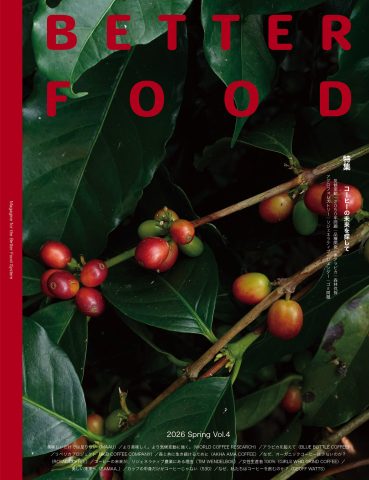
Why Don’t We See More Organic Coffee?
The Current State of Organic Coffee and the Expectations for Regenerative
Could you tell us about Royal Coffee?
Royal Coffee is a medium-sized U.S. coffee importer founded in 1978. We have multiple warehouses throughout the United States, as well as a warehouse in Canada and one in China. We also have a coffee laboratory in Oakland and another in Addis Ababa, Ethiopia.
We are also independently owned by a single family, the Nicholas-Fulmer family, which is quite rare in the coffee business as many coffee importing companies are owned by multinational corporations.
Even though we are a relatively small team, around 60 people, we work all around the world. I personally live in Japan, and have many customers here in Japan, but my main focus remains on the United States and Canada. Globally, there are only a handful of coffee producers mainly in Central and South America who are producing regenerative coffees, and we’re very happy to be supporting those coffees and the movements behind them.
Could you tell us your background?
I’ve been in the coffee business for 20 years, and I’ve spent 11 of those years at Royal Coffee. Like many people in the coffee industry, I started out as a barista and a barista trainer. After that, before joining Royal Coffee, I also spent five years working at the nonprofit organization Fair Trade USA.
Although the fair trade model is not perfect, it taught me an essential lesson: to truly think about sustainability, you must consider both the people who grow coffee and the planet itself.
So I spent five years building that background, working with roasters across the United States and Canada. Through that experience, I learned what it means to have a sustainability certification program and what sustainable sourcing really involves.
At the same time, I also worked closely with producers and heard directly from them about what sustainability means in their own context, why it matters to them, and how it connects to improving the quality of their coffee.
So now I’ve been at Royal Coffee for 11 years. At its core, my job is actually quite simple: I buy coffee, and I sell coffee. Ideally, it’s sustainable coffee.

Please explain to us about the sustainable initiatives of Royal Coffee.
Today, more than 50% of what Royal Coffee handles is certified organic, which is something we’re extremely proud of. Of course, certifications are not perfect, but it is a fact that they play a huge role in our supply chain and represent an important step in the right direction.
At Royal Coffee, we work with a range of certification programs, including Organic, Fair Trade Certified, Rainforest Alliance, Smithsonian Bird Friendly, Coffee SMBC for short, and regenerative programs. These certifications are a significant part of what we do, and they’re also a major part of the work producers are doing at origin. Are they perfect? No. Are they a single tool that works for every producer and every roaster? No. But they are undeniably a step in the right direction.
This is something I’m deeply proud of at Royal Coffee, and something I actively try to support, helping roasters of all sizes do the right thing, and supporting people at origin.
Why did Royal Coffee make this decision to go in with more than half of its inventory as organic?
In my opinion, sustainability and farmer’s profitability are the two most important things in coffee. These are the hard realities of the current coffee industry. Quality and traceability have advanced so far that it’s now essential to pause and really think about sustainability. Because without a sustainable environment, and without safe and viable conditions for coffee producers to grow coffee, there is no coffee. And without coffee, there is no business for any of us.
So, to answer why Royal Coffee committed to this, there was something that happened in the United States, particularly in the San Francisco Bay Area, called the slow food movement. This cultural movement originally emerged from the radical student movements of the 1960s in Berkeley. Over time, those student movements evolved into what became known as the slow food movement, driven by a desire for access to locally grown, organic food. That way of thinking really took hold in the San Francisco Bay Area throughout the 1970s, 80s, and 90s.
And, Royal Coffee is a Bay Area company. We were very much part of that broader cultural movement in the region. This growing awareness of where food comes from and the importance of access to organic produce. I think that environment influenced the company’s owners, Robert Fulmer, his wife Helen Nicholas, and Robert’s cousin, Pete McLaughlin and helped spark their interest in organics.
But there isn’t a simple, direct line, it’s not that Royal Coffee existed in the Bay Area, the slow food movement happened, and therefore we focused on organic. Rather it’s something that has always been in the background, part of who we are as people within a business, and as individuals who care deeply about these issues.
I think that’s why this legacy still resonates today, and why Royal Coffee can be seen as carrying forward the spirit of the slow food movement.
Generally, why is organic still limited in the current coffee industry?
Organic coffee itself is actually fairly common. If you go into almost any grocery store whether in Japan, the United States, Europe, Australia, or Canada, you’ll likely find at least one organic coffee option. As you move into higher-end grocery stores, you’ll usually see even more.
But I think what you’re really getting at, is why high-end micro-roasters often don’t use organic coffee. That’s the more nuanced and interesting question.
Is it organic—yes or no? Is it fair trade—yes or no? For a long time, the main differentiators in the coffee market were simple. But today, other factors have entered the conversation. Variety plays a role, like this coffee is a Geisha. Processing plays a role, like this coffee uses extended fermentation or experimental methods. Some coffees are even co-fermented with fruit, like peaches. These elements have become key ways for micro-roasters to differentiate themselves in an increasingly crowded landscape.
And I think this really comes down to the roaster’s pure desire to go beyond the progress that has already been made. If we were standing here with ten of the top micro-roasters, they would probably all look at organic coffee and say, “They’re doing a really good job.” But then they would add, “I want to go one step further. I want to know more. I want it to be more sustainable,” or “I’m more interested in terroir,” or “I’m more interested in the story.” And honestly, I applaud that.
From a macro-level perspective on the coffee market, I look at what micro-roasters around the world are doing and genuinely admire it. The quality they bring to market is incredible. As a consumer, you can experience amazing coffees whether it’s a co-fermented coffee, a Cup of Excellence coffee, or a coffee where the farmer and roaster have a deep personal relationship.
But for some reason, whether the coffee was grown organically or regeneratively has largely disappeared from that conversation. So while the organic coffee market continues to grow at a macro level, when you walk into high-end micro-roaster shops, you actually see less and less organic coffee, and even less regenerative coffee.
So, if I understand you correctly, from the roaster’s perspective there are now many different factors that can add value to a coffee. At the moment, organic is seen as just one of those factors, alongside things like variety, single-origin or micro-lot sourcing, and specific farming or processing methods. Because of that, would it be fair to say that the value of organic coffee tends to be underestimated?
From a macro perspective, I think it’s fair to say that organic coffee is growing globally. At the same time, I also think it’s true that interest in organic coffee among micro-roasters is declining. I think a big part of this is that micro-roasters are becoming more and more excited about many other aspects of coffee.
I think it’s really about the desire to go further, and I think that’s both understandable and deserving of respect. If you truly celebrate your craft, if you’re passionate about roasting and brewing, you travel to origin, you care deeply about co-fermentation, you seek out exceptional Geisha lots or specific varietals, and you’ve spent countless hours roasting, cupping, brewing, developing marketing materials, and training your staff, then when someone walks into your shop and simply asks, “Is the coffee organic?”, it can feel as though all of that extra work is being diminished, especially if the answer is no. In that sense, what roasters are doing really is something to be celebrated.
At the same time, I don’t think this should be framed as an either-or choice. It shouldn’t be either Geisha or organic, or either co-fermented or organic. I believe organic should be a baseline, something many of us start from. It’s not a perfect system, but in an ideal world, coffee would be sustainably produced while also expressing all the other incredible qualities that allow it to truly thrive.
You mentioned that organic coffee is growing globally. Is that growth mainly driven by large coffee companies and major roasters sourcing more organic coffee? In other words, is the increase in organic coffee coming primarily from large-scale roasters and manufacturers rather than from micro-roasters?
One thing I think is important to understand is that micro-roasters, even if there are hundreds or even thousands of them, are still much smaller than the large players in the industry. Even when you look at social media and see a roaster with a huge following, sometimes millions of followers, that doesn’t necessarily mean they’re roasting a significant volume of coffee.
Larger roasters simply move much more volume. In Japan, for example, there are many very large coffee companies that may not even have retail stores of their own. When those large companies choose to work with organic coffee, it expands the overall organic market. That’s what really grows the organic pie in recent years.
And if you look at the organic market, whether it’s coffee or any other product, 30 years ago, the only place you could really find organic produce was at a farmer’s market.
Today, almost every grocery store in the developed world carries at least one organic product. You can go into almost any convenience store in Japan, and there’s probably at least one organically certified item. Thirty years ago, that simply wasn’t the case.
If you walk into an Aeon or a Seiyu supermarket, you’ll find a wide range of organic products, and very likely at least one organic coffee as well. And the reality is that the vast majority of coffee is not sold by small micro-roasters with one or two shops. Most coffee is sold by large distributors.
This isn’t to say that micro-roasters aren’t interested in organic coffee, but many of them absolutely are. But at the moment, organic coffee isn’t the trendy thing. Having organic coffee is simply not what’s considered fashionable right now.
Royal Coffee has more than half of its inventory certified as organic. When it comes to your main customers, who is driving that demand? Is it primarily large roasting companies, or is it more micro-roasters?
We have a very diversified customer base. Our typical customer is a medium-sized roastery, maybe a roaster with a few cafés, roasting in-house, doing some wholesale as well. You could think of them as a regional roaster.
At the same time, we also sell to a small number of large multinational roasters with stores all over the world. And on the other end of the spectrum, we work with very small home roasters like people buying as little as 10 kilos at a time. So our customer base is extremely diverse, and no two customers really look the same. In that sense, Royal Coffee is very lucky.
We’re also diversified geographically. We work with many different types of roasters across countries all around the world, which gives us a very interesting and somewhat unique perspective on the market.
We believe strongly in organic coffee, and many of our customers do as well. That said, there are also plenty of customers who buy our coffee simply because they like the coffee itself, regardless of whether it’s organic or not.
And that’s another layer of complexity here. There’s often a difference between how much organic coffee that roaster purchases and how much coffee is actually sold and labeled as organic. Many roasters may not place much value on the certification itself, or they simply don’t participate in certification programs, but they just like the coffee.
As you can probably hear, there are no simple answers in this discussion. It’s incredibly complex. If we had ten different micro-roasters sitting here together, I think you’d end up with eleven different answers, with everyone feeling slightly differently. And that’s actually one of the most incredible things about the specialty coffee industry. Everyone can have their own unique perspective, and everyone can take a slightly different approach.
That said, if you take ten steps back and ask a more fundamental question—is organic coffee better than non-organic coffee?—my answer would be yes. That perspective comes from working with hundreds of coffee companies and hundreds of coffee producers all around the world. Of course, each of them has their own viewpoint, but that broader experience shapes how I see it.
In some places, producing organic coffee is simply very difficult, for a variety of reasons, whether it’s the cost of certification or the scale being too small. It’s not a perfect system, and it doesn’t work for everyone.
Small producers, in particular, often struggle to produce organic coffee because of the costs involved. As a result, there are entire regions of the world where you won’t see organically certified coffee, even when producers are doing the right thing. In many cases, the price barrier alone makes certification inaccessible.
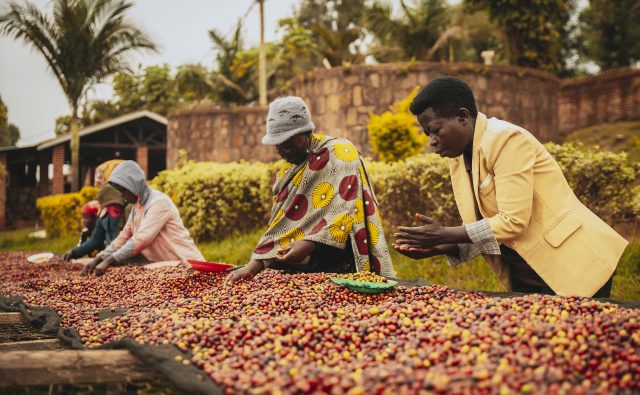
What are the biggest challenges farmers face when it comes to organic coffee production?
Ultimately, it comes down to sales and cost. 2025 was the most expensive year for coffee on record. Coffee prices hit an all-time high, with the C price reaching around $4.40 per pound. The previous record was about $3.11, before late 2024. In the United States, the largest coffee market in the world, tariffs were introduced by the government, which pushed prices even higher. And even if you’re not operating in the U.S., what happens there affects global pricing, simply because of the size of the market. As a result, coffee prices increased everywhere. The U.S. dollar was also extremely strong last year.
What ultimately drives everything in coffee is cash flow. Even when coffee prices are high, producers can struggle to maintain cash flow during the period between producing coffee and finally receiving payment. Last year in particular, producers faced many challenges.
Organic production has real costs. It isn’t free. Certification itself costs money, and producers cannot use pesticides, which means higher labor costs and more time-intensive, environmentally friendly practices. It is much cheaper and faster to spray chemicals. As prices rise and labor costs increase, this becomes even more difficult.
No two coffee-producing countries are the same, but last year we heard about labor shortages in many regions around the world. In some places, there simply weren’t enough people to pick coffee, which also contributed to higher prices. All of this makes the situation extremely complex.
At the end of the day, coffee producers are running businesses, and they have to make business decisions. They have to ask themselves: does it make sense for my business to invest in organic certification? Even if they decide to do so, there is a transition period. Producers must follow all the costly organic practices for several years before they are allowed to sell their coffee as certified organic, due to the certification and crop-cycle requirements.That waiting period has to make financial sense.
The cost of certification can be prohibitive. For a small producer, it often doesn’t make sense unless they are part of a larger organic cooperative. In that case, the costs and systems can be shared, and organic certification becomes more feasible. Similarly, for large estates that have full control over their operations, organic production can also make sense.
It sounds really complicated and it makes all these problems more difficult to understand or solve.
And if you’re a coffee lover, you naturally approach this from a consumer’s perspective and start asking yourself: What coffee should I buy? Do I go to the local coffee shop near me, where I have a great customer experience, where the staff are friendly, they remember me from last time, the muffins are great, and the coffee is delicious? Or do I go to a grocery store and buy organic coffee, where there’s no interaction and it feels more like buying salt? It’s not an easy choice. Which of those options is actually better?
Ideally, the best situation is when your local coffee shop serves the kind of coffee you truly believe in. That’s the sweet spot. And what I really love seeing is micro-roasters that offer a range of options, an organic coffee, an experimental lot, a Geisha, a dark roast. That way, anyone who walks in can have a great experience, whatever they’re looking for.
You’ve mentioned several times that organic is not a perfect system. Could you elaborate a bit more on that?
Monocrop agriculture is necessary. To feed the global population, we rely on monocropping. You need large areas of rice, corn, wheat, and soybeans. These four crops, in particular, tend to function best as monocrops grown over vast areas.
Coffee, however, doesn’t need to be grown that way. In fact, coffee thrives in biodiverse environments. Unlike those four staple crops, coffee can only grow in very specific regions between the tropics, near the equator. Supporting biodiverse agriculture in these regions matters enormously, because these areas include some of the world’s most sensitive ecosystems, the rainforests above and below the equator, where much of the planet’s carbon is stored.
The world is simply better when rainforests are healthy. The world is better when biodiversity is thriving. And coffee is one of the crops that can grow in those environments in a way that supports that balance.
Because of that, I believe supporting biodiversity is the right thing to do. And whether coffee is organic or not doesn’t necessarily tell you anything about biodiversity. Regenerative agriculture does. Regenerative approaches explicitly address soil health, crop diversity, and biodiversity as a system.
So organic can mean that a coffee was grown in a biodiverse way, but it doesn’t always. There’s “big organic,” and there’s “small organic.” And when most of us think about sustainability or organic farming, what we’re often really imagining is something closer to regenerative agriculture.
That’s why regenerative farming is so exciting right now, both in the United States and globally. At the same time, it’s important to be clear that regenerative agriculture is still extremely small. The movement is growing, but it remains very limited in scale.
So what you’re saying is that there can be a gap between how coffee is actually grown under organic farming practices and how people perceive or understand organic farming. In other words, the reality on the ground and the image people have of organic don’t always align.
Yeah, because organic coffee can still be grown in a monocrop system. You can have large expanses of coffee farms planted as a single crop, and even if they’re certified organic, that doesn’t necessarily support biodiversity. It doesn’t support migratory birds, and it doesn’t support local flora and fauna if it’s done that way but it can still qualify as organic.
And without doing in-depth research on every single coffee, it’s almost impossible to know the full reality. You’d completely exhaust yourself trying to evaluate everything at that level of detail. Regenerative agriculture, on the other hand, seems to lean much more toward the original spirit of what organic was meant to represent.
That makes sense. That leads us nicely into regenerative agriculture. Let’s move on to Regenerative Organic Certified (ROC). I saw the announcement on Royal Coffee’s website that you obtained ROC certification as a coffee importer in 2024. Could you briefly explain what Regenerative Organic Certified is, and why Royal decided to pursue this certification?
Today, roasters around the world know Royal Coffee for its strong commitment to certified organic coffee. And I think regenerative agriculture is really an extension of the organic movement.
It goes deeper than simply asking whether something is organic or not, and instead focuses on soil health, biodiversity, and crop diversification, three elements that are fundamental to the true meaning of sustainability.
In many ways, regenerative feels like a response, a desire to return to what organic was originally meant to be: sustainable, biodiverse systems that support birds, flora and fauna, and soil health. When we think about what is truly sustainable, organic plays a huge role. Organic done the right way is a critical part of that. Regenerative feels like a step in that same direction, but with stricter requirements and a more holistic framework.
This isn’t to say that organic is bad. As I’ve said, I’m a strong believer in organic, and the entire world can’t suddenly become regenerative overnight. But regenerative agriculture carries an exciting momentum, one that has the potential to inspire the next generation of sustainable business practices.
Regenerative coffee is still very small compared to organic, I don’t know the exact percentage, but it’s a tiny fraction. To put that into perspective, right now we might have around 500 organic coffees on our offer sheet, but only two that are regenerative. One is from Cecanor in Peru, a long-standing producer partner we’ve worked with for 20 or 25 years. The other comes from a group near Lima, through an exporter we’ve also partnered with for a very long time. That alone shows just how new regenerative coffee still is.
Personally, I think regenerative coffee is incredibly important, and I do believe we’re at a point where it has the opportunity to grow. Will it grow across the industry? I honestly don’t know. There are many challenges facing coffee businesses today.
What do you think about the market reaction over the past years toward regenerative coffee? Have roasters and buyers been excited about it? Do they appreciate the concept? Is demand growing?
In the United States, there are still only a handful of roasters working with regenerative-certified coffee. If you go to a high-end grocery store, you might see some regenerative products. But if you go to a mid-range grocery store, you likely won’t see any. And it’s still extremely rare to see regenerative coffee listed on the menu at a coffee shop in the U.S.
But it’s definitely growing. And I think a big part of that growth connects back to what I mentioned earlier, the original spirit of what organic farming was trying to achieve. Regenerative agriculture, as a movement, is expanding in the United States, and coffee is slowly becoming part of that conversation.
Actually, all of the regenerative coffees we offer sell very quickly. I think many roasters are curious about regenerative coffee because their customers are curious about it as well. However, it still represents less than 1% of our total volume. It shows just how small this segment still is. At the same time, that also means there’s significant room for growth.
Do you have any challenges selling regenerative coffee?
From our perspective as an importer, becoming involved with regenerative coffee isn’t particularly difficult, but it mainly involves some additional paperwork. The real challenge has been finding regenerative producers. That’s been extremely difficult, simply because there is so little regenerative coffee available on the market. I think there may only be around ten producers globally who are certified regenerative for coffee.
I think producers are simply exhausted. For them, every new certification means more work. When Fairtrade first emerged, they had to adapt to Fairtrade. When Organic came along, they had to adapt to Organic. Then Rainforest Alliance—okay, that too. If you want to sell to Japan, you need one organic certification. If you want to sell to Norway, you need another. So they do that as well. And now, on top of everything else, there’s regenerative.
It can be overwhelming and exhausting, especially because in many cases the standards behind these certifications are very similar. The main difference is often just how the information needs to be reported. At the end of the day, it’s simply more work for producers.
Because of that, I think the global coffee market needs to clearly demand more certified coffee. If that demand exists, more producers will enter the market and pursue these certifications.
And I think one thing many people tend to overlook is that these are people running businesses. They’re making business decisions, and those decisions have real consequences.
Yeah, I see. It really feels like this isn’t an easy challenge to overcome. But I do hope this momentum continues to grow. From your perspective, how do you think producers can overcome these challenges? And do you have any thoughts on what might help this movement move forward?
Yeah, this is tough. I don’t really know the answer. What I can say is that in a very complicated market, regenerative agriculture is an exciting development right now. If you’re innovative and interested in new ideas, regenerative practices can help you differentiate yourself, especially if you’re a coffee producer who is already doing the right things.
Would I recommend that all coffee producers immediately pursue regenerative certification? No. It’s still very new, and it’s not the right fit for everyone. But it is exciting. There are roasters out there who will be interested in trying your coffee specifically because it’s regenerative.
And if you’re in the business of selling coffee, differentiation matters. Anything, even a small thing, that helps you stand out can be important. In that sense, this brings us back to the earlier conversation about micro-roasters. Why aren’t many micro-roasters focused on organic? Because they want to differentiate themselves. And similarly, why might a producer choose to pursue regenerative certification even if they’re already organic? Because it offers another way to differentiate.
What do you think about the current status of organic or regenerative coffee in Japan?
Taking a broader view of the food movement, I’d say I’m an expert in the United States and still very much learning about Japan’s food system. In the U.S., the organic food movement is fairly large. Regenerative agriculture, on the other hand, is still quite small though it is growing. While I don’t know the exact percentage, organic-certified products are widely available across the U.S. You can find organic coffee and food in virtually every city, and even small convenience stores will usually carry at least some organic items. This isn’t just about coffee, this applies to many things.
I don’t know enough yet about Japan to speak definitively, but I do think it’s still a growing movement here. If you look at all the micro-roasters in Japan, you’ll find that very few of them work with organic coffee, and even fewer with regenerative coffee. That raises an interesting question about the future of this market: what is actually going to drive the growth of specialty coffee? For me, it’s essential that this growth is guided by a sustainability-driven approach.
But if you’re in Japan, the yen is very weak right now. Coffee is traded in U.S. dollars, and coffee prices reached historic, all-time highs this year, levels we’ve never seen before. When costs rise like this, special initiatives can sometimes be delayed, including investments in sustainability.
If there are any roasters in Japan who are interested in purchasing organic or regenerative coffee, would it be okay for them to reach out to you directly?
Of course. Yeah, I’m happy to help.
To wrap things up, could you share the direction you see the company heading over the next few years? What are Royal Coffee’s longer-term goals or priorities, and how do you think the company will continue to evolve?
I think continuing to support the producers who have supported us over the years is incredibly important. One thing we’re especially proud of is that we’ve been buying coffee from some producers for 30 or even 40 years, and we want to see more of those long-term relationships.
At the same time, we have to keep innovating. We need to introduce new producers and new kinds of coffee. Five years ago, for example, there were no co-fermented coffees on our offer sheet. Now we have four different co-fermented coffees available. Three years ago, there were no regenerative coffees. Today, we have five regenerative coffees available for purchase.
As the market continues to evolve, we have to adapt as well. When it comes to organic coffee, that will always be the backbone of who we are. Offering a wide range of organic-certified coffees, across many different price points and from many different origins, is extremely important to us. If you look at our website, you’ll probably feel overwhelmed by how many organic coffees we offer.
I hope that one day regenerative coffee reaches a similar scale. For now, we’ll continue to promote regenerative and grow alongside the market. We’re not the only importer working with regenerative coffee but there are others as well, but it’s still a very new trend, and one we’re genuinely excited about.
We’re excited about new ideas in general. And when an importer whether it’s Royal, a company in Japan, or anyone else steps in, it makes it possible for roasters and consumers to try new things. The importer takes on the risk, and hopefully, that risk pays off someday.

Latest Articles by Royal Coffee
IEEPA Tariff Refunds: Where Royal Coffee Stands
CBP's new CAPE refund portal is live, and Royal Coffee has filed its Phase 1 claims. No refunds have been issued to date, and timing at the customer level remains...
Understanding The IEEPA Tariff Refund Process: What Coffee Roasters Need to Know
Recent court rulings around tariffs imposed under the International Emergency Economic Powers Act (IEEPA) have created understandable confusion across the coffee industry. In this article, we break down what the...
Green Coffee Is Exempt From the New Tariffs. Here’s What Roasters Need to Know
Two major trade actions landed in under a week, and they created a lot of noise. Here’s the piece that matters for green coffee buyers: unroasted coffee (green) is explicitly...