
Crown Jewel Costa Rica Anaerobic Washed Carlos Fernández Morera
39553-1 – SPOT RCWHSE$263.08 per box
Boxes 44
Warehouses Oakland
Flavor Profile Lime, cinnamon, passion fruit, raspberry, and apricot
Add to your artisan.plus account: 
 Download PDF
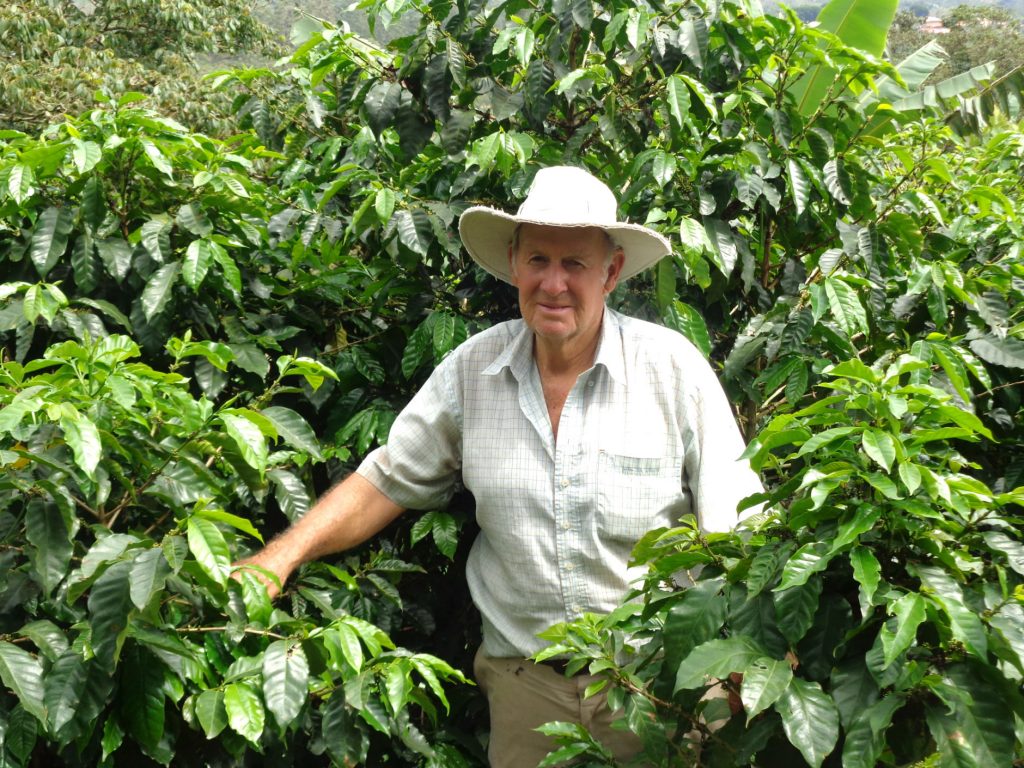
Costa Rica El Diamante Anaerobic is sourced from a El Diamante, which is owned and operated by Carlos Fernández Morera and his family.
22lb Boxes
Spot



Overview
Overview
This is a high-intervention depulped and anaerobically fermented coffee from Alajuela, Costa Rica, produced by Carlos Fernández Morera on the Diamante plot of his farm, Finca El Cerro.
The flavor profile is like a scoop of Neapolitan ice cream, with vanilla, cinnamon, and ripe nectarine sitting alongside lavender florals and notes of pink lemonade and pink grapefruit, all wrapped in a creamy, deeply spiced texture.
Our roasters found this Costa Rican anaerobic wants a long, slow Maillard to build its sweetness.
When brewed, we found it to be very user friendly and thought it would be a great addition to any bar or home espresso setup.
Taste
Taste Analysis by Isabella Vitaliano
Returning to the Crown Jewel menu this week is one of our longest standing and most unique coffees, an anaerobic Costa Rican coffee from award-winning producer Carlos Fernández Morera.
With flavors of vanilla ice cream, cinnamon, and ripe nectarines, it’s like Neapolitan ice cream; it has everything you want in three distinct sections but can blend together perfectly. Sweet and fruity, creamy vanilla, and a deep spice texture are all here. There are also some high florals like lavender, which pair well with some other lemonade flavors the team was getting.
To me this coffee felt really pink; the soft pink in a Starburst, pink lemonade, or even some pink grapefruit. It’s such a one-of-a-kind flavor profile. It stands out in the crowd and would shine on a pour over station. Not only is it a star, but it can also handle the versatility of espresso and batch brew as well.
Source
Source Analysis by Chris Kornman
There’s so much about Carlos Fernández Morera’s coffee to discuss: farm and farmer history, processing methods, the prestige of a Cup of Excellence top 5 finish in 2017… but really the start of this conversation has to be about its flavor. It’s at once immensely unique, immediately delicious, and irrepressibly nostalgic. Undeniable notes of gingerbread and cinnamon toast are its hallmarks, eliciting nearly unanimous descriptors. These top notes are accented by a sugary sweetness and a fruitiness clean enough to integrate seamlessly and bold enough to stand out in a complex and thought-provoking sensory landscape. Year after year, it continues to be an experience unlike anything I’ve had with a cup of coffee.
Carlos Fernández Morera is an experienced farmer. He is approaching his 70th season growing coffee in San Rafael de San Ramón, where his family has lived since 1895. His deep connection to his trees and the soil he works with is evident in the way he talks. “Coffee is a very grateful crop,” he says. “If you dedicate a little love, it responds very well… The earth is a living element, we must take care of it, pamper it, so that it transmits to the coffee plant all its force.” Morera’s plot of earth is called Finca El Cerro. Many of his four grown children and nine grandchildren help on the estate; his eldest works directly with administration, his youngest works for the export brand, Café de Altura, and his oldest grandson is an agronomist.
The plot of the farm where this award-winning lot originates is called Diamante (“the Diamond”). It contains Caturra and Catuaí cultivars, though other varieties more resistant to rust have been planted in recent years in other areas of El Cerro. After pulping the coffee undergoes a sealed-tank anaerobic fermentation process (learn more about anaerobic and carbonic fermentation methods here). A selection of mucilage and a little water are added to the mix, and the slurry is closely monitored for pH, temperature, brix, and a host of other variables. Under a watchful eye, the high degree of environmental control this allows contributes immeasurably to the coffee’s flavor. Thereafter the lot is dried for three days on a patio before moving to raised beds for another eighteen days of drying.
Green
Green Analysis by Isabella Vitaliano
Anaerobically fermented and then fully washed, this green coffee has a distinct smell of florals and herbs. Density is quite high for a Central American coffee at 734 m/L. Moisture content and water activity are both within average ranges. Screen size is right in the middle of our screen size range with 75% of the coffee in the 19-17 range. While high heat is recommended by our team for those high-density coffees, be sure it doesn’t take off at the end of the roast. Check out the roasters’ notes for more details on how this coffee handles itself in the roaster.
Caturra are commonly grown in Costa Rica, is a Villalobos and Villa Sarchi locally adapted mutations. It’s a dwarf tree, and Villa Sarchi is the pure arabica parent of the Sarchimor group of hybrids.
Diedrich
Diedrich IR5 Analysis by Doris Garrido
Gingerbread spice. Vanilla ice cream. A silky, round mouthfeel that tastes like a dessert in a cup. Ripe fruit and a touch of nectarines around it. A clean Costa Rican natural, sweet comforting, no funk.
To roast this coffee, I started by warming the drum to a medium temperature — in this case, 424F — and let it soak for a minute before adding gas. After one minute, I opened the gas to 100% and let it push through to Maillard until I hit 311F then dropped the gas to zero. My goal at this point was to reach Maillard and then slow things down, since this coffee has a ton of sweetness in it, and that’s exactly what I wanted to showcase.
Color change happened at 319F, and I started opening the airflow, first to 50%, then fully open. I brought the burners back at 370F to keep the roast moving. The coffee hit first crack at 383F, and I aimed for a slightly longer development; my yellowing phase lasted 3:35, so I wanted to let it caramelize a bit more. I finally dropped the coffee at 398F.
Very aromatic on the cupping table. Sweet aromas of chocolate. On the palate: gingerbread, ripe fruit, with a round, smooth, silky texture. My approach here was to bring some of the coffee’s natural acidity, which shows up as nectarines and pink lemonade, while still capturing the clean, smooth sweetness typical of natural process.
Aillio
Aillio Bullet R1 IBTS Analysis by Evan Gilman
We use the RoasTime app and roast.world site to document our roasts on the Bullet. You can find our roast documentation below by searching on roast.world, or by clicking on the link below. Take a look at our roast profiles below, as they are constantly changing!
A classic favorite returns! This coffee always lands around the same time: late enough in the summer to remind me that fall is coming, but early enough for the Bay Area’s persistent June gloom to make this a comforting cup on a cloudy morning. Maybe at this point it’s July gloom, but who’s counting?
I knew from experience that I could hit this coffee with plenty of heat, but I decided to take the middle path and charge at 455F, with P8 power and F2 fan speed. At peak rate of change, I reduced power to P7 and increased fan to F3, quickly deciding that F4 might be a nice move in order to draw out Maillard a bit. My only other move was to increase fan once more before first crack to F5, and use P6 and F6 to eke out just a touch more post-crack development and smoke abatement.
This coffee was incredibly easy to roast, with a few notable attributes that seem to set it apart from other coffees. First off, the crack was very gentle, and I may have marked it just a touch late even though my ear was to the rail. Secondly, this coffee doesn’t take on color easily. Even at 395F, the coffee was looking a bit light, though I know again from experience that this coffee’s sugars will still taste phenomenal at a lighter color metric. Crack continued apace as the coffee left the drum for its new (temporary) home, the cooling tray. The way it smelled, I can assure you it’s going to find a new forever home (my stomach) very quickly.
Indeed, this was a cup redolent of lemon, cane sugar, and of course cinnamon toast. As the cup cools, complexity ramps up into a symphony of vanilla and spice, with quite a morish (thanks, British Bakeoff) aniseed sweetness that leaves a very mouthwatering aftertaste. If I were to do anything different in roast, it would be to draw out Maillard more than I did, and perhaps even take the coffee further into post-crack development to make this coffee a bit more custardy.
This coffee is an absolute classic, and I might try to hold onto some green until the holiday season to have a coffee that really fits the weather. Regardless, you’re going to enjoy this one with a pastry or after dinner. A complete confectionery experience.
You can follow along with my roast here at roast.world: https://roast.world/egilman/roasts/I7457PdzqlUbpJWGw6sFQ
IKAWA
Ikawa Pro V3 Analysis by Isabella Vitaliano
Our current Ikawa practice compares two sample roast profiles, originally designed for different densities of green coffee. The two roasts differ slightly in total length, charge temperature, and time spent between color change in first crack. You can learn more about the profiles here.
Such an unexpected take from a Costa Rica natural, we love this pinkish toned anaerobic coffee. With a high density in the 730 range, I would expect this coffee to taste great as a high density roasted coffee. On the low density roast, it had some pomegranate notes with sweet spices and milk chocolate. The high density roast was where this coffee truly shined, though. Think apricot, lavender and mangosteen. I really loved the texture and flavors of the high density roast, I recommend trying that profile out before anything else. Happy roasting!
You can roast your own by linking to our profiles in the Ikawa Pro app here:
- Roast 1: Low Density Sample Roast
- Roast 2: High Density Sample Roast
Espresso
Espresso Analysis
After a few shots, I found this coffee does have multiple routes to a varied, delicious dial, but first why not lean into what it does best: cinnamon! The first shot I tasted, I did a double take. Surely that couldn’t be from the coffee alone, but alas, cinnamon is decidedly the taste on everyone’s lips. After some adjustments I found a balanced profile that highlighted our cinnamon star without being just that. This shot had a 20 gram dose, yielded 39 grams, and pulled in 33 seconds. Flooding the palate with rum raisin ice cream flavors, lemon tea, and cornbread with magical floral top notes the likes of black licorice and tonic water.
With my next dial, I wanted to pull more fruit to the forefront, and I was not disappointed. This dial used a 17.5 gram dose yielding 36 grams, and taking a total of 32 seconds. This shot really was a lovely counterpart to my first. Now it was truly fruity, in the realm of cherry cordial, gooseberry, and nectarine. Also, the cinnamon was dialed way back, and in its place some delightful savory details like butter, sesame, and cedar presented themselves.
In conclusion, my cinnamon queen is so much more. I learned to not judge a book by its cover. She contains multitudes, wonderful fruits, floaty florals, and a savory depth that drew me in. Additionally, I found this coffee to be very user friendly and think it would be a great addition to any bar or home espresso setup!
Related Coffee
Honey, strawberry, toffee, apricot, blackberry
Oakland 39 Boxes
Crown Jewel Ethiopia Anaerobic Natural Banko Chelchele
39056-1 – SPOT RCWHSE
Honey, strawberry, toffee, apricot, blackberry
Spot
39 Boxes
$271.04 per box

Black Tea, caramel, lemongrass, passion Fruit, apricot
Oakland 14 Boxes
Crown Jewel Burundi Honey Peaberry Heza Washing Station
38863-1 – SPOT RCWHSE
Black Tea, caramel, lemongrass, passion Fruit, apricot
Spot
14 Boxes
$255.49 per box
White Tea, basil, biscoff cookie, cacao, candied fruits
Oakland 12 Boxes
Crown Jewel Bolivia Organic Washed Yulissa Chambi
39122-1 – SPOT RCWHSE
White Tea, basil, biscoff cookie, cacao, candied fruits
Spot
12 Boxes
$220.94 per box
Banana Bread, plum, rosemary, cocoa Nib, and toffee
Oakland 42 Boxes
Crown Jewel Yemen Anaerobic Natural Sharqi Haraz Cooperative
39818-1 – SPOT RCWHSE
Banana Bread, plum, rosemary, cocoa Nib, and toffee
Spot
42 Boxes
$710.39 per box