
Crown Jewel Ethiopia Anaerobic Natural Banko Chelchele
39056-1 – SPOT RCWHSE$271.04 per box
Boxes 20
Warehouses Oakland
Flavor Profile Honey, strawberry, toffee, apricot, blackberry
Check out our Guide to Ethiopian Coffee Grades
Add to your artisan.plus account: 
 Printer Friendly PDF
This is a smallholder-grown, centrally processed natural from Ethiopia’s Gedeb district.
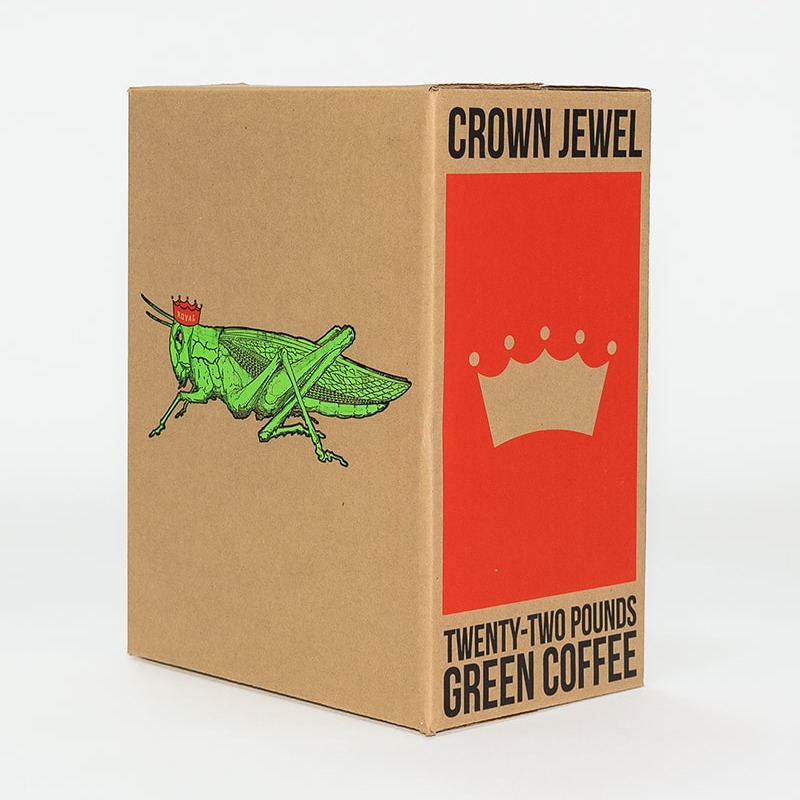
22lb Boxes
Spot

Overview
Overview
This is a high intervention anaerobically fermented natural coffee from Chelchele, Ethiopia, produced by smallholder farmers organized around the Banko Chelchele washing station and the organization EDN, who have affectionately dubbed it “supernatural.”
The flavor profile is clean and fruit-forward, with strawberry, concord grape, pomegranate, and blackberry taking center stage, supported by hints of rose jam, cacao nib, and sweet citrus.
Our roasters found the coffee has a tendency to rapidly absorb heat in the moments preceding first crack and suggest moderating your roast to avoid scorching.
When brewed, our baristas were charmed by the coffee’s flavorful character and noted ease of extraction, generally preferring coarser grind sizes and lower doses for best clarity.
Taste
Taste Analysis by Isabella Vitaliano
Supernatural does not always mean superscary; in this case, it equates to a lively coffee with tons of personality and enough berry notes to stock your fridge, freezer and then some. Fruit notes of concord grape, pomegranate, hibiscus, Bing cherry, mandarin orange, blackberry… it’s endless, really. Texturally this coffee is not weighed down at all with all the fruit notes. It retains a tannic bright quality while also having rounded tones of rose jam and wine. It’s crazy how an extended fermentation can really nurture all these fruit notes. Some other flavors the team got in the cup were velvety notes, silky, cacao nib, cream cheese, raisins, baklava, and capri sun.
Tasting this coffee is almost like watching a cartoon with more subdued color grading of Rugrats or Courage the Cowardly Dog (I’m a 90’s kid). It tastes like purple; an animated, deep-hued plum or grape color. Borderline silly in its fruit notes, at the very least it has a nostalgic feeling of syrupy sweets from the early 2000s.
Over the past couple of years, much of this coffee has gone to the China market where the flavor profile is highly sought after. And, for as untechnical as the word supernatural is for the producers, it sure does make it great for marketing. Some of the first of its kind to be offered to our U.S. clients, you have the opportunity a part of a group that is on the cutting edge of processing and the power of possibility from our trusted sourcing partners in Ethiopia.
As much as it is a fruit explosion, it still remains precise and welcoming profile. The unconventional combo of sundried natural and anaerobic fermentation exposes the new heights that can be created when there is trust and longstanding relationships between folks in every step of the supply chain.
Source
Source Analysis by Charlie Habegger
This is a smallholder-grown, centrally processed natural from Ethiopia’s Gedeb district. This corner of Yirgacheffe (officially the Gedeo Zone) is well-known for being dense with processors and having a uniquely heady, perfume-like terroir that sets it apart from the rest of Yirgacheffe. “Supernatural” is the name given to coffees like this whose cherry is fermented for a period of time prior to drying on raised beds, giving the final cup an acidic, fruity kick that conventional naturals typically can’t achieve.
Gedeb’s Significance and Coffee Profiles
The district of Gedeb takes up the south-eastern corner of Ethiopia’s Gedeo Zone—a narrow section of plateau dense with savvy farmers whose coffee is known as “Yirgacheffe”, after the zone’s most famous district. Gedeb, however, is a terroir, history, and community all its own that merits unique designation in our eyes. Coffees from this community, much closer to Guji Zone than the rest of Yirgacheffe, are often the most explosive cup profiles we see from anywhere in Ethiopia. Naturals tend to have perfume-like volatiles, and fully washed lots are often sparklingly clean and fruit candy-like in structure.
The municipality of Gedeb itself is a is a bustling outpost that links commerce between the Guji and Gedeo Zones, with an expansive network of processing stations who buy cherry from across zone borders. These processors would argue (and we would agree) that their coffee profiles are not exactly Yirgacheffe, but something of their own. The communities surrounding Gedeb reach some of the highest growing elevations for coffee in the world and are a truly enchanting part of the long drive into Guji. Banko Chelchele is one of the communities in central Gedeb and includes numerous local cooperatives, as well as independent processing stations of various types, like this one.
EDN Ethiopian Coffee & Processing
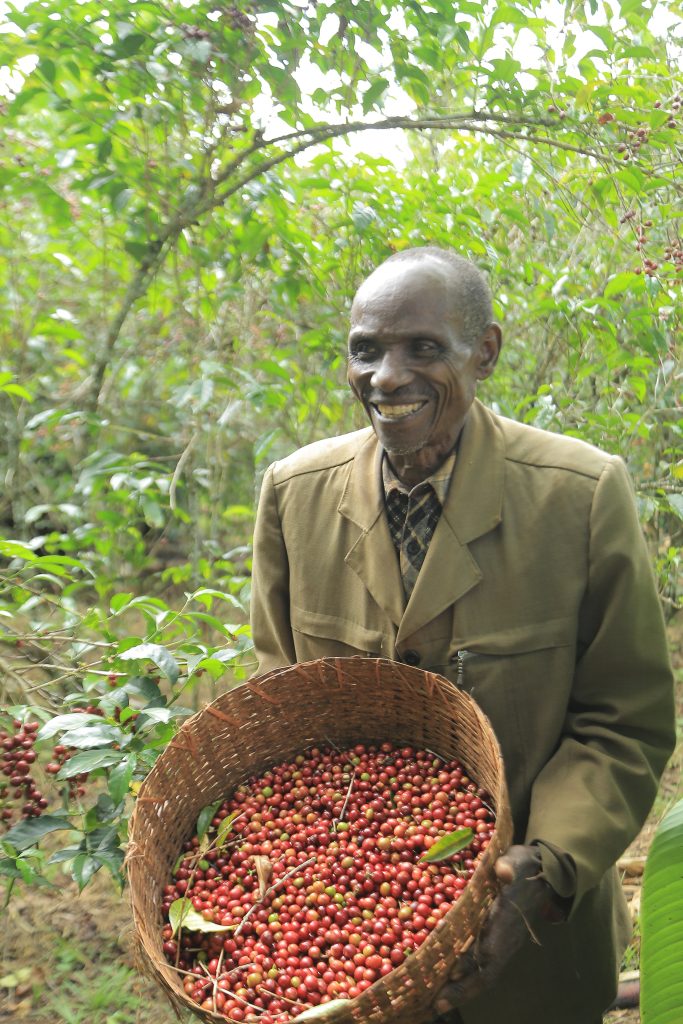
EDN Ethiopian Coffee is an independent processor and exporter of coffee with processing sites in Guji, Gedeb, and Sidama. The Banko Chelchele site services the coffee produced by a few hundred outgrowers, each with an average of 1-2 hectares of diversified farmland. While not certified organic, farming methods among smallholders here have traditionally favored organic and regenerative practices, and all produce subsistence crops for the families who live on site.
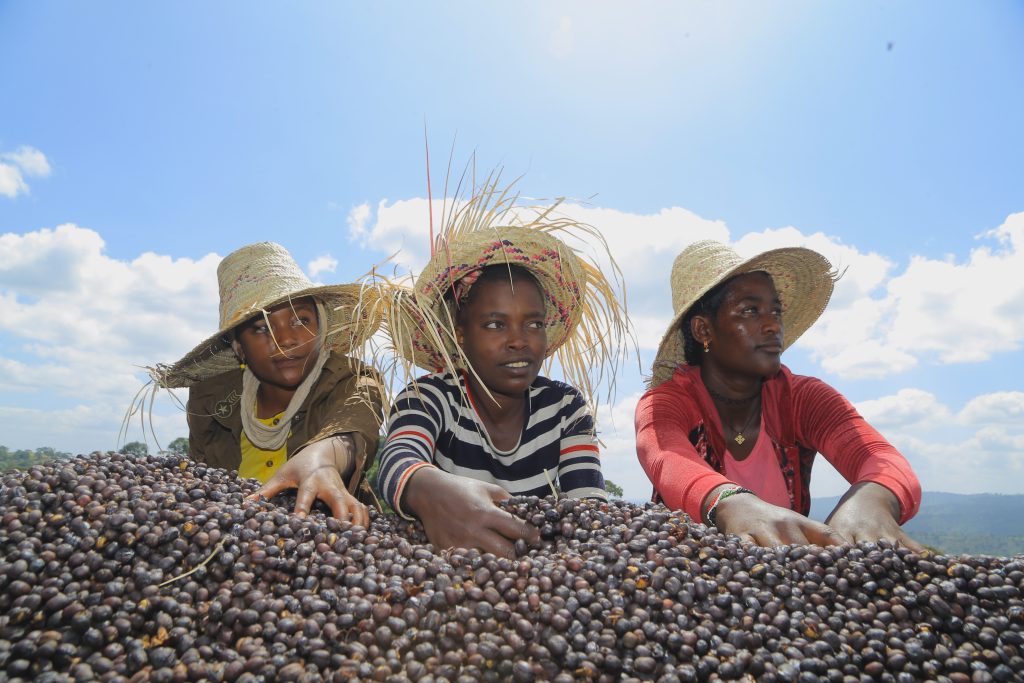
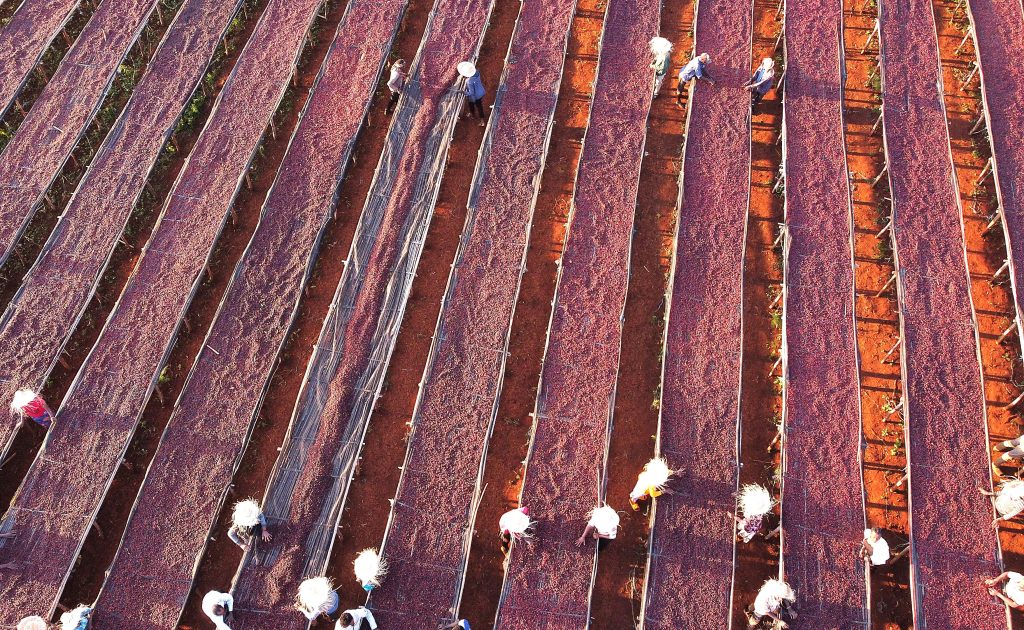
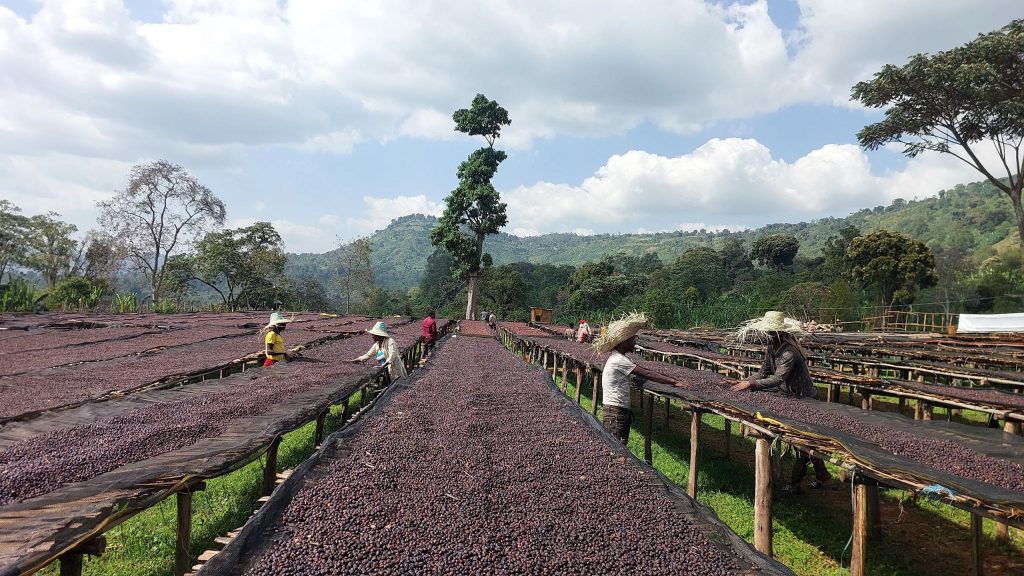
EDN processes coffee both as sundried natural and anaerobically-fermented “supernaturals”. “Supernaturals” such as this one are received at the processing station in the form of fresh-picked cherry. Cherry is sorted for defects, uniform ripeness, and color and then transferred to the site’s fermentation tanks to ferment anaerobically for 24 hours in full cherry. After this step, cherries are moved directly to raised screen beds to dry in the sun. Drying takes 2-4 weeks depending on the local climate. After the coffee is fully dried, it is transported to a local warehouse where it is rigorously assessed for quality and conditioned until it can be transported to Addis Ababa for final milling and export.
During the harvest months the Chelchele site employs over 200 people to manage the continuous rotating and sorting of sundried cherry, as well as intake, payment, security, and inventory operations. All workers and their families receive educational resources, full daily meals, and on-site lodging during the harvest. They are also pursuing sustainability and social governance certifications to expand their global market.
Green
Green Analysis by Isabella Vitaliano
Ethiopian landraces like this one often have higher density and slightly smaller beans. The green specs on this supernatural coffee partially reflect that, with generally small bean size, but unusually it has especially low density, likely in part due to the additional processing and fermentation. The water activity is slightly above normal, with moisture content in average ranges. The slightly higher water activity could indicate that the coffee could develop color a little quicker than usual, as water is a catalyst for the Maillard reaction. The low density likely dictates a gentler approach with heat throughout the roast, particularly at or around first crack.
In the green you’ll notice a fruity aroma, and the coloration has a distinct yellow/green variation that identifies it as a natural processed coffee. Specs are clean, and the cups are too! Although this coffee is bit of a fruit bomb, it has a really lovely clarity and decadence to the cup.
Loring
Loring S15 Falcon Analysis by Doris Garrido
Besides the cool name, we received one of the first batches of these Supernatural coffees just in time for us to show at Expo this past April, and it ended up being the most popular coffee at the traders’ booth. Royal selected a few lots from Banko Chelchele, and this particular lot was chosen for our Crown Jewel program.
There’s a lot to say about this coffee. Yes, it’s super delicious, super fruity, and super sweet, highly recommended! But let’s focus on the roasting.
This coffee loves to fly.
Starting from the beginning of the roast, I wasn’t timid with the charge temperature. I pushed the drying phase because my main goal is always to reach Maillard as soon as possible, then find the sweet spot to start stepping down the power… That is basically how I love to approach Ethiopian coffees.
For the couple of roast I’m sharing here, I used the Loring Falcon S15 with an 18 lb batch size (about 50% capacity).
The drying and yellowing phases went exactly as planned. The coffee took the heat remarkably well as it reached Maillard, changed color, and rode right through yellowing. I made an early power drop first at 320°F and then another at 340°F, settling the gas at 70%, which kept the yellowing phase right on track.
Now, this is where the party started, right as we approached first crack and post-development.
For this part of the roast, watching the numbers closely became crucial. It took me a couple of attempts to dial in the exact profile I was looking for. This coffee will be served as espresso here at The Crown, so I wanted to tweak the roast specifically for that format. It’s not that I roast exclusively for espresso; our green selections are already special as they are, and our goal is simply to highlight that inherent quality, but espresso accentuates every detail of the roast, so I needed a super clean finish.
As I mentioned, this supernatural coffee flies, and it flies high, so you have to be careful. Leading up to the first crack on my first roast, I saw the RoR spike coming, but I didn’t take it seriously enough. I regretted that! The rate of change jumped first at 385°F, then again at 395°F, and my bean temperature started soaring. I cut all power as fast as I could, but I couldn’t stop the momentum. I ended development at 1:14 with a finish temperature of 419°F. I was sweating. This wasn’t what I wanted.
I cupped that first roast immediately, it was tasty: sweet, fruity, with lots of berries, but it had a grainy finish. Not quite toasty, but right on the line. It was okay, but this coffee deserved more than “just okay” roast. I asked my coworkers to taste it with me, and we agreed I should try again.
I set the Loring up for a second roast. Same start, same drying phase, but this time I caught the RoR bumps earlier to drop the power ahead of time. It worked better, allowing me to drop the finish temperature by a few degrees. When we cupped it again, the difference was noticeable, a much cleaner finish. The roast was good, but I knew it could be even better.
My third roast was the winner. Learning from the previous runs, I caught the exact moments the RoR started to bump and didn’t hesitate to cut the power. I made earlier drops at 365°F, followed by a few more adjustments right before the first crack that brought the gas down to 30%, before cutting power completely at 408°F. I developed the coffee just a touch longer and dropped the batch at 413°F.
Even with a relatively high end-temperature, the notes on the cupping table were absolute magic:
Floral, jasmine, baklava, rose jam, cream cheese, tamarind, hibiscus, blackberry, pomegranate. An overly sweet coffee, intensely fruity, with a buttery, silky texture, creamy body, and tangy acidity
An overall excellent Supernatural coffee. There’s no doubt this coffee will be a favorite at bar: sweet, silky, fruity, and velvety. Highly recommended! Just be careful, this Supernatural flies, on the roaster and off the shelves.
Aillio
Aillio Bullet R1 IBTS Analysis by Evan Gilman
We use the RoasTime app and roast.world site to document our roasts on the Bullet. You can find our roast documentation below by searching on roast.world, or by clicking on the link below. Take a look at our roast profiles below, as they are constantly chang ing!
Absolutely stunning fruits are a hallmark feature of the supernatural, a mark I was introduced to through my coworker Peter who began contracting this coffee for the Chinese market. It was a runaway hit, with folks creating queues at the cupping table at Hotelex Shanghai, as well as in our order book. It’s easy to see why, with the clear fruitiness and unabashedly bright acidity of this coffee.
Generally, I expect Ethiopian coffees to be higher density, with plenty of resistance to heat application. Long story short, this is not one of those coffees. I started with what I thought was a reasonable 464F, with P8 power and F2 fan speed. I should have taken it as a sign that my lowest temperature after dropping the coffee into the roasting chamber was 212.5F, but alas I did not. At turning point, I did introduce fan speed to F3, and at peak rate of change, reduced heat application to P7. In a fairly early move, I increased the fan speed further to F4 at 347F, a bit after Yellowing began. At first crack, I reduced power to P6 and increased the fan to F5, though perhaps these moves could have come a little sooner. The roast began to take off leading up to first crack, and while I was able to temper its rise, it still felt a bit out of hand.
This really didn’t come through in the cup, though. As most of us know, high-quality coffees are very forgiving. The resultant cup was not only bright and fruity, but also heavily textured, with favorable comparisons to red velvet cake. There was lemony brightness and cooked berry sweetness, and the only thing missing from my roast that I saw in other roasts was a zippy cleanliness. This roast left a heavy chocolate flavor on the palate, something I’m just as happy with.
So while this coffee is flexible, I do recommend taking it a little slower through the roast cycle than I did here. It has a ton of potential outside of whatever your usual roast might be, and I’d dare say it’s worth experimenting with your heat application and airflow. I Want to Believe you won’t be disappointed!
You can follow along with my roast here at roast.world: https://roast.world/egilman/roasts/zL_0ONM8SvN90khbGkdqM
IKAWA
Ikawa Pro V3 Analysis by Isabella Vitaliano
Our current Ikawa practice compares two sample roast profiles, originally designed for different densities of green coffee. The two roasts differ slightly in total length, charge temperature, and time spent between color change in first crack. You can learn more about the profiles here.
A dynamic and transformative coffee, its high density makes it a perfect candidate for the HD profile but I was curious how it would taste in both profiles. The low density roast this coffee was really sweet, notes of Ferrero Rocher and endless fruit were in the cup. The high density coffee had a nicer acidity that made this coffee truly stand out among the rest.
You can roast your own by linking to our profiles in the Ikawa Pro app here:
- Roast 1: Low Density Sample Roast
- Roast 2: High Density Sample Roast
Brew
Brew Analysis by Meri Jane Smith
Okay, wow, this coffee has to be supernatural because it’s truly out-of-this-world delicious! I’m not kidding. I haven’t had a coffee as delightfully sweet and juicy as this in a long time. Most of my tasting notes had something to do with either a dessert, a sweet drink, or some kind of candy, all while staying nice and balanced without being too overpoweringly fruity or funky. I actually had two different roasts of this coffee to work with, one being just slightly darker, and they were both really great. All the brews I made were tasty in their own ways, so it was hard to narrow it down to two recommended recipes, but I think I chose the two best ones… Let’s get into it!
First, we have a brew that I made using the lighter of the two roasts on the V60 brewer. I started out with a lower dose, going with 18g of coffee at a moderately coarse grind. It had a brew time of about 3:45, a TDS of 1.36, and an extraction percentage of 19.83%. For me, at first sip it tasted like a lemon-lime sports drink, followed by notes of guava, strawberry jam, canned peaches, lemongrass, green grape, honey, and some kind of sweet, flakey pastry. The rest of the team found some additional notes of toffee, marmalade, grape jelly, sugar cookies, and elderflower.
This next recipe was made with the slightly darker of the two roasts, and honestly, this was my favorite overall. For this one, I switched over to the Kalita Wave, bumped up the dose to 19g, and ground the coffee more coarsely. It had a slightly faster brew time of about 3:10, and the TDS was a bit higher, coming out at 1.45. The extraction percentage, however, was a little bit lower, dropping down to 19.62%. Initially, the flavor kind of reminded me of those classic raspberry jam thumbprint cookies, just like my mom used to make when I was a kid. I also found notes of pomegranate, honey cake, blackberry ice cream, blue raspberry hard candy, and caramelized sugar. The rest of the team found notes of Creme Brulée, blackberry jam, rose, apricot, cherry limeade, jasmine, and caramel. Overall, this one had the best balance of candy and dessert sweetness and the most well-rounded flavors.
Honestly, this is another one of those coffees that’s literally just that good, and no matter what way you decide to brew it, you’re probably going to find something you like about it. From what I picked up, this coffee tends to favor a coarser grind and a low to medium dose. It tasted great on both the V60 and the Wave, so I don’t really have a suggested brew device. I’d say, with the V60 and lower dose I noticed brighter, candy-like flavors, while the higher dose on the Wave brought out more of those sweet, dessert-like notes. All in all, this coffee really is supernaturally delicious… Enjoy! 🙂
Espresso
Espresso Analysis by Marie de Courcy
We’ve been receiving a lot of wonderful coffees from Ethiopia this summer at the Crown. This “supernatural” from the Banko Chelchele washing station is really something special, full bodied and fruity with savory and spicy notes on the finish.
My first recipe used a dose of 18g, with a 36g yield pulled at 30 seconds. This shot was full bodied, sweet and bright with some nice savory notes on the finish. I tasted orange juice, toasted walnut, salted chocolate and coconut. The mouthfeel was slightly syrupy and it was very pleasant to sip.
My second recipe used a dose of 19g, with a 41g yield pulled at 31 seconds. This shot was also fairly full bodied but with much bolder flavors; a bit sweeter and warm leaning into its spicier notes. I tasted pistachio, orange creamsicle, cardamom and clove. The higher dose made this shot feel slightly heavier, but the fruity acidity really came through with the higher yield.
This coffee works great on espresso, bright and sweet with plenty of complexity. A lower dose and low yield will give you something full bodied and classic in profile for a natural Ethiopian coffee. A higher dose and higher yield really opens up more of those warm spicy flavors.
Related Coffee

Lemongrass, blueberry, jammy, marzipan, nectarine
Oakland 18 Boxes
Crown Jewel Ethiopia Anaerobic Natural Lemongrass Co-ferment Banko Chelchele
40655-1 – SPOT RCWHSE
Lemongrass, blueberry, jammy, marzipan, nectarine
Spot
18 Boxes
$351.68 per box
Chocolate, strawberry, stone fruit, baking spice, and strawberry
Oakland 68 Boxes
Crown Jewel Kenya Natural Ndiaini Factory Nyeri
16TY0014 – 39976-1 – SPOT RCWHSE
Chocolate, strawberry, stone fruit, baking spice, and strawberry
Spot
68 Boxes
$248.35 per box

Lavender, lemon, strawberry, floral, and berry jam
Oakland 92 Boxes
Crown Jewel Uganda Natural Kigezi Valley
39619-1 – SPOT RCWHSE
Lavender, lemon, strawberry, floral, and berry jam
Spot
92 Boxes
$267.84 per box

Berries and cream, lemon, raspberry, red wine, and allspice
Oakland 80 Boxes
Crown Jewel Uganda Anaerobic Natural Kigezi Valley
39620-1 – SPOT RCWHSE
Berries and cream, lemon, raspberry, red wine, and allspice
Spot
80 Boxes
$276.91 per box