
Crown Jewel Uganda Anaerobic Natural Kigezi Valley
39620-1 – SPOT RCWHSE$276.91 per box
Boxes 54
Warehouses Oakland
Flavor Profile Berries and cream, lemon, raspberry, red wine, and allspice
Add to your artisan.plus account: 
 Download PDF
.
22lb Boxes
Spot



Overview
Overview
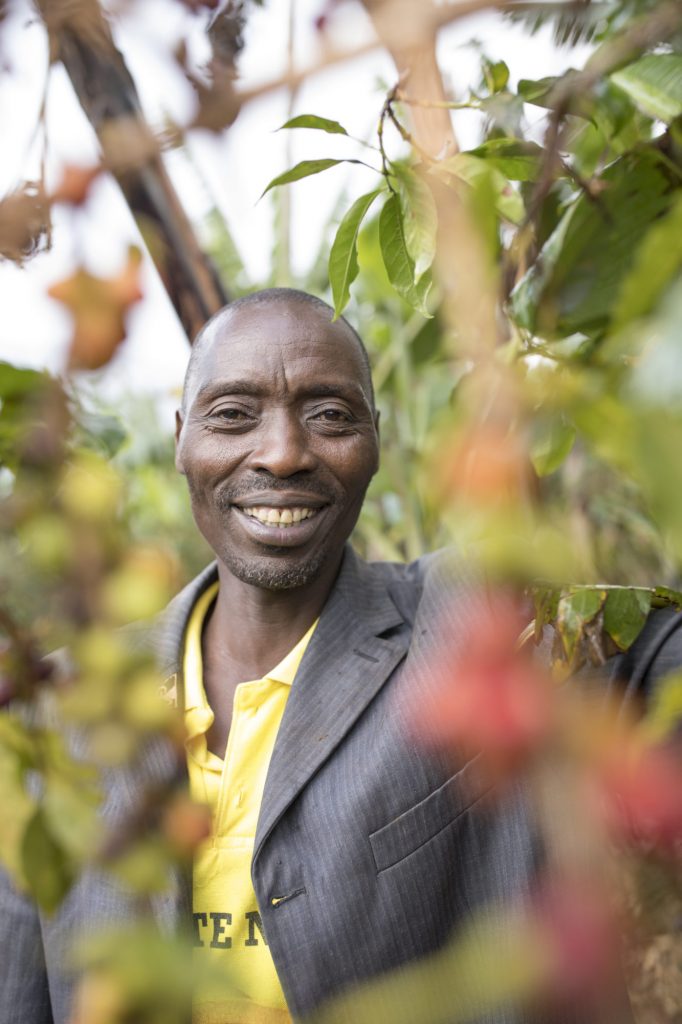
This is a moderate intervention anaerobic natural Nyasaland variety coffee from Kigezi Valley, Uganda, produced by 300 smallholder farmers organized around Kigezi Valley Coffee and Mountain Harvest.
The flavor profile is tangy and sweet, with candied papaya, Greek yogurt, red wine, pluot, and mango, rounded out by star anise, allspice, and rice.
Our roasters found this coffee rewards a cautious hand approaching the first crack.
When brewed, it hit a lovely, balanced stride on a flat-bottomed brewer.
Taste
Taste Analysis by Isabella Vitaliano
There is some extreme silliness going on in this coffee. It’s tangy, it’s sweet and it has an amalgamation of wine and fruit flavors. A standout from the crowd, you could easily identify this in a lineup. It’s distinct, it’s experimental, it’s controlled. On the nose you’ll get a berry explosion and in the cup, you’ll find flavors of candied papaya, Greek yogurt, red wine, pluot and mango. It’s an unexpected flavor combination, but it works so well. On the heavier side of things there are some notes of star anise, allspice and rice that round out those tart flavors to really make it a complete flavor experience.
Mountain Harvest is a supplier that has been doing excellent work to raise the level of awareness around the potential for high-quality Ugandan coffee. All the while they are providing better pay as well as education for farmers that contribute to their program. Uganda doesn’t historically have the best reputation for coffee and it’s coffees like this one (along with the accompanying honey and natural coffees) that are going to change the narrative.
No matter the brewing style, I think this coffee will catch anyone’s attention. Offer it as a single-origin espresso or a thoughtful pour over offering. This is the perfect coffee to bring to light an age-old coffee producing country and newer processing techniques.
Source
Source Analysis by Charlie Habegger
Mountain Harvest’s coffee has quickly become one of the most popular and sought after East African coffees we offer. It’s limited, admirably sourced, and insanely good.
One of their more recent expansions has been to the Kigezi Highlands, a wide and high elevation territory in Uganda’s Southwest that shares a border with northern Rwanda. In true Mountain Harvest fashion, their value chain in Kigezi began not with aggressive cherry buying but with the slow and steady training of local agronomists, processing education, and the full network of financial services they developed on Mt. Elgon over five years.
We love anaerobics for blending together the terroir of a coffee and the wild, unique acids and esters of its fermented fruit. Mountain Harvest’s dry fermented natural brings a lot of zip to the cup; the flavors are kombucha-like with marmalade and cotton candy, peach pie, quince paste, and custard. Tasting this one next to the low intervention natural lot (also a Crown Jewel) really helps distinguish the process character from the coffee, in a memorable way.
Welcome to the Kigezi Highlands
Close your eyes and picture western Rwanda: steep grassy mountainsides groomed with perfect terraces, deep blue lakes, forest gorillas. This is Uganda’s Kigezi Highlands. Geographically, this region is a stark contrast to the rest of Uganda’s landscape. Uganda as a whole just doesn’t have other widespread highland territories like this. Nearly the entire country is low, tropical, and consistently warm, save for only three dramatic and concentrated exceptions: Mt. Elgon in the East, the Kigezi Highlands, and the Rwenzori Mountains in the West. Coffee-wise the country is well suited for Coffea canephora (robusta), which grows wild here and is commercially critical as well: 80% of Uganda’s almost 9 million annual exportable bags are robusta. If you’ve tasted great coffee from Uganda (and many have not), chances are it came from one of only a handful of producer groups, and chances are also that they were founded in the past 10 years. Arabica, and especially great tasting arabica, is still incredibly scarce.
The Kigezi Highlands maintain a consistent high elevation across many kilometers, rarely dropping below 1,500 meters, and climbing as high as 2,700. Despite the fact that coffee itself is underdeveloped, mountainside farming overall is well established here. The districts in the Kigezi Highlands are not especially known for coffee and are far behind Mt. Elgon and even the Rwenzori mountains in notoriety. That said, the terroir here is an extension of Rwanda’s, and vice versa. It should be no surprise that incredible coffees are likely, with the right effort.
Mountain Harvest
Mountain Harvest is a young and big-thinking group, first established in 2017 in Mbale, near Mt. Elgon. Mountain Harvest’s entire structure was designed from scratch to be the antithesis of Uganda’s typical arabica value chains. They specialize in farmer empowerment, transparent pricing in all directions, and slow and steady processing innovation. They invest heavily in their farmers’ equity in the final product, as well as constantly diversifying their cup profiles available to the world.
For its first 5 years, Mountain Harvest dedicated itself to smallholders on Mt. Elgon. They began in Mbale as an impact investing project underwritten by Lutheran World Relief, and for the first couple years were based, presciently, in a dilapidated dry mill deserted by a bankrupted cooperative union. By the end of this short first phase, the business model included farmer education and training, investments in centralized processing, community storage facilities, detailed quality control, and international marketing. All the while staying very modest in size, exporting only five to seven containers per year.
In 2022 Mountain Harvest set its sights on the Rwenzori Mountains, for the same reasons: incredible quality potential and under-resourced arabica growers. Within a couple years, they were working there full time, processing cherry centrally at their “Mountains of the Moon” station, and marketing the results.
In 2023, they started working in the Kigezi Highlands, with a local producer group there called Kigezi Valley Coffee (KVC). This has been a small and very precise initiative, with only 300 smallholders belonging to KVC, but with Mountain Harvest’s full suite of expertise applied.
Natural Processing at KVC & A Brief History of Nyasaland
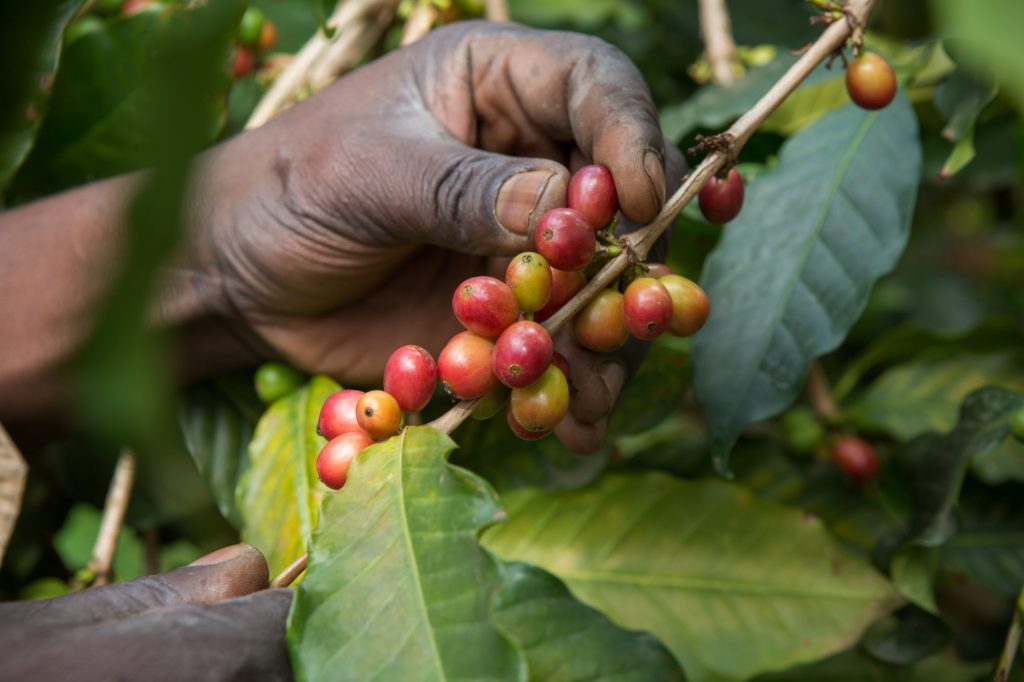
Cherry for this microlot was picked carefully by farmers to ensure uniform ripeness and sugar content going into the fermentation process. Fermentation of the cherry was carried out dry, without the addition of water, in large drums with a sealed lid. This stage lasted 72 hours, after which the drums were opened and the soft, fermented cherries were moved directly to raised screen beds in full sun to skin dry for 2-3 days. Once pre-dried, the cherry was moved to a shaded area for the duration of the drying, until it reached a final moisture content of 10.5%. The final dried pods were trasported to Mountain Harvest’s temperature controlled warehouse in Mbale to cure for two full months.
Nyasaland, the cultivar grown in this part of Kigezi, is rarely found these days but is a kind of antique with an interesting past. Nyasaland is a typica lineage arabica first brought to Malawi (then known as Nyasland) from Jamaica in the late 19th century. This was very early-stage commercial East African coffee, but the British colony of Nyasland was flourishing at the time and the variety was widely planted. Nyasland’s climate, however, was not nearly as cool or amenable to the fragile arabica genetics, and much of the new arabica plants overbore, then dropped production dramatically, leaving Nyasland with a cratered coffee sector (that still struggles today). The variety was moved north to Uganda in the early 20th century where, despite its fragility and lower yields, is still a favored arabica heirloom in higher elevations. It is sometimes known locally as Bugisu (though this term is also used as a geographical indicator), and it is directly related to Jamaica Blue Mountain Typica.
Green
Green Analysis by Isabella Vitaliano
This coffee is a little bit below average density with below average moisture content and average water activity. Screen size is between 18-16, a very typical screen size range. With the lower density and fermented natural processing style, be careful with too much heat so that this coffee doesn’t take off at the end of roast.
Uganda also boasts a unique variety usually called Bugisu but also named Nyasaland as well. With only 20% of production volume being Arabica, it can be less common to have access to these types of coffees, especially in three different processing styles. This is another reason that makes the work that the producer and Mountain Harvest are doing collectively all the better, and all the more reason to support.
Diedrich
Diedrich IR5 Analysis by Doris Garrido
The Uganda Anaerobic Natural was my second roast of the day, and my approach was very similar to the first. However, instead of using a short soak, I opted for a slightly lower charge temperature this time (430°F) with that same intention of stripping away moisture evenly to enter the Maillard phase in about 4 minutes or so. For the heat application, I cranked the gas to 100% right from the beginning. I kept it there for 3:50 minutes before dropping the gas completely to zero at 296°F, just a few seconds before marking the color change. My goal here was to establish strong initial momentum to reach Maillard, and then gently coast my way through caramelization.
Because this lot is an anaerobic natural rather than a standard natural, I knew I had to be extremely cautious as it approached the first crack. For airflow management, I engaged 50% air right before dropping the burners and then opened it to full exactly as the first crack commenced. This strategy worked perfectly to tap the brakes and slow the pace right as the structural tipping point arrived. The coffee finally hit the first crack at 385°F with a Rate of Rise of 14°F per minute, which allowed me to comfortably develop the batch for 1:32 minutes.
On the cupping table, the results were incredibly pleasant and unique. It led with a vibrant candied papaya sweetness and a beautifully clean, hard-candy finish. The acidity was wonderfully distinct, showcasing notes of Greek yogurt, mango, and pluot. This anaerobic natural is just remarkably clean and structurally complex, opening up with surprising tones of ginger, rice, and star anise. It is truly a fascinating, delicious coffee to experience.
Aillio
Aillio Bullet R1 IBTS Analysis by Evan Gilman
We use the RoasTime app and roast.world site to document our roasts on the Bullet. You can find our roast documentation below by searching on roast.world, or by clicking on the link below. Take a look at our roast profiles below, as they are constantly changing!
It’s been a minute since I’ve had my hands on a Ugandan coffee processed any other way but washed or traditional natural techniques. Of course, we know that Mountain Harvest produces reliably delicious coffees from their aerie in the Rwenzori Mountains. I’ve been cupping coffees from this dry mill with Charlie since 2012 (when it was owned by Gumuntindo), and Mountain Harvest since 2017 with the Royal Team. I have never known Mountain Harvest’s coffees to disappoint.
So, I knew from both my experience and looking at and smelling the green that I would be in for a treat. This is a fairly dense and large-bean coffee that I knew could take some heat – but that’s not the direction I decided to go. I also knew from experience that I wanted to pull as many of the complex fruity notes as possible, and I decided to start with a low charge temperature. This meant that I could spend plenty of time in Maillard to get good texture while still giving decent post-crack development.
My charge temperature was on the lower side at 446F, with an initial power of P6 and airflow of F2 which I kept rolling until turning point. I then increased to P8 and F3 until peak rate of change, then lowered to P7 and F4 for plenty of airflow. Lowering heat further before 365F helped me to temper development through Maillard, and increasing airflow to F5 just before first crack allowed for more time in post-crack development. For me, this was a textbook roast of an anaerobic coffee that would result in fruit throughout the flavor experience.
And that’s just what I found in the cup: sweet and aromatic Muscat grape, juicy cantaloupe, and a bright/tart lemon zinger hibiscus note in the finish. There was a really evasive tropical fruit note in here as well, and I just couldn’t put my finger on it; all the better, as it kept me coming back for sips, trying to figure it out.
You’re going to have a phenomenal time with this coffee, as it’s flexible in the roaster and will be plenty flexible in any brew device you choose, as well. If you don’t like fruit, you’re out of luck. Otherwise, you’re in for a treat!
You can follow along with my roast here at roast.world: https://roast.world/egilman/roasts/QdijPPCB1y-wbkOKn2gKw
IKAWA
IKAWA Analysis by Isabella Vitaliano
Our current Ikawa practice compares two sample roast profiles, originally designed for different densities of green coffee. The two roasts differ slightly in total length, charge temperature, and time spent between color change in first crack. You can learn more about the profiles here.
A Ugandan natural anaerobic is such a rarity, and looking at the specs, I figured that the low-density roast profile would suit this coffee the best. The high-density roast had chocolaty flavors but also bay leaf and a coconut milk texture to it. The low-density roast had a surprising amount of acidity in comparison, and it tasted like strawberry candy. I think we have a clear winner here: the low density really complimented the profile.
You can roast your own by linking to our profiles in the Ikawa Pro app here:
- Roast 1: Low Density Sample Roast
- Roast 2: High Density Sample Roast
Brew
Brew Analysis by Tim Tran
The vast variety of coffee cultivars out there has as of late been just as exciting to me as the various methodologies behind process, and so the opportunity to dig into a rarer cultivar in Nyasaland was absolutely a delightful opportunity. This anaerobic natural coffee from Uganda really brought plenty of great flavors in the cup and the layered complexity made it a fun tasting journey until the last sip.
I found this coffee to really hit a lovely balanced stride on a flat-bottomed brewer, and all my favorite brews ended up being made on a Kalita Wave.
My favorite brew was made with a moderately high dose, on a coarse grind setting. The brew yielded a 1.3 TDS brew with a 17.24% extraction. This brew favored a slightly more heavy-handed sweetness, providing upfront notes of berries and cream, wild strawberry, and an acidity that was particularly reminiscent of a young natural wine. As it cooled, flavors developed bringing in a lovely lemongrass and herbal profile.
My second favorite brew was made with a moderate dose, at a moderate grind setting. This brew yielded a 1.31 TDS with an 18.56% extraction. This brew brought forward complementary herbal flavors more upfront, with underlying gentian roots to accent the notes of cherry and dark strawberry.
As far as sources of excitement, this coffee definitely brings appreciable characteristics both for what it is and how it tastes. Ultimately I recommend brewing this on a flat-bottomed brewer with a moderate dose and a moderate to coarse grind setting. We hop you enjoy!
Related Coffee
Chocolate, strawberry, stone fruit, baking spice, and strawberry
Oakland 49 Boxes
Crown Jewel Kenya Natural Ndiaini Factory Nyeri
16TY0014 – 39976-1 – SPOT RCWHSE
Chocolate, strawberry, stone fruit, baking spice, and strawberry
Spot
49 Boxes
$248.35 per box

Lavender, lemon, strawberry, floral, and berry jam
Oakland 70 Boxes
Crown Jewel Uganda Natural Kigezi Valley
39619-1 – SPOT RCWHSE
Lavender, lemon, strawberry, floral, and berry jam
Spot
70 Boxes
$267.84 per box
Black Tea, caramel, lemongrass, passion Fruit, apricot
Oakland 6 Boxes
Crown Jewel Burundi Honey Peaberry Heza Washing Station
38863-1 – SPOT RCWHSE
Black Tea, caramel, lemongrass, passion Fruit, apricot
Spot
6 Boxes
$255.49 per box
Lemon, floral, hibiscus, rosemary, and apple
Oakland 46 Boxes
Crown Jewel Ethiopia Anaerobic Natural Rue Co-ferment Banko Chelchele
40654-1 – SPOT RCWHSE
Lemon, floral, hibiscus, rosemary, and apple
Spot
46 Boxes
$358.51 per box