
Crown Jewel Tanzania Karatu Vohora Family Washed SL-28
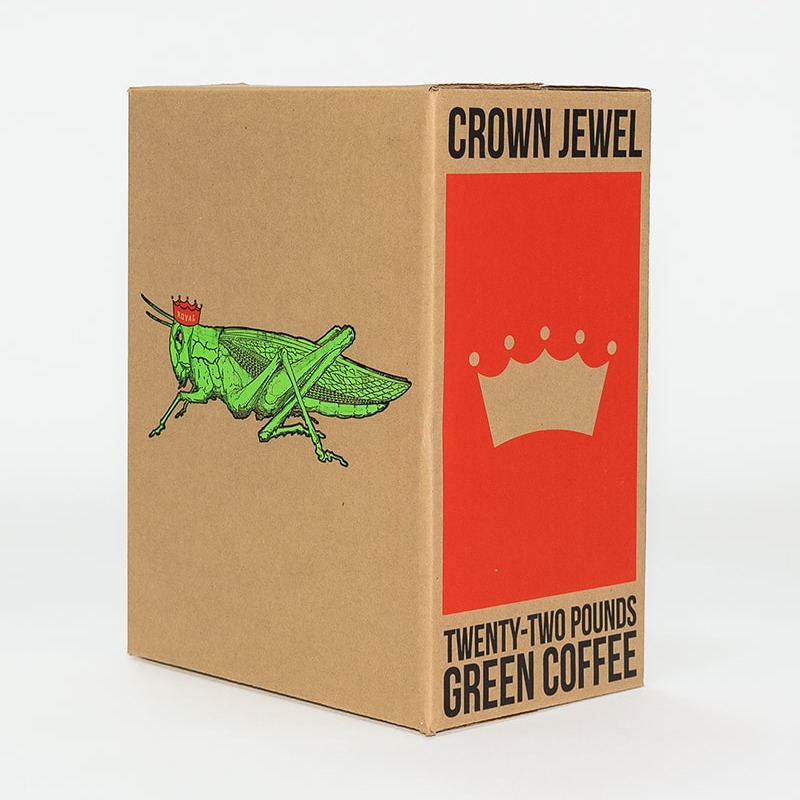
Lot 158 – 39893-1 – SPOT RCWHSE$257.28 per box
Boxes 22
Warehouses Oakland
Flavor Profile Plum, caramel, graham cracker, cranberry, green apple
Add to your artisan.plus account: 
 Download PDF
.
22lb Boxes
Spot
Overview
Overview
This is a moderate intervention fermented and washed SL-28 cultivar coffee from Karatu, Tanzania, produced by siblings Neel and Kavita Vohora on their Gaia farm.
The flavor profile offers a balance between the expected bright fruitiness of the SL-28 cultivar and an unexpected soft, creamy roundness. We tasted amber ale, marzipan, apricot, and caramel.
Our roasters found the coffee benefitted from a little extra caramelization and a quick drying stage to pair SL28’s natural bright acidity with body and sweetness. And watch out for deceptive early first cracks!
When brewed, we liked a moderately high dose paired with a coarser-than-average grind setting to bring out the best of balance and sweetness in your pour-overs.
Taste
Taste Analysis by Isabella Vitaliano
Neel and Kavita are really such stars on the Crown Jewel menu. Consistent, innovative and delicious- every year that we source from them. For these microlots this brother and sister duo focus on sectioning off their farm to show off cultivar types, paired with their mastering of process leaves you with a compelling and captivating coffee.
SL-28 is not the most uncommon cultivar type, but I do love that it’s being grown at this farm. It was developed in a lab in Kenya through breeding methods, and shows the relationship between Kenya and Tanzania in proximity as well as the similarities and differences in flavor profiles.
Sweet, soft and round, this cup is subtle enough to please the masses but also here to showcase what is special about Tanzania coffee. Amber ale, marzipan and apricot are in the cup along with marigold, caramel and corn flakes. Sounds like the perfect mix of a wide array of orange tones. In the cup we also got apple cider, orange, dry plums, lemongrass and walnut.
Headed straight to our espresso bar here at The Crown, we already had the chance to try the production batch of this coffee. While we dial in how the Loring best suits this coffee, the Diedrich takes the cake in roast style. This roast was bold, tangy and creamy. I think rest will really benefit this coffee and while I may prefer some roasts over others, this coffee still has a wide range of flexibility for roasting.
Source
Source Analysis by Chris Kornman
Under the watchful guidance of sibling team Neel and Kavita Vohora, the Edelweiss and Gaia farms have begun to blossom from well-managed estate farms, spanning 1000 acres across multiple ridges of the Ngorongoro caldera in northern Tanzania, into an innovative and genre-defying coffee enterprise. I’ve worked with Neel and Kavita, and the coffees from the farms for 15+ years and every year I’m more excited than the last about their coffees.
Among the family’s favorite cultivar selections are the SL-28s, coffees descended from some of the earliest Arabica selections made in Africa outside of Ethiopia. Tanzania was among the first colonial coffee cultivated on the continent – Bourbon trees from Réunion were delivered to the Bagomoyo mission as early as 1868. From this expanding population of C. arabica var. Bourbon a selection was made in the early 1930s by a now-extinct British agricultural breeder called Scott Labs. SL-28 is Tanzanian stock, chosen for its drought resilience almost 100 years ago, and it found its home primarily in Kenya (where the lab was based) and earned a reputation with growers for bountiful harvests and large screen sizes and with cuppers as a bastion of cup quality. The Vohoras’ SL-28s thrive on the farms as productive trees (if susceptible to diseases like berry fungus) and frequently top the siblings’ cup rankings in their lab.
The Vohoras’ farms continue to innovate in processing methodology as well. Rather than resting on the laurels of tradition, nearly all of their coffee (including the commercial volumes of larger lots) goes through a cherry maceration period prior to processing. For microlots, like this SL-28, the timeframe for whole cherry “pre-fermentation” is determined specifically by cultivar, through a trial-and-error process that’s been honed into precise protocols to bring out the best in each variety. In this case, the SL-28 harvest will macerate in whole cherry on raised beds under protective tarps for four days prior to completing the nearly 4-week drying process on raised beds in whole cherry. After this is finished, the dried coffee is stored in GrainPro until it can be milled in Vohora’s facility back in Arusha.
Ngorongoro, the world’s largest unbroken caldera, looms over a verdant landscape, the shell of an ancient, ruptured volcano. Inside its walls, a wildlife conservation area cut off from much access to the outside world, is home to hordes of zebra, eland, gazelles, wildebeests, two prides of lions, hyenas, hippopotami, and scores of other local birds and mammals, including a small population of black rhino. The Maasai, among the region’s more visible residents with distinctive red flannel robes and unchanged traditions of nomadism, are frequent visitors, passing through the crater with their goat and cattle herds in tow. The caldera’s wildlife are no strangers to the farms, either. Native forest corridors on the estates allow freedom of movement for the animals as they migrate, but it’s fairly common to find damage to the coffee trees; the most frequent offenders being elephants and water buffalo.
The Vohora’s estates are nestled into the caldera’s outer ridges, bordering the park. Since 1971, the Vohoras have owned about 1000 acres of farmland on the southern exterior slopes near the town of Karatu. The siblings’ grandfather arrived from India, first working for the British colonists as a farm manager prior to the nation’s independence, and their father founded and ran the export business from nearby Nairobi.
Today, Neel manages the farms, including overseeing more than fifty full-time employees and nearly eight hundred seasonal workers during the peak of harvest. He’s also at the forefront of processing innovations and cultivar selections. Kavita helms the export business from Arusha and is the lead cupper and licensed Q-grader at the dry mill. Her daughter, Nicolene, is learning to taste coffee… the family’s fourth generation, now in training.
You can read more about the farms in a recent blog.
Green
Green Analysis by Isabella Vitaliano
A single cultivar lot, this density is quite high at 705 m/L. Moisture content is in normal ranges while water activity sits a little bit higher than normal. High density paired with larger bean size is an interesting mix! Often coffees from east Africa are small and have higher densities. Be sure to check out the roasting notes for more details on how to roast this.
Diedrich
Diedrich IR-5 Analysis by Chris Kornman
Making a quick guest appearance on the roasters this week, I enjoyed roasting the first production trial for this SL28 from the Vohora family. While I often think of SL28 as a variety with a lot of citric acid, this coffee, as grown in Tanzania, also has excellent sweetness and a full body. Balancing these characteristics was my goal during this roast.
Starting with a charge temperature of 425, I waited for almost a minute to turn the burners up from idle (30%) to full blast with closed airflow setting. Anticipating color change and wanting to stretch out Maillard reaction a bit, I dropped the gas to 70% and opened the airflow halfway at around 4 minutes. With plenty of momentum built up, I opened the airflow fully and dropped the gas back down to idle at color change, 4:37 at 307F. Despite pumping the brakes, the coffee colored fairly quickly and I only managed about 2:45 during this stage until first crack began in earnest. Note that there are outliers that pop early, don’t be fooled! Let first crack really start to roll, with pops at regular 1-second intervals.
I cut the burners for 30 seconds during development to keep my rate of rise from accelerating and allowing a little extra time to develop sweetness, finishing at 9:00 exactly and 399F, with a ColorTrack reading of 60 (whole bean) and 54 (ground).
The cupping table revealed a lovely, sweet coffee with a touch of caramelization and depth that we really appreciated. I tasted amber ale, apples, apricots, and dates, marzipan, and marigold blossoms.
Treat this a bit like a hybrid – use plenty of heat early in the roast for that SL28 pop of fruit and floral flavor, but be sure to color and caramelize fully to enjoy the depth of body and sweetness it would be incomplete without.
Aillio
Aillio Bullet R1 IBTS Analysis by Chris Kornman
We use the RoasTime app and roast.world site to document our roasts on the Bullet. You can find our roast documentation below by searching on roast.world, or by clicking on the link below. Take a look at our roast profiles below, as they are constantly changing!
I’m making a guest appearance here on the Bullet roaster for this coffee this week, which offers me a great opportunity to point you to my very nicely executed Diedrich roast and let you know up front that I felt my 500g batch here was a little less than perfect. Let’s diagnose why:
Using my standard P9, F2, D4 settings, I preheated to 482F and let it rip! Early stages of roasting went very much according to plan, with a quick, hot drying phase. I tried to hit the brakes with higher fan settings and lower power during color change but only spent about 2:15 until I started hearing early pops.
This was my first mistake. I already knew there were early first cracks from my Diedrich roast. I marked FC too early here, and did my usual drop in power and increase fan speed… but it was too early. I stalled a bit. Tried to let the roast run a little extra long, but my rate of rise dropped too quickly and I just didn’t have the momentum to color properly during development.
It wasn’t a terrible roast. I tasted carmael, vanilla ice cream, dried citrus, and coriander. But it didn’t have the depth or sparkle of that Diedrich roast.
Lesson learned. Be sure to maintain some heat for this coffee as it develops color.
You can follow along with my roast here at roast.world: https://roast.world/ckornman.wnD2/roasts/sq12zbqmqY0DRDBJUdGoa
IKAWA
Ikawa Pro V3 Analysis by Isabella Vitaliano
Our current Ikawa practice compares two sample roast profiles, originally designed for different densities of green coffee. The two roasts differ slightly in total length, charge temperature, and time spent between color change in first crack. You can learn more about the profiles here.
On the light density roast of this coffee the profile was creamy and had lots of sweetness. The high density was a little bit toasty and had a rougher edge to it. I really enjoyed how cohesive the light densty roast is and that preference was a surprise with how high the density is on this coffee.
You can roast your own by linking to our profiles in the Ikawa Pro app here:
- Roast 1: Low Density Sample Roast
- Roast 2: High Density Sample Roast
Brew
Brew Analysis by Tim Tran
The return of Tanzanian coffees to the Crown lineup is always an exciting time – right on the cusp of summer with a plethora of uniquely delicious coffees from a family of incredible producers and people. This coffee was a treat and my brew analysis gave me the fun experience of unfolding different flavor layers.
My favorite brew landed on a recipe using a moderately high dose of coffee on a coarse grind setting with a conical brewer, at a 1:15.79 ratio. This brew gave me an extraction percentage of 17.18% with a TDS of 1.28. This brew gave a fairly silky, light texture that was homogenously tied to the confectionery sweetness and subtle plum and walnut notes. Incredibly easy to drink while still keeping a sense of uniqueness in every sip, this brew did a good job highlighting what makes this coffee so special.
My second favorite brew was with a moderate dose of coffee on a moderate grind setting with a conical brewer, at a 1:16.67 ratio. This brew gave me an extraction percentage of 18.19% with a TDS of 1.25. This brew maintained a delicateness in the body, which helped with preserving a high level of clarity in the stonefruit notes. With a slightly lengthened ratio, the balance of flavors trended a little more towards graham cracker and some slightly savory almond notes.
My preferred brews tended to have slightly lower TDS and extraction percentages, which may suggest a more delicate sweetness in this coffee; however, absolutely worth hunting for the elevated confectioner’s sugar note, as it really does tie a lot of the inherent flavors of this coffee together.
Ultimately I recommend a moderately high dose at a moderately coarse grind setting on a conical brewer. What an exciting start to the Tanzanian Crown Jewels!
Related Coffee

Caramel, jasmine, floral, milk chocolate, and peach
Oakland 25 Boxes
Crown Jewel Tanzania Washed Simba Neel & Kavita Vohora
Lot 159 – 39894-1 – SPOT RCWHSE
Caramel, jasmine, floral, milk chocolate, and peach
Spot
25 Boxes
$267.56 per box

Floral, jasmine, cherry, plum, apricot
Oakland 16 Boxes
Crown Jewel Tanzania Washed Gesha Neel & Kavita Vohora
Lot 156 – 39891-1 – SPOT RCWHSE
Floral, jasmine, cherry, plum, apricot
Spot
16 Boxes
$308.67 per box
Honey, lemon, lime, Arnold Palmer, cherry tomato
Oakland 56 Boxes
Crown Jewel Kenya Peaberry Washed Ndiaini Factory
16KE2004 – 39977-1 – SPOT RCWHSE
Honey, lemon, lime, Arnold Palmer, cherry tomato
Spot
56 Boxes
$216.63 per box

Black Tea, caramel, lemongrass, passion Fruit, apricot
Oakland 6 Boxes
Crown Jewel Burundi Honey Peaberry Heza Washing Station
38863-1 – SPOT RCWHSE
Black Tea, caramel, lemongrass, passion Fruit, apricot
Spot
6 Boxes
$255.49 per box