
Crown Jewel Tanzania Natural Gesha Neel & Kavita Vohora
Lot 157 – 39892-1 – SPOT RCWHSE$360.07 per box
Boxes 8
Warehouses Oakland
Flavor Profile Honey, apricot, baker's chocolate, black tea, and peach
Add to your artisan.plus account: 
 Download PDF
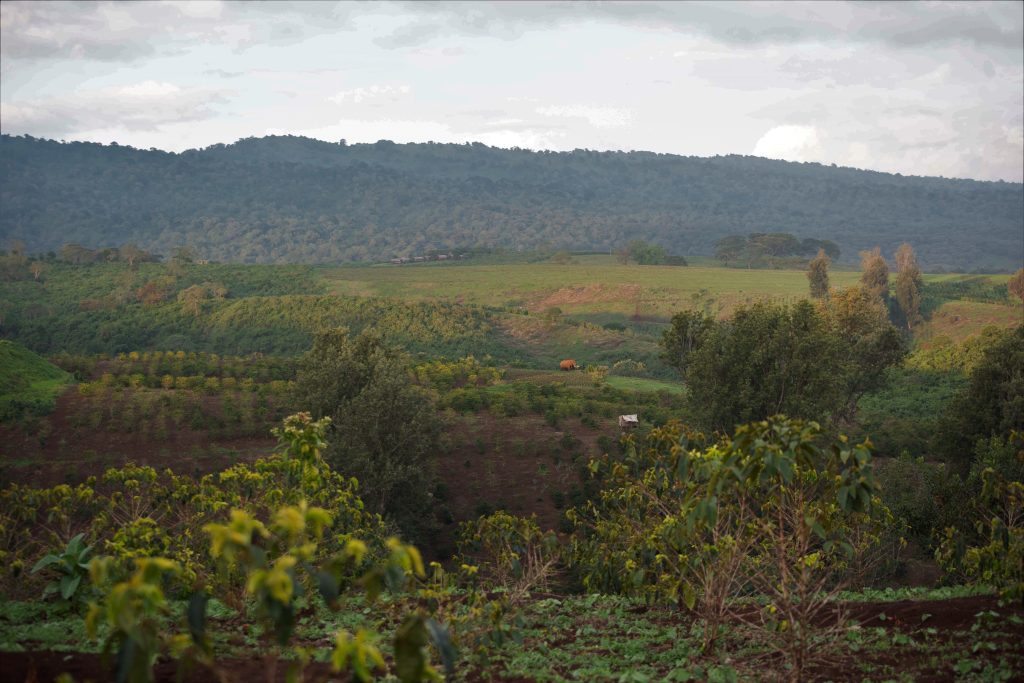
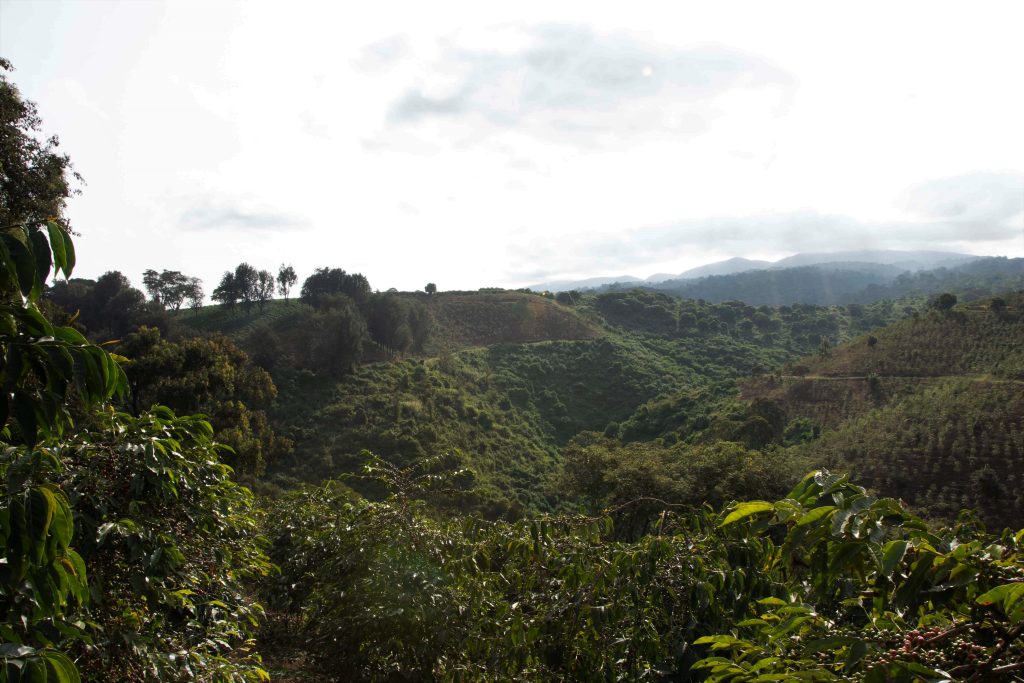
Gaia Farm is a 620-hectare family-owned estate located in the Karatu district of Tanzania.
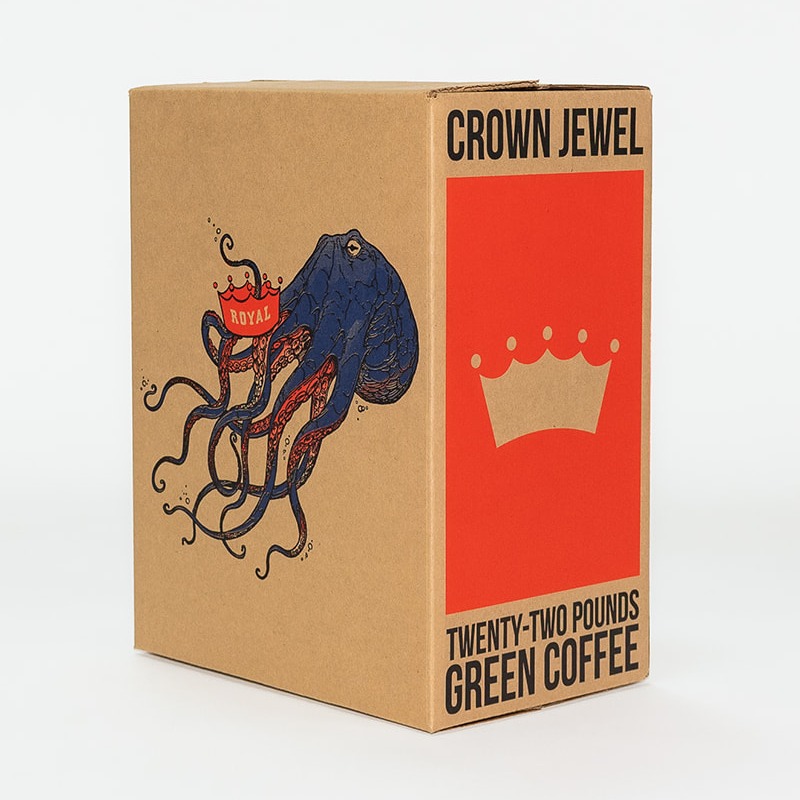
22lb Boxes
Spot


Overview
Overview
This is a moderate intervention fermented natural Gesha cultivar coffee from Karatu, Tanzania, produced by siblings Neel and Kavita Vohora on their Gaia farm.
The flavor profile is balanced and sweet; we tasted ripe peach, Meyer lemon, honey, and hibiscus.
Our roasters found this Gesha rewards more than one approach. Doris kept it gentle and low to protect the florals, while Evan charged hot and vigorous, and both cups landed beautifully.
When brewed, our team preferred a slightly lower dose, and a coarser grind on a cone brewer to really bring the delicate floral and fruity flavors!
Taste
Taste Analysis by Chris Kornman
Lovely aromatics of hibiscus and lime jump from both the coffee grounds and the brewed liquid. This is a special little coffee for more reasons than one… but one of the big reasons, of course, is flavor.
The floral notes on this Gesha are delicate and restrained, with soft white tea-like fragrances giving way to subtle rose and agua de Jamaica notes on the palate.
It’s also a fruity coffee, with balance and sweetness taking precedence over decadence. I taste a lot of ripe summer tree fruits—peaches, apricots, nectarines, plums. There’s this Santa Rosa plum tree in my yard with a bumper crop this year, round yellow spheres the size of a Ping-Pong ball with more sweetness and fragrance and a little less acidity than your typical grocery store variety. My neighbor made preserves with it, added a little Meyer lemon and some sugar and reduced the plums into a concentrate… and what a transformation. This coffee reminds me a little of it; more sweet than tart but not without a burst of sunny citrus fruits.
And it has such a lovely, full presence, even at lighter roasts and low dose pour-overs it is silky and buoyant. Isabella noted crème fraîche, really nailing that delightful interplay of acid, fat, and sweetness as it dissolves into a memory on the tip of your tongue.
I wish we had more of this coffee, I’d really love to share it with a wider audience. It’s become a perennial favorite. What Neel and his team at the farms have done with both the cultivation and processing of this natural Gesha is such a gift to those of us lucky enough to taste it. Select plantings on ideal hillsides, bespoke processing with terroir and cultivar at the forefront of flavor development… it all speaks to intentionality and design behind such small volumes of coffee. I guess that’s also part of what makes it special.
Source
Source Analysis by Chris Kornman
Under the watchful guidance of sibling team Neel and Kavita Vohora, the Edelweiss and Gaia farms have begun to blossom from well-managed estate farms, spanning 1000 acres across multiple ridges of the Ngorongoro caldera in northern Tanzania, into an innovative and genre-defying coffee enterprise. I’ve worked with Neel and Kavita, and the coffees from the farms for 15+ years and every year I’m more excited than the last about their coffees.
At the vanguard of the team’s efforts are their Gesha plantings, newly matured trees giving some of the first exportable harvests this year and stunning us with their deeply floral flavors and elegant nuance. The plants were grown from seed stock related to the New World’s initial Gesha trees, first noticed on the Peterson farm Hacienda la Esmeralda in Panama in the early aughts but brought to Costa Rica’s CIRAD facility as early as the 1960s from a research station in… wait for it… Tanzania. Neel’s befriended that research station’s current manager and has a vast trove of genetic information and historical records at his fingertips, and the data is fascinating. Needless to say, we’ll be keeping a close eye on some of the new seedlings I saw growing in the nursery at the farms on a recent visit.
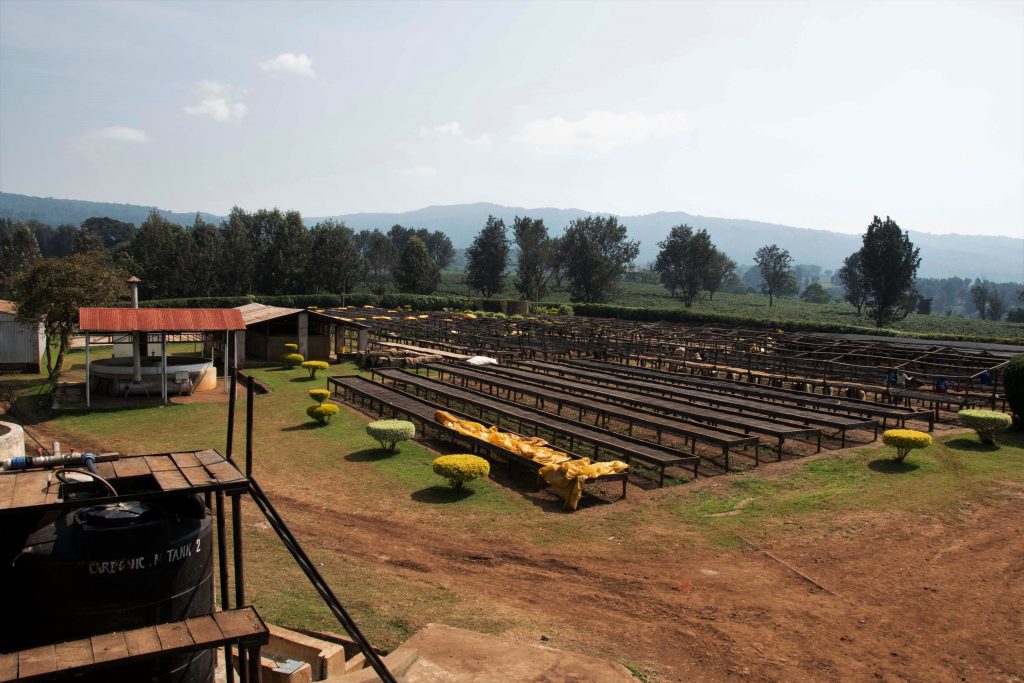
The Vohoras’ farms continue to innovate in processing methodology as well. Rather than resting on the laurels of tradition, nearly all of their coffee (including the commercial volumes of larger lots) goes through a cherry maceration period prior to processing. For microlots like this Gesha, the timeframe for whole cherry “pre-fermentation” is determined specifically by cultivar, through a trial-and-error process that’s been honed into precise protocols to bring out the best in each variety. In this case, the Gesha harvest will macerate in whole cherry on raised beds under protective tarps for four days prior to completing the nearly 4-week drying process on raised beds in whole cherry. After this is finished, the dried coffee is stored in GrainPro until it can be milled in Vohora’s facility back in Arusha.
Ngorongoro, the world’s largest unbroken caldera, looms over a verdant landscape, the shell of an ancient, ruptured volcano. Inside its walls, a wildlife conservation area cut off from much access to the outside world, is home to hordes of zebra, eland, gazelles, wildebeests, two prides of lions, hyenas, hippopotami, and scores of other local birds and mammals, including a small population of black rhino. The Maasai, among the region’s more visible residents with distinctive red flannel robes and unchanged traditions of nomadism, are frequent visitors, passing through the crater with their goat and cattle herds in tow. The caldera’s wildlife are no strangers to the farms, either. Native forest corridors on the estates allow freedom of movement for the animals as they migrate, but it’s fairly common to find damage to the coffee trees; the most frequent offenders being elephants and water buffalo.
The Vohora’s estates are nestled into the caldera’s outer ridges, bordering the park. Since 1971, the Vohoras have owned about 1000 acres of farmland on the southern exterior slopes near the town of Karatu. The siblings’ grandfather arrived from India, first working for the British colonists as a farm manager prior to the nation’s independence, and their father founded and ran the export business from nearby Nairobi
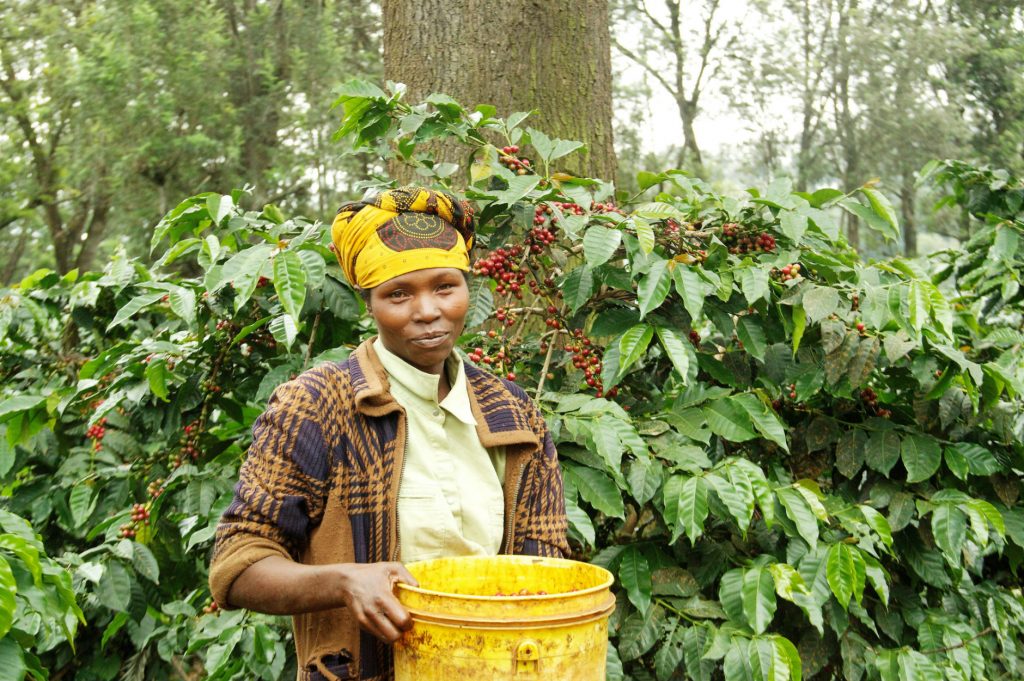
Today, Neel manages the farms, including overseeing more than fifty full-time employees and nearly eight hundred seasonal workers during the peak of harvest. He’s also at the forefront of processing innovations and cultivar selections. Kavita helms the export business from Arusha, and is the lead cupper and licensed Q Grader at the dry mill. Her daughter, Nicolene, is learning to taste coffee… the family’s fourth generation, now in training.
You can read more about the farms in a recent blog.
Green
Green Analysis by Isabella Vitaliano
Density sits in the average ranges and and moisture content and water activity are both as expected from this coffee. The gesha cultivar are slightly larger oblong shaped beans which aligns perfectly with the screen size readings from this coffee.
Gesha is a highly sought-after cultivar that can exceed prices of $4500 per lb in Best of Panama auctions. Gesha at its best is floral, bright, clean, making this profile very desirable. They created the perfect intersection of marketing, high cup quality, and demand through these auctions to create high returns for producers and solidify their mark in the specialty coffee world.
Originally the Gesha cultivar was sent to Colombia to produce a crop that has high yields. This project failed to obtain high yields and was sent over for other producers to try in Panama at another research stations in the 1960’s. It was not a favored cultivar due to its brittle leaves, although it had relatively high yields. It wasn’t until the early 2000’s that this cultivar was entered into the Best of Panama contest, won and broke the record for green coffee auction prices. After this, the famed Gesha name started gaining traction and popularity among producers and consumers alike.
Diedrich
Diedrich IR5 Analysis by Doris Garrido
Tasting the arrival of this coffee with the traders at the Emeryville office, I got so excited! I usually try not to read the labels beforehand, but when I caught those delicious florals on the dry grounds, I had to make sure this coffee was going to the Crown Jewel program. Sure thing I was about to taste the arrival from the Vohora Family in Tanzania, and everything arrived even better than expected, which was excellent.
I’m always a little nervous when a Gesha is in my hands, hoping I make the right decisions to bring out its aromatics and find the delicate flavors of this cultivar. So, I’ll explain how I approach this coffee.
This is natural Geshas, so during the drying phase I treat the beans delicately, gently adding heat for a soft start, and then pushing it with everything until the color changes before holding the heat as it reaches the last part of yellowing. I look to end with a low rate of rise so I can develop enough taking into consideration that because of the process the coffee may want to take over so I will try to avoid high temperatures to maintain the florals and fruitiness of the coffee.
On the roaster, I charged the coffee at 430°F and waited close to two minutes to turn the gas up to 100%. At 330°F, I dropped the gas to zero, opened the airflow at 360°F, and brought back the burners at 370°F, to maintain the roast going, since I got the full airflow going. The coffee cracked at 384°F and developed for 1:28 minutes, ending at 402.9°F.
The florals were there, hiding a bit, but definitely present during the cupping just a couple of hours after roasting, so I was happy and hoping the coffee would open up even better in a couple of days. Overall, the coffee was bright with flavors of nectarine, peach, and a lot of citruses. On the sweetness, I got a honeysuckle, a subtle tea-like body, and a touch of herbal notes.
Aillio
Aillio Bullet R1 IBTS Analysis by Evan Gilman
We use the RoasTime app and roast.world site to document our roasts on the Bullet. You can find our roast documentation below by searching on roast.world, or by clicking on the link below. Take a look at our roast profiles below, as they are constantly changing!
Atypical cultivars from unexpected origins are going to be the theme of the next few weeks! We started off this month with some very interesting Brazil selections, and now we’re on to a delectable Gesha from Tanzania. This coffee has graced our table before, but we’re even more enthusiastic about this year’s crop.
I was hoping to try something different with this coffee, and decided not to use my typical approach for Gesha, which is starting with a lower charge temperature and aiming for solid airflow throughout the roast. Instead, I opted for a more vigorous beginning to the roast cycle with 464F charge temperature and P8 power from the outset. The difference was in starting with F3 fan, increasing to F4 at peak rate of change. This meant that I spent the bulk of time in green/drying phase, but I was able to slow down the roast towards the finish through high fan speed and lower heat application. Truth be told, I felt that my roast might be a little too aggressive, but the results in the cup were excellent. Hitting P7 just before what was a very faint first crack was essential, as was increasing fan speed to F5 just as first crack hit. This was a very short roast, but still within spec at 8:05 / 403.5F. The coffee itself still looked to be on the light side, despite the higher finishing temperature.
In the cup, the texture was the star of the show for my palate. Super creamy and buttery texture is not something I usually find in Gesha coffees, but this paired incredibly well with the peach tea, bright citrus, and forest honey sweetness. This coffee is eminently quaffable, and provides plenty of nuance to keep you coming back for more.
You can follow along with my roast here at roast.world: https://roast.world/egilman/roasts/oBnbXzqh7_h-YskPMO6VR
Brew
Brew Analysis by Katie Briggs
A fun week of coffee rolling into the Crown for analysis this week! I was excited to stat in on this Natural Gesha. I started my brews with a V60 cone brewer with a dose of 19 grams of coffee and a grind of 10. I did an initial pulse of water of 50 grams and let it bloom for 40 seconds. We liked this initial brew and got notes of cacao, apricot, and lemon zest. This brew did taste a bit heavy and had a strong body, which I wanted to soften up. So, for the next brew I coarsened the grind to 11 and repeated my brew process. This brew we liked a lot more! It was lighter in the body and had more sweetness. We got notes of pear, orange blossom, and lilac. This brew had a touch of bitterness on the end, so for the next one we decided to lower the dose to 18.5.
I stuck with the V60 cone brewer and repeated my brew process with the new dose of 18.5. This brew was very nice! We all agreed it was our favorite. It had notes of Myer lemon, honey, and peach.
I did one last brew on the Kalita Wave flatbed brewer just to see how this coffee would do on a different device. I did the same brew that was our favorite on the V60, but on the Kalita. This brew was okay. It ended up bringing back some of the bitterness, and we didn’t like it as much as the last brew on the V60. I do think the recipe could be tweaked to taste great on the wave as well, maybe with a higher dose and with the same coarse grind. But for this coffee I would recommend a slightly lower dose and a coarser grind on a cone brewer to really bring the delicate floral and fruity flavors!
Related Coffee
Lemon, floral, hibiscus, rosemary, and apple
Oakland 89 Boxes
Crown Jewel Ethiopia Anaerobic Natural Rue Co-ferment Banko Chelchele
40654-1 – SPOT RCWHSE
Lemon, floral, hibiscus, rosemary, and apple
Spot
89 Boxes
$358.51 per box

Plum, caramel, graham cracker, cranberry, green apple
Oakland 45 Boxes
Crown Jewel Tanzania Karatu Vohora Family Washed SL-28
Lot 158 – 39893-1 – SPOT RCWHSE
Plum, caramel, graham cracker, cranberry, green apple
Spot
45 Boxes
$257.28 per box
Black Tea, caramel, lemongrass, passion Fruit, apricot
Oakland 34 Boxes
Crown Jewel Burundi Honey Peaberry Heza Washing Station
38863-1 – SPOT RCWHSE
Black Tea, caramel, lemongrass, passion Fruit, apricot
Spot
34 Boxes
$255.49 per box
White Tea, basil, biscoff cookie, cacao, candied fruits
Oakland 33 Boxes
Crown Jewel Bolivia Organic Washed Yulissa Chambi
39122-1 – SPOT RCWHSE
White Tea, basil, biscoff cookie, cacao, candied fruits
Spot
33 Boxes
$220.94 per box