
Crown Jewel Madagascar Washed Ampary
38889-1 – SPOT RCWHSE$276.70 per box
Boxes 17
Warehouses Oakland
Flavor Profile Caramel, chamomile, pear, cacao, and milk chocolate
Add to your artisan.plus account: 
 Printer Friendly PDF
Sourcing Details Madagascar is a specialty coffee origin that might be new to many, but coffee has been grown on the island since the 1800s and has one of the most diverse coffee genetics anywhere on the planet.
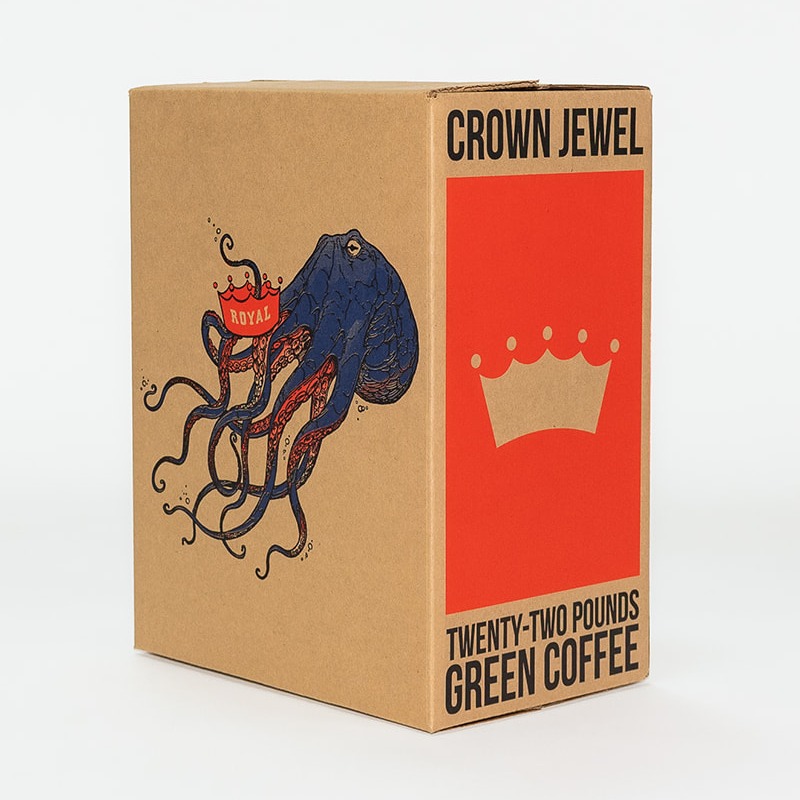
22lb Boxes
Spot
Overview
Overview
This is a low intervention washed coffee from Itasy, Madagascar, produced by smallholder farmers organized around the Madagascar Coffee Company.
The flavor profile is slightly savory, tart, and delicate, with a saffron tea-like texture and notes of milk chocolate, persimmon, and lemongrass.
Our roasters found the coffee fun and easy to work with, favoring moderate approaches with longer color-change phases, noting that the beans can appear light despite normal development times.
Taste
Taste Analysis by Isabella Vitaliano
A slightly savory and delicate experience, this Madagascar is the first of two featured on the Crown Jewel menu for the first time. The texture on this coffee is so nice: saffron tea, fancy milk chocolate and lemongrass are all in the cup. It’s slightly tart, with persimmon-like tannins, dried florals and clean citrus notes.
There are so many hurdles that coffee producers and exporters face every season when its time to deliver coffee. Even more so, in places with lack of infrastructure support like Madagascar, with climate crises and political instability. All the more reason to be impressed by this coffee. Not only does it taste great, but as a customer, you will be laying the groundwork for Madagascar Coffee Company to continue to do the work they do by supporting.
I have a feeling this won’t be the last we hear of this exporter, and I expect many more years of delicious coffee to come. All that being said, we don’t have a ton of these lots available, so get them while they are here! Customers will love this cacao nib, sweet herbal chamomile and white tea profile.
Source
Source Analysis by Chris Kornman
Wreathed in mystique, the island nation of Madagascar is a biodiversity hotspot with nearly 90 percent of its flora and fauna considered endemic, including a large number of coffee species. With such a rich ecosystem, you might expect the island to supply the world with unexpected and unique flavors of both culture and agriculture. However, throughout its history, Madagascar has been plagued by violent cyclones, famine, and political instability that leaves it severely underdeveloped and with limited access to export markets.
My relationship with the Madagascar Coffee Company began, as so many coffee sourcing connections do, through personal touch. Amy Periera, a Q Grader who works on Royal Coffee’s inbound logistics team (and was formerly involved in NGO development projects that included coffee production in Myanmar) made the initial contact. A friend of hers knew of a project in development in north-central Madagscar that was looking to get some expert opinions on the quality of a coffee redevelopment strategy. I said “sure.” It’s a rare treat to taste coffee from uncommon origins.
It’s also a pleasure to provide positive initial feedback to a project in its early development stages. The coffees were unexpectedly delicious, a selection of comparative samples from home processed and centrally processed arabicas, a research-station cultivar, and a robusta/arabica hybrid. I offered some quality and commercial advice to the project lead, Ryan Kelley, who offered a little context about the project in response, and then we didn’t exchange communication again for more than a year.
In the months that intervened between our initial conversations and offer samples, Ryan had been busy. He’d solidified a supply chain, had begun exporting container-loads of robusta to Europe, and was in the process of coordinating central processing to improve quality and consistency of the product. We were offered a perfectly decent robusta and two unique, exciting microlots of arabica. With 2025’s robusta supply in crisis due to tariffs, Royal was keen to find suppliers… and we happened to have a few roasters in our books that remembered the last time we brough in coffee from the country, almost a decade ago. We drew up contracts and Ryan expedited the process, just barely getting coffee out of the country before the monsoon season and its devastating cyclones which mercifully spared the coffee project but left destruction and death in its wake throughout other parts of the island.
Tucked into that container with 300 bags of robusta were 10 little washed arabica jute sacks, and I’m so thrilled to say that they arrived in exceptional condition. They are the first Madagascar coffees to ever release as a part of the Crown Jewel program, and I certainly expect they won’t be the last.
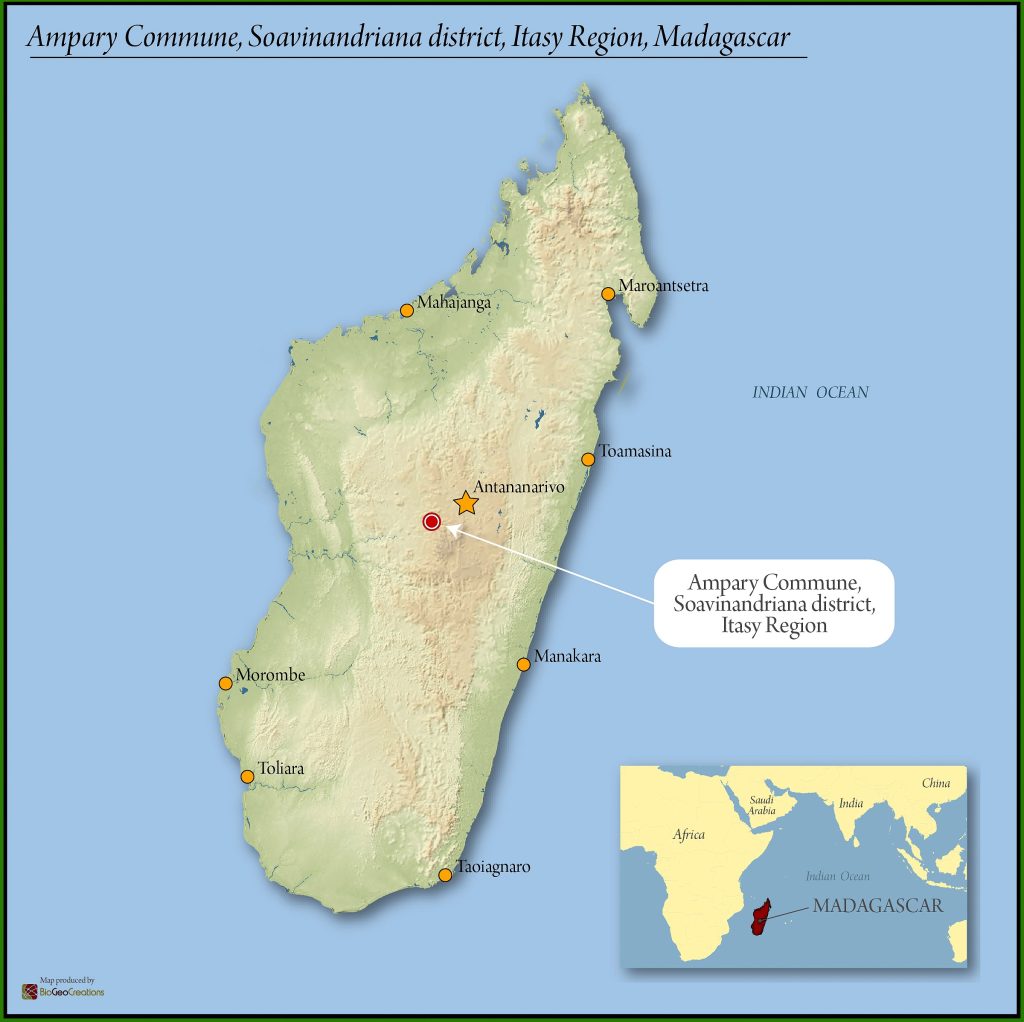
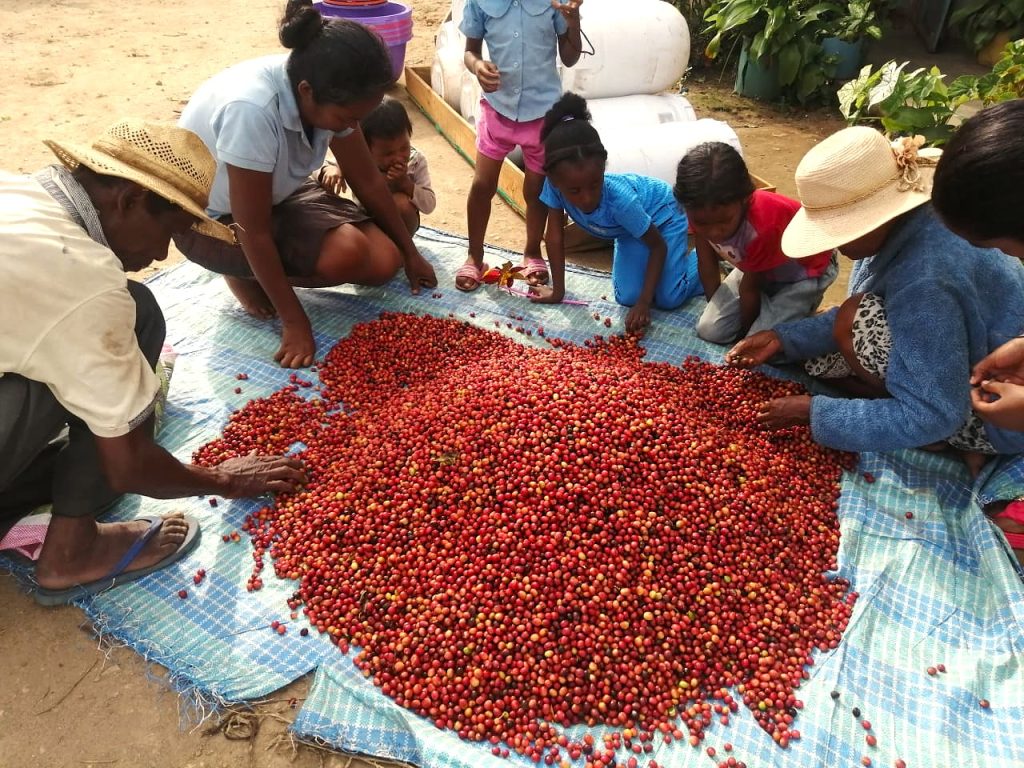
This lot is from Ampary, in the Itasy region, grown by about 40 local Malagasy producers and centrally processed by Ryan Kelley’s Madagascar Coffee Company. As with smallholders the world over, these coffee producers are cultivating coffee on tiny plots, less than two hectares in size, and intercropping with a mix of diversified agriculture including rice, maize, beans, cassava, local vegetables, avocados, citrus, and bananas. The varieties of coffee grown are locally adapted red and yellow Bourbons and some Catimor selections.
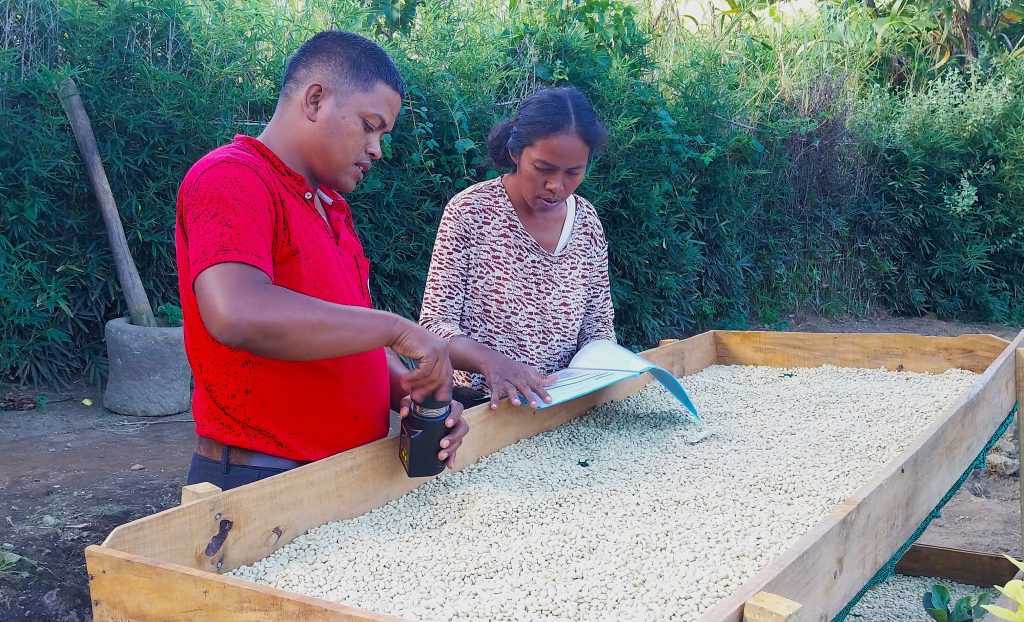
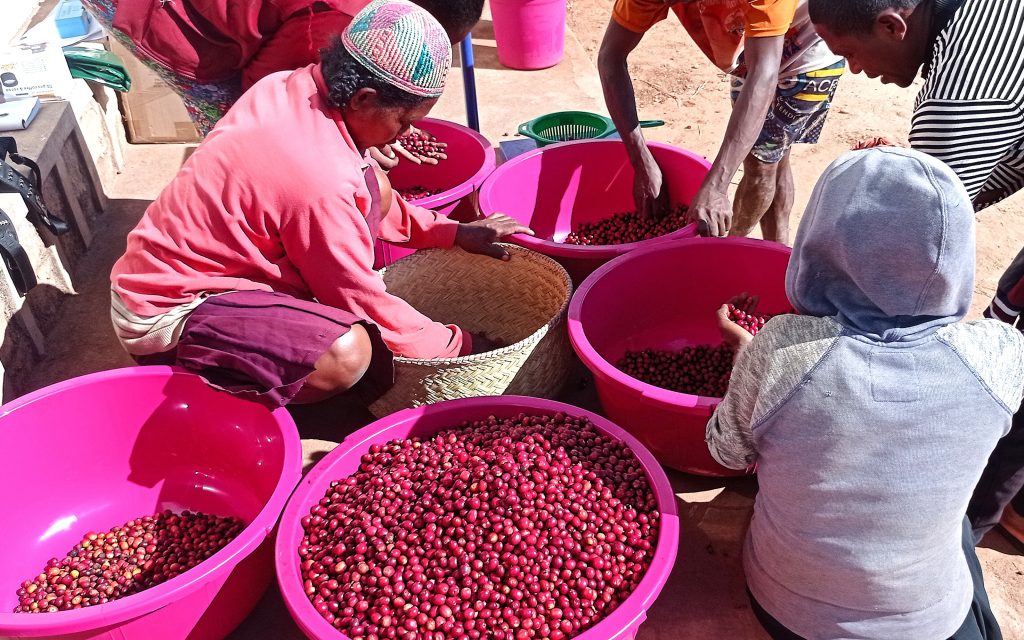
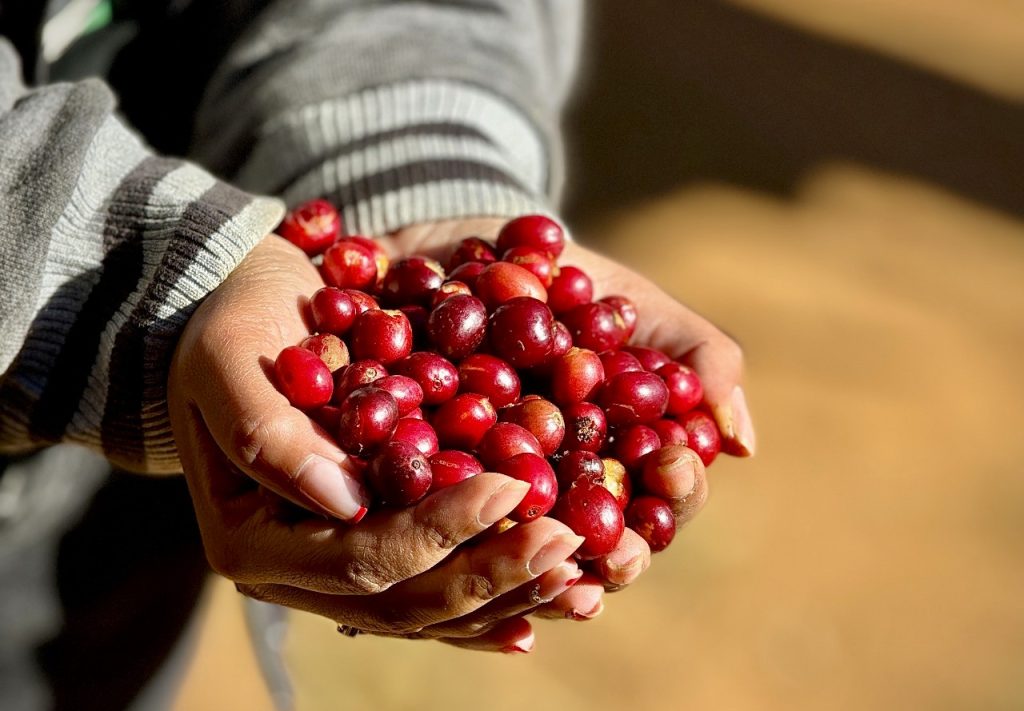
At the MCC processing site (2025 was their first year in operation), only ripe cherries are selected and then depulped and fermented underwater before washing and drying on rasied beds for 10-14 days. MCC employs seasonal workers at the washing station and has a full time regional coordinator, named Bina Lalaina, who leads field relationships and quality control. The company’s stated goal is to revitalize the coffee sector—which has fallen into general decline due to poorly maintained trees, fractured infrastructure, and inconsistent processing—by providing training, renovation support, coffee tree nurseries, and clear price incentives for quality. These coffees come with full farmgate transparency: coffee growers were paid 4,500 Malagasy ariary per kilogram of ripe cherry. If converting by weight, that’s equal to roughly $2.50-2.70 per pound of export ready green coffee.
Green
Green Analysis by Isabella Vitaliano
Density for this coffee sits on the lower end at 658. Moisture content and water activity are both in average ranges. Screen size is very evenly spread throughout the 18-16 range. Elevation is relatively high around 1500-1800 masl, which is typical of the mountainous region of the island.
Due to political instability, climate crises and lack of infrastructure, it’s been historically difficult to enter the specialty coffee market. Uganda has been in a similar position in regards to lack of government support, infrastructure and political instability. There are a few main actors that have been able to elevate the reputation of Uganda-grown coffee.
Madagascar company is making a valiant effort to do the same things with Madagascar’s reputation and I have no doubt they’ll succeed. Be the first to hand select this coffee and support the growth of the specialty coffee sector by purchasing this coffee and educating your customers on the topic. Not only is there a great story, but the green specs are great and the coffee is delicious.
Diedrich
Diedrich IR5 Analysis by Doris Garrido
The first time I heard of Madagascan coffees, couldn’t help but picture baobab trees and volcanoes alongside coffee trees. This is my first time tasting and roasting coffees from this amazing place, and I am very intrigued by the results. Madagascar is known mostly for its Robusta production, so receiving two lots of Arabica is very exciting. It is a great opportunity to see those volcanic, mineral rich soils work their magic on the cup.
Since this was my first time roasting these coffees, I wanted to be careful and observe how they behave, so I began by checking the green coffee physical aspects to build my roasting plan. Moisture looked standard at 10% and density was approximately 705 g/L. Working with three cultivars – Catimor, and Red and Yellow Bourbon – I decided on a moderate approach. I used a charge temperature of 401° F while keeping the gas low in the early stages.
The turning point came at 177°F. At the 1:50 minute mark with the beans at 180°F, introduced 70% gas. Noticing a slowdown in the drying phase, I decided to ramp up to 100% gas at 230°F, then dropped back to 30% once I reached 311°F, and I allowed it to develop for 1 minute and 41 seconds.
On the cupping table, the results were soft but comforting herbal lemon tea acidity, and notes of green grapes. The sweetness presented as textured toffee, caramel, and graham crackers. A truly comfortable cup. I feel that by making a shorter Yellowing I hid some complex flavor in this coffee and for my next roast I would plan to introduce heat earlier to shorten the drying phase and pull out the complex sweetness this coffee is hinting at.
Aillio
Aillio Bullet R1 IBTS Analysis by Evan Gilman
We use the RoasTime app and roast.world site to document our roasts on the Bullet. You can find our roast documentation below by searching on roast.world, or by clicking on the link below. Take a look at our roast profiles below, as they are constantly changing!
This is truly the first arabica I have ever roasted from Madagascar, so I didn’t know what to expect. Doris gave me a bit of a heads up on this coffee, and how it may not color as expected later in the roast. Just looking at the round little seeds, I knew this had to be a Bourbon-dominant coffee, so I did expect some nice texture and sweetness, but other than that I was in the dark, shooting what turned out to be a barrel of fish, but also a barrel full of monkeys. That is to say, it was both easy and fun to roast this coffee.
Taking that into effect, I started with a good push at 464F charge temperature, P8 power, and with plenty airflow at F3 fan speed. I lowered my fan speed for a bit to extend my peak rate of change, but then returned to F3 shortly afterwards. At yellowing, I reduced heat to P7 and let this ride out for the remainder of the roast. My only other changes were to slowly increase fan speed to F4 before first crack, then F5 at first crack proper. My final temperature and time as 395.6F at 8:44, a somewhat short roast, but those stats would in no way prepare you for how light the coffee looks.
In the cup, the lightness did come through a little, but the predominant notes were custardy vanilla, sweet golden raisin, and a touch of lemongrass aromatic. If you’re looking for a wild, berry forward coffee, this isn’t it. What it is, is a delicate and smooth sipper that will reward those who love a clean coffee. I can imagine this pairing very well with a dessert of vanilla ice cream and lemon cake, but take it however you like. This is a unique and quaffable cup for coffee lovers of all persuasions.
You can follow along with my roast here at roast.world: https://roast.world/egilman/roasts/NdFM2NsN0I170EH1jdyBl
IKAwa
Ikawa Pro V3 Analysis by Isabella Vitaliano
Our current Ikawa practice compares two sample roast profiles, originally designed for different densities of green coffee. The two roasts differ slightly in total length, charge temperature, and time spent between color change in first crack. You can learn more about the profiles here.
As a low intervention, washed coffee, the coffee really provides an understanding of the type of baseline flavors are expected from Arabica coffee grown in Madagascar. On the two Ikawa profiles we found the low density roast was herb-like, botanical and sweet. The low density roast really stood out compared to the high density roast as it felt noticeably juicer, tart and had a really creamy texture.
I highly recommend using the high density roast of this coffee on the Ikawa. While it doesn’t track perfectly with our density-roast theory, we do love to be proven wrong – especially when it tastes this good.
You can roast your own by linking to our profiles in the Ikawa Pro app here:
- Roast 1: Low Density Sample Roast
- Roast 2: High Density Sample Roast
Related Coffee
Apricot, caramel, lemongrass, raw sugar, agave
Oakland 46 Boxes
Crown Jewel Madagascar Washed Soavinandriana
38888-1 – SPOT RCWHSE
Apricot, caramel, lemongrass, raw sugar, agave
Spot
46 Boxes
$256.15 per box
Tomato, caramel, orange, lime, and tropical fruit
Oakland 11 Boxes
Crown Jewel Kenya Washed Ngomano Factory
45KF0153 – 38302-1 – SPOT RCWHSE
Tomato, caramel, orange, lime, and tropical fruit
Spot
11 Boxes
$207.57 per box

Lime, raspberry, peach tea, honey, sweet, clean
Oakland 14 Boxes
Crown Jewel Rwanda Natural Busanze Washing Station
Lot 3 – 38186-1 – SPOT RCWHSE
Lime, raspberry, peach tea, honey, sweet, clean
Spot
14 Boxes
$206.66 per box

Orange blossom, ruby red grapefruit, cherry juice, bright, clean
Oakland 23 Boxes
Crown Jewel Rwanda Washed Rwamiko Washing Station
Lot 1 – 38183-1 – SPOT RCWHSE
Orange blossom, ruby red grapefruit, cherry juice, bright, clean
Spot
23 Boxes
$204.39 per box