
Crown Jewel Burundi Honey Peaberry Heza Washing Station
38863-1 – SPOT RCWHSE$255.49 per box
Boxes 58
Warehouses Oakland
Flavor Profile Black Tea, caramel, lemongrass, passion Fruit, apricot
Add to your artisan.plus account: 
 Printer Friendly PDF
“Our peaberry lots hold a very special place in our hearts.
22lb Boxes
Spot


Overview
Overview
This is a moderate intervention honey processed peaberry coffee from Kayanza province, Burundi, produced by smallholders organized around the Heza coffee washing station and the Long Miles Coffee Project.
The flavor profile is bright and clean, with fresh flavors of lemongrass, caramel sweetness, hints of citrus zest in the acidity, and a clean black tea-like finish.
Our roasters found this coffee rewards patience, slow heat absorption early and minimal intervention through development.
Taste
Taste Analysis by Isabella Vitaliano
There are a few main players in the specialty coffee industry in Burundi. Long Miles Coffee (LMC) being one of them, is a producer and exporter that has been committed to elevating the specialty coffee industry by showcasing high caliber coffees paired with transparency. Approving this coffee once it arrived was an easy ‘yes’. I was thrilled with how good this was when it landed in our warehouse as it’s one of the few, perhaps the only, honey processed coffee I’ve tried from the country. And it will be even better once it’s in your hands.
Crisp and sparkly champagne and aromatics of oolong tea upon cooling create a subtle but experimental experience reminiscence of spring. This reminds me of a sweet perfume, with light aromatics and soft florals like jasmine. It evokes feelings of sitting underneath trees with fresh sprigs and soft leaves growing just after the depth of winter has left. It’s a straightforward coffee with layers of citrus notes, soft chocolate and dried cranberry.
An ideal candidate for a pour over option on the menu, it will show off its subtlety in the best way. Don’t let this stop you from trying it on batch brew or espresso though, as there is so much to discover in this honey processed Burundi coffee.
Source
Source Analysis by Charlie Habegger
“Our peaberry lots hold a very special place in our hearts. These lots represent Long Miles, even Burundi as a whole, in a way that a micro-lot from a very specific geographical area cannot.”
Very true words from the team at Long Miles Coffee Project, the producer of this unique blended peaberry. A regionally-blended coffee being a Crown Jewel is nearly unheard of—all the rarer because blending, period, is a kind of antithesis to Long Miles’ entire supply chain. But hey; top quality regional blends from Burundi are difficult to find, so we were delighted to learn a few harvests ago that each year the Long Miles team produces a small amount of screen 14-15 peaberry coffee, sorted out of their best microlots throughout the season and blended together. The funny thing is that, by almost any other processor’s standard, this would be a microlot. Context is everything.
Given the above it’s a little strange how successful these “macrolot” coffees have become. Long Miles’ reputation has been diligently earned through a decade of day lot separation. From nothing, Long Miles built a supply chain that matches Kenya’s in its diversity and transparency. Having been a buyer of theirs myself, I regularly met roasters in their Bujumbura offices, cupping sample after sample to select only 5 or 10 perfect bags. Given the difficulties of getting into and around in Burundi, this shows the immense value microlot coffee has in an origin where this was thought to be impossible.
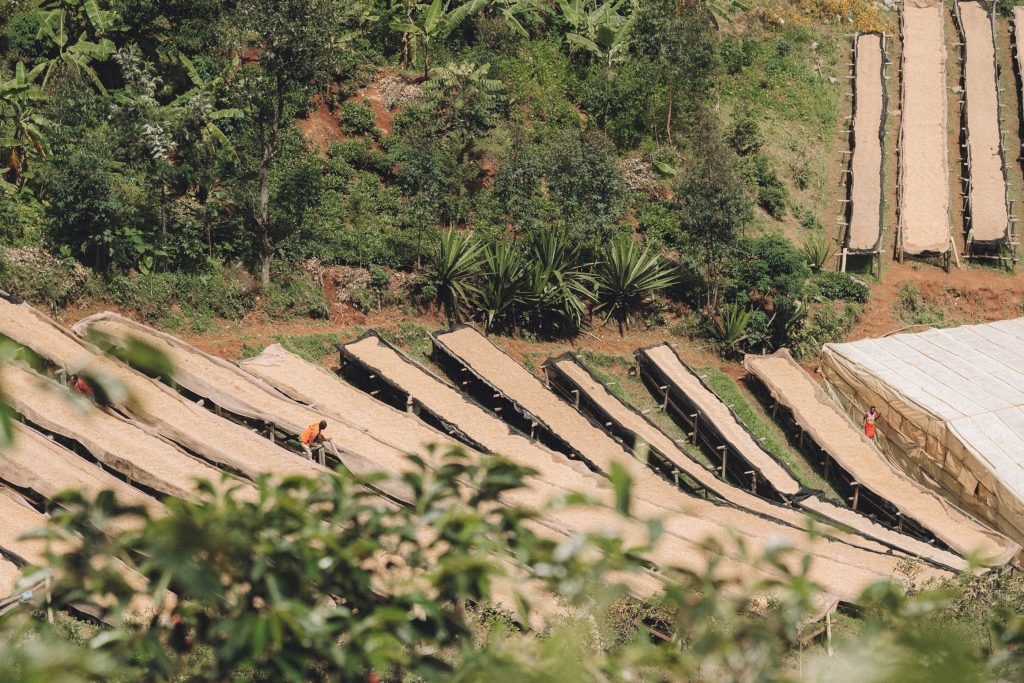
Long Miles started with a single washing station, Bukeye, whose first full harvest was processed in 2014. The station itself was evidently DIY, with a single bore hole for ground water and hand-hewn triple layer drying tables with tiny roofs on top for shade. Since that first year, Long Miles has been committed to the concept of day lots, separating almost every single cherry delivery by hill.
Long Miles Coffee Project
Since their inception Long Miles has been a microlot business through and through. All of their infrastructure, systems, employees, and marketing are shaped to support the complete differentiation of small, fully traceable day lots. Long Miles organizes their farmer base by the hills they live on, designating delivery days of the week for each microregion. This is common practice for processors in Burundi, but unlike most, Long Miles separates every hill and delivery day until processing is complete and a quality assessment has been made. Doing so in Burundi is especially difficult because farms produce very little cherry and are scattered across broad landscapes. They are also numerous, requiring the successful coordination of hundreds of farmers and processing staff just to produce a single differentiated lot. Such an effort requires sustainable prices to support, so the coffee itself needs to be as delicious as possible. Fortunately, LMCP excels at identifying landscapes and communities with potential, and investing heavily in farmer livelihood. With this formula they are easily producing many of the country’s best coffees each year.
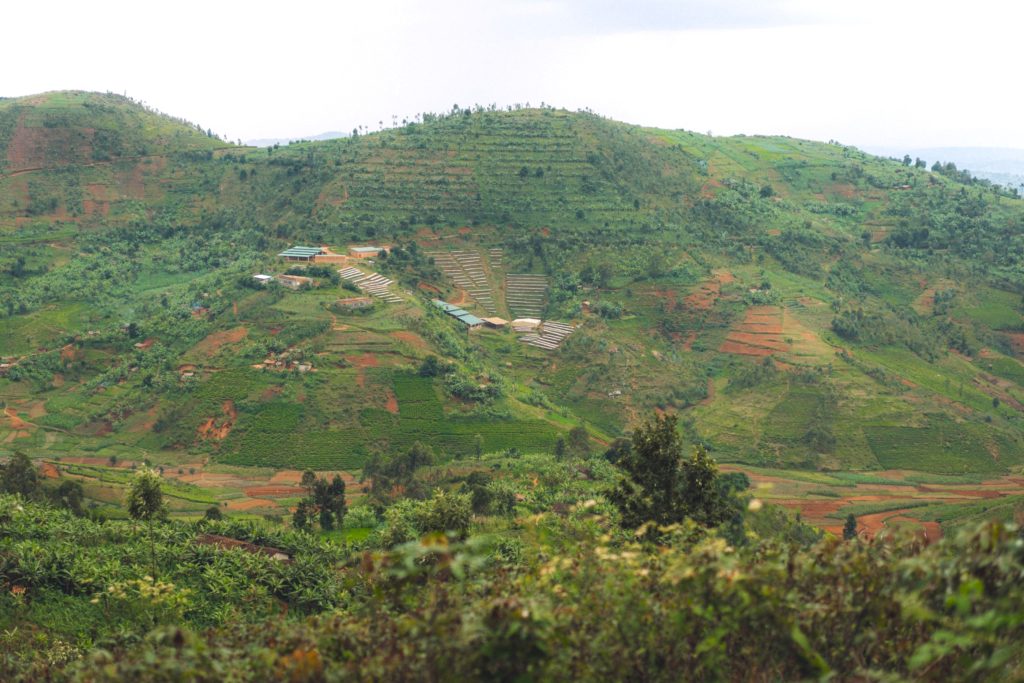
Long Miles operates three washing stations: Bukeye, their first, in Muramvya province, and Heza and Ninga, their second and third, both located in Kayanza province. Surrounding farmers that Long Miles works with often grow onions, tea, wheat, cabbage, corn, cassava and peas, all in addition to their coffee. Long Miles themselves manage two farms of their own on Nkonge hill, part of Heza’s catchment area, with a total of 5,334 coffee trees in production. All smallholder farmers are registered partners with Long Miles and receive not only highly competitive prices and post-harvest premiums for their cherry, but also farm-level trainings covering canopy and fertilizer development, pruning, harvesting for quality and integrated pest management. Farmer trainings are all provided by local “Coffee Scouts”, Long Mile’s team of community-based trainers who serve as local instructors. The education and high prices combined have helped many farmers renew their faith in coffee as a long-term livelihood. Long Miles works with a total of 5,700 farmers between their three washing stations, servicing 11 different hills.
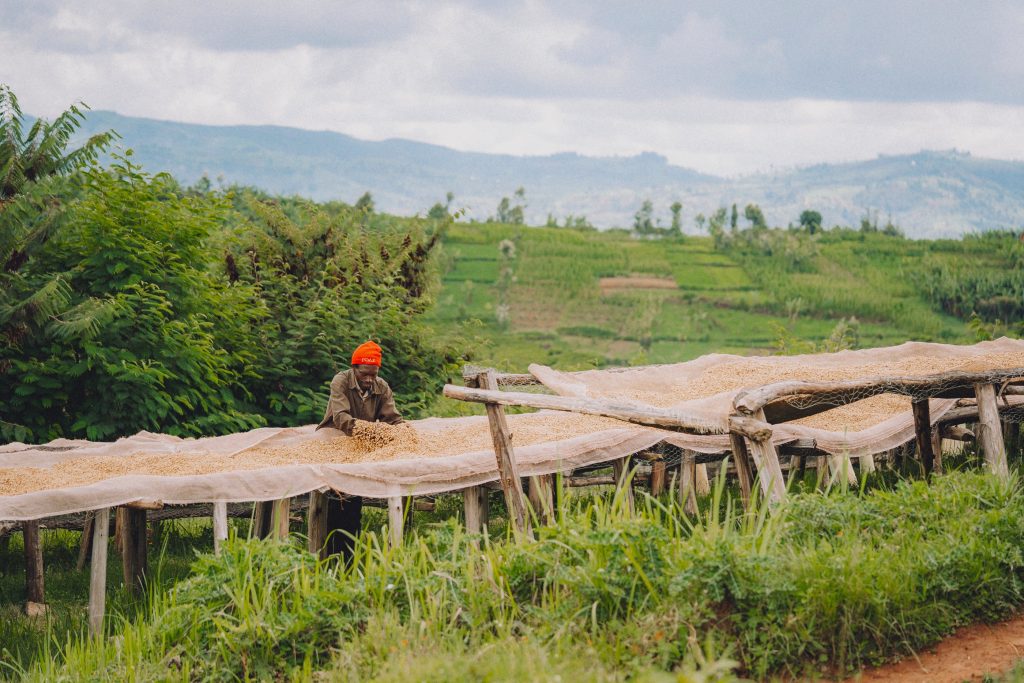
Washed processing at all three stations undergoes the same steps. Cherry is first floated and hand-sorted for maximum ripeness upon delivery. Once the cherry is depulped the parchment undergoes a double fermentation process, including a 12-hour dry fermentation, followed by a 24-hour wet fermentation, during which the parchment is submerged entirely in spring water. After the set of fermentations is complete the parchment is “footed”, or agitated by dancing barefoot in the parchment to help the decomposed mucilage completely detach. Once the agitation is complete, the parchment is rinsed in fresh water, graded by density, and left to soak another 4-6 hours in a final rinse tank. Post soak, the parchment is moved to shaded drying beds to allow residual surface water to evaporate, during which it is hand-sorted for any insect damage and visual imperfections. Parchment is then moved again to the larger beds with no shade to dry completely, a process that typically takes 16-20 days.
Peaberries are a naturally-occurring small and round bean shape that all coffees in the world contain. In Burundi, however, only 15+ screen size coffee is considered micro-lot quality, leaving the perfectly good smaller screens, such as the peaberries, rejected. Long Miles holds the peaberry sortings from each of their microlots throughout the harvest and then blends them together at the end of each year. They hand sort over and over again until the lot is the best it can be, creating a unique presentation of a regional blend that comes from their best overall coffees. Not only is the coffee citrusy, floral, and peachy sweet, but the physical consistency means the coffee is exquisitely easy to control in the roast.
Green
Green Analysis by Isabella Vitaliano
Very small beans from this lot with 70% in the 13 range. Density is a bit higher, and moisture content and water activity are in average ranges. All of these specs line up perfectly with expectations of coffee from Burundi. This coffee is impressive when you think of the restraints around connecting different regions of Burundi and even more impressive when we think about this coffee being a honey processed coffee. Not as straightforward as washed or natural, and communication between all ends of production needs to be clear and concise.
Bourbon was introduced to Bourbon Island from Yemen in the early 1700s but didn’t leave the island until the mid 19th century. The cultivar spread to other parts of the world as missionaries moved from Africa and the Americas. Still a common cultivar for parts of East Africa, you see it coming from Burundi as well as Tanzania and Rwanda.
Diedrich
Diedrich IR5 Analysis by Doris Garrido
Tangy clear honey and dried cranberry hit at the same time, followed by a pleasant cola mouthfeel and some comforting cinnamon, cream, and butter. It has a perfumed aroma and is a magically sweet, calm cup of coffee. I was thinking about all the times I have cupped this coffee, but I decided to brew the roast I did for this analysis so I can see exactly what I have done.
First of all, these are beautiful Peaberry beans. Because of that, I waited until the turning point to start my gas adjustments; I wanted to allow the coffee to absorb the heat slowly and avoid hurting the outside skin. I love to do a fast-drying phase when the coffee allows it, but for this one I waited, and it paid off well. I kept the rest of the roast really simple, using the airflow just to observe how the coffee developed.
I warmed up the drum and got it stable at 432°F before starting the roast. With these just slightly dense Peaberrys, I watched as the sensor started to sync with the temperature of the beans. As soon as it did, I started the gas—100% once I was at 190°F. Then I waited to reach 300°F and dropped to 30%. Just like that, energy was built. From there, I just watched the rate of change; seeing how it was struggling to drop, I started full airflow once the temperature reached 325.5°F. First crack was reached with a rate of change of 16°F, with the bean probe reading 383°F. With the remaining energy, I let it develop for one minute and 34 seconds.
I have been sipping the sweetness of this coffee while writing this, and even though I’m enjoying my cup, perhaps this coffee could use just a bit less heat. Instead of full gas, maybe 80% would mellow out the finish. The touch of florals and the complex sweet flavors are my favorites, but a little less power might refine that cola note at the end.
Aillio
Aillio Bullet R1 IBTS Analysis by Evan Gilman
We use the RoasTime app and roast.world site to document our roasts on the Bullet. You can find our roast documentation below by searching on roast.world, or by clicking on the link below. Take a look at our roast profiles below, as they are constantly changing!
It’s been a minute since I’ve had the opportunity to roast a Burundi coffee, and I’m happy to say I started with a phenomenal selection. I knew this was a dense but tiny coffee, with enough moisture content and water activity to provide a touch of resistance in the roaster. The consistent screen size meant that I didn’t need to hit it with too much heat to get it rolling, however. Remember that mixed screen sizes will need a bit more heat to get up to crack.
I started with a charge temperature of 464F, P9 power, and F3 fan. This is a pretty energetic start, so I ramped back heat to P8 once I reached turning point, then P7 once I hit what I determined was peak rate of change. A touch after yellowing, I increased airflow to P4 to pull this coffee through Maillard phase. Then at 5:30 / 365F I increased further to F5, something I usually reserve for after first crack. Before first crack, I ramped down heat to P6 and let the coffee coast along, only hitting P5 and F6 a little before dropping the coffee into the cooling tray. The result was almost even amounts of time in Green and Maillard stages, and 18% of the roast in post-crack development, with an end time/temperature of 8:06 / 394F. That initial heat really carried me through the roast!
This was a comforting yet compelling cup. Upon first taste, I found lots of black tea and floral notes, but as it cooled, I started to perceive dried fruit notes with caramelized sugar. Something like kettle corn without the corn, or puffed rice without the rice note. Crisp, yet sugary. Rice Krispie treat, perhaps? Anyhow, the sugars were clear and beautiful, and the fruit notes were light and airy. Did it keep me coming back for more sips trying to figure it out? Absolutely.
You can follow along with my roast here at roast.world: https://roast.world/egilman/roasts/Rbk9xs7RxNyzIF_kXh5Dc
Related Coffee
Tomato, caramel, orange, lime, and tropical fruit
Oakland 15 Boxes
Crown Jewel Kenya Washed Ngomano Factory
45KF0153 – 38302-1 – SPOT RCWHSE
Tomato, caramel, orange, lime, and tropical fruit
Spot
15 Boxes
$207.57 per box

Lime, raspberry, peach tea, honey, sweet, clean
Oakland 22 Boxes
Crown Jewel Rwanda Natural Busanze Washing Station
Lot 3 – 38186-1 – SPOT RCWHSE
Lime, raspberry, peach tea, honey, sweet, clean
Spot
22 Boxes
$206.66 per box

Orange blossom, ruby red grapefruit, cherry juice, bright, clean
Oakland 26 Boxes
Crown Jewel Rwanda Washed Rwamiko Washing Station
Lot 1 – 38183-1 – SPOT RCWHSE
Orange blossom, ruby red grapefruit, cherry juice, bright, clean
Spot
26 Boxes
$204.39 per box
Strawberry, lemon, rosemary, blueberry, dark chocolate
Oakland 12 Boxes
Crown Jewel Burundi Natural Bavyeyi IV
Lot 13N1 – 38691-2 – SPOT RCWHSE
Strawberry, lemon, rosemary, blueberry, dark chocolate
Spot
12 Boxes
$226.79 per box