
Crown Jewel Burundi Natural Bavyeyi IV
Lot 13N1 – 38691-2 – SPOT RCWHSE$226.79 per box
Boxes 12
Warehouses Oakland
Flavor Profile Strawberry, lemon, rosemary, blueberry, dark chocolate
Add to your artisan.plus account: 
 Download PDF
Jeanine Niyonzima-Aroian, the founder of JNP Coffee, is without a doubt one of the most influential individuals in Burundi coffee today.
22lb Boxes
Spot

Overview
Overview
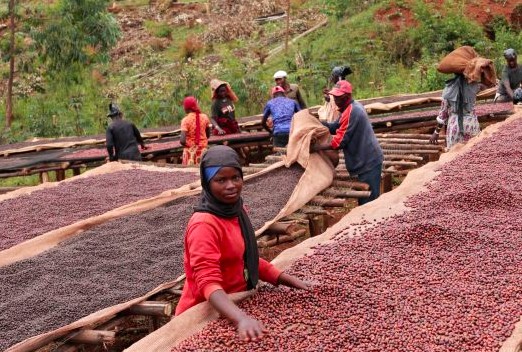
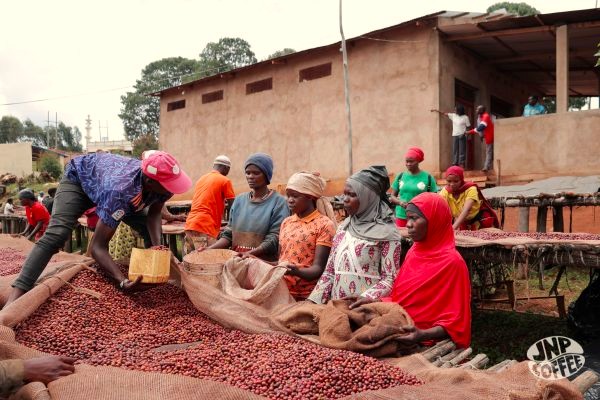
This is a minimal intervention natural coffee from Ngozi Province, Burundi, produced by members of the Bavyeyi community organized around JNP Coffee.
The flavor profile is sophisticated and wine-like, with fresh coriander, cooked orange, and fennel layered over ume boshi and saffron, with a luscious, mineral depth more reminiscent of a fine tea than a fruit-forward natural.
Our roasters found this natural Bourbon prefers careful heat control, a shorter drying phase and gradual gas reductions, including a full burner drop before first crack, preserved the sparkling, wine-like acidity that makes this coffee so distinctive.
Our collective favorite brews trended towards a finer grind setting to really strike a balance between the bright acid structure of this coffee with underlying desserty sweetness.
Taste
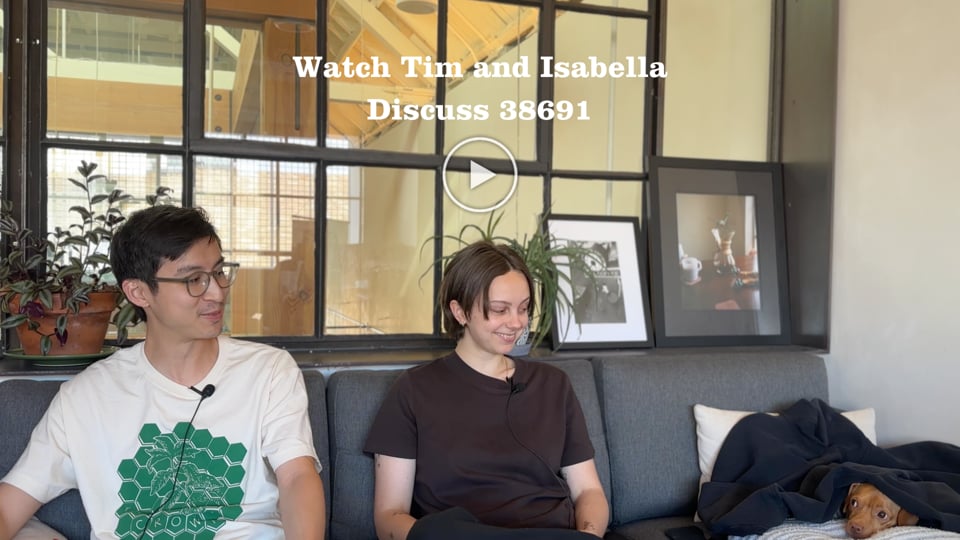
Taste Analysis by Isabella Vitaliano
Jeanine is the founder of JNP coffee and is a long-time partner of Royal Coffee. As soon as you meet her, you realize how enigmatic and charming she is. She sort of radiates this regal energy as she floats around the room. The only time I have briefly met Jeanine is on the floor at EXPO in previous years. And to meet her in such chaotic circumstances and still emanate this is extremely impressive. Her coffees are as enigmatic as she is – if not more so. She has built a reputation over the past 15 years by curating some delicious coffees and also supporting women in the industry. For me, this coffee breaks down preconceived notions about typical flavors coming from the region. I find that the range of great coffee can feel narrow if it’s not fitting into these exact molds of what is expected. With fresh coriander notes, cooked orange and mineral-like wines, this coffee really takes Burundi coffee 10 steps forward. It’s intricate. It’s subtle. And most importantly, delicious.
An amalgamation of merlot, fresh fennel, ume boshi and saffron, this coffee is sophisticated to say the least. It diverges from your typical natural Burundi coffees in that it is luscious and full of flavor notes of a subtle expensive tea rather than a high acid fruit forward profiles. Doris and I, while tasting this got loads of different wine flavors such as orange wine and mineral like notes that are common in white wines.
Source
Source Analysis by Charlie Habegger
Jeanine Niyonzima-Aroian, the founder of JNP Coffee, is without a doubt one of the most influential individuals in Burundi coffee today.
Raised in the capital city of Bujumbura, Jeanine would go on to earn an MBA from Northwestern University’s prestigious Kellogg School, cycle through corporate America, and eventually reconnect with her birth country by founding Burundi Friends International, a not-for-profit funding educational and economic empowerment programs for rural Burundians, which is now in its 13th year. After a few years marketing Burundi coffees stateside for friends and family, Jeanine realized she had every reason to lead the business, and JNP Coffee was born.
Coffee grown in Ngozi Province has a special meaning for Jeanine, as that is where her mother grew up. Memories of her mother, leading the family’s coffee harvest to cover school fees, are woven into the name for this coffee. Bavyeyi in Kirundi translates to “parents,’’ a name given to honor the generations of hardworking parents, like Jeanine’s, whose labor in coffee (something many farming families either do not consume or cannot afford to consume) provides shelter, nourishment, and educational opportunities to their children. The producer group is women-owned and works closely with JNP Coffee’s trained Q Graders in Burundi on best quality practices and lot curation. Indeed, this coffee itself is comprised of five unique processing lots from different days throughout harvest.
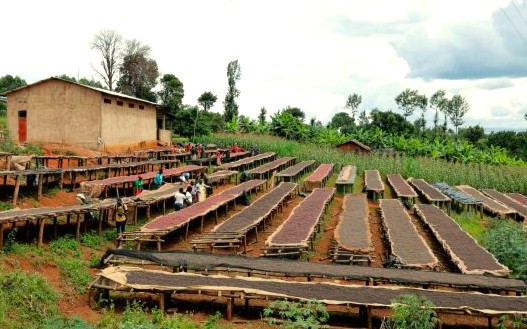
Drying naturals in the high and cool Ngozi climate is a painstakingly slow process, often taking 45 to 60 days to complete, during which the coffee is continuously circulated for even air exposure. Despite having one of the longest drying periods in the world, the cup profile is noticeably mild in process, expressing a piqued raisin sweetness, rich almond paste, and brisk orange acidity.
JNP Coffee is highly focused on women’s empowerment, and along with a few local women’s rights advocates, supported the Burundi chapter of the International Women’s Coffee Alliance. IWCA farmer members in Burundi now number more than 2,000, whose coffee is differentiated by membership, marketed for its traceability and impact, and has generated end-of-year premiums. JNP Coffee has created additional programs to expand their farmer base and generate Dushime™ premiums. It seems they can’t expand fast enough. In Kayanza and Ngozi, the heart of the nation’s coffee production regions, competition for cherry can be fierce, so washing stations may pay well above the country’s minimum price to court premium harvests. JNP Coffee goes a step further, returning second payments to farmers and investing in opportunities for education and community building.
Green
Green Analysis by Isabella Vitaliano
This coffee is well balanced in the cup and has the specs to match up to it. Density is a little bit below average and with moisture coming in at an average pace along with water activity. Screen size is in a moderately compact range and you’ll notice lovely sweet florals coming off of the green coffee.
Bourbon was introduced to Bourbon Island from Yemen in the ealry 1700s but didn’t leave the island until the mid 19th century. The cultivar spread to other parts of the world as missionaries moved from Africa and the Americas. Still a common cultivar for parts of East Africa, you see it coming out from Burundi as well as Tanzania and Rwanda.
Diedrich
Diedrich IR5 Analysis by Doris Garrido
Occasionally, I taste coffees that mimic the crisp sophistication of a fine white wine, but our newest arrival from JNP coffee not only does exactly that but combines its inherent fruity sweetness, resulting in a well-balanced cup.
As expected, this coffee showed its elegance at the cupping table during its arrival tasting. Between all the notes we collected that day, I vividly remember – among many others- Brut sparkling wine, probably because of its dry, acidic and mineral notes.
For this roast, I approached the first phase -Drying- by starting with a slightly higher charge temperature combined with 70% of the gas power in order to shorten the drying time to around 4 minutes. I chose this method because it allows me to taper the heat more easily during yellowing. Since this coffee is Natural process Bourbon, I was looking to avoid reaching excessively high temperatures, aiming instead to smooth out this phase and reach development as evenly as possible.
At 3:44 minutes into the roast, I dropped the gas to 45%, so the rate of change started to drop. I marked the color change at 302⁰F, and just past 5 minutes, I dropped the gas again to 30%. I noticed at this point that I needed to pull the brakes again, so I dropped the burners to 0% for close to 2 minutes before bringing them back and immediately opening the airflow. I marked the First Crack at 389⁰F and developed the coffee for 1:29 minutes. This resulted in an overall duration of 9:18 minutes; this Burundi Natural hit the cooling tray with sweet intense aromatics. The final cup retains the vibrant, sparkling acidity we loved at the arrival tasting, now balanced by the deep sweetness of maple syrup, honey, and blood orange, while maintaining those mineral notes that evolve into some rhubarb, orange wine, and mangosteen.
Aillio
Aillio Bullet R1 IBTS Analysis by Chris Kornman
We use the RoasTime app and roast.world site to document our roasts on the Bullet. You can find our roast documentation below by searching on roast.world, or by clicking on the link below.
Take a look at our roast profiles below, as they are constantly changing!
We source relatively little coffee from Burundi, but when we do, it slaps. I’m thrilled to have had the opportunity to roast this little microlot of naturally processed coffee, exported for us by my friend Jeannine Nyonzima-Aroian and her organization, JNP coffee.
I started roasting using my standard 500g quick roast, which employs a static drum speed, starts hot, and gradually reduces burner power and increases fan speed. I wanted to ensure the coffee spent ample time in Maillard Reactions and color change, so I pumped the brakes a little early and used a more active management strategy for both the heat and fan speed, which was critical to developing and maintaining sweetness, especially since the coffee began to yellow earlier than I expected. I also noted a lot of dark chaff appearing fairly early in the roasting process, and endeavored to mitigate this with increased fan speed. Watch this closely as you roast, and try not to let the excess chaffiness affect your filter or exhaust.
I kept the post-crack development short and sweet, with a low rate of rise. The roast was thoroughly enjoyable, with clean deep fruit flavors apparent from fragrance to cup. I tasted black grape and blackberry jam, while colleagues noted fig, date, mango and toffee. This is a wonderfully sweet coffee and I’d suggest it is at its best at lighter colors and longer Maillard durations.
You can follow along with my roast here at roast.world: https://roast.world/ckornman.wnD2/roasts/8tVx5QCzfH4UasktwDOZw
IKAWA
Ikawa Pro V3 Analysis by Isabella Vitaliano
Our current Ikawa practice compares two sample roast profiles, originally designed for different densities of green coffee. The two roasts differ slightly in total length, charge temperature, and time spent between color change in first crack. You can learn more about the profiles here.
Burundi is back in town baby! East African coffees are ready to take over and this intricate but soft natural processed coffee is the stuff people are really looking for. The low density roast of this coffee had lots of truffle notes and flavors like orange wine and marzipan. The high density roast of this coffee was much more complex in acidity as well as variety of flavor notes. In leaned towards tropical but still stayed in that saffron/herbal range. I highly recommend drinking the high density version of this roast!
You can roast your own by linking to our profiles in the Ikawa Pro app here:
- Roast 1: Low Density Sample Roast
- Roast 2: High Density Sample Roast
Brew
Brew Analysis by The Crown Baristas
JNP coffee is always an exciting time of the year, and some of the my favorite natural coffees have come from this region. This coffee was a lovely desserty drink to brew and our team had a lot of fun digging into this!
Our favorite brew was made on a conical with a moderate dose, at a fine grind setting. This brew came in at an 18.47% extraction with a TDS of 1.35, and the conical brewer really helped bring forward many of the sweet citrus notes to the forefront of the coffee. Our team noted blood orange, lemongrass and strawberry, backed by notes of graham crackers and pistachio, to really round out the flavor profile of this brew. The finer grind helped lean into the richer mouthfeel of this natural process coffee and made for a cohesive drinking experience.
Our second favorite brew was made on a flat-bottomed brewer with a moderate dose, at a fine grind setting. This brew came in at a similar 18.92% extraction, with a TDS of 1.33. This recipe really highlighted some of the fruited tart characteristics and acid structure that we’ve come to love with Burundi coffees. Our team tasted notes of strawberry lemonade, mango, and dark chocolate. These flavors really came through nicely with the richer mouthfeel from this coffee.
This Burundi coffee really is a treat and made for a sweet, fruited, and tart adventure in coffee! Our collective favorite brews trended towards a finer grind setting to really strike a balance between the bright acid structure of this coffee with underlying desserty sweetness. We recommend a moderate dose and really split the difference as to brewing dripper – all to say, this coffee really does taste great across different brew devices! We hope you enjoy!
Related Coffee

Lime, raspberry, peach tea, honey, sweet, clean
Oakland 24 Boxes
Crown Jewel Rwanda Natural Busanze Washing Station
Lot 3 – 38186-1 – SPOT RCWHSE
Lime, raspberry, peach tea, honey, sweet, clean
Spot
24 Boxes
$206.66 per box
Tomato, caramel, orange, lime, and tropical fruit
Oakland 15 Boxes
Crown Jewel Kenya Washed Ngomano Factory
45KF0153 – 38302-1 – SPOT RCWHSE
Tomato, caramel, orange, lime, and tropical fruit
Spot
15 Boxes
$207.57 per box

Orange blossom, ruby red grapefruit, cherry juice, bright, clean
Oakland 27 Boxes
Crown Jewel Rwanda Washed Rwamiko Washing Station
Lot 1 – 38183-1 – SPOT RCWHSE
Orange blossom, ruby red grapefruit, cherry juice, bright, clean
Spot
27 Boxes
$204.39 per box
Coconut, piña colada, mango, upside down pineapple cake, floral
Oakland 8 Boxes
Crown Jewel Colombia Carbonic Honey Mango/Coconut Co-Ferment Pedro Nel Salazar
38870-1 – SPOT RCWHSE
Coconut, piña colada, mango, upside down pineapple cake, floral
Spot
8 Boxes
$392.02 per box