
Crown Jewel Timor Leste Organic Washed Café Brisa Serena
38840-1 – SPOT RCWHSE
Boxes 0
Warehouses Oakland
Flavor Profile Orange, vanilla, mandarin, cocoa, chocolate
Out of stock

Overview
Overview
This is a low intervention washed coffee from the Ducurai village of Timor-Leste, produced by ten farmers organized around Café Brisa Serena. It is certified organic and comes with full farmgate pricing transparency.
The flavor profile is rich and decadent, layered with caramelized sugars, chocolate and spice, and lifted by notes of lemongrass, grapefruit pith, and aromatic herbs.
Our roasters found that a strong early heat application followed by a controlled taper and steady development maximizes caramelization while preserving the Timor Hybrid’s lively zestiness.
When brewed as espresso, a moderate dose with a high yield and moderate extraction time works well; as a pour-over, it performs best with a finer grind, slightly lower dose, and extended bloom to increase extraction.
Taste
Taste Analysis by Isabella Vitaliano
Coming from the Ducurai village, this low intervention coffee is produced by a small group of producers organized by an organization that works closely with a Japanese NGO created to support the country in the early years of East Timor’s independence. The land is rich with biodiversity and low wetlands; coupled with the meticulous eye of the producers, you get an eclectic but fan favorite cup with flavors of tiramisu, lemongrass and allspice.
Heavy caramelized sugars make up a bulk of the experience with even notes of crème brule, flan and grapefruit pith. It has your classic chocolatey and spice flavors that one might expect from the region. The textural experience of this coffee is quite decadent with flavor notes like pudding and chocolate truffle. Other flavor elements like vanilla bean, palo santo and sage also add to this crow pleasing flavor profile.
Source
Source Analysis by Charlie Habegger and Evan Gilman
Timor-Leste, or East Timor, takes up the eastern half of the greater Timor island, part of the Indonesian archipelago and not far from the northern coast of Australia. It is a young republic with a long and chaotic political history, having only achieved full independence in 2002, after almost 500 years of consecutive occupations by the Portuguese, the Dutch, and Indonesia.
Timor-Leste’s coffee is small in overall scale but highly significant to the Timorese, 25% of whom rely on coffee production for their livelihood. The island’s inland forests also happen to be historically significant, being the origin of coffee’s most adaptive genetic cross—the Timor Hybrid—a natural breeding of local robusta and typica trees that was identified in the 1920s, and whose vigorous genetics can be found in countless timor-based cultivars in almost every producing country today. The island’s isolation has also allowed for a unique preservation of endemic typica variety coffees, whose purity and diversity resembles that of nearby Papua New Guinea, and expresses similarly in the cup.
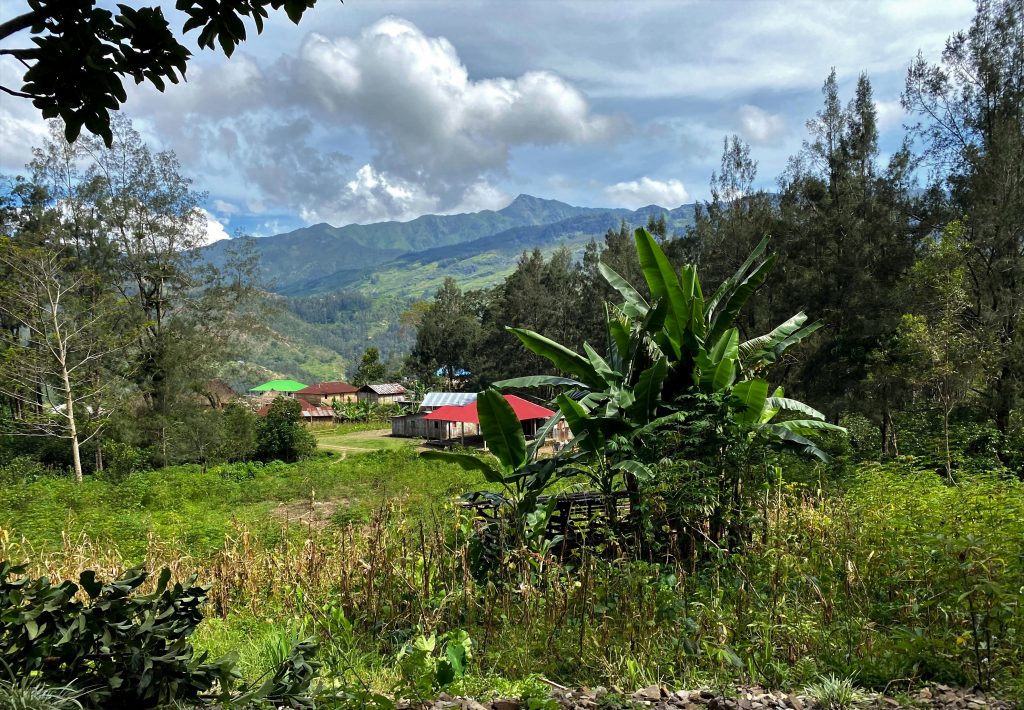
The greater Timor island is sun-baked and humid along its coast, but the interior quickly rises to lush and rugged highlands, with sharp ridges and vibrant grass-covered slopes. The Ermera municipality is one of the island’s highest in elevation and includes its highest peak, Tatamailau. The villages in the mountain’s vicinity are where Café Brisa Serena (CBS), a social enterprise and exporter, has spent the last 15 years developing smallholder coffee value chains.
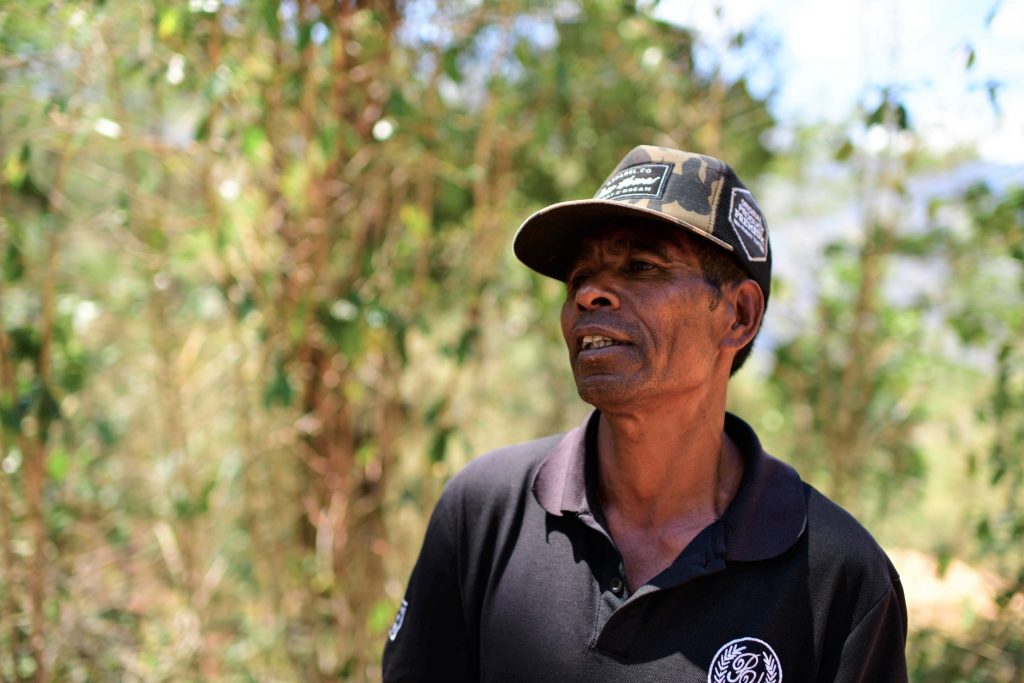
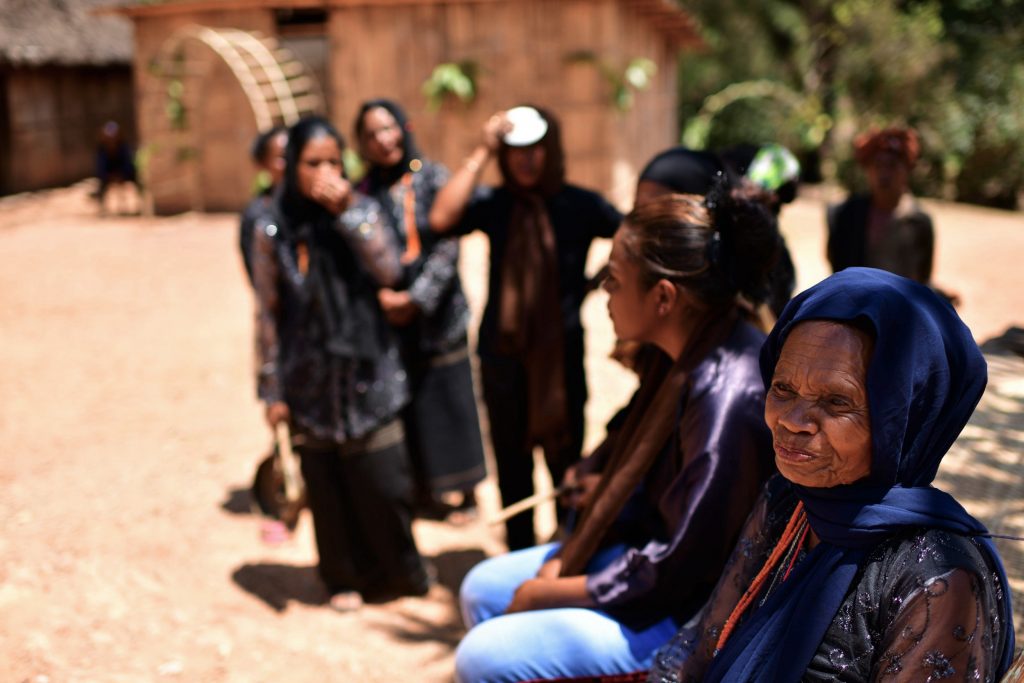
This coffee is produced by 10 select farmers from the Ducurai village, whose group is called “Lebudu Kraik”, which translates to “lower wetlands” and comes from their particular location on the mountainside. The Ducurai village is just north of Tatamailau’s peak and Lebudu Kraik is one group in a small portfolio we import each year from CBS, who began by training remote smallholders in farm management and processing, and who is now a highly capable exporter with some of the best smallholder traceability in the world. Each year we receive a spreadsheet with farmer names and farm data, as well as parchment prices paid. This harvest Lebudu Kraik group farmers received $3.50 per kilogram of dried parchment, which after final dry milling is roughly equivalent to $2.27 per pound of exportable green coffee.
Coffee in Letefoho is not young. Trees are tended to for decades, and due to the lofty, vine-like typica varieties throughout, coffee is often harvested by leaning long wooden ramps against the trunk so that pickers can access the sprawling canopy. Farms range between 0.5 and 1.5 hectares only and tend to be well-shaded by evergreen she-oaks, a natural mulcher and nitrogen fixer. During harvest coffee is picked painstakingly by hand and processed at home on personal or shared pulping equipment, which is often hand-made using wood and textured metal discs.
After fermenting in small personal containers, the coffee is dried on raised beds and constantly sorted for quality. Many of the current harvesting and processing standards come directly from CBS, who have helped establish specialty protocols and invested in improvements to processing equipment. The addition of drying structures, for example, has greatly improved farmers’ ability to consistently meet quality standards for moisture content and water activity. In addition to coffee, Ducurai farmers also manage personal crops of taro and cassava, as well as pigs, goats, fowl, and cows, and many also have personal compost programs in addition to being organic certified.
Café Brisa Serena works with over 400 farmers in the Letefoho area. The organization was formed in close collaboration with Peace Winds Japan, a Japanese NGO that had been working in Timor-Leste’s coffee lands during the first decade after independence, when violence and crumbled infrastructure had disenfranchised many remote coffee communities. CBS continued the development work of Peace Winds, and in 2015 began a formalized specialty export chain. CBS also runs a café in Dili, the nation’s capital, where it promotes Letefoho’s specialty coffee to locals.
For more on CBS and Peace Winds Japan, see Evan Gilman’s interview with Armando de Araujo of CBS, here: https://royalcoffee.com/producer-interview-armando-de-araujo-from-cafe-brisa-serena-timor-leste/
Green
Green Analysis by Isabella Vitaliano
This region commonly grows both Timor Hybrid as well as Typica. Timor Hybrid is a spontaneous cross between robusta and arabica which indicates it is heartier and more resilient to climate change as well as diseases and pests compared to other arabica cultivars.
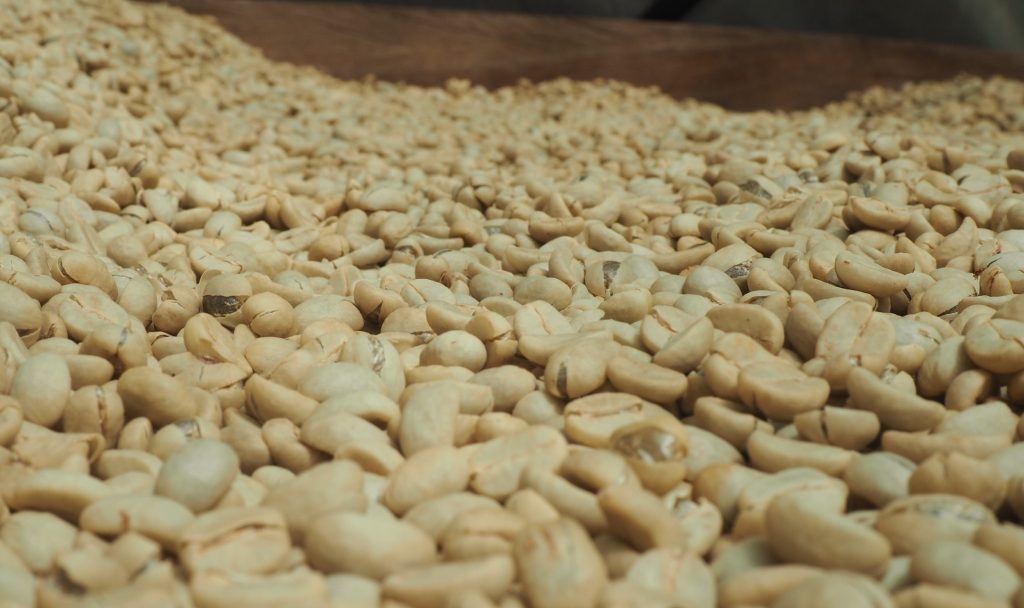
Density is slightly below average, and the moisture content is slightly above average ranges. We found the green on this coffee is especially clean visually; often coffee from this region can look a little bit funky. Ideal moisture specs paired with a condensed screen size indicated easy breezy roasting. Moisture will dissipate in the roaster evenly and give you reliable results every time.
Diedrich
Diedrich IR5 Analysis by Doris Garrido
One of the aspects I truly enjoy about the Timor Hybrid is its inherent sweetness and the beautiful way the sugars caramelize. The zestiness from its Robusta lineage, combined with the refined sweetness of its Arabica roots, results in a remarkably approachable and comforting cup. Every year, I look for that specific caramelization, and this harvest has not disappointed.
For this profile, I began with a drum preheat of 440F. I utilized 50% of the airflow from the start to soften the initial thermal change while maintaining a far amount of heat. At the one-minute mark, I applied the full gas, allowing the roast to build energy for just under three minutes before dropping to 30%.
Color change occurred at a bean temperature of 304F. From that point, I opened the airflow fully and utilized the remaining thermal energy to drive caramelization. I hit the first crack at 381.3F at the 7:46/minutes mark. The development phase ran smoothly, with a rate of change sliding from 14.4/minute, down to 5.9/min. These intentional gas changes allowed me to highlight the candied caramel notes while preserving the Timor’s characteristic zestiness.
The final results confirm this coffee’s incredible sweet potential. In this roast, I noted: on sugar and texture, creme brulee caramelized sugars, and buttery flan like mouthfeel. On the complexity, chocolate tiramisu, vanilla beans and allspice. And on the top notes, lemongrass, black pepper, palo santo, and grapefruit pith.
The sweet and citric acidity integrates perfectly with the caramel sweetness. I also had the opportunity to taste a well dialed espresso shot from the amazing barista Thi Tran during his espresso analysis, and I got, and it was a beautiful balance of extraction, zesty without being overwhelming, and deeply sugary. It is a non-presumptuous espresso that simply get the job done: it’s a shot to relax with and enjoy
Aillio
Aillio Bullet R1 IBTS Analysis by Chris Kornman
We use the RoasTime app and roast.world site to document our roasts on the Bullet. You can find our roast documentation below by searching on roast.world, or by clicking on the link below.
Take a look at our roast profiles below, as they are constantly changing!
I had the pleasure to take up the Bullet roasting mantle this week in Evan’s absence and enjoyed this easy-to-roast coffee form Timor-Leste, a familiar addition to our Crown Jewel lineup that comes with farmgate pricing transparency and an Organic certificate. One of my favorite things about these coffees is the inclusion of the Timor hybrid, a canephora-arabica cross that spontaneously occurred on the island. While it’s one of the most important genetic contributions to coffee in the last century, used most commonly as an ingredient in Catimor and Sarchimors worldwide, it’s rarely grown commercially on its own. While some may turn their noses up at its robusta roots, I’m always impressed at the cleanliness in the cup when presented, as it is here, by the smallholder farmers associated with Cafe Brisa Serena.
The roast followed fairly closely my standard 500g quick roast, which employs a static drum speed, starts hot, and gradually reduces burner power and increases fan speed. The main adulteration in my standard profile was an extension of post-crack development to about 2 minutes at relatively low ROR, giving the coffee a little additional time to brown and sweeten without loosing some of the fun flavors of terroir and cultivar.
It’s an easy-going coffee, and one that could certainly handle a darker roast degree if that’s your preference. In this instance, we found the coffee’s flavor reminded us of almond and peanut butter, chocolate, golden raisin, dried citrus, and sweet herbs. It’s arrived just in time for longer days and warmer weather, and we’re roasting it in similar style for our house cold brew at The Crown.
You can follow along with my roast here at roast.world: https://roast.world/ckornman.wnD2/roasts/drqjaTmNXQCQkRYQL_eEU
Brew
Brew Analysis by Joshua Wismans
Some coffees seek to challenge preconceived notions of origin characteristics, and some coffees highlight and elevate what makes the region unique. This coffee from the farmers of Lebudu Kraik fulfills the promises of the latter. Their work here is distinctly Timor in its profile while also being profoundly delicious. When this coffee is properly expressed, you’ll find a wonderful balance of nutty sweetness, citrus, and florals.
It’s important to note that this coffee is not very soluble. Our first brews started with a slightly fine grind and we quickly realized we need to go much finer. We also started on a conical brewer, but made the switch to a flat-bottom brewer after deciding that the maple like sweetness of this coffee was something to lean in to rather than try an balance.
Our recommended brew is very finely ground, with a slightly lower dose and a long bloom time to help increase extraction. Our favorite brew ended up with a TDS of 1.39 with a fairly long brew time because of the fine grind and long bloom time. Paired with a flat bottom brewer, you’ll find a cup that has a beautiful cream soda sweetness, Meyer lemon acidity, florals, and cashew.
Espresso
Espresso Analysis by Tim Tran
In a world of constantly evolving specialty coffee, we find people pushing the boundaries of what a coffee can accomplish. What is important to hold on to, and what this washed Timor-Leste coffee does exceptionally, is the notion of comfort flavors in an approachable manner. While certainly jam-packed with flavor, this coffee was incredibly easy and transparent in the profile of flavor it presented. Incredibly sweet in the cup, I had a lot of fun digging into how this coffee extracted on espresso. Perhaps a noteworthy comment to make, all my favorite shots were extracted to slightly higher yields, but maybe a testament to these flavors being best appreciated slightly stretched out in the body of the espresso.
My favorite shot was brewed with a dose of 18.5 grams with a 48 gram yield in 23 seconds. This shot featured caramel and flan sweetness upfront balanced around orange and lemongrass notes. For a higher yield shot, the espresso maintained a fairly buttery body that accented the prominent flavors found up front in the espresso.
My second favorite shot was brewed with a dose of 19 grams with a 42 gram yield in 29 seconds. This shot brought out a little more acidity with a shift in the sweetness profile to be more reminiscent of almonds, cashews and other sweet nuts underscored with notes of dates.
A fun espresso to dig in to and absolutely a testament to delicious terroir, this coffee was a treat to sip on and the higher yield shots meant all the more to sip. Ultimately, I recommend this coffee brewed as espresso with a moderate dose, high yield with a moderate extraction time. We hope you enjoy!
Related Coffee
White Tea, basil, biscoff cookie, cacao, candied fruits
Oakland 41 Boxes
Crown Jewel Bolivia Organic Washed Yulissa Chambi
39122-1 – SPOT RCWHSE
White Tea, basil, biscoff cookie, cacao, candied fruits
Spot
41 Boxes
$220.94 per box
Cherry, grapefruit, apricot, floral, and lime
Oakland 24 Boxes
Crown Jewel Colombia Washed SL-28 Juliana Guevara & Wbeimar Lasso
38868-1 – SPOT RCWHSE
Cherry, grapefruit, apricot, floral, and lime
Spot
24 Boxes
$259.91 per box

Green apple, jolly rancher, apple, mojito, apple cider
Oakland 2 Boxes
Crown Jewel Colombia Carbonic Honey Green Apple Co-Ferment Edwin Noreña
37700-2 – SPOT RCWHSE
Green apple, jolly rancher, apple, mojito, apple cider
Spot
2 Boxes
$367.77 per box

Lime, raspberry, peach tea, honey, sweet, clean
Oakland 14 Boxes
Crown Jewel Rwanda Natural Busanze Washing Station
Lot 3 – 38186-1 – SPOT RCWHSE
Lime, raspberry, peach tea, honey, sweet, clean
Spot
14 Boxes
$206.66 per box