
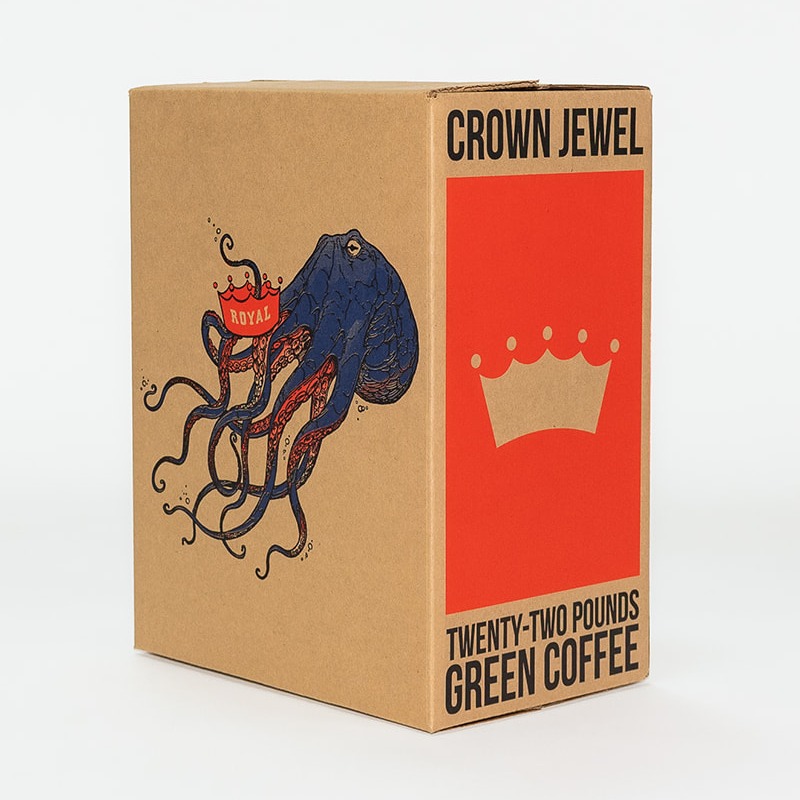
Crown Jewel Sumatra Anaerobic Wet Hull Kampung Kenawat Region
35821-1 – SPOT RCWHSE
Boxes 0
Warehouses Oakland
Flavor Profile Chocolate, rosejam, black tea, and brown sugar
Out of stock

Overview
Overview
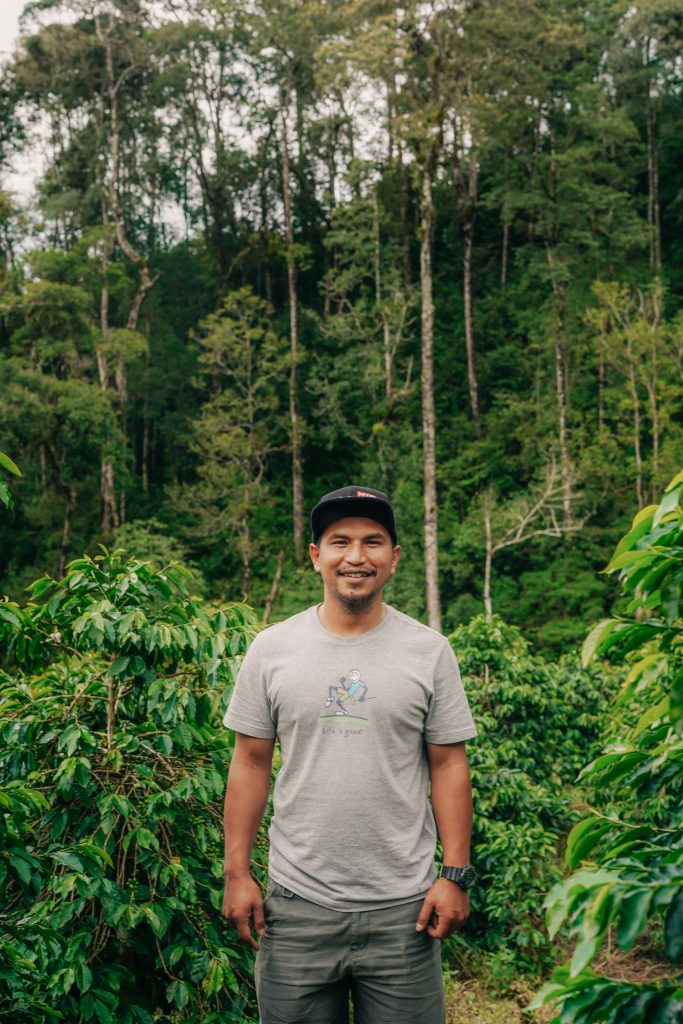
This is an anaerobically fermented and wet hulled coffee from the Aceh region of the Indonesian island of Sumatra, produced by six smallholder farmers organized around the Adena Coffee Kenawat Coffee Mill.
The flavor profile is very clean and sweet with a tangy tart acidity and loads of fruitiness without going completely over the top. It tastes like pineapples, papayas, and rose petals.
Our roasters used a low charge temperature and a slightly slower approach to this anaerobic and wet hulled coffee.
When brewed, we found the coffee versatile but most liked a moderate dose and a coarser grind to strike the optimal fruity/floral balance.
Taste
Taste Analysis by Chris Kornman
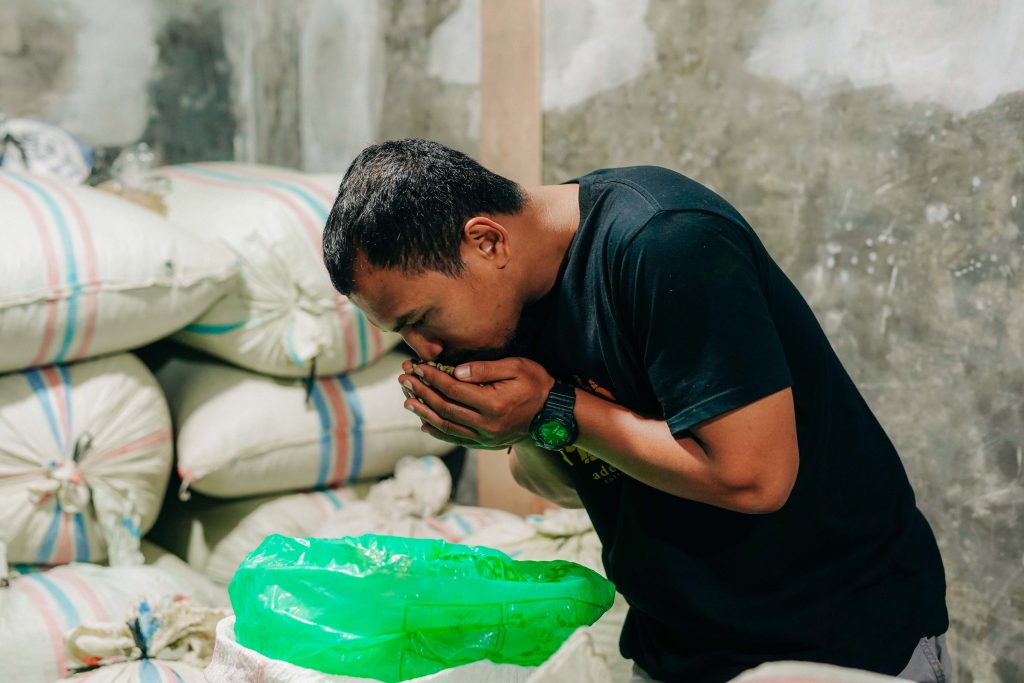
Evan Gilman (who was responsible for sourcing this coffee and is ever at the ready to defend the honor of Indonesian coffees) and I cup somewhat frequently together and were at the table for the selection of this lot – a unique combination of new-wave fermentation techniques and classic regional wet hulling post-harvest processing. We both agreed, it was fruit forward, sweet, and not without the hint of… can you call wet hulling “terroir?” Or is it something else, “intervention,” perhaps?
At any rate, it’s an exception to expectations (or at least my admittedly biased ones) about flavors. At that tasting, we mentioned peaches and plums, pink starburst candies and papayas and pineapples, and also some words which do not start with the letter “p,” such as rosemary and hibiscus.
Both of these techniques – anaerobic fermentation and wet hull processing – have their stigmas for those amongst us not attuned to their particular brands of tastes, our sensitivities assaulted by “booziness” on the one hand and “earthiness” on the other, vilifying them as egregiously bold and as affronts to traditionally celebrated delicacies such as florality, fragility, and faint fruitiness.
This coffee brings both branches of flavor to the table, refines some of the more jagged-edged assertions of their genres, and presents us with a wholly engaging and thoroughly delightful coffee that neither erases its origins nor offends with painfully obvious overtures. Rather, it pleases the senses.
Sample roasts on arrival Doris’ production roast produced a coffee we celebrated for its sweetness – cotton candy-like and clean – and its fruitiness that reminded us of guava, cascara, dried cranberries and figs, and rosehips.
It is a very good and very clean coffee, deliciously sweet, tangily tart, and endlessly enjoyable.
source
Source Analysis by Royal Coffee
Regional details
Tradition runs deep in the province of North Sumatra on the island of Sumatra, renowned for cup profiles and the classic Indonesian style of coffee cultivation and processing. Coffee is cultivated and harvested from farms that average less than 3 acres in size. Producers belong to the Hutasoit tribe and maintain a traditional village lifestyle that includes houses that resemble ships. Seventy percent of the producers are women who rely on coffee income to support their families.
Processing Details
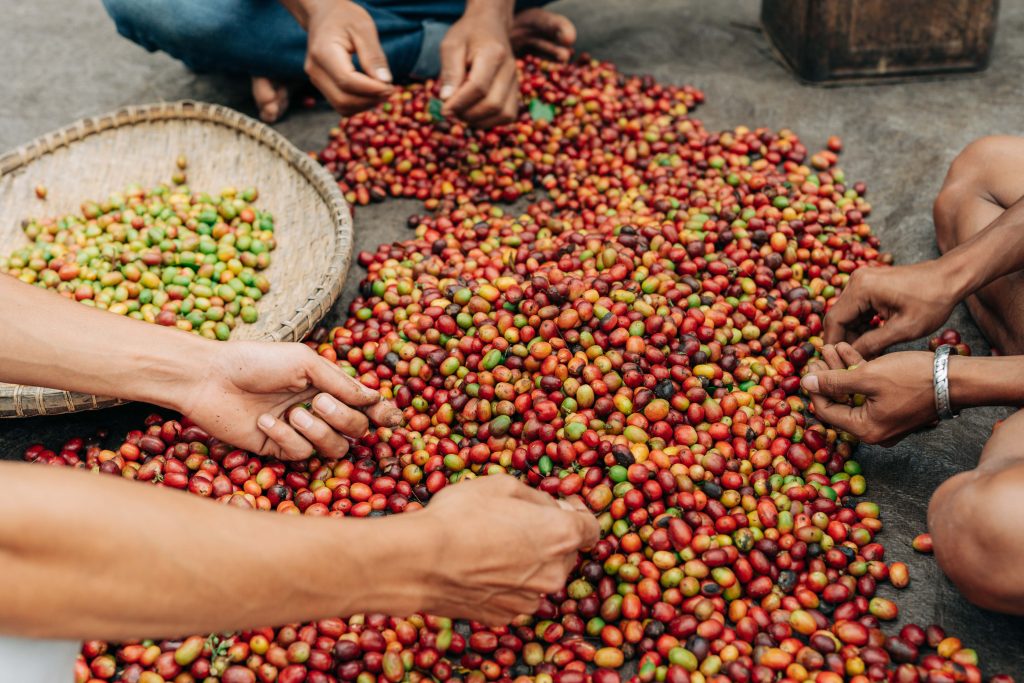
Each producer carefully sorts their harvested cherries before depulping and fermenting overnight with small micro-mills. The coffee takes on a unique step in fermenting in which the depulped coffee is sealed in airtight containers that allow the fermentation to be extended for up to seven days. Then the coffee is washed and laid out on patios to shed the excess water from the parchment covered beans. Next the coffee takes the traditional Indonesian detour from the conventional path of processing in other origins, wherein, the coffee parchment is removed while the coffee still has a high moisture content. This wet-hulling process, called Giling Basah in the Indonesian language, leaves the coffee bean exposed while drying on patios to a moisture percentage acceptable for export. This Indonesian processing method gives the bean its unique bluish color and the hallmark Indonesian profile.
Exporting Details
With Indonesian coffees, half the battle is overcoming logistical challenges like rugged roads and unpredictable torrents of rain. Adena Coffee, an export company, takes on an important role of organizing local warehouses and transportation so farmers can overcome these challenges. Adena Coffee Kenawat Coffee Mill also coordinates the dry-mill process to swiftly bring the coffee to the international market, ensuring greater earnings for producers.
Green
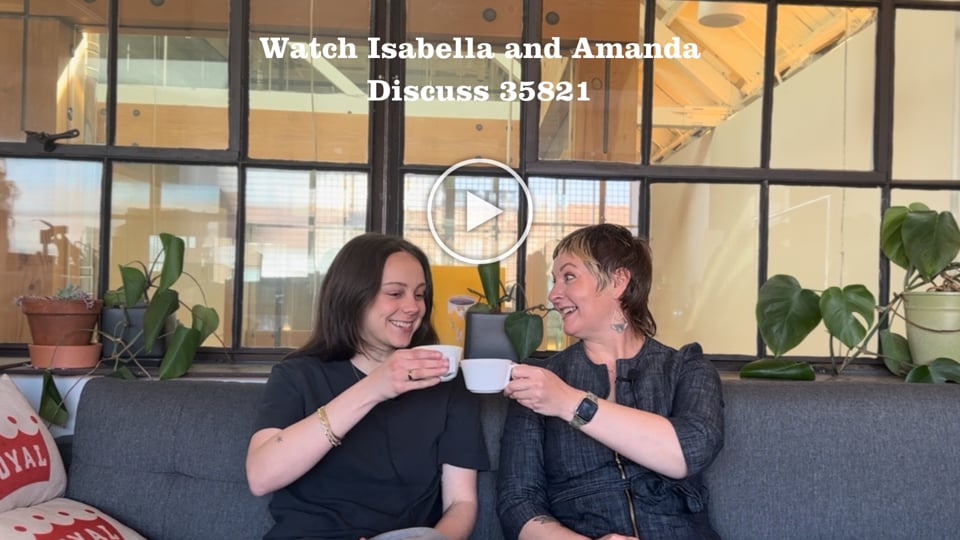
Green Analysis by Isabella Vitaliano
Metrics are in ideal ranges with density in the below average ranges. Water activity is above average and moisture content is in the above average range. During the processing of this coffee there is a extended fermentation in airtight containers for up to seven days and then the coffee is washed and laid out to allow excess water to be removed. The wet-hull style in the later steps of processing gives it the look of a classic Indonesian coffee. A slightly wider spread on the screen size, paired with lower density might be something to look out for in the roaster. Check out the roaster notes for more details.
Abyssinia is in the mix of cultivars, which is one of the few original cultivars introduced to Indonesia in the early 20th centuries. It is directly from early 20th century Ethiopian selections of cultivars brought to colonized countries to begin cultivation. It traveled from Indonesia to Cameroon and then to Central America, where the selection is known now as Java.
Tim-tim stands for Timor-Timur also known as Timor-Leste. This variation is a natural cross between robusta and arabica discovered in the early 20th century. You see a spike of availability in the 1950’s due to its resistance to coffee leaf rust.
Diedrich
Diedrich IR5 Analysis by Doris Garrido
Visually, this green coffee looks like a typical wet hulled Sumatra. However, the anaerobic processing has significantly impacted the flavor profile, revealing remarkably clean notes. Personally, I found the tasting notes to range from grapefruit to elegant rose petals, which is quite exceptional. While I appreciate the traditional pine zest characteristics of Sumatran wet hulled coffees, this particular lot stands out for its crispness and clarity. We got notes of juniper, cranberry, lemongrass, white grapes and cascara.
In terms of roasting, I approached this coffee as I would a standard wet-hulled Sumatra, which for me means that it will require the most significant heat application as it approaches the moisture release before starting to crack.
Consequently, I started with a low charge temperature of 390F. It’s worth noting that we’ve been experiencing warmer days in Oakland, and this was one of those days. Despite temperature control, I observe slight temperature fluctuations in the roaster.
I introduced gas at 2 minutes and 27 seconds of the roast, setting 70%, and allowed it to run for a while. I then increased the flame to 100% and ran it for 1 minute during the early Maillard phase -at 5:07 minutes- Then I reduced the gas to 60% at 6 minutes and a little later to 30%, providing a gentle push towards the end. As per my usual practice, I engaged full airflow just before first crack to mitigate the smoke and ensure a smooth finish. For development, I allowed the coffee to roast for a minute and 31 seconds, with a final drop temperature of 408F. This Anaerobic wet hulled process is quite interesting, and it absolutely worth a taste.
Brew
Brew Analysis by Alisha Rajan
When it comes to flavor profiles, the words “anaerobic” and “delicate” are rarely associated. And yet, this exquisite anaerobic wet hulled offering from Sumatra is equal parts vivacity and grace. Straightforward in its presentation of fruitiness, it manages to integrate rosy florals, the complexity of black tea, and a creme brulee sweetness throughout the tasting arch.
I began the brew analysis with a middle of the road approach. Dosing at 18.0g at a 9.5 EKS43 grind, I arrived at a pleasant brew in just under three minutes which boasted flavors like bold pineapple, peach rings, and burnt caramel. We were off to a great start already, but I was curious about what else this coffee could offer. I decided to coarsen the grind a bit and was surprised by this coffee’s higher overall solubility.
The most well-balanced brew came in at an 18.0g dose and an 11 EKS43 grind on the Kalita wave in just under three minutes. I found myself enamored with this one’s rose jam florality, watermelon/hibiscus brightness, and brown sugar depth. Though the TDS was on the higher end of the spectrum, I felt like the full body of the brew was worth the effort.
Another notable brew came in at an 18.0g dose at a 10 EKS43 grind on the V60 brewer. Although the specs on this one were very similar to the previous one, the flavor profile was notably different. This one presented with more herbal notes like lemon verbena, bergamot, and the sweetness of fig and earthy cocoa on the finish.
Overall, I suggest a moderate dose and a coarser grind to strike the optimal fruity/floral balance. I found this coffee to be fairly versatile in terms of the brew device. An immersion style brewer can bring out more fruit-forward notes, whereas a conical brewer could yield more complex florals and tea-like notes. This coffee is a sure delight from start to finish! Happy tasting!
Related Coffee
Tomato, caramel, orange, lime, and tropical fruit
Oakland 22 Boxes
Crown Jewel Kenya Washed Ngomano Factory
45KF0153 – 38302-1 – SPOT RCWHSE
Tomato, caramel, orange, lime, and tropical fruit
Spot
22 Boxes
$207.57 per box

Coconut, piña colada, mango, upside down pineapple cake, floral
Oakland 14 Boxes
Crown Jewel Colombia Carbonic Honey Mango/Coconut Co-Ferment Pedro Nel Salazar
38870-1 – SPOT RCWHSE
Coconut, piña colada, mango, upside down pineapple cake, floral
Spot
14 Boxes
$392.02 per box
Floral, vanilla, brown sugar, honey, apricot
Oakland 8 Boxes
Crown Jewel Colombia Honey Gesha Juliana Guevara & Wbeimar Lasso
38869-1 – SPOT RCWHSE
Floral, vanilla, brown sugar, honey, apricot
Spot
8 Boxes
$277.59 per box
Cherry, grapefruit, apricot, floral, and lime
Oakland 40 Boxes
Crown Jewel Colombia Washed SL-28 Juliana Guevara & Wbeimar Lasso
38868-1 – SPOT RCWHSE
Cherry, grapefruit, apricot, floral, and lime
Spot
40 Boxes
$259.91 per box