
Crown Jewel Colombia Honey Gesha Juliana Guevara & Wbeimar Lasso
38869-1 – SPOT RCWHSE
Boxes 0
Warehouses Oakland
Flavor Profile Floral, vanilla, brown sugar, honey, apricot
Out of stock
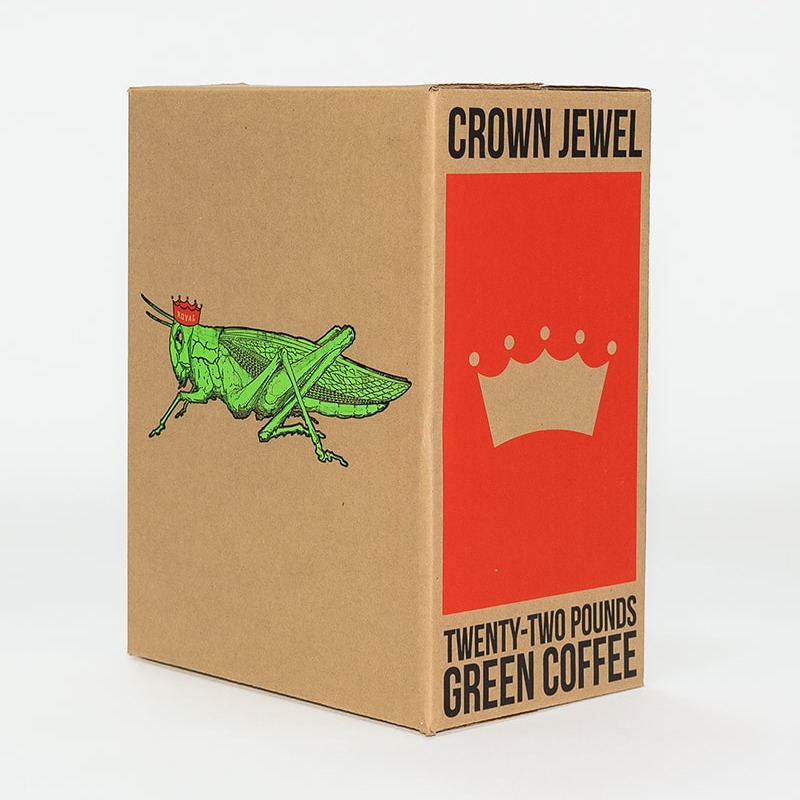

Overview
Overview
This is a moderate intervention fermented honey process Gesha variety coffee from Huila, Colombia, produced by Juliana Guevara and Wbeimar Lasso on their farm, La Terraza.
The flavor profile is making an early run for 2026 Crown favorite, as Juliana and Wbeimar have inimitably balanced the light touch of fermentation with the delicate flavors of genetics and terroir. We relished in the sweet flavors of apricot, cherry, and corriander, and lush florals from lavender to gardenia and beyond.
Our roasters recommend a gentle, high-airflow roast with steady heat and restrained development to preserve the Gesha’s delicate florals, bright citrus, and honey-like sweetness while maintaining clarity and balance.
When brewed we found it difficult to chose a favorite extraction, but favored pour-overs with moderate doses and modestly coarse grind settings. The coffee was versatile as espresso, but our best shots centered around standard 2:1 ratios and moderate extraction times.
Taste
Taste Analysis by Isabella Vitaliano
Spring is calling in the form of this Colombia Gesha the crown time is reminded of juniper, jasmine, lilac – every bud that you can find at a local farmers market during the spring season. Floral was noted many times by the team and there are also nuanced cherry, apricot and coriander notes to pair with it. Turmeric, pear and even more floral notes of lavender and gardenia.
Resembling tea like texture and hoppy light beer, this refined profile will showcase to your customers what it really means to be a Gesha. While much of the profile is a gentle light emblem of the season, there are also deeper notes of chocolate and cherry.
Source
Source Analysis by Charlie Habegger
As lauded as southern Huila is with roasters all over the world, a true Gesha separation from this part of Colombia is still exceedingly rare. This microlot comes from La Terraza, a high elevation family farm a few kilometers south of La Plata. Although it’s depulped and fermented like a washed coffee, the parchment spends the entire process, drying included, encased in its own sticky mucilage, which the producers are careful not to disturb, giving the final cup a delicate but distinct cake-like sweetness, alongside the subtle powdery florals that Panama geshas are known for.
Southern Huila
Huila is arguably Colombia’s best-known department for top microlots. Huila’s geographical accessibility, dense population of knowledgeable farmers, warm and subtropical forests, high elevations, and microclimate diversity have for many years sustained one of specialty coffee’s most beloved regions. The fact that most of the department is harvesting coffee almost every month of the year means that fresh coffee is always available.
Huila is a long and narrow valley that follows a winding gap between two large cordilleras of the Andes. Colombia’s 950-mile long Magdalena river has its source in southern Huila and has shaped the agriculture here for centuries. Uphill from the valley’s lush and picturesque lower slopes are a diverse array of coffee producing communities, often dramatically steep, and each with their own unique climate and history.
Finca La Terraza
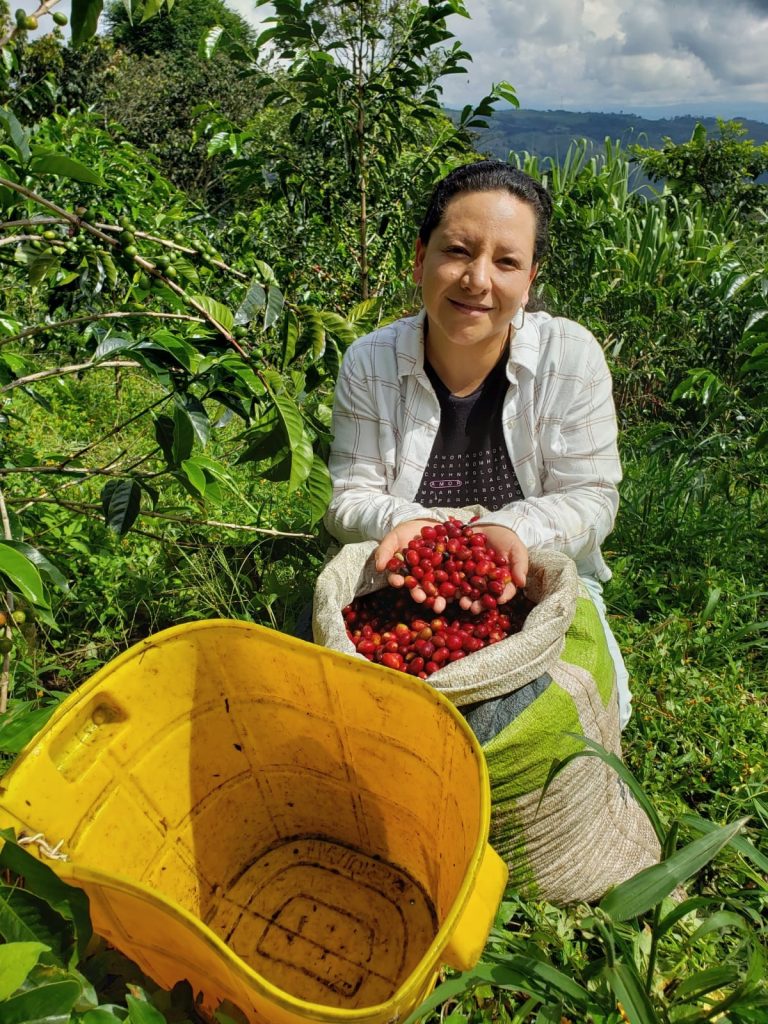
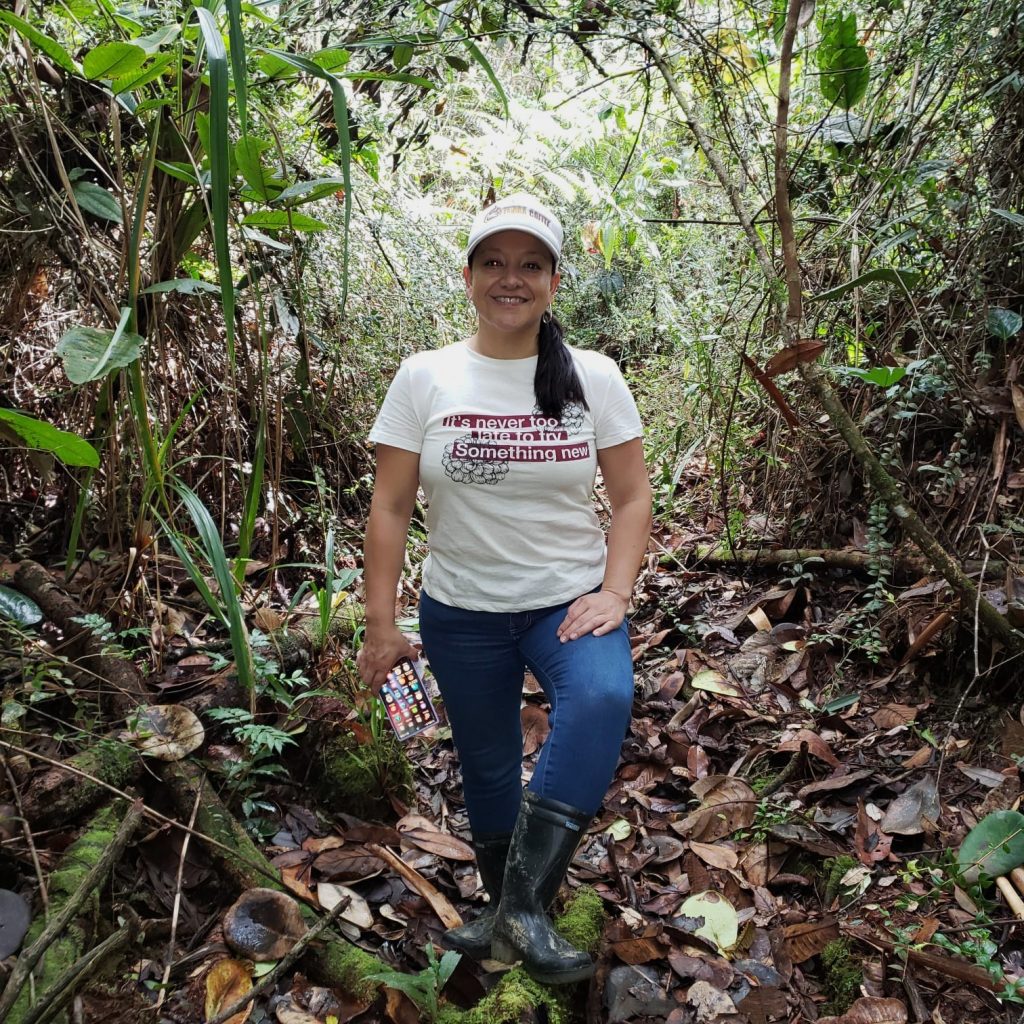
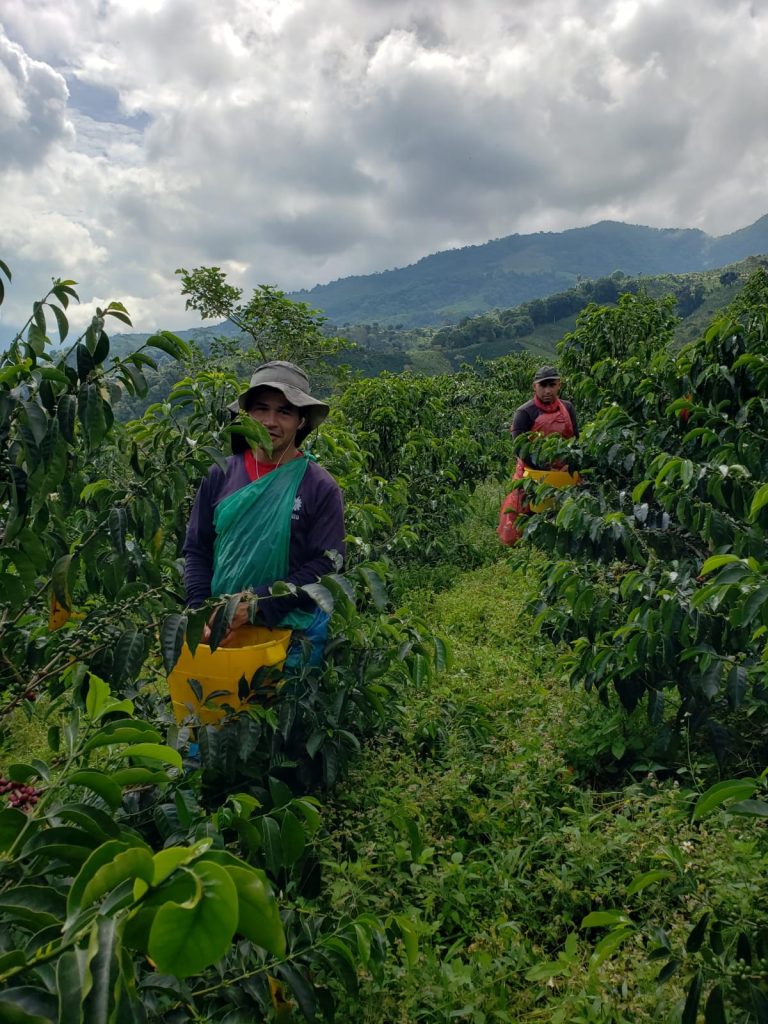
Terraza is the name for the farm owned and managed by Juliana Guevara and Wbeimar Lasso, the duo behind the processor group Terra Coffee. The farm is very passionately run (with a delightful and educational Instagram account no less, @Fincalaterraza). Finca La Terraza resembles countless farms in this part of Colombia, being only a few hectares in size and in a very specific microclimate that encourages coffee trees to fruit nearly the full calendar year—requiring constant monitoring and harvesting in small quantities. This is the second time we have featured their washed gesha as a Crown Jewel.
Wbeimar Lasso, a Colombian Cup Tasters Champion, agro-industrial engineer and third generation coffee producer, is also a bit of a tinkerer with processing. He has become notorious at Royal for multi-fermentation stages coordinated across small farms in Huila, delivering us some of our most unique and interesting coffees from this area.
La Terraza has a number of separated varieties, including pacamara, yellow Colombia, and gesha. The farm’s elevation means a cool climate with particularly frigid nights, which retards everything in coffee production that is temperature dependent, including the maturation of cherry on the tree, fermentation, and the drying of parchment. Indeed, this lot took 25 full days to dry on raised beds.
A Fermented Honey?
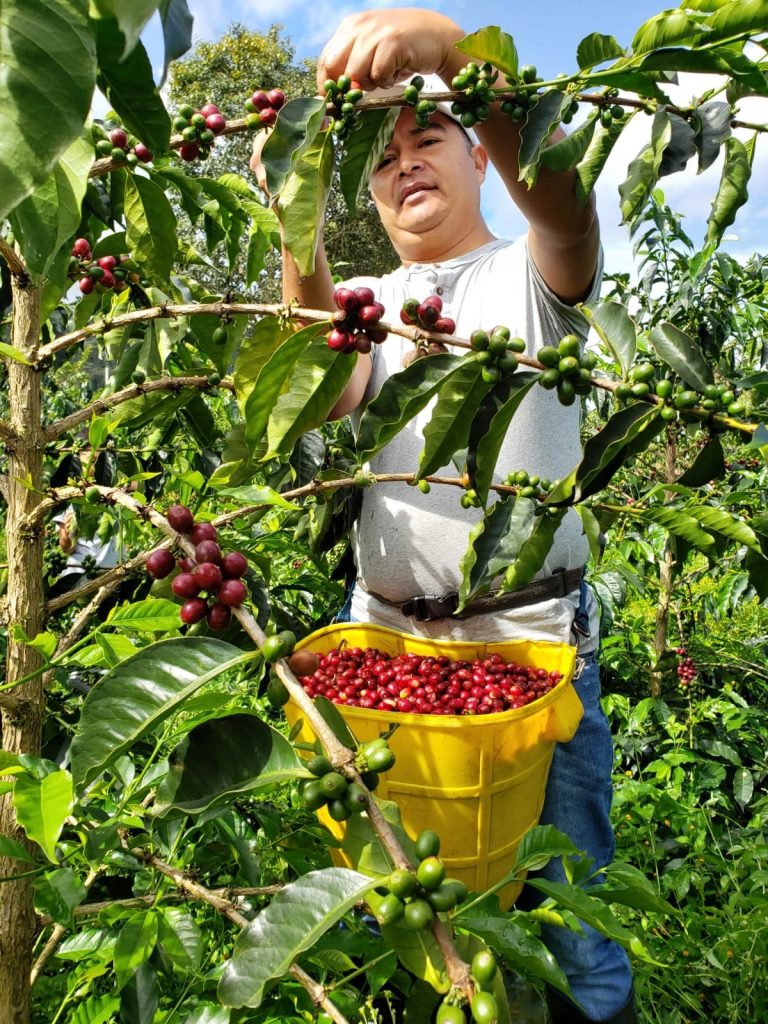
The Gesha selected for this microlot was carefully hand-picked and sorted for ripeness and consistency beyond the typical high standards of the farm, allowing only for top quality cherry and highest sugar levels to enter the lot.
Unlike honey processing as we know it, this coffee was depulped and then fermented in plastic tanks for 48 hours. When complete, the mucilage was broken down but not fully, and it was not rinsed or scrubbed away from the parchment like a washed coffee would have it. Instead, the parchment, and all its fermented mucilage, were moved together to the family’s solar drier, where it was spread in a very thin layer to avoid any contamination from fungus, mold, or bacteria (at this point the mucilage is so voluminous, wet, and warm, that the risk is high and needs to be avoided with precise technique). After the first 5 days of drying the mucilage coffee has shed much of its outer moisture and can then be safely piled much thicker; doing slow retards drying and allows for a much longer, slower period of evaporation and moisture equilibration. The total drying time is 25 days.
Once complete, the whole lot is moved into a storage facility. From there, the Terraza team withdraws a sample, which is allowed to rest for 15-20 days before roasting and cupping, to help the coffee shed some of its edgy flavors and better represent a rested offer sample to Royal.
Terra Coffee SAS – Beyond La Terraza
Terra Coffee SAS is a local producer group, established in 2016 by Wbeimar and Juliana, with a narrow focus on developing high quality coffees alongside select producers in the Huila and Nariño departments, and sharing them with the world. The small company manages one single producer association in each department where they work, “Ecoterra” in Nariño, with 140 producer partners, and “Terra Verde” in Huila, with 120.
For Terra Coffee SAS as a whole, quality in coffee is very rationally understood as a direct pathway to well-being for volume-limited, small coffee farming families. Driving their business model is an understanding that quality results from small harvests have direct impacts on not just the farm owner, but the many dependents on each small farm, including young children, older adults, and the women of the household performing essential labor that often goes unpaid. By increasing quality and placing microlots in the market, Terra Coffee SAS plans not only to increase prices to growers and their families, but also increase their sense of pride in the details of their work.
Green
Green Analysis by Isabella Vitaliano
The density of this coffee is on the below average side with a moisture content that sits a little bit higher at 12.2, but still within normal ranges. Screen size is spread out between 18-16 which could indicate some uneven roasting but should check the roaster’s notes for further information.
Diedrich
Diedrich IR5 Analysis by Doris Garrido
Here I am again with another Gesha from one of my favorite producers at La Terraza. As I have mentioned before, I am convinced I can taste a personal signature in their coffees. Having roasted their lots for a couple of years now, it is always a pleasure to rediscover those incredible florals. Their coffees are a true sensory experience, defined by botanical aromas and delicate flavors. This time, the focus is on their Honey Gesha. For this roast, I preheated the drum to 420°F and charged the coffee using 50% airflow. For my gas adjustments, I started at 100% one minute into the roast and maintained that for three minutes before dropping to 40%. I managed the gas at that level until just after the first crack, where I dropped to 30% at 383°F, followed by a total cut to 0% at 386°F.
The drying phase lasted 4:35, ending with the color change marked at 301°F. During the yellowing phase, which lasted 3:09, I opened the airflow to 100% at 360°F. I developed the coffee for 1:20, reaching a drop temperature of 395°F.
Because this is such a delicate coffee, I wanted to utilize airflow throughout the entire roast, and I am delighted with the results. From the start, the floral and citric notes were very prominent. I found a delightful ginger note, along with hints of coriander seeds and rose water. Overall, it is a very clean roast with juicy, honey-like sweetness. On the fruity side we found notes of mandarin orange, pear, vanilla, and apricot, finishing with a delicate floral note of white tea.
Aillio
Aillio Bullet R1 IBTS Analysis by Evan Gilman
We use the RoasTime app and roast.world site to document our roasts on the Bullet. You can find our roast documentation below by searching on roast.world, or by clicking on the link below. Take a look at our roast profiles below, as they are constantly changing!
“What, another Gesha?!” said nobody, ever. Tasting one after another has us feeling spoiled, but the nuance and variety in the lots we’ve seen this year is breathtaking and certainly doesn’t lead to fatigue. Juliana Guevara & Wbeimar Lasso have brought us many amazing coffees this year, and this one feels like a comfort coffee in comparison to some of the wilder ones we’ve seen. It is nonetheless beautiful in its own right.
I wanted to treat this coffee gently and opted for a 455F charge temperature, P6 power, and F2 fan from the start. At turning point, I increased heat to P8 in an end to my false ‘soak’ of heat from the barrel (the Bullet’s barrel doesn’t truly hold heat like a cast iron barrel would). At peak rate of change, I decreased heat to P7 and increased fan to F3. A little further on, I increased fan to F4, then dropped power to P6 a little before first crack. My only other move was to change to P5 power and F5 fan after first crack for a longer, slower development. Finishing at 9:46 / 394F, this coffee was on the light side, but with enough sugar development to eke out body and herbals without sacrificing all the bright acids.
In the cup, I got some phenomenal herbals on the finish like sage, bay leaf, and thyme. The backing for the experience was a juicy plum and pear flavor, with tons of cocoa and a flavor I simply think of as “blue” in relation to the blue flavor commonly found in gummy or hard candies. It’s not blueberry, it’s not blue raspberry… it’s just blue.
I could see this coffee performing well in every situation, but perhaps it would be more interesting with a high degree of particulate solids in a brew method like cupping, French press, or even espresso. Honestly, it’s going to perform well as drip, too. Drink with confidence!
You can follow along with my roast here at roast.world: https://roast.world/egilman/roasts/0t7CLozT8I_c0kJKQHYQB
Brew
Brew Analysis by Tim Tran
Finca La Terraza has been a Crown Jewel producer with a reputation for excellence throughout a number of different coffees, so it’s no surprise that there’s excitement behind the bar when their coffees make their way behind the bar. This fermented honey-processed gesha is no exception and picking a favorite brew was honestly the most challenging part of this analysis – all that to say, this is an exceptionally approachable and easy to brew coffee in terms of producing a tasty cup.
In the spirit of picking a recipe to recommend to you all though, my favorite brew came from a moderate dose of 18.5 grams of coffee, ground moderately coarse, with a 1:16.22 ratio on a flat-bottom brewer. This brew particularly gave a dessert-forward cup, with a sweetness profile that was reminiscent of tiramisu. Plenty of sweet brown sugar and honey notes that complemented a rich and creamy mouthfeel. The coffee had an incredibly well-rounded profile, with just a touch of citrus peeking through the sweetness. While certainly no honey is used in the honey-process, I could certainly be fooled after drinking this coffee.
My second favorite brew utilized the same dose, ratio, and grind setting on a conical brewer. The brewer difference preserved a lot of the sweet and rich mouthfeel while bringing out a more citrus forward profile, almost akin to orange creamsicle. Still incredibly sweet and dessert-like, this coffee almost took me to an after-dinner digestif.
Really a coffee that lends itself to tasty recipe experimentation, so long as your goal is to have a good cup, this gesha is versatile and full of flavor depth. Definitely worth changing your brew parameters, but who knows, you may find yourself like me and enjoying most the first brew you try. We recommend starting with a moderate dose on a moderately coarse grind setting with a fairly standard 1:16.22 ratio. Cheers to some excellent coffee!
Espresso
Espresso Analysis by Marie de Courcy
This honey processed Gesha from Finca La Terraza is another special offering from producers Juiliana Guevara and Wbeimar Lasso. We are spoiled here at the Crown and get to taste so many high-quality coffees that it’s exciting when there’s a lot of buzz around a new offering. The process really shines in this coffee, all those fermented flavors at the front of every shot pulled.
The first recipe used a pretty straightforward ratio, 18g dose, 38g yield pulled at 32 seconds. The extraction was even and smooth, producing a slightly viscous mouthfeel while still being light and juicy. I tasted candied orange, jasmine flowers and toasted sesame. There was a really pleasant, hoppy bitter note present as well.
The second recipe leaned further into the sweetness of this coffee. A 19g dose, 44g yield pulled at 32 seconds. Still pretty full bodied but rounding things out and a little funkier. I tasted notes of almond frangipane, orange creamsicle, lavender and shiitake mushroom.
This coffee seems to like a longer extraction time. When pulled a bit faster, the shots were a bit too acidic and unpleasantly funky. For something light and juicy, a traditional 1:2 ratio will produce a shot that is well balanced and sweet with some pleasant bitterness. For a sweeter and more funky shot, up your dose and shoot for a higher yield.
Related Coffee

Green apple, jolly rancher, apple, mojito, apple cider
Oakland 7 Boxes
Crown Jewel Colombia Carbonic Honey Green Apple Co-Ferment Edwin Noreña
38642-1 – SPOT RCWHSE
Green apple, jolly rancher, apple, mojito, apple cider
Spot
7 Boxes
$368.24 per box
White Tea, basil, biscoff cookie, cacao, candied fruits
Oakland 31 Boxes
Crown Jewel Bolivia Organic Washed Yulissa Chambi
39122-1 – SPOT RCWHSE
White Tea, basil, biscoff cookie, cacao, candied fruits
Spot
31 Boxes
$220.94 per box
Caramel, fig, raisin, apricot, baking spice
Oakland 13 Boxes
Crown Jewel Brazil Natural Red Catuai Paulo Alexandre Fernandes
39722-1 – SPOT RCWHSE
Caramel, fig, raisin, apricot, baking spice
Spot
13 Boxes
$249.71 per box
Black Tea, caramel, lemongrass, passion Fruit, apricot
Oakland 30 Boxes
Crown Jewel Burundi Honey Peaberry Heza Washing Station
38863-1 – SPOT RCWHSE
Black Tea, caramel, lemongrass, passion Fruit, apricot
Spot
30 Boxes
$255.49 per box