
Notes between cuppings 2/4/2026
Offer samples flooded my desk these past few weeks. Tanzania, Guatemala, Brazil… a bit of an unusual crowd for early February. These are the doldrums, the dead of winter, the quiet hours of waiting.
With Brazil tariffed much of 2025, purchases from the country plummeted for the US market and large volumes of anticipated arrivals in the winter months shifted. And, unsurprisingly, Brazilian producers found other buyers. I should have been cupping these coffees from my friends at Carmo back in October… but it is what it is.
Tanzania, known in the US for its peaberries and not much else, has early harvests available to ship as soon as August or September in some cases, but the Vohora’s family estates in the north are high on the rim of the Ngorongoro crater and harvest much later. I’ve made no secret of my obsession with their coffees and adoration of their family and farms. Always a source of exhilaration to source coffee from this very special place.
With cherries mostly off the trees at this time in Guatemala, it’s not uncommon to vet offers in the early months of the year, but it is a bit strange to be tasting such high quality samples as these often aren’t expected to be ready until later in the sourcing calendar. If it works out, we might have some pretty exceptional microlots this year, from uncommon regions.
Arrivals at this time of year include early harvests of Mexico and Honduras, still a trickle compared to the volumes we’ll expect later in the season. Colombia and Costa Rica, too, in small smatterings, and a nice box of Rwanda Dukunde Kawa just hit the port in Oakland, a perennially exceptional coffee with the rarity of organic certification.
Oh… and Indonesian coffee, what arrivals are to be had, are being pulled at unusually high percentages for inspection by the FDA, causing unfortunate delays and no small amounts of headaches.
There’s a loose thread here, I think, worth tugging at. I was asked to interview recently about “emerging origins.” It was neither the first time I’ve been tasked with publicly addressing the phrase, nor was it the first time I was offered a grouping of coffee-growing countries—Indonesia, India, Vietnam—who each have very long histories cultivating the crop.
When asked what the biggest misconception of what specialty coffee thinks of these origins, my response was “that they are emerging.”
India has been cultivating coffee since ca. 1670, and Indonesia since ca. 1700. Both have robust production infrastructure and longstanding leadership in genetic research, as examples of their establishment in the industry. Why do we think of places like these, and perhaps also places like Tanzania and Rwanda as “emerging?”
It’s undoubtedly true that there are more companies now who explicitly focus on roasting and serving Indian or Indonesian or Vietnamese coffees. Microlot specialty availability is also something that’s better now than it ever has been. Fermentation and processing innovations, and unique cultivar selections, are no longer limited to Colombia or Panama.
The sometimes-unexpected nature of coffee availability is a double-edged sword. On the one hand, limited options from places like Indonesia and Brazil make menu building and consistency a challenge for any roaster. On the other, the opportunity to sample SL-28s, Geshas, and anaerobically fermented coffees from three continents in less than a week is an uncommon privilege.
Sourcing coffee never ceases to keep us on our toes, even in the quiet season.
There’s also something very special about sipping a coffee from an underappreciated or underrecognized region, let’s take Rwanda as an example, in the middle of winter and appreciating the comfort and warmth it provides, the beauty and importance of coffee as a throughline regardless of origin, regardless of how far away it is from its roots in the soil.
Tim Tran, one of the baristas at The Crown, is using our Rwandan Crown Jewel from Kivu Belt as a base for a couple of cocktails at the Coffee in Good Spirits competition this weekend in Seattle. There’s a beauty in the symmetry and reflection in his routine – coffee from half a globe away, paired with craft and care to a beverage made with locally sourced ingredients, like the Bay Laurel. It’s an unassuming coffee in some ways, no fancy genetics, no extravagant processing methods. But it shines in service, an instantly recognizably excellent coffee. And somehow it shines even brighter when carefully crafted in small batch cocktails.
-Chris

Latest Articles by Chris Kornman
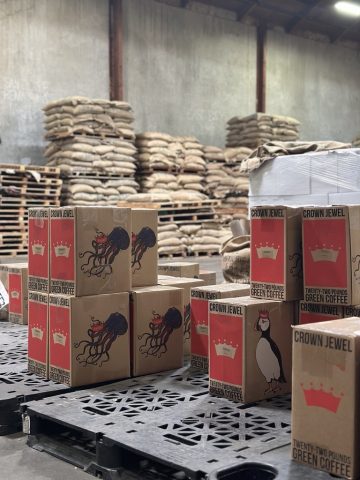
Crown Jewel Outlook: September-December 2026
Get an early look at the Crown Jewel coffees arriving through the end of 2026, from Ethiopian naturals and rare Guatemalan cultivars to Colombian co-ferments and new origins in Asia.
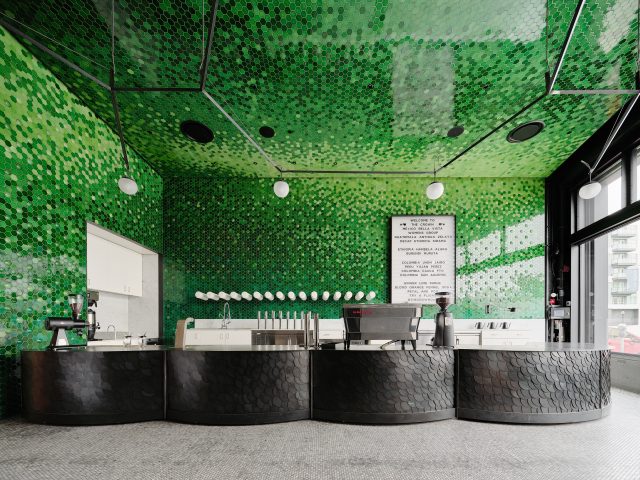
Why We’re Temporarily Reducing Our Coffee Drink Prices
We’ve long maintained that tariffs were not just a tax on U.S. businesses, but on the American people. We’re finding creative ways to try and pay back that debt to our customers at The Crown. What? ...
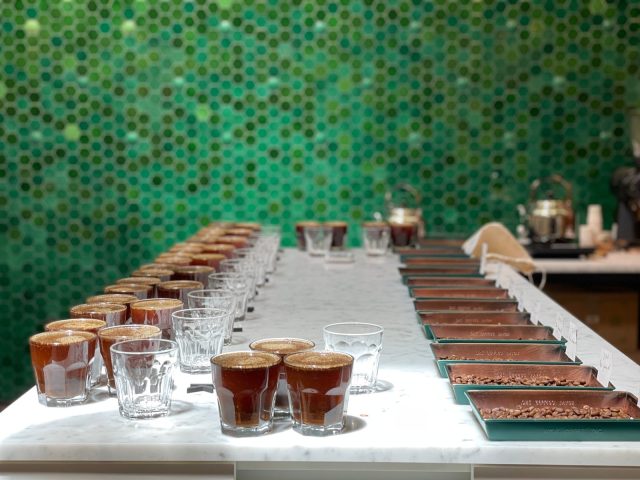
Notes Between Cups, Volume 3
Chris Kornman on the hidden biases shaping every coffee cupping: how context, neighboring cups, and ritual influence sensory evaluation — and where the SCA CVA falls short.