
Crown Jewel Burundi Natural Bahire Community Ngozi Province
36252-1 – SPOT RCWHSE
Boxes 0
Warehouses Oakland
Flavor Profile Dates, chocolate, cherry, cinnamon, and brown sugar
Out of stock



Overview
Overview
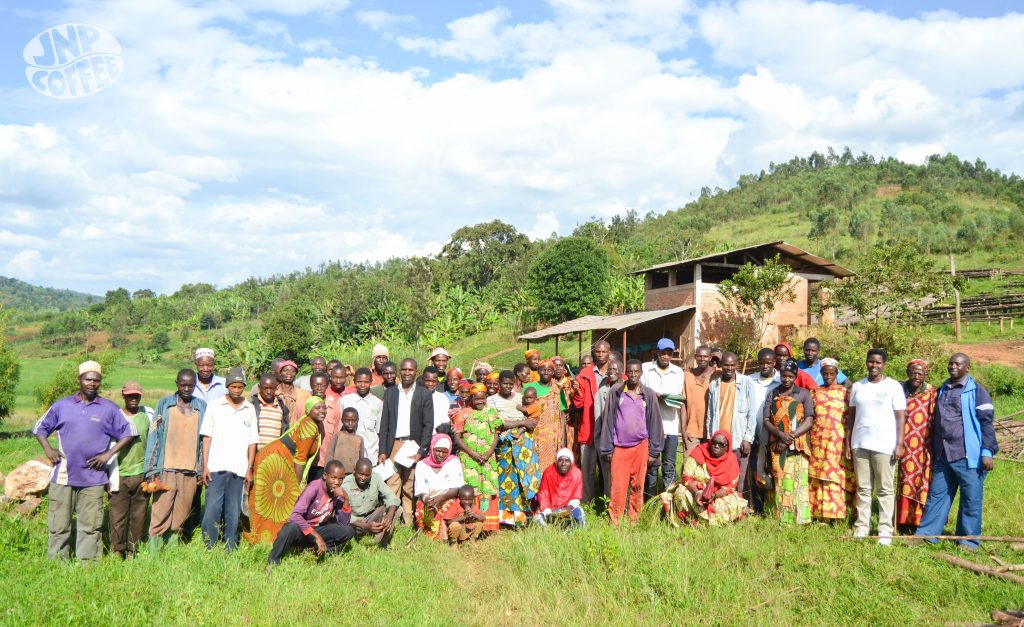
This is a minimal intervention natural coffee from Ngozi, Burundi, produced by smallholder members of the Bahire community, organized around JNP Coffee.
The flavor profile is sweet, summery, and fruity without overwhelming the palate – we taste dates, lemongrass, chocolate, cherries, and fresh strawberries.
Our roasters used a number of techniques to bring out the best in this coffee and generally preferred moderate (not too fast, not too slow) roasting times and lighter roast colors.
When brewed, we especially liked the clarity of flat-bottom-brewed pour-overs using finer grind settings and found espresso shots easy to dial.
Taste
Taste Analysis by Isabella Vitaliano
Sweet and lush, this coffee will give you a feeling of whimsy, sort of like a long day in the sun, picking ripe berries on hiking trails or having a drink on the beach. It’s bright like the gleam of a summer day with the clarity fresh botanical aromatics.
From apricot, juniper, boysenberry and pomegranate you get a stunning array of fruit flavors. The fruit layer of this natural coffee is not muddled in any way by the processing. While it is dense and full, it remains sharp and light. Fruit flavors are accented by lime leaf, peppermint, jasmine and brandy. An enigmatic combination of fresh fruit, dense brandy and light botanicals make for a welcoming experience.
This coffee is for those looking for a drinker that will suit everyone but is extremely elegant. Customers that have an experienced palate will immediately know this is something to savor. Customers that are new to the world of specialty coffee will be delighted by this introduction to what makes a good coffee so great.
JNP is a women led exporting group based in Burundi founded by Jeanine Niyonzima-Aroian. If you ever get the chance to meet Jeanine you will be charmed by her warm aura and acute insights into coffee industry. The audience Jeanine has been able to reach for Burundi grown coffees, and even more importantly, coffees that directly support women’s empowerment has grown exponentially since the company started 13 years ago. Royal is grateful to not only work with the whole team at JNP year after year, but we are also thrilled to be able to support women’s empowerment by purchasing their coffee.
Source
Source Analysis by Charlie Habegger and Chris Kornman
Jeanine Niyonzima-Aroian, the founder of JNP Coffees, is without a doubt one of the most influential individuals in Burundi coffee today.
Raised in the capital city of Bujumbura, Jeanine would go on to earn an MBA from Northwestern University’s prestigious Kellogg School, cycle through corporate America, and eventually reconnect with her birth country by founding Burundi Friends International, a not-for-profit funding educational and economic empowerment programs for rural Burundians, which is now in its 13th year. After a few years marketing Burundi coffees stateside for friends and family, Jeanine realized she had every reason to lead the business, and JNP Coffee was born.
JNP Coffee is highly focused on women’s empowerment, and along with a few local women’s rights advocates, formulated the Burundi chapter of the International Women’s Coffee Alliance. The IWCA value chain has been so impactful over the years that JNP has created additional programs to expand their farmer base and generate premiums not just for women farmers, but for everyone involved. Producer groups of women and men alike, such as this one, can qualify for JNP’s “Dushime®” program, which delivers the same kind of post-harvest premiums as IWCA has since 2013. It seems they can’t expand fast enough. In Kayanza and Ngozi, the two provinces at the heart of the nation’s coffee production, competition for cherry can be fierce, so washing stations may pay well above the country’s minimum price to court premium harvests. JNP coffee goes a step further, returning second payments to farmers and investing in opportunities for education and community building.
Coffee grown in Ngozi Province has a special meaning for Jeanine, as that is where her mother grew up. Memories of her mother, leading the family’s coffee harvest to cover school fees, are woven into the name for this coffee. Bahire in Kirundi is a kind of well-wishing given to others that roughly translates to “be well, successful, prosperous, happy”. Bahire is a micro-community of smallholders selected from within one of JNP’s larger communities, Bavyeyi, thanks to their unique terroir. The producer group works closely with JNP Coffee’s trained Q Graders in Burundi on best quality practices and lot curation.
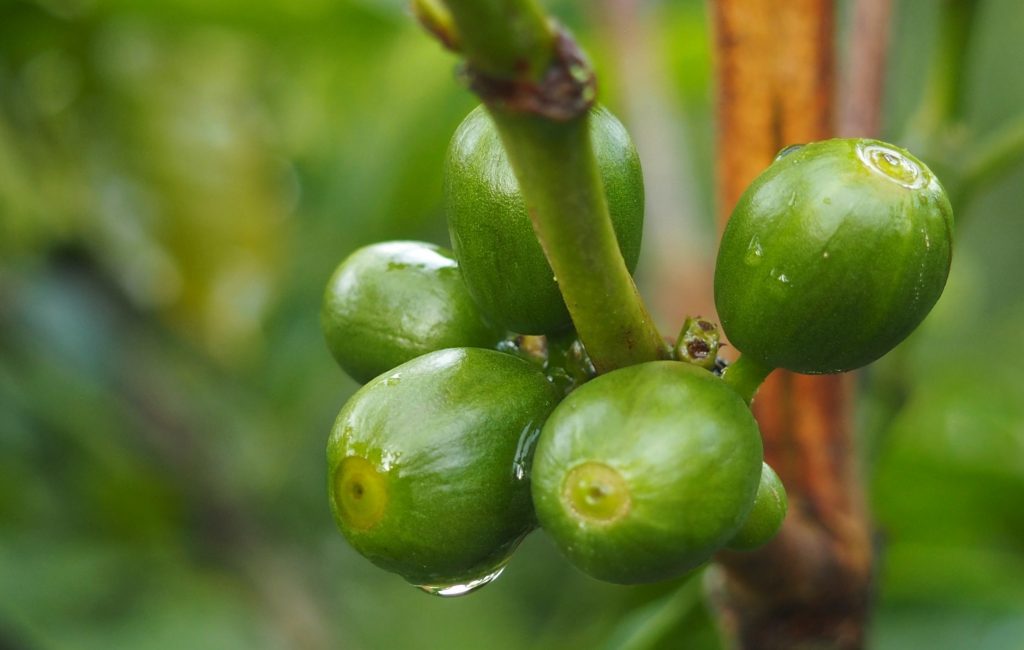
This year’s Crown Jewel selection is a natural process coffee, cherries dried in the whole fruit with minimal intervention. Drying coffee cherries requires more attention and more real estate than drying processed parchment, as the cherries must be spread thinly and evenly to ensure they don’t spoil. It also takes longer, particularly in the humid and occasionally rainy months following harvest, it’s not uncommon to hear of natural coffees being dried for six weeks or longer.
Despite being geographically minuscule, Burundi commands an outsized presence in specialty coffee sourcing. Its hills provide exceptional climate and elevation for growing, and its most conscientious producers are cultivating, processing, and exporting coffee that rivals the best and brightest from anywhere in the world. The crop is the country’s single most important export by both volume and value.
Access to extraordinary qualities of coffee in Burundi is a labor of love, and make no mistake it is genuinely difficult labor. The landlocked country has no port and limited infrastructure, making logistics complicated. Its 600,000+ coffee-growing citizens – almost exclusively smallholder farmers whose trees number in the low hundreds – live predominately rural and agrarian lifestyles, with scarce access to basic resources, farm improvement techniques, and even education.
It’s one of the reasons we love working with Jeanine, and JNP. In addition to the Dushime second payment program, the intimate personal connections in the region, and high quality of coffees, Jeanine also invests heavily in the people a communities she works in. It makes the coffee taste that much sweeter.
You can read more about Chris’s 2023 visit to Burundi with Jeanine and JNP on our blog.
Green
Green Analysis by Isabella Vitaliano
We love specs that look like this! Larger beans, typical of the Bourbon cultivar have a tight screen size in the 17-18 range. Density is on the lower side with moisture content and water activity a little bit below average. This jammy and seamless coffee bounces between flavors with ease. Be sure to be gentle with this in the roaster and check out the production and bullet analysis to see the best way to approach this coffee.
Bourbon was discovered on Réunion island, an island off the coast of east Africa and first made its way to the global stage by being introduced to Brazil in 1859. The introduction of Bourbon was in direct response to the coffee leaf rust outbreak.
Generally considered to have higher yields but lower quality than typica, as the fungal infection spread throughout the world the concerns around cup quality diminished. By 1877 it was brought to Tanzania from Réunion island by French missionaries and soon moved throughout the rest of east Africa.
Diedrich
Diedrich IR5 Analysis by Doris Garrido
Expo is always my happy place to meet people who inspire me, and this past one I had a chance to chat with Janine, the inspiring woman behind JNP coffees and, for this occasion, the brilliant mind behind the production of this Burundi Ngozi Natural.
As elegant as Janine herself, this coffee is full of personality, a lot of character, and comes with a symphony of very subtle flavors that will crown your cup.
As I’m writing this, I’m warming up the Loring Falcon to roast a production batch of this coffee, as it will be our new espresso. This coffee will be featured on the Crown Jewel green menu as well at the espresso bar here at The Crown, as always serving the best coffee in my beloved Oakland, CA.
This coffee boasts bright acidity, remarkably clean flavors from the natural process, a very fruit-forward profile, and delicate candy-like sweetness.
For this analysis I’m going to share the results I achieved on the Diedrich and also a bit of the application of those insights to a larger batch using the Loring, on which I aim to highlight that lovely clean sweetness for espresso.
I have to mention that since I worked with a small batch on the Diedrich, I had the pleasure of playing with the flame, I made some gas adjustments, resulting in an amazing flame dance that is unique to this kind of drum roasters. However, on the Loring, I will aim to keep it simpler.
On the Diedrich, I started with a medium to high charge temperature (470F / 70% gas) during charging and then applied full heat until halfway through the drying phase. I went for a slightly moderate drying. Since the moisture content appeared a bit low, I increased the flame (100%gas at 223 F / 2:23 minutes) but not for too long, just to maintain control over the heat. Then, I reduced the gas (30% at 310F /4:14 minutes) to prolong the caramelization. With all that energy, I was able to utilize all airflow from minute 5:04 until the end. First crack occurred at exactly 7 minutes and I simply let the rate of change decrease, turning off the pilot just a few seconds before dropping.
The end temperature was 404F with 1:27 minutes of post development. The weight loss was 11.02%. From what I have seen, natural coffees often show higher end temperature in the reading but tastier lighter, probably due the last layer of shaft skin on the beans. The result was a bright and clean profile of apricot, lime leaf, lemongrass, rose water, sweet persimmon, plum, a delicate dry fruit character reminiscent of jolly ranchers candy. A non aggressive yet clean natural, with a subtle acidity and delicate sweetness.
On the Loring for my final profile, I attempted to extend the drying, in this machine, it happened more quickly, so appeared shorter. I used only 80% power for most of the roast, lowered the heat during color change to stretch the caramelization both in yellowing and post development. I am confident that the results will showcase a bit more of the delicate sweetness and will truly shine as an espresso. Thanks to Janine for the leadership inspiration and for giving us the opportunity to taste this great coffee!
Aillio
Aillio Bullet R1 IBTS Analysis by Evan Gilman
We use the RoasTime app and roast.world site to document our roasts on the Bullet. You can find our roast documentation below by searching on roast.world, or by clicking on the link below. Take a look at our roast profiles below, as they are constantly changing!
Every now and again, we’re reminded by the world that our logic is not infallible. Just so with my roast of this beautiful Burundian coffee. Dear reader, I had prepared to make a deliciously juicy roast with tons of sweetness that really brought out the fruity naturalness of this coffee, but what I hadn’t prepared for was checking the machine before I began my roast.
After returning from Expo in Houston, I should have known that the machine would have been used thoroughly for roasting samples. What I did anticipate was needing to empty the chaff canister, which I did. What I missed was cleaning the chaff screen, and that led to restricted airflow and a much faster roast than I was looking for. So, while my adjustments did reflect well on the roast itself, the whole thing was much faster and hotter than what I had envisaged.
Thus, I won’t be sharing my profile for this particular coffee, but I can tell you that despite the unfavorable results I expected from my roast curve, the coffee was still palatable. My drop temperature was a toasty 404F at about 7:30, and while the coffee was darker than I generally prefer, there was plenty of chocolatey goodness, plenty of date-like sweetness, and a touch of sweet red velvet cake on the finish. I wouldn’t recommend my roast, but I do think that through constant attention to detail, you’re going to get something delicious from this coffee.
While I would certainly still suggest using higher charge temperatures and plenty of airflow towards the end of roast for this dense coffee, I should reiterate that the best course of action would be to make sure you have a clean machine! Better safe than sorry, and better me than you. My condolences to JNP for doing this to their coffee, but in the end, I’m still drinking it!
Ikawa
Ikawa Pro V3 Analysis by Isabella Vitaliano
Our current Ikawa practice compares two sample roast profiles, originally designed for different densities of green coffee. The two roasts differ slightly in total length, charge temperature, and time spent between color change in first crack. You can learn more about the profiles here.
This coffee from JNP is our one and only Burundi Crown Jewel lot of the season and it’s a good one!
The light density roast of the coffee was jammy but a touch toned down in fruit flavors. The high density was a little bit fuller with strawberries, mint, blueberry and boysenberries galore.
I recommend trying out the high density roast of this coffee, it feels a little bit more in tune with what this coffee can offer. If you do want something more subdued and delicate the light density roast is also a good option.
You can roast your own by linking to our profiles in the Ikawa Pro app here:
- Roast 1: Low Density Sample Roast
- Roast 2: High Density Sample Roast
Brew
Brew Analysis by Tim Tran
JNP Coffee has consistently provided great coffees and it is with fond memories of last year’s naturally processed coffee harvest that I dove into this brew analysis.
My brew analysis started with a moderate dose of coffee at a moderately coarse grind setting on a conical brewer. This initial brew proved to be fairly light with sufficiently high clarity, which proved to be a staple across all the brews I tried and perhaps the most exciting thing about this coffee for me – a naturally processed coffee that also provided for high clarity! The initial brew carried nice, sweet notes of brown sugar, dates, green grape mixed with some orange acidity and a forward lemongrass note. Following this brew, I moved to a finer grind setting to push extraction further; while this brew still carried forward a lot of the high clarity, a strong vegetal flavor was domineering on the foretaste of the coffee.
I landed on my favorite brews upon moving to a flat-bottomed brewer. The initial of the brews was with a moderate dose at a fine grind setting on a flat-bottomed brewer. This first brew provided a very sweet coffee that carried dark fruit notes while losing some of the forward vegetal notes that were present on the conical brewer. Our team tasted candied orange, cherries, and chocolate in this first brew. This brew was fairly silky and rich, opening up with even sweeter plum and brown sugar notes as the brew cooled – a fun experience in developing flavors over the temperature of a brew.
On the second flat-bottomed brewer coffee, I increased the dose higher and opted for a coarse grind to try to target similar extraction percentages as the lower-dosed brew. In this second brew, there was a touch higher acidity reminiscent of berries with the richness and sweetness of dates and pralines. The body and texture of the coffee sat nicely at these settings with a long and sweet finish.
I was most excited by the fact that this coffee held on to its high clarity across a variety of different brew parameters. Ultimately, I would recommend this coffee brewed at a moderate dose with a moderately fine grind setting on a flat-bottomed brewer.
Espresso
Espresso Analysis by MJ Smith
Honestly, this coffee as an espresso was love at first sip. Right off the bat, from the first test shot I pulled, I could tell that I was going to really enjoy working with (and drinking) this coffee. But to be real, coming from JNP, I would expect nothing less. Jeanine truly does not play around when it comes to producing the most delicious coffee ever. With natural coffees, I’m always interested to see exactly *what kind* of natural they are. For example, will they be sweet and fruity? Or maybe a little more funky and wild?? This one was a perfect balance of both categories. Lots of baked goods sweetness and fresh berries, with just a hint of herbs and spices. Ready to dive in? Let’s go!
Like I said, this coffee was pulling great right from the start. In fact, this shot I’m going to talk about was the first shot I pulled of this coffee today. As for the specs, this one had a dose of 19g, a yield of 37.2g, and a pull time of 34 seconds. My first sip impression reminded me a lot of a Snickers bar (chocolate, caramel, peanut, nougat), followed by grilled peanut butter & jelly sandwiches. Maybe this is why they say don’t dial espresso when you’re hungry? (I don’t know if anyone actually says that, but maybe we could make it a thing??) Some other notes I picked up were lime leaf, brown sugar, honey milk tea, and blueberries. I shared some with the rest of the team, who agreed that there were definitely some PB&J notes, as well as lemon, strawberry, sour straws, honey sticks, and rosemary.
For the second shot, I wanted to add a little more coffee, but pull it faster and longer, so we have a dose of 19.5g, a yield of 44.2 seconds, and a pull time of 30 seconds. To me, this shot reminded me of nearly every Middle Eastern dessert I’ve ever had. Knafeh, baklava, cardamom, honey, and pomegranate molasses were the flavors dancing across my tongue. It also had a slight hint of blueberry cake donuts. I shared some with some of team, and they added notes of nougat, fruity gelato, dried apricot, cranberry, and coriander.
As you can tell, this coffee is no stranger to flavor and sweetness. I enjoyed most of the shots I pulled today, but my favorites all landed somewhere in the 19-19.5g dose and 30-34 second pull time range. This coffee is extremely flexible and easy to work with, so don’t be afraid to experiment for yourself! If curiosity finds you in Oakland, come on down to the Crown and try it for yourself! It will be making its debut on our featured espresso bar sometime in the next few days! Enjoy!
Related Coffee

Lime, raspberry, peach tea, honey, sweet, clean
Oakland 20 Boxes
Crown Jewel Rwanda Natural Busanze Washing Station
Lot 3 – 38186-1 – SPOT RCWHSE
Lime, raspberry, peach tea, honey, sweet, clean
Spot
20 Boxes
$206.66 per box

Strawberry, lemon, rosemary, blueberry, dark chocolate
Oakland 5 Boxes
Crown Jewel Burundi Natural Bavyeyi IV
Lot 13N1 – 38691-2 – SPOT RCWHSE
Strawberry, lemon, rosemary, blueberry, dark chocolate
Spot
5 Boxes
$226.79 per box
Tomato, caramel, orange, lime, and tropical fruit
Oakland 10 Boxes
Crown Jewel Kenya Washed Ngomano Factory
45KF0153 – 38302-1 – SPOT RCWHSE
Tomato, caramel, orange, lime, and tropical fruit
Spot
10 Boxes
$207.57 per box
Orange blossom, ruby red grapefruit, cherry juice, bright, clean
Oakland 25 Boxes
Crown Jewel Rwanda Washed Rwamiko Washing Station
Lot 1 – 38183-1 – SPOT RCWHSE
Orange blossom, ruby red grapefruit, cherry juice, bright, clean
Spot
25 Boxes
$204.39 per box