
Crown Jewel Thailand Fermented Natural Chiang Mai Khun Tuen
41567-1 – SPOT RCWHSE$380.03 per box
Boxes 28
Warehouses Oakland
Flavor Profile Boysenberry, chamomile, lambrusco, raspberry, anise
Add to your artisan.plus account: 
 Printer Friendly PDF
.
22lb Boxes
Spot

Overview
Overview
This is a moderate intervention fermented natural coffee from Chiang Mai, Thailand, produced by smallholder farmers organized around Big Black Box Coffee’s wet mill.
The flavor profile is avant-garde, punchy, and decadently sweet. We tasted raspberry hard candy, limoncello, mint, lilac, and bamboo shoot.
Our roasters found this coffee rewards a short, restrained finish to protect its fruit.
When brewed, we liked a higher dose with a slightly longer than average extraction time.
Taste
Taste Analysis by Isabella Vitaliano
In Royal’s almost 50 years of operating the company still manages to hit new milestones and reach new horizons. This particular horizon is looking at Thailand, in the form of this natural coffee that is avant- garde, punchy and decadently sweet.
One of the main factors preventing us from sourcing Thailand coffee earlier is merely the volume needed to fill up a container. Our way of navigating around this is to airship this coffee so that not only we can purchase small quantities, but it can also arrive quickly.
It feels as though this coffee is modernizing the tradition of fruity naturals and taking it up a notch. Not in intensity but rather in clarity and expression. Iris and lilac take the form on the tongue and transform into watery bamboo. From there you can delve into the raspberry hard candy, limoncello, cranberry and minty sweetness. Playing into some of the final experiences of this coffee is a classic chocolate hazelnut, we find this coffee has a lingering finish that’s sweet and very berry forward. A blissful and unhurried experience, this coffee is best enjoyed slowly and languidly.
Perhaps the first of many, this Thai coffee has created a high bar for future sourcing endeavors. Big Black Box Company has created a rhythmic and tantalizing coffee that is an idyllic introduction to our U.S market.
Source
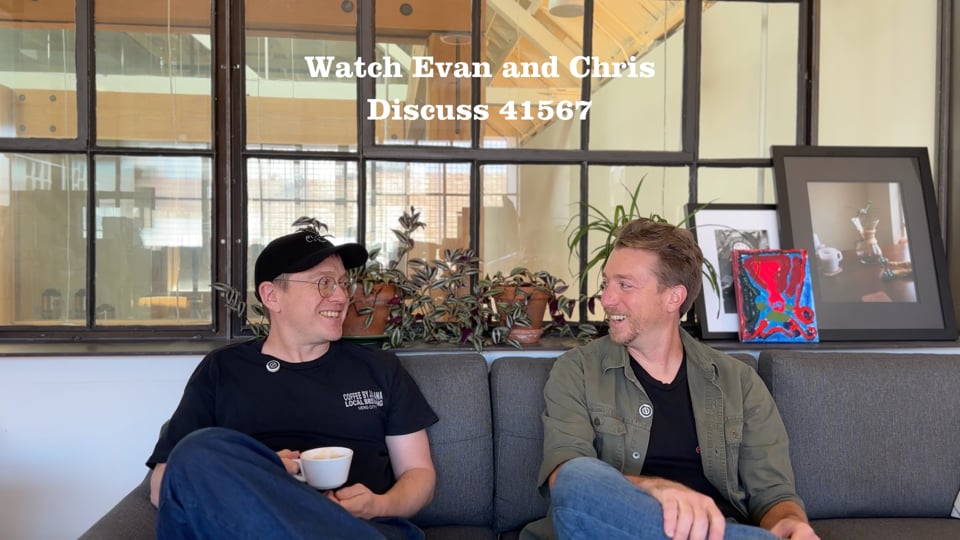
Source Analysis by Evan Gilman
We are proud to announce our first coffee from Thailand, which also happens to be our first Thai Crown Jewel. This coffee comes to us from Big Black Box Company, on an introduction from Bryce Castleton, an old friend and fellow coffee educator.
When I lived in Chiang Mai in 2009 studying Piphat music for a year, specialty coffee was hard to come by. As a budding coffee nerd, I searched far and wide, and the consensus was that the true players in the game were a local espresso machine distributor, Hillkoff. Here I was able to purchase a French press and get freshly (Frenchly?) roasted coffee that was grown on nearby Doi Inthanon. There were a few other options at the time, notably a cafe that had the exact same logo as Ritual Coffee Roasters, but certainly not the same type of coffee. But that’s a story for another time. It’s safe to say that the scene has changed remarkably in the last 16 years.
Coffee production in Thailand has been growing at a decent clip for the past decade, yet hasn’t kept pace with the growth of the domestic specialty coffee industry. Visit any major city in Thailand and you’re liable to come across a wide selection of shops providing pourovers and well-dialed espresso in cafes with sleek, modern design and coffees from all over the world. Thai coffee professionals have ranked consistently in the World Latte Art, World Barista, and World Cup Tasters Championships. Thailand is serious about coffee in general, and it’s serious about its own coffee, too. As a result, Thai coffee is now in high demand.
Nowadays, coffee is grown all throughout Thailand, from Yala province robusta in the South to arabica in the far Northern reaches of Chiang Rai. This coffee comes to us from the Western side of Thailand, in Omkoi District near the border with Myanmar, just 50km East of where the Moei river spills into the Thanlwin (aka Salween) river. The soil here is rich and red, and while the hills can be very arid in the dry season, they get ample rain to support the growth of coffee, and appropriately timed rains for flowering and cherry development.
Big Black Box Company
Big Black Box Company Limited has been working to develop specialty coffee industry in Thailand, with winning lots at local competitions since 2020. Their work focuses not only on bringing Thai coffee to market, but also providing wholesale green coffee to local roasters, and education to coffee professionals throughout Thailand.
In particular, Big Black Box (hereafter BBB) has been working in the Northern reaches of the country, bringing fully processed coffee down to their dry mill about 30km outside of Bangkok. Working in Chiang Mai, Chiang Rai, Mae Hong Son, and Nan provinces, they’re finding that quality coffee can be produced at scale in this relatively underexplored coffee landscape.
This particular coffee comes from Khun Tuen, Omkoi, Chiang Mai province, where they have installed a wet mill and drying facilities. BBB has plans to make Omkoi a renowned coffee origin through focusing on specialized processing and specific coffee varieties. Coffees for this wet mill are sourced from the nearby areas of Doi Muser, Khun Yuam, Jomthong, and Kiew Lom. However, this particular lot focuses on coffee solely from the Khun Tuen area southwest of their wet mill, where farmers are growing their shrubs under the shade of trees.
Ripe cherries are first cleaned and floated less than 48 hours from harvest, with less dense cherries separated out along with any foreign matter. From this point, the coffee cherry is held in liner bags for 72 hours for extended fermentation under strict environmental control. Once this fermentation period is complete, the cherries are taken from the bag and spread thinly on raised drying beds, where another round of hand selection occurs to remove any defects that were missed. Drying at about 2cm depth, the coffee loses moisture rapidly during this initial stage of drying, while also being subject to three rounds of turning or mixing to distribute moisture evenly throughout the day. Once the coffee reaches 10-11% moisture, the coffee is gathered for storage and only subject to hulling when ready for shipment or roasting.
We’re incredibly excited for this chance to try a less common origin, and to bring Big Black Box’s coffee to market for the first time here in the United States.
Green
Green Analysis by Chris Kornman
An easygoing coffee by the physical specs, this Thai coffee is mostly 16+ in screen size, of modest density, and only very slightly above normal in moisture content. Combined with the processing style and lowish elevation at which it was grown, I’d typically expect this coffee to prefer gentler approaches in roasting, but be sure to check our analysis for confirmation.
The Catimor cultivar is a broad umbrella—a group of related trees that share a similar formula: Timor Hybrid (robusta x arabica) crossed with Caturra (short stature Bourbon mutation). Catimors might be the most commonly cultivated arabica plant type. They can be found worldwide, often grown under country-specific names, representing an early successful hybridization and dissemination project dating back to the 1960s in Portugal. Catimors tend to be at least somewhat resistant to leaf rust, are often high yielding, and can be planted relatively densely due to their shorter stature which improves yield per hectare.
Diedrich
Diedrich IR5 Analysis by Doris Garrido
At a time when we can explore more coffee origins and flavor experiences than ever before, discovering a Thai coffee for the first time feels particularly exciting. This coffee immediately stood out at every cupping table for its extraordinary tasting profile, delivering both complexity and balance while offering a fresh perspective on what this origin can achieve.
For this roast, I relied on my experience with natural-process coffees, Catimor cultivars, and the information gathered from the green coffee metrics to develop an approach that would best showcase the unique character of this Thai coffee. I roasted it on the Diedrich IR-5 at 50% of the machine’s capacity. The green grading showed good density, although slightly lower than average, with a moisture content of 11%. Based on those characteristics, my goal was to keep a moderate drying phase in around four and a half minutes, a similar yellowing phase and a restrained development ratio to preserve fruit and sweetness intensity. I started with a preheated drum, waited a little over two minutes before applying 100% gas, and then maintained the full gas for approximately two and a half minutes. I then cut the burners for about a minute and a half before reintroducing heat at 341°F using the lowest gas setting, 30%.
With this approach, I was able to extend the yellowing phase to 4:34 and reach the first crack at 389°F. From there, I developed the coffee for 1:29 before dropping it at 407°F. I used airflow during development to clear smoke from the drum and help control the finish of the roast, as the coffee was showing a rapid increase in RoR during this stage.
On the cupping table, the coffee opens with an intense burst of red berry notes, led by raspberry, raspberry hard candy, fresh blueberries, and cranberries. A sparkling acidity reminiscent of limoncello and sparkling wine brings energy and vibrancy to the cup. The natural process enhances the fruit-forward character, while notes of hazelnut chocolate contribute to a structured sweetness. Delicate florals add elegance and complexity. The overall profile is remarkably clean, crisp, and sugary, with a long, sweet finish that maintains clarity throughout the entire tasting experience.
Aillio
Aillio Bullet R1 IBTS Analysis by Evan Gilman
We use the RoasTime app and roast.world site to document our roasts on the Bullet. You can find our roast documentation below by searching on roast.world, or by clicking on the link below. Take a look at our roast profiles below, as they are constantly changing!
Having a brand new origin on the menu isn’t something we see every day, but we can take what we know about roasting similar coffees and apply them to this new experience. To that end, I knew I was dealing with a fairly dry coffee, and I’d need to hit with plenty of heat in the first stage of roasting in order to work my way slowly through Maillard later on. I started with 464F charge temperature, P8 power, and F3 fan to get a spike in rate of change up front, working my way gradually into Maillard. At peak rate of change, I reduced to P7, and increased fan to F4 at yellowing. I kept this up all the way to first crack, where I increased fan to F5 and reduced heat to P6 in order to keep some pressure on the coffee, while not allowing it to take off too much at the end of roast as naturals are prone to do. Make sure to keep a keen ear on this coffee, as crack was very soft. My final time was just about 9 minutes flat, with 399F on the IBTS readout.
In the cup, this coffee had plenty of fruit (as one would expect). More surprisingly, it has a super creamy body even with only 13% post-crack development. Some zesty lemon curd notes came through initially, rounding off into a dehydrated raspberry tartness, and milk chocolate notes that reminded me of a chocolate truffle or mousse. This is simultaneously an intriguing and chuggable cup that’s not exactly like any other natural I’ve tasted.
If you’re interested to see what’s happening in Thailand right now in terms of specialty coffee production, there’s no better place to start than with this coffee. We hope to see more of these in the near future, but for now, grab yourself a box and enjoy!
You can follow along with my roast here at roast.world: https://roast.world/egilman/roasts/NKt7cPw1gV-k9l8MQ8DyM
Brew
Brew Analysis by Castle Victoria
Thailand is a country of origin I have been somewhat unfamiliar with as far as coffee goes, so my eyes lit up when I saw this coffee arrive. Having little prior experience with coffees from Thailand, I started my analysis with a dose on the higher side and a coarse grind for fun and had great results.
Dosing the coffee at 19.5 grams and grinding at 12 on an EK-43 led to a brew with slight floral notes of rose, a reminiscence of apricot, and a very nice and juicy mouthfeel. I’m a huge fan of this recipe, but I’d like to add some definition to the fruit note I was tasting. I attempted brewing on a Wave with the same recipe but found the brew slightly tarter than with the V60, and it didn’t do any favors to the subtle fruity notes I was picking up.
Back to the V60, I chose to drop down to a more moderate dosage and tighten the grind size. Now with a higher water to coffee ratio (16.22:1), I was able to really lock onto and bring those faint fruity notes out and maintain the juicy body. This was my favorite brew by far! It’s well-rounded with juicy notes of plum, tart sweetness of apricot and raisins, and a nice smooth tea like mouthfeel.
Espresso
Espresso Analysis by Tim Tran
Royal’s first Thai coffee and for it to be a Crown Jewel, exciting news! And as of late, I’ve been finding myself particularly excited by clean natural process coffees, which this Thai coffee carries in spades. This coffee was incredibly responsive to dial adjustments so it was easy to explore some more atypical and untraditional recipes to get a sense of flavor range.
My favorite recipe was a moderately high dose, with a moderately high yield and brewed a touch on the longer side. This recipe gave me a very complex shot that boasted notes of cherry jam, lemongrass, nutmeg, with a pretty structured acid profile paired with a creamy espresso body. Part of the appeal in complexity for this coffee was in how almost compartmentalized the flavor expression was; there felt like a very clear bridge from upfront fruit acid into more rounded spices and florals on the tail end of the coffee.
My second favorite recipe was a moderate dose with a moderate yield, with a fairly standard extraction time. This profile leaned a little more into some of the brighter fruit acids, with more of a ripe cherry flavor profile, and a much more pronounced lemongrass note. Some of the sweetness present was reminiscent of almonds and a dark cacao. This recipe gave a medium weight espresso shot that still preserved a long finish.
Overall, this coffee was a treat to brew and some of the flavor separation was a real joy to experience across a multitude of shots. Even on some of the wackier long-extraction shots, it felt easy to parse flavor elements of the coffee in the cup in a still unique way.
Ultimately, I recommend a higher dose with a slightly longer than average extraction time. Truly an exciting coffee to dig into for espresso, we hope you enjoy!
Related Coffee
Lemon, floral, hibiscus, rosemary, and apple
Oakland 46 Boxes
Crown Jewel Ethiopia Anaerobic Natural Rue Co-ferment Banko Chelchele
40654-1 – SPOT RCWHSE
Lemon, floral, hibiscus, rosemary, and apple
Spot
46 Boxes
$358.51 per box
Chocolate, strawberry, stone fruit, baking spice, and strawberry
Oakland 47 Boxes
Crown Jewel Kenya Natural Ndiaini Factory Nyeri
16TY0014 – 39976-1 – SPOT RCWHSE
Chocolate, strawberry, stone fruit, baking spice, and strawberry
Spot
47 Boxes
$248.35 per box

Black Tea, caramel, lemongrass, passion Fruit, apricot
Oakland 6 Boxes
Crown Jewel Burundi Honey Peaberry Heza Washing Station
38863-1 – SPOT RCWHSE
Black Tea, caramel, lemongrass, passion Fruit, apricot
Spot
6 Boxes
$255.49 per box
Floral, jasmine, cherry, plum, apricot
Oakland 16 Boxes
Crown Jewel Tanzania Washed Gesha Neel & Kavita Vohora
Lot 156 – 39891-1 – SPOT RCWHSE
Floral, jasmine, cherry, plum, apricot
Spot
16 Boxes
$308.67 per box