
Crown Jewel Honduras Washed Ebin Castillo
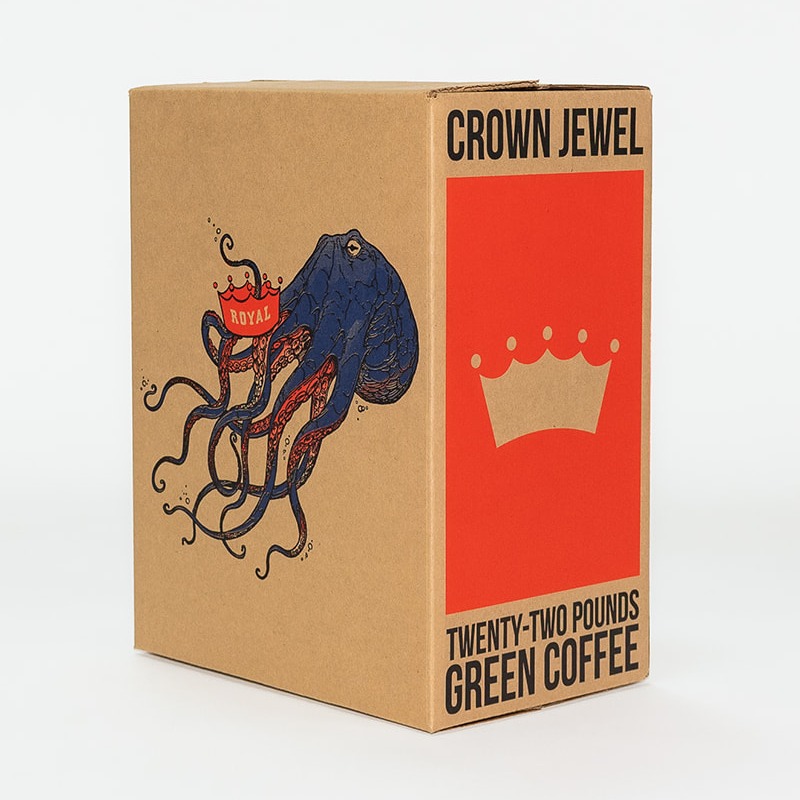
Lot 64 – 41042-1 – SPOT RCWHSE$165.00 per box
Boxes 61
Warehouses Oakland
Flavor Profile Caramel, chocolate, lemon, apricot, brown sugar
Add to your artisan.plus account: 
 Download PDF
.
22lb Boxes
Spot

Overview
Overview
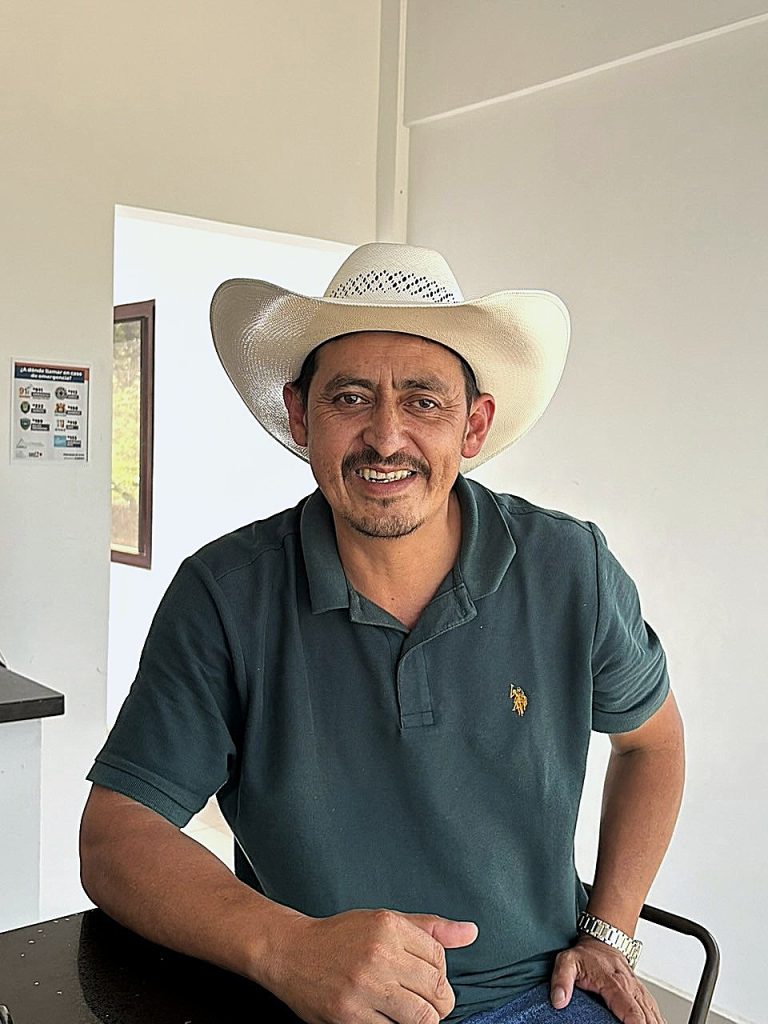
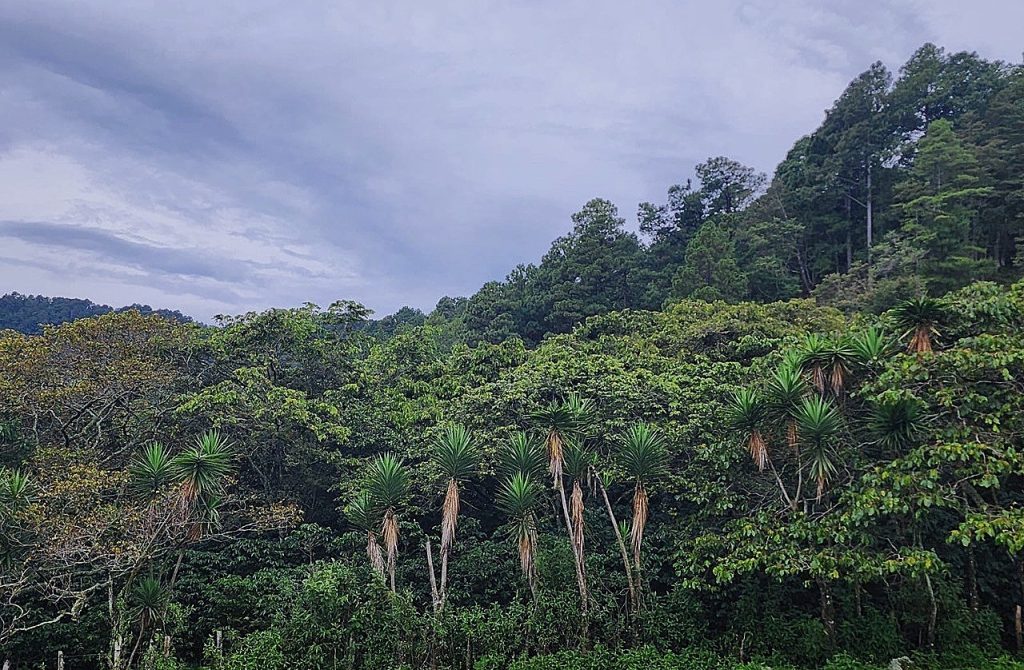
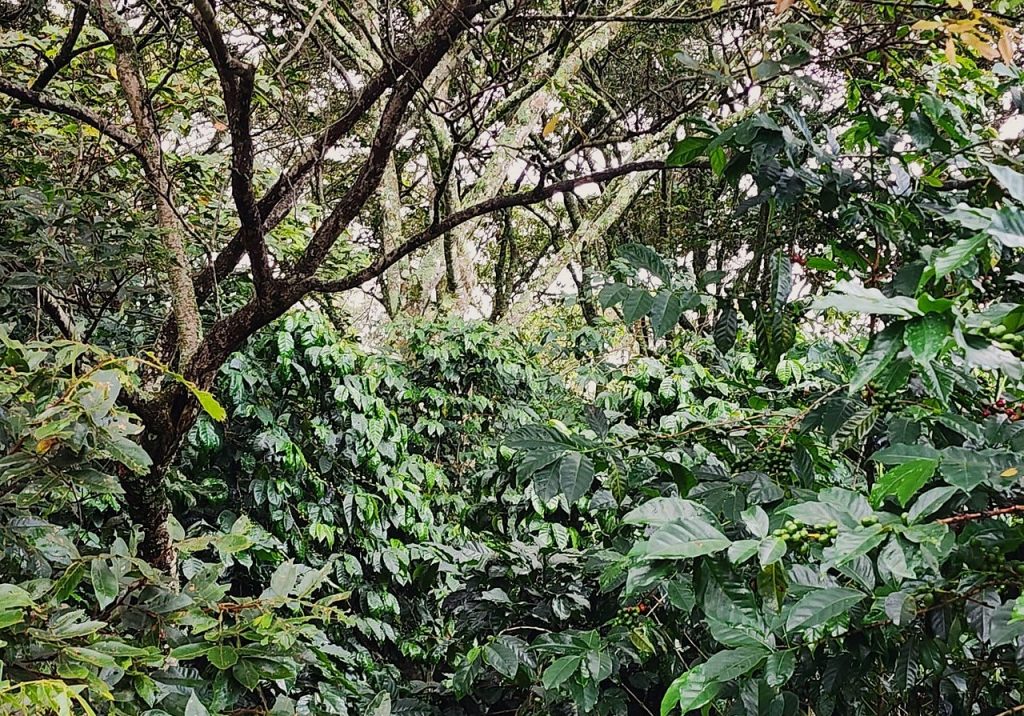
This is a low intervention washed coffee from Lempira, Honduras, produced by Ebin Castillo on his farm, El Matazano.
The flavor profile is sweet and chocolaty, with a crisp clarity and refined finish. We tasted citrus fruits like lemon and lime, hints of green apple and apricot, and plenty of caramelized notes like brown sugar, honey, and toasted marshmallow.
Our roasters found this washed coffee responds well to a lower charge temperature, to work with its slightly below average density and higher moisture content.
When brewed, our team found this coffee very versatile. It tastes delicious across every brew device, though the V60 with a moderate dose and grind edged out others as the team’s favorite for its balanced dark chocolate and caramel notes.
Taste
Taste Analysis by Chris Kornman
Back in early spring, when we were up to our ears evaluating scores of Ethiopian samples and countless other coffees that have, or will soon arrive, I doublechecked our purchasing records and found us a little short on classic washed selections for the Crown Jewel line.
To be perfectly honest, clean washed coffees, even when excellent and (relatively) inexpensive, like Ebin Castillo’s offering here, are a tough sell to the Crown Jewel crowd. Flashier flavors and more esoteric processing styles have become the norm and the expectation. And I get it. The difference between the flavors of a really excellent Honduran washed coffee, and a mild generic specialty option might be a little nuanced.
But, on a personal level, it makes it that much more rewarding and exhilarating when I’m offered a cup of simple washed coffee and find that it’s an elevated experience. It’s invigorating, and drives me to curiosity. Who is responsible for this delicate delight’s existence? What is its provenance and cultivar?
The answer, in this case, is that it is a humbly grown coffee by a man named Ebin Castillo who simply cares enough to make a difference. You can read more about (and by) him in the Source Analysis. Let’s cut to the chase, however, and discuss what this coffee tastes like.
It is long on sweetness; butterscotch, honey, and caramel are immediately apparent in the aromas and further on in the cup. It reminds me a little of a kouign-amann, buttery pastry dough and sugars stretched and caramelized into decadent layers. We found elements of dried raspberries and baked, spiced peaches, of fresh apples and ripe oranges and lemons. There’s a distinctive black-tea-like tannic quality, that bitterness that brings with it crisp clarity and refined finish. It has all of the depth but none of the heaviness of classic Honduran coffees. It’s an instant “yes, I’ll have another cup.”
Source
Source Analysis by Chris Kornman & Ebin Castillo
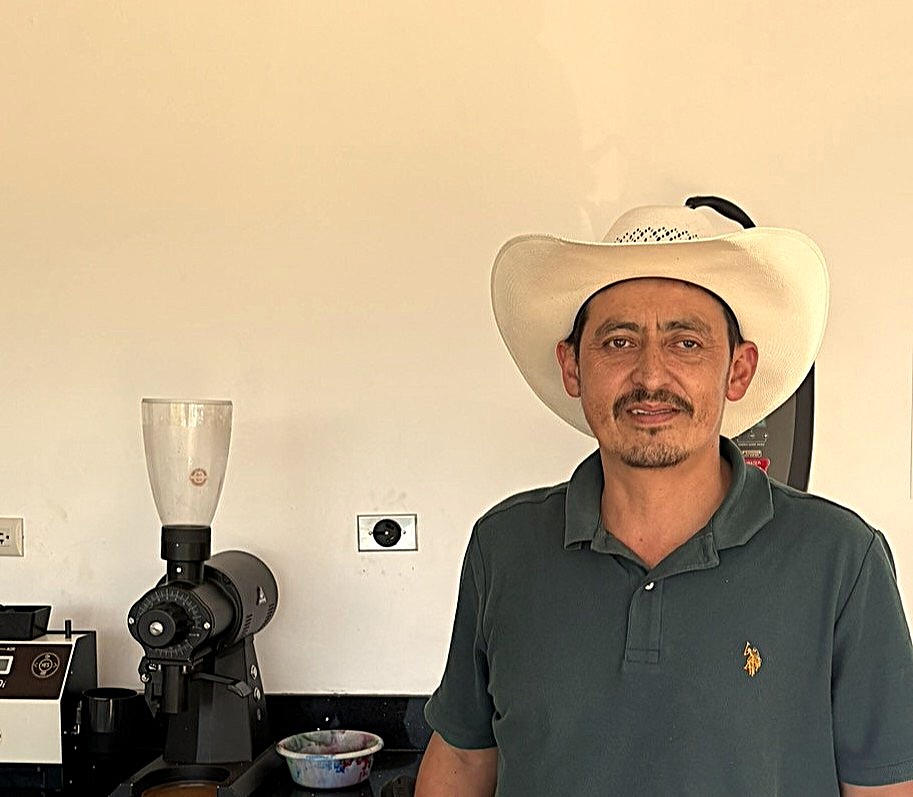
Ebin Castillo is a smallholder farmer of coffee, primarily, as well as the municipal president of Asociación Hondureña de Productores de Café (AproCafé, the Honduran Coffee Producers’ Association). He’s also an eloquent writer.
“I live in a region where the air smells of damp earth and freshly harvested coffee,” he writes in his introduction to his farm. “El Matazano is not just the name of my farm; it is a piece of my history. These four hectares, although small, hold years of hard work and the dream of a better future.”
It’s not often we receive a receive a personal note from the producer, nor one that is such a joy to read.
Castillo goes on to describe his farm, Finca El Matazano—the timber trees for shade, the vegetables for food, cattle for milk and meat— “there is no room for the superfluous; everything must be useful.”
His pride in selecting coffee as his focus, however, is evident from the start, entering his life “almost by chance.” His parents, subsistence farmers, grew a few trees for their own use. He saw potential. And, thanks to beneficial local climate and his careful stewardship, he can “achieve a quality that inspires pride.”
Like many such smallholder coffee farmers, he relies on his family (“during peak season, my son joins me in the work”) and his community for help during harvest, and processes his coffee in small batches, exclusively depulped, fermented overnight, washed, and finally dried on patios in the sun.
He’s diversified the cultivated varieties on his farm, wisely, choosing a mix of mostly short stature trees with some degree of rust resistance bred into their genes. This batch is comprised of IHCAFE 90, the Honduran Coffee Institute’s original Catimor hybrid, and Icatu, a Brazilian cross of Bourbon and Robusta. Unpretentious cultivars, unremarkable with regard to their reputation for quality, grown out of a matter of pragmatism.
And yet, this is a remarkable coffee for its cleanliness, sweetness, and texture—an elevated washed coffee, archetypically Honduran. In some ways, I’m more excited by coffees like this than I am about the rarities and oddities that today represent the bulk of our Crown Jewel menu. And there’s nothing wrong with celebrating novelty and innovation, but there’s also something beautiful about finding little coffees like this, produced with pride and care, that represent in such small ways the best of classic, traditional coffee flavors.
Castillo closes his letter to us with these paragraphs:
“For me, coffee is more than just a crop; it is a way of life. It is the aroma that wakes me in the morning, the sweat on my brow at midday, and the sense of satisfaction at the end of the day. It is the heritage I want to pass on to my children, but also the legacy I want to build alongside my neighbors and fellow growers. We dream of producing more micro-lots and achieving higher quality—of a future where coffee from El Matazano is recognized not only for its flavor but for the effort and passion behind every single bean.
“And although there is no shortage of challenges—weather, prices, labor—I keep moving forward. Because, in the end, ‘coffee isn’t planted; it is inherited.’ And I want my legacy to be one that endures.”
Green
Green Analysis by Chris Kornman
This is a slightly lower than average coffee in density, with a standard European Prep screen size and elevated moisture. The water activity in particular is a little out of range on this coffee, so be sure to keep the beans sealed up in the EcoTact packaging or another well-protected environment. And probably go a little easy on the heat in the roaster.
Ebin Castillo’s cultivar selections here are humble and utilitarian. IHCAFE 90 is a classic Honduran Catimor (Caturra x Timor Hybrid) first released in the 1980s after selecting from T5175, a selection made—but never released—by the Costa Rican institute, ICAFE. ICAFE made the selection from 3rd generation trees from a Brazilian population, the first Catimor selections developed in Portugal in the 1960s. It is a short stature tree with high yield potential. Unfortunately, the cultivar has not aged well, and is now considered susceptible to leaf rust and very susceptible to Ojo de Gallo (another pathogenic fungal coffee disease). World Coffee Research indicates its quality potential is low… a claim I’d beg to differ with, based on its inclusion here in this delightful tasting coffee.
Icatu is the other variety included in Ebin Castillo’s coffee here, a cultivar most frequently grown in Brazil. There are multiple recognized Icatu varieties maintained by the Instituto Agronômico de Campinas (IAC), many of which are yellow fruiting. Officially “Icatu Vermelho,” the original red variety is a very old hybrid, dating back to 1950. It is an interspecific robusta-arabica cross, using Red Bourbon as the arabica base. Icatu Vermelho is tetraploid, and therefore considered arabica. Other Icatu iterations typically backcross (i.e., breed the interspecific hybrid with one of the parent species), often using Mundo Novo (Typica x Bourbon) as the second-generation parent. Icatu, like many other aging hybrids, is less resistant to rust and other diseases than more modern cultivars.
Diedrich
Diedrich IR5 Analysis by Doris Garrido
At a time when we have endless experimental processing methods and increasingly complex coffee profiles, there remains a unique pleasure in returning to beautifully executed washed coffees. Clean and expressive, it exemplifies the strengths of traditional washed processing, showcasing vibrant acidity, layered sweetness, this is the case of this coffee from Ebin Castillo, from his finca “el Matazano”, located in the department of Lempira, Honduras. It’s a coffee that reminds us how rewarding simplicity can be, on a well-executed washed coffee.
For this coffee, I took a simple roasting approach. Because the density marked just slightly below average, I chose to charge at 425°F with a 30-second soak. This allowed me to take advantage of the Diedrich’s infrared ceramic panels to build early energy during the drying phase and reach Maillard sooner, hitting color change right at 4:45. To control the approach to First Crack without stalling, I stepped the gas down to 65% at 280°F, dialed it back further to 30% at 321°F, and opened the airflow to 100% at 350°F to clear excess thermal mass out of the drum. First Crack arrived at 382°F with strong yet well-controlled energy, allowing for a 1:30 post-development time.
The resulting acidity was magnificent: the cup opened with dynamic top notes of lemongrass, fresh mandarin, crisp lima (sweet lime), and green apple. Sweetness presented as honey, soft brown sugar, and gentle caramel, rounded out by rich, buttery pastry nuances of kouign amann, marzipan, and almond on a smooth, lingering finish.
Aillio
Aillio Bullet R1 IBTS Analysis by Evan Gilman
We use the RoasTime app and roast.world site to document our roasts on the Bullet. You can find our roast documentation below by searching on roast.world, or by clicking on the link below. Take a look at our roast profiles below, as they are constantly changing!
At last, a plain old well-executed washed coffee! A few years ago, I never thought I’d be the guy stunned to be regaled by the arrival of a fully washed coffee from Central America. Yet here we are, and here is a very deserving coffee to be taken aback by.
Noting the higher moisture content and water activity in this lot, I steeled myself for a wild ride but found this coffee to be well behaved and decently predictable. With 464F charge temperature, I knew that a hot start might cause this coffee to take off a touch at the beginning of roast, so I tempered my high charge with P7 power and F2 fan, increasing to P8 and F3 on turning point. This coffee had plenty of airflow behind it, because I wanted to make sure to utilize the relatively high water activity to really pull out the stops for the organoleptic-positive Maillard reactions we all know and love. I reduced power back to P7 and increased fan to F4 at peak rate of change, well before yellowing. My only other moves were to gradually reduce power and increase fan, hitting P5 and F6 for the last 30 seconds of post-crack development.
The roast loss percentage on this coffee is going to look high, due to the higher moisture being wicked off during roasting, so don’t let that be too much of a guiding light for your roasting practice. I finished my roast at 9:55 / 394.7F, and while this is a longer roast than usual, I really was focusing in on those protein and sugar browning characteristics. I got a whopping 16% of time in post-crack development, so you know I got what I was looking for.
Huge milk chocolate notes topped the zesty orange marmalade flavors I found in my first cup. As it cooled, gentle aromatic sweetness like clover honey emanated from the back of my palate. This coffee is just a confection, with brown sugar sweetness for days, and a creamy pastry-like finish to boot. It’s sweet, sweet, sweet. A real topper-upper if I do say so myself.
So here we are, in an era of thermal shock processed, cotton candy infused, pichia yeast inoculated geshamabobs, and I’m the old guy in the back of the cafe with a newspaper and a feather in my cap, nursing a cup of this coffee. And folks, I couldn’t be happier.
You can follow along with my roast here at roast.world: https://roast.world/egilman/roasts/iAJG2Kym9VteD0Zg_hfM1
IKAWA
Ikawa Pro V3 Analysis by Chris Kornman
Our current Ikawa practice compares two sample roast profiles, originally designed for different densities of green coffee. The two roasts differ slightly in total length, charge temperature, and time spent between color change in first crack. You can learn more about the profiles here.
Ebin Castillo’s coffee handled itself evenly on our two roasting profiles, though it did turn out a bit light in color on both roasting options.
The Low Density option presented a lot of aromatic complexity, from caramel and toasted marshmallow to dried apple and chocolate. The cup was clean but with a slight dryness in the finish. However, it cooled admirably, with a nice sweetness and bright orangey acidity.
The High Density roast was less aromatically complex and a bit nuttier, though it presented a nice clean mouthfeel and decadent smoothness. Its brightness was apparent at first, but it dulled a bit with cooling.
Overall I preferred the Low Density profile for this coffee due to the more complex flavor profile and sweetness.
You can roast your own by linking to our profiles in the Ikawa Pro app here:
- Roast 1: Low Density Sample Roast
- Roast 2: High Density Sample Roast
Brew
Brew Analysis by MJ Smith
“For me, coffee is more than just a crop; it is a way of life.”
I was already loving this coffee, and then I read the source analysis and saw this quote from Ebin Castillo himself, and I truly couldn’t agree more. Now that I’m thinking about it, that’s actually the perfect quote for this specific coffee. This is one of those washed process coffees that is so perfectly sweet that even the most loyal of natural process drinkers could enjoy it. I found something to love in every brew I made for this analysis, but here are the two I preferred the most.
The first recipe I want to highlight was made on the Kalita Wave, and it had a dose of 19g, a grind of 9.5, and a brew time of 3:15. This brew was the brighter and juicier of the two, but it also had some amazing sweetness that reminded me of those butter shortbread cookies that come in the metal tin around the holidays. In addition to delightful little cookies, I also picked up notes of blood orange, salted caramel, apricot, candied pecans, and rosemary.
Next, I switched over to the V60 and cut the dose back to 18g, but the grind and the brew time stayed the same. I found notes of dark chocolate, caramel corn, clementine “cuties”, and sweet roasted carrots. Some notes from the rest of the team include marshmallow, marzipan, pear, plum, roasted apricot, and lemon zest. I think this was the most well-balanced of all the brews, and it was definitely everyone’s favorite.
This is another one of those coffees that’s so easy to work with that you don’t really have to fight it much at all to get it tasting good. I found that a moderate grind worked best for this coffee, as I tried one brew at an 8 grind and another brew at a 10 grind. The 8 was far too slow, and the 10 was far too fast, but 9.5 was perfect. Other than that, the Wave and V60 both gave me great brews, so have at it! Enjoy!
Espresso
Espresso Analysis by Tim Tran and Castle Victoria
Recipe 1: 19.0g in, 35.0g out in 40 seconds
Recipe 2: 18.5g in, 38g out in 34 seconds
This coffee from Honduras was a delight in flavors presented and it was a treat to learn of its unassuming cultivar lineage. It has an incredible depth of flavor and it’s able to stride confidently on flavor paths of both savory and sweet.
Our favorite recipe was brewed with a 19 gram dose to a 35 gram yield shot in 40 seconds. This shot had notes of orange liqueur, pomegranate, and baking spices, carried on an incredibly rich and velvety espresso. We were especially surprised at how bright this shot tasted despite the long shot clock and contact time.
Our second favorite recipe was brewed with a dose of 18.5 grams, to a 38 gram yield, in 34 seconds. This recipe brought out a nuttier undertone to the coffee while still preserving the citrus and orange liqueur brightness. This espresso shot was especially tasty, with a wide spread of flavor complexity.
This coffee is amenable to a wide range of flavor profiles, and it was especially fun digging into how structured and complex this coffee presents in the cup. Ultimately, we recommend a moderate dose with a lower yield, targeting longer brew times.
Related Coffee

Black Tea, caramel, lemongrass, passion Fruit, apricot
Oakland 7 Boxes
Crown Jewel Burundi Honey Peaberry Heza Washing Station
38863-1 – SPOT RCWHSE
Black Tea, caramel, lemongrass, passion Fruit, apricot
Spot
7 Boxes
$255.49 per box
Banana Bread, plum, rosemary, cocoa Nib, and toffee
Oakland 34 Boxes
Crown Jewel Yemen Anaerobic Natural Sharqi Haraz Cooperative
39818-1 – SPOT RCWHSE
Banana Bread, plum, rosemary, cocoa Nib, and toffee
Spot
34 Boxes
$710.39 per box
Orange blossom, red wine, baker's chocolate, and black tea
Oakland 15 Boxes
Crown Jewel Yemen Washed Sharqi Haraz Cooperative
39817-1 – SPOT RCWHSE
Orange blossom, red wine, baker's chocolate, and black tea
Spot
15 Boxes
$580.58 per box
Lemon, floral, hibiscus, rosemary, and apple
Oakland 48 Boxes
Crown Jewel Ethiopia Anaerobic Natural Rue Co-ferment Banko Chelchele
40654-1 – SPOT RCWHSE
Lemon, floral, hibiscus, rosemary, and apple
Spot
48 Boxes
$358.51 per box