
- This product is out of stock.
Crown Jewel Ecuador Natural Typica Mejorado Juan Peña
40302-3 – SPOT RCWHSE
Boxes 0
Warehouses Oakland
Flavor Profile Raspberry, Meyer lemon, basil, blackberry, blueberry
Out of stock


Overview
Overview
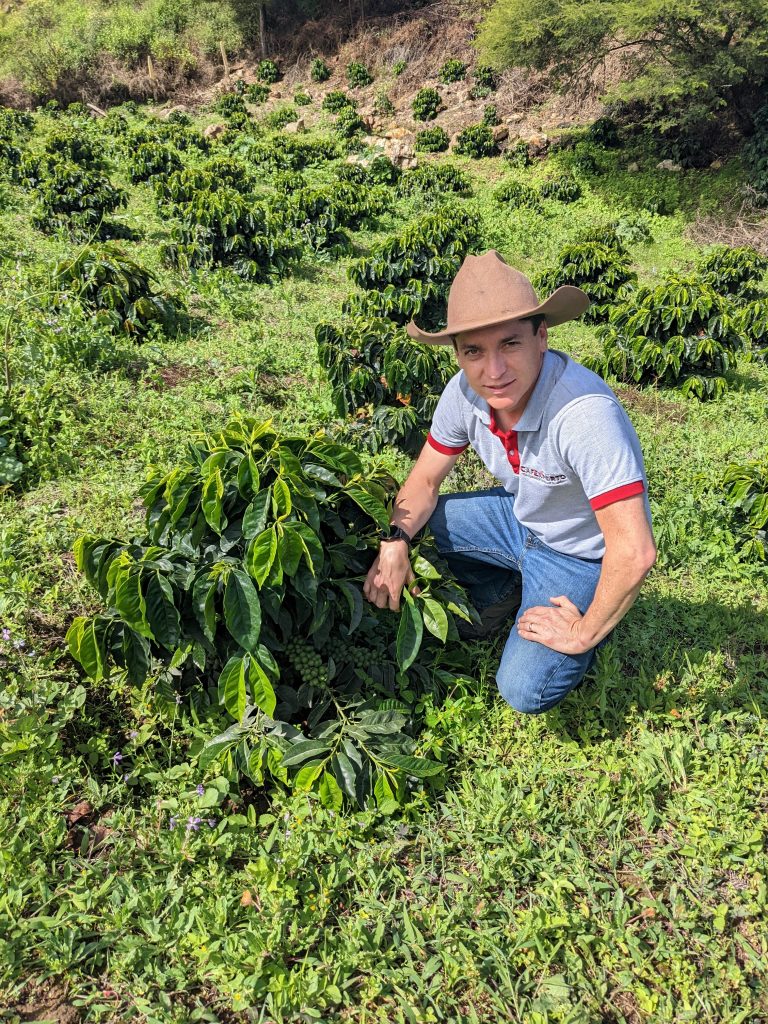
This is a low intervention natural Typica Mejorado cultivar coffee from the Yunguilla Valley in Ecuador, produced by Juan Peña.
The flavor profile is unmistakeably fruity and natural-process forward, but with the cleanliness and grace nodding to its meticulous processing. We taste raspberries, lemonade, cherry compote, and a rich chocolatey structure.
Our roasters found this coffee needs careful heat management near first crack, closing gas entirely through color change, then reintroducing with full airflow to prevent runaway development and preserve its signature hard candy sweetness and elegant florals.
When brewed, our favorite pour-over recipes used a flat-bottomed brewer and a moderately coarse grind to bring balance to the cup.
Taste
Taste Analysis by Isabella Vitaliano
I have a particular fondness for Juan Peña’s coffee. The first coffee shop I worked at six years ago now carried his coffee and had for some time at that point. When learning how to taste coffees I had some difficulty seeing what the difference between a ‘good’ and a ‘great’ coffee was. When first exploring how to taste coffee it can be hard to break this down because when tasting say, really fruity natural coffees, the flavor is so obvious it can be so exciting. His coffees were used as the example of what a truly great coffee was. Soft, complex, intricate, controlled profiles that reflect the meticulous work put into them. Because of this, I carry a particular fondness for his coffees, like many do in the industry.
It feels tranquil, compact and romantic – clean strawberry, red grape, lemonade, papaya, cherry compote, and expensive chocolate. Classic flavor notes but combined together make for a tranquil experience. Juan Peña has put in a lot of work over the years to systemize the perfect process – through his own experience as an agronomist, trial and error and lots of research. In the cup the team also got notes of fig, jolly rancher, blackberry and rose aromatics. This is especially delicious as it cools, it turns into sweet hibiscus tea with sweet syrup.
Source
Source Analysis by Chris Kornman
It has been three years since coffee from Juan Peña has graced our menu, though not for lack of trying. The man is popular, and busy, and in the past few years there simply hasn’t been enough coffee to go around. This year, however, we were offered coffee from Yunguilla, a recently developed project expanding outside the boundaries of Peña’s famous Hacienda la Papaya coffee farm.
Yunguilla, located in the Choco Andean Cloud Forest, sits a little further to the north, across the Jubones river which serves as the border with Loja in the Azuay state. The farm here contains variety-specific plots, irrigated and Pacific-facing slopes, with stable moderate temperatures. Across the coffees he works with, Juan Peña has implemented a “Integrated Coffee Pulse” monitoring system of his own development, which ensures a level of quality control that extends to soil nutrients and climate conditions, ensuring optimal coffee tree health as well as coffee cherry quality and uniformity.
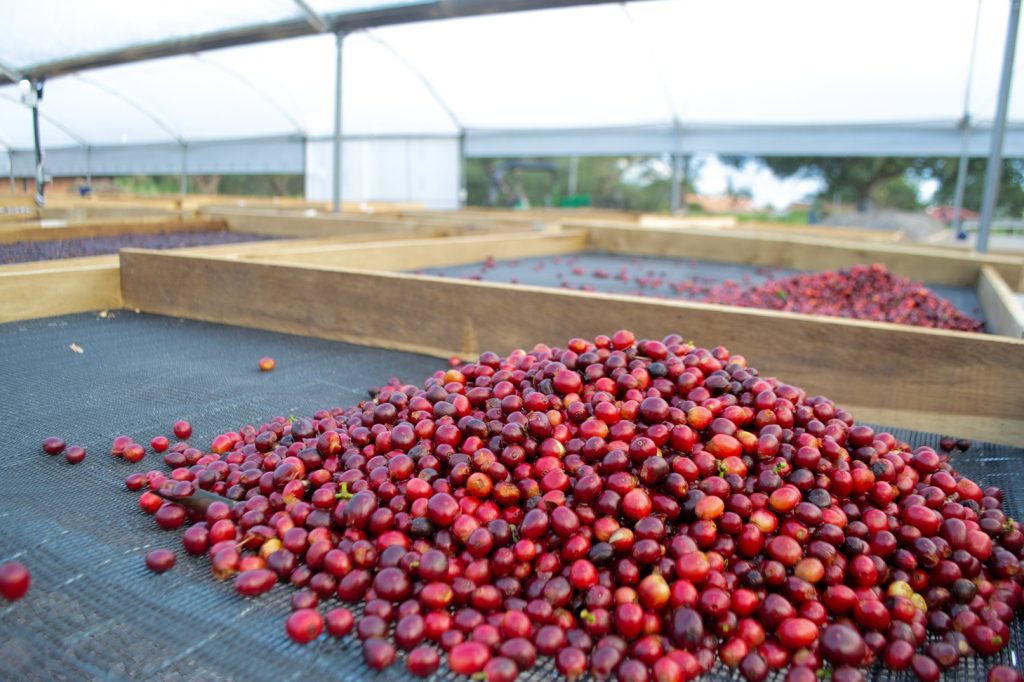
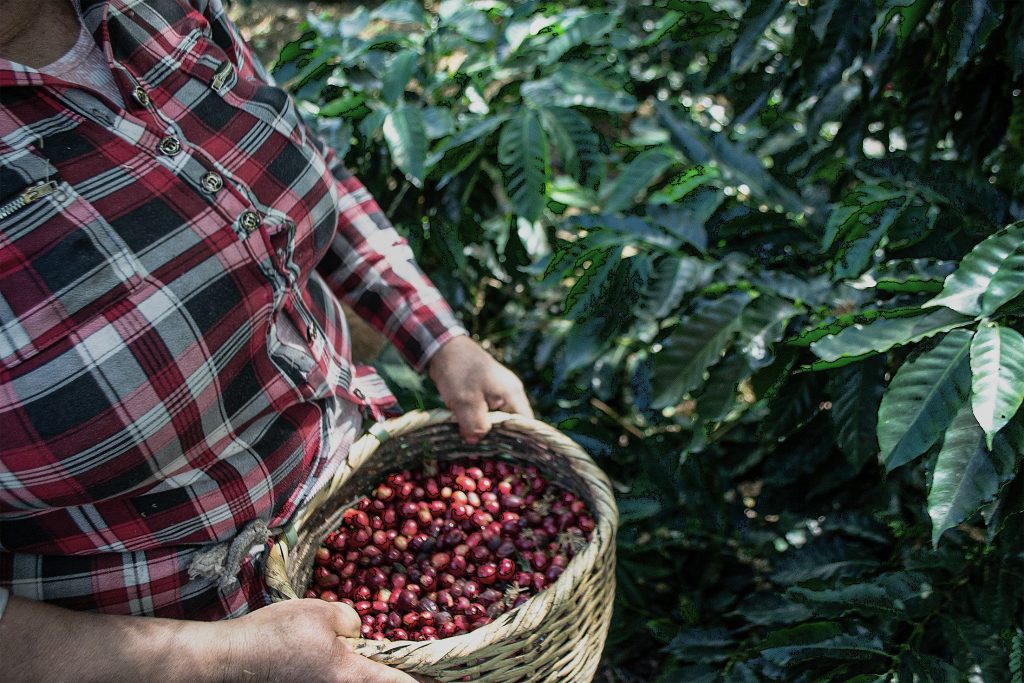
From the 2025 harvest, we selected three lots, iconically Ecuadorian in both flavor profile and genetic selections. This is a minimal-intervention natural Typica Mejorado. Peña’s processing methodology is meticulous, presenting the distinctive flavors of coffee genetic and terroir in pristine clarity. Coffees are selectively harvested and washed before drying as whole fruit under a combination of solar drying rooms and raised African beds. Using an extended drying stage, 20-30 days in total, Peña’s team utilizes an automated drying room management system to carefully ensure stable moisture content and water activity levels, while also manually turning the drying cherries 3-4 times daily.
Typica Mejorado (“Improved” Typica) is almost exclusively grown in Ecuador (and a few farms in Colombia), and Juan Peña maintains his own gene bank of varieties from which he selects his seedlings. Rumored to have been developed by a now-defunct Nestle research project in the Pinchincha province, there is some confusion around its heritage. Information from Peña’s team indicates that the variety is a hybrid of Typica and an unspecified Ethiopian landrace variety, however there are anecdotes indicating genetic testing concluding that Mejorado is a hybrid of Bourbon and an Ethiopian landrace, a claim shared but not elaborated upon by noted coffee geneticist Chrisophe Montagnon. Daily Coffee News offers one of the more detailed oral histories of its introduction, but stops short of naming its specific provenance. Despite claims of genetic verification, an entry for Typica Mejorado does not yet exist in the World Coffee Research Arabica variety catalog, likely due in part to the lack of a reliable identity—it’s highly probable there are multiple variants of Typica Mejorado grown by different farmers. It has been theorized that the “Typica” moniker may have originated because of morphological and sensory similarities to true Typica. Nevertheless, regardless of its origins, the variety remains coveted for its high sensory quality potential, which this selection from Yunguilla is certainly a testament to.
Peña’s reputation for crafting exceptional coffees precedes him. He holds three “Sprudgie” Notable Producer awards, a degree in agronomy, and maintains an agreement with Cuenca’s University for research and development, in addition to having his coffees regularly featured on the global competition stages. Hacienda la Papaya boasts consecutive annual top 3 placements in brewers, baristas, and/or roasters championships in the US circuit beginning in 2016.
“We experiment with chemistry and I’m pretty sure that we have the best quality control, with sensors on harvest, developing of fertilizer, and drying rooms” he says. Beyond the farm, Peña has established an export company, CafExporto, to manage the dry milling, quality control, export logistics, and marketing efforts. The direct line from farm to port allows for a high degree of transparency and control, and has facilitated a wider network of neighboring farms, both large and micro-scale to begin gaining access to specialty coffee export market opportunities.
Green
Green Analysis by Isabella Vitaliano
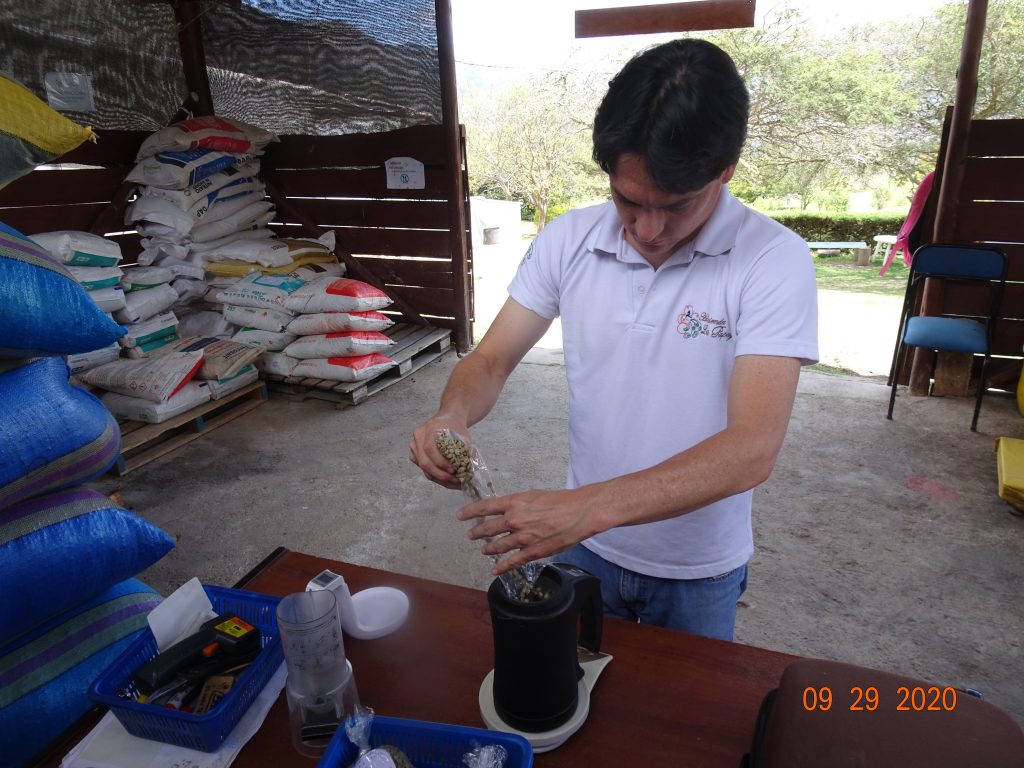
Density is in the average range with slightly below average moisture content as well as water activity.
Both specs of the Typica Mejorado from Juan line up really close to one another even with different processing methods. Screen size is spread out right in the median range of 18-16. Be sure to check out the roasters notes for tips on roasting.
One thing we always notice about Juan Peña’s coffees is how well they last over time. We suspect that something in the drying step, hence these specs, create green coffee that can last longer than average. Still make sure to steal them up properly to make it taste as fresh as possible. Even in the aromatics of the green coffee you can immediately tell how fragrant and almost floral-like the smell it.
Diedrich
Diedrich IR5 Analysis by Doris Garrido
Juan Peña has always delivered delicacy and elegance in his natural coffees – the clear hard candy sweetness, the dry fruit flavors without a trace of winey or fermented notes, an acidity reminiscent of Meyer lemons and pink lemonade, hints of Jolly Rancher candy, elegant florals, a refined chocolate taste. An experience no one should miss.
This coffee was my second Typica Mejorada of the day. After noticing how the first one behaved, I took notes and applied a more delicate approach for this one, considering this was a natural process. As usual, because of the process, coffee tends to accelerate rapidly near the first crack. Considering this, I started the roast at 440°F. I waited one minute before introducing the gas, which I set to 100%. I then waited until 290°F, about four minutes into the roast, and dropped it to zero. I brought the gas back after being closed for nearly 2 minutes, when the bean temperature reached 350°F. Opened the full airflow fully at this point. I wanted to slow the rate of change at first crack to lower the risk of runaway during development. The first crack started at 383°F. With a development time of 1 minute and 46 seconds. The final drop temperature was 396°F.
Delicious floral notes upon grinding this coffee. A true experience in a cup. Never miss an opportunity to taste Juan Peña’s excellent coffee. I have the pleasure of tasting and roasting them, and for that I feel very fortunate -and always recommended.
Brew
Brew Analysis by Joshua Wismans
Ecuador has cemented itself as a premiere origin in the world of coffee, and Juan Pena helped put it on the map. These latest coffees exemplify what makes coffees from this region so special. This natural processed Typica Mejorado in particular stands out as a bright, clean, floral counterpoint of your typical natural processed profile. With so much brightness and clean crisp fruit, we chose a recipe that helps balance the cup, bringing some body and roundness to balance the brightness in the cup.
We actually currently have this coffee on our pour-over bar at The Crown, and couldn’t be happier with it. Like any coffee, it required some tweaks to get it where we felt the coffee was at it’s truest expression. We initially started dialing on a conical brewer and found sound bitterness that we were determined to clean up. We found that this coffee has a ton of meyer lemon brightness and sought to balance that with a switch to flat bottom brewer.
Our final recipe for service, and how we recommend brewing this coffee, was with the Kalita Wave. We used a moderately coarse grind and a fairly standard ration of 15.78 coffee to water. The brew we were happiest with, which brough out notes of blueberry, tiramisu, and meyer lemon, had a TDS of 1.33 and an extraction percentage of 17.99.
Related Coffee
Cherry, grapefruit, apricot, floral, and lime
Oakland 28 Boxes
Crown Jewel Colombia Washed SL-28 Juliana Guevara & Wbeimar Lasso
38868-1 – SPOT RCWHSE
Cherry, grapefruit, apricot, floral, and lime
Spot
28 Boxes
$259.91 per box
Chamomile, toffee, mandarin, cane sugar, caramel
Oakland 24 Boxes
Crown Jewel Ecuador Washed Sidra Juan Peña
40303-2 – SPOT RCWHSE
Chamomile, toffee, mandarin, cane sugar, caramel
Spot
24 Boxes
$319.05 per box

Caramel, black tea, guava, applesauce, and apricot
Oakland 23 Boxes
Crown Jewel Ecuador Washed Typica Mejorado Juan Peña
40301-2 – SPOT RCWHSE
Caramel, black tea, guava, applesauce, and apricot
Spot
23 Boxes
$307.72 per box
Green apple, jolly rancher, apple, mojito, apple cider
Oakland 12 Boxes
Crown Jewel Colombia Carbonic Honey Green Apple Co-Ferment Edwin Noreña
37700-2 – SPOT RCWHSE
Green apple, jolly rancher, apple, mojito, apple cider
Spot
12 Boxes
$367.77 per box