
Crown Jewel Ecuador Washed Typica Mejorado Juan Peña
40301-2 – SPOT RCWHSE$307.72 per box
Boxes 23
Warehouses Oakland
Flavor Profile Caramel, black tea, guava, applesauce, and apricot
Add to your artisan.plus account: 
 Printer Friendly PDF
.
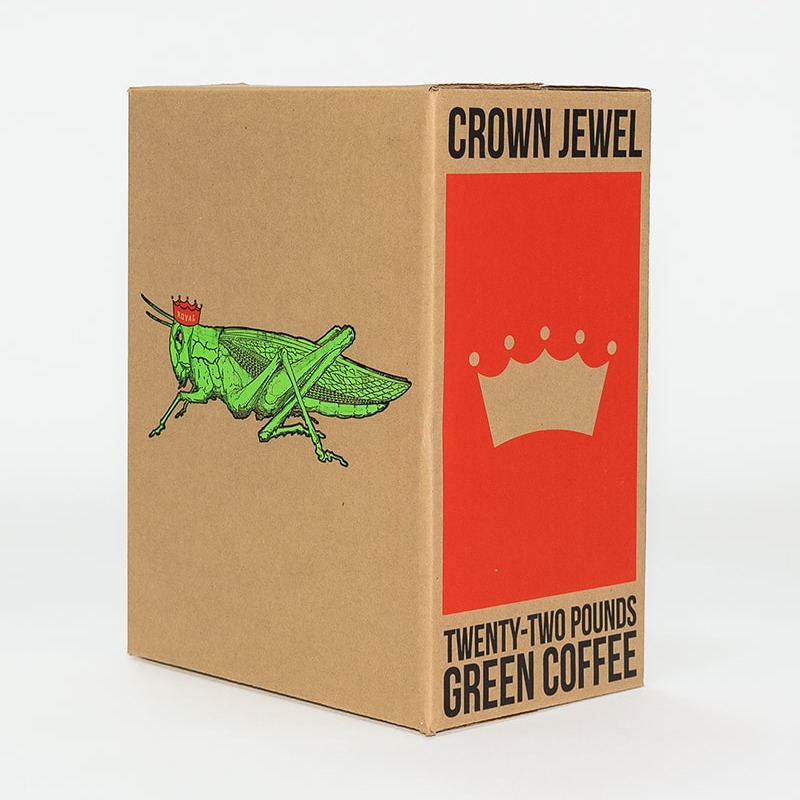
22lb Boxes
Spot

Overview
Overview
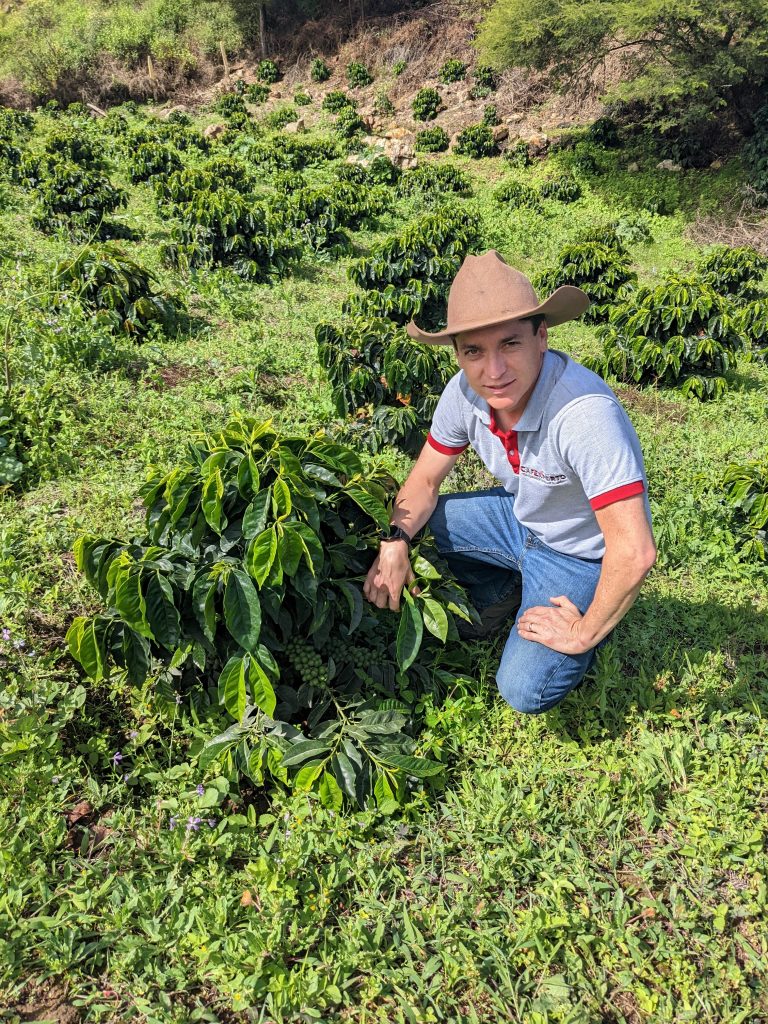
This is a low intervention washed Typica Mejorado cultivar coffee from the Yunguilla Valley in Ecuador, produced by Juan Peña.
The flavor profile is mesmerizing and intricate, with complex sweetness, a decadent soft texture, and long finish. We taste guava, black tea, sweet custard, and lemongrass.
Our roasters found this coffee benefits from a short drying phase with an elongated yellowing.
Our favorite pour-overs used recipes with a flat bottom brewer, coarse grind, and a moderate dose to accent the sweet floral flavors the coffee offers.
Taste
Taste Analysis by Isabella Vitaliano
I have a particular fondness for Juan Peña’s coffee. The first coffee shop I worked at six years ago now carried his coffee and had for some time at that point. When learning how to taste coffees I had some difficulty seeing what the difference between a ‘good’ and a ‘great’ coffee was. When first exploring how to taste coffee it can be hard to break this down because when tasting say, really fruity natural coffees, the flavor is so obvious it can be so exciting. His coffees were used as the example of what a truly great coffee was. Soft, complex, intricate, controlled profiles that reflect the meticulous work put into them. Because of this, I carry a particular fondness for his coffees, like many do in the industry.
Fig leaf, vanilla, textured plum, pine and pear create a resonate profile with delicate florals and unexpected contrasts. It opens up to lemongrass, guava jelly, green mango and sweet custard notes. Descending to lower notes, you’ll find basil, delicate citrus blossom, mesquite that finalizes with an aromatic finish. Texture may not be one of the most coveted attributes in the coffee industry but its one of my favorites, and this has mesmerizing texture of thick but soft mouthfeel and a lasting finish. Its subtle but enchanting flavors will grab anyone’s attention. A perfect example how to distinguish a ‘great’ coffee from the rest.
Source
Source Analysis by Chris Kornman
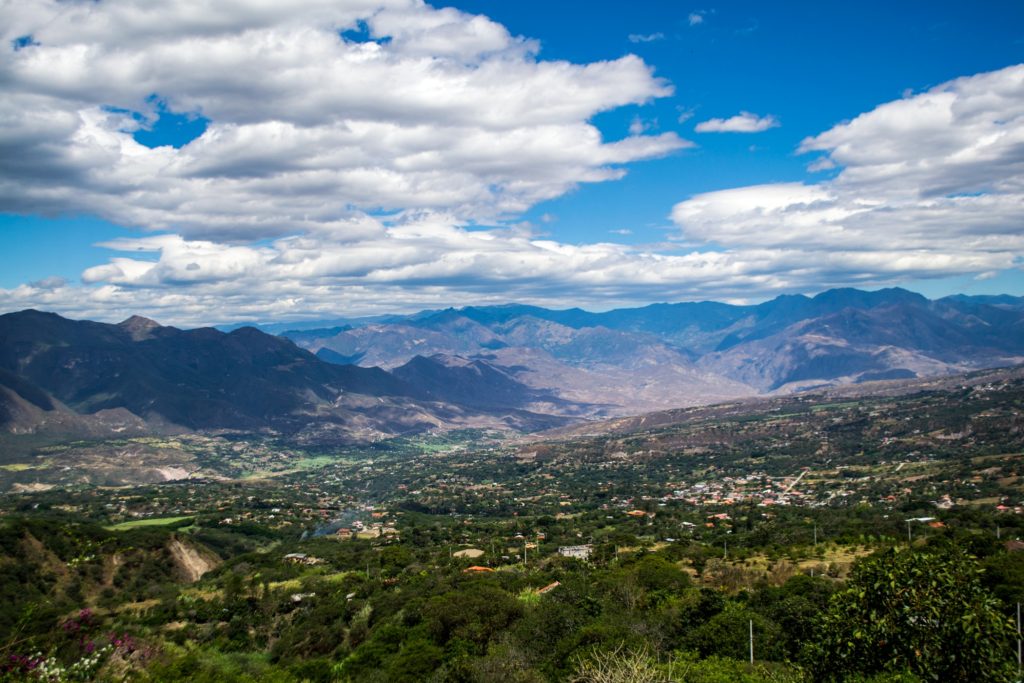
It has been three years since coffee from Juan Peña has graced our menu, though not for lack of trying. The man is popular, and busy, and in the past few years there simply hasn’t been enough coffee to go around. This year, however, we were offered coffee from Yunguilla, a recently developed project expanding outside the boundaries of Peña’s famous Hacienda la Papaya coffee farm.
Yunguilla, located in the Choco Andean Cloud Forest, sits a little further to the north, across the Jubones river which serves as the border with Loja in the Azuay state. The farm here contains variety-specific plots, irrigated and Pacific-facing slopes, with stable moderate temperatures. Across the coffees he works with, Juan Peña has implemented a “Integrated Coffee Pulse” monitoring system of his own development, which ensures a level of quality control that extends to soil nutrients and climate conditions, ensuring optimal coffee tree health as well as coffee cherry quality and uniformity.
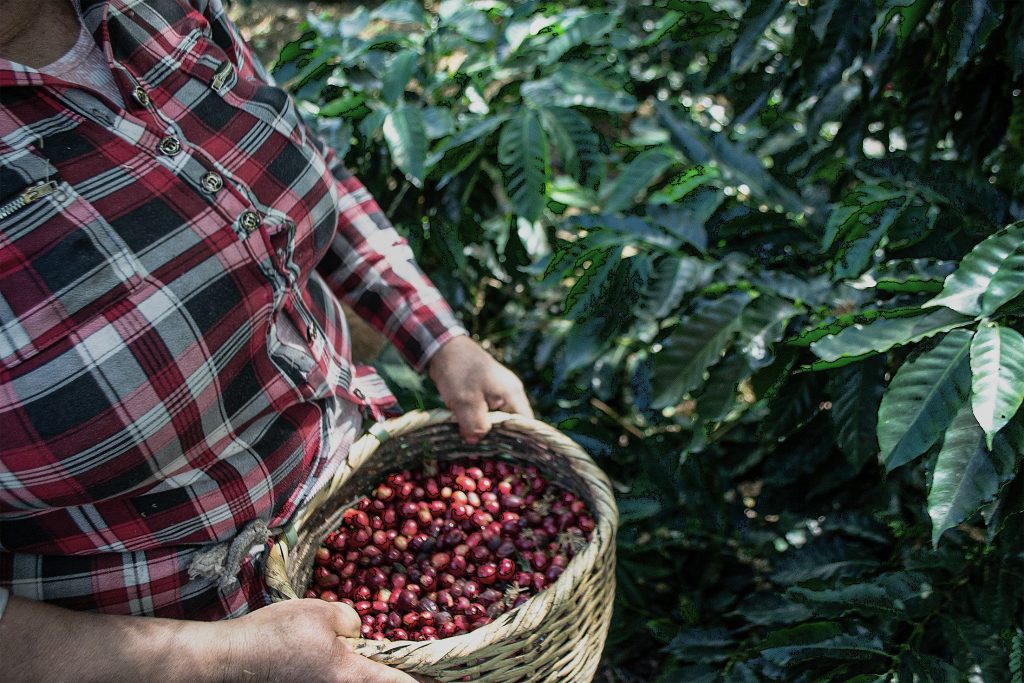
From the 2025 harvest, we selected three lots, iconically Ecuadorian in both flavor profile and genetic selections. This is a low-intervention washed Typica Mejorado. Peña’s processing methodology is meticulous, presenting the distinctive flavors of coffee genetic and terroir in pristine clarity. Coffees are selectively harvested, floated and sorted for density prior to processing, depulped, fermented washed, and dried for 9-18 days using an automated drying room management system to carefully ensure stable moisture content and water activity levels.
Typica Mejorado (“Improved” Typica) is almost exclusively grown in Ecuador (and a few farms in Colombia), and Juan Peña maintains his own gene bank of varieties from which he selects his seedlings. Rumored to have been developed by a now-defunct Nestle research project in the Pinchincha province, there is some confusion around its heritage. Information from Peña’s team indicates that the variety is a hybrid of Typica and an unspecified Ethiopian landrace variety, however there are anecdotes indicating genetic testing concluding that Mejorado is a hybrid of Bourbon and an Ethiopian landrace, a claim shared but not elaborated upon by noted coffee geneticist Chrisophe Montagnon. Daily Coffee News offers one of the more detailed oral histories of its introduction, but stops short of naming its specific provenance. Despite claims of genetic verification, an entry for Typica Mejorado does not yet exist in the World Coffee Research Arabica variety catalog, likely due in part to the lack of a reliable identity—it’s highly probable there are multiple variants of Typica Mejorado grown by different farmers. It has been theorized that the “Typica” moniker may have originated because of morphological and sensory similarities to true Typica. Nevertheless, regardless of its origins, the variety remains coveted for its high sensory quality potential, which this selection from Yunguilla is certainly a testament to.
Peña’s reputation for crafting exceptional coffees precedes him. He holds three “Sprudgie” Notable Producer awards, a degree in agronomy, and maintains an agreement with Cuenca’s University for research and development, in addition to having his coffees regularly featured on the global competition stages. Hacienda la Papaya boasts consecutive annual top 3 placements in brewers, baristas, and/or roasters championships in the US circuit beginning in 2016.
“We experiment with chemistry and I’m pretty sure that we have the best quality control, with sensors on harvest, developing of fertilizer, and drying rooms” he says. Beyond the farm, Peña has established an export company, CafExporto, to manage the dry milling, quality control, export logistics, and marketing efforts. The direct line from farm to port allows for a high degree of transparency and control, and has facilitated a wider network of neighboring farms, both large and micro-scale to begin gaining access to specialty coffee export market opportunities.
Green
Green Analysis by Isabella Vitaliano
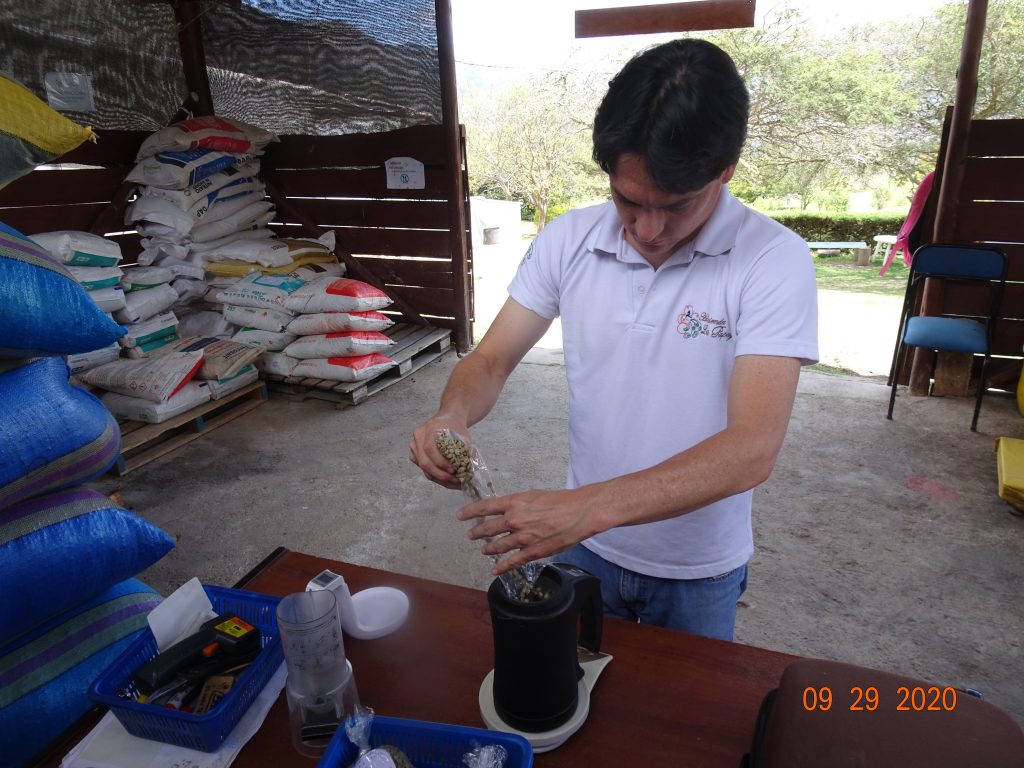
Density sits a little bit below average with a really even screen side spread between 18-15. Moisture content is a little bit below average and water activity is below average as well.
One thing we always notice about Juan Peña’s coffees is how well they last over time. We suspect that something in the drying step, hence these specs, create green coffee that can last longer than average. Still make sure to steal them up properly to make it taste as fresh as possible. Even in the aromatics of the green coffee you can immediately tell how fragrant and almost floral-like the smell it.
Diedrich
Diedrich IR5 Analysis by Doris Garrido
Typica Mejorada. I translated Mejorada from Spanish as a better version of Typica. But what if I told you that I heard Typica Mejorada carries no Typica lineage at all, but only Bourbon and Ethiopian Landrace? Very interesting, isn’t it? It made me want to know what magic happened inside the Ecuadorian Nestlé laboratory. But honestly, what interests me even more is the work of Juan Peña and the team of professionals he has built alongside the University of Cuenca, to study and maintain mother plants to preserve the variety’s genetics in Ecuador.
These people are the true coffee influencers to me.
So, for this roast, I kept the drying phase short, and with its Bourbon lineage in mind, I looked to elongate the yellowing phase.
I warmed up the Diedrich to 450°F and started the roast with 50% airflow and 100% gas from the beginning. I dropped the gas at 280°F, around three minutes into the roast. Color change happened at 307°F, and just past that, I dropped the burners to zero at the 314°F mark. I brought the burners back at 340°F, and the first crack landed at 382°F at 7 minutes and 51 seconds into the roast. I ran a development time of 1 minute and 48 seconds and dropped the coffee at 390°F.
On the cupping table, some of my favorite flavors: guava, green mango, basil, pine and citrus blossom. A subtle sweetness of pear and Belgian waffle to crown the beauty of this jewel.
Brew
Brew Analysis by Joshua Wismans and Katie Briggs
Ecuador’s mark on the specialty coffee world can be largely credited to Juan Pena and the two varietals we’re bringing to the menu this year. Shrouded in lore of hybrids and research centers, Sidra and Typica Mejorado represent a region rich in tradition and innovation. This washed process Typica Mejorado provides a sensorial glimpse into the future of specialty coffee in Ecuador, with Juan Pena expanding his producing to new farms. With this recipe, you’ll be rewarded with lemon curd, black currant, florals, and brown butter, representing the floral and sweet character of the varietal.
Much like the natural process, this coffee finds its’s balance with a flat bottom brewer. We chose the Kalita Wave, and settled on a coarse grind with a moderate dose. Traditional approaches to TDS work well with this coffee, with us finding a sweet spot at 1.34 and an extraction of 18.1%. This is where those notes of lemon curd, apricot, and brown butter come through. The coffee is fairly soluble, which is why you’ll want a coarser grind to avoid over extraction. Too fine of a grind and you’ll get more tobacco and cashew notes. Not bad, just not the clean juicy profile we found.
To summarize, we recommend a flat bottom brewer, coarse grind, and a moderate dose to bring out the wonderful sweetness and florals this coffee has to offer.
Related Coffee
Cherry, grapefruit, apricot, floral, and lime
Oakland 28 Boxes
Crown Jewel Colombia Washed SL-28 Juliana Guevara & Wbeimar Lasso
38868-1 – SPOT RCWHSE
Cherry, grapefruit, apricot, floral, and lime
Spot
28 Boxes
$259.91 per box
White Tea, basil, biscoff cookie, cacao, candied fruits
Oakland 42 Boxes
Crown Jewel Bolivia Organic Washed Yulissa Chambi
39122-1 – SPOT RCWHSE
White Tea, basil, biscoff cookie, cacao, candied fruits
Spot
42 Boxes
$220.94 per box
Chamomile, toffee, mandarin, cane sugar, caramel
Oakland 24 Boxes
Crown Jewel Ecuador Washed Sidra Juan Peña
40303-2 – SPOT RCWHSE
Chamomile, toffee, mandarin, cane sugar, caramel
Spot
24 Boxes
$319.05 per box
Peach, jasmine, peach black tea, grapefruit, and peach nectar
Oakland 16 Boxes
Crown Jewel Colombia Carbonic Honey Peach Co-Ferment Edwin Noreña
38644-1 – SPOT RCWHSE
Peach, jasmine, peach black tea, grapefruit, and peach nectar
Spot
16 Boxes
$351.23 per box