
Crown Jewel Costa Rica Natural Bryan Rivera Ureña León Cortés Canton
36182-1 – SPOT RCWHSE
Boxes 0
Warehouses Oakland
Flavor Profile lemongrass, strawberry, lavender, cranberry, and raspberry
Out of stock


Overview
Overview
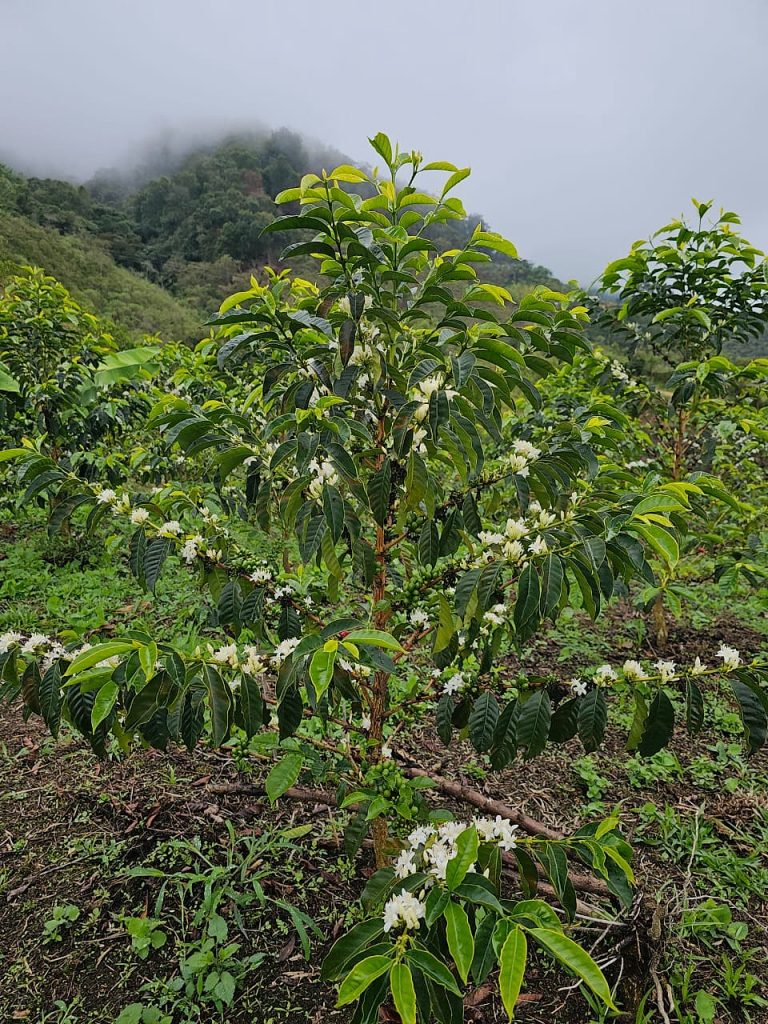
This is a minimal intervention natural Bourbon variety coffee from the Tarrazú region of Costa Rica, produced by Bryan Rivera Ureña on his farm, Finca Santa Rosa.
The flavor profile is lush and structured, with vibrant dark berries, blackberry lemonade, orange zest, and hazelnut. Rambunctious as espresso, this coffee mellows into a strawberry–plum milkshake delight when paired with milk.
Our roasters found that a steadier approach with reduced burner energy, extending both the drying and Maillard phases beyond nine minutes, can help unlock deeper fruitiness and more developed caramel notes
When brewed, the team recommends a slightly finer grind setting with a moderate dose on a flat-bottomed brewer.
Taste
Taste Analysis by Isabella Vitaliano
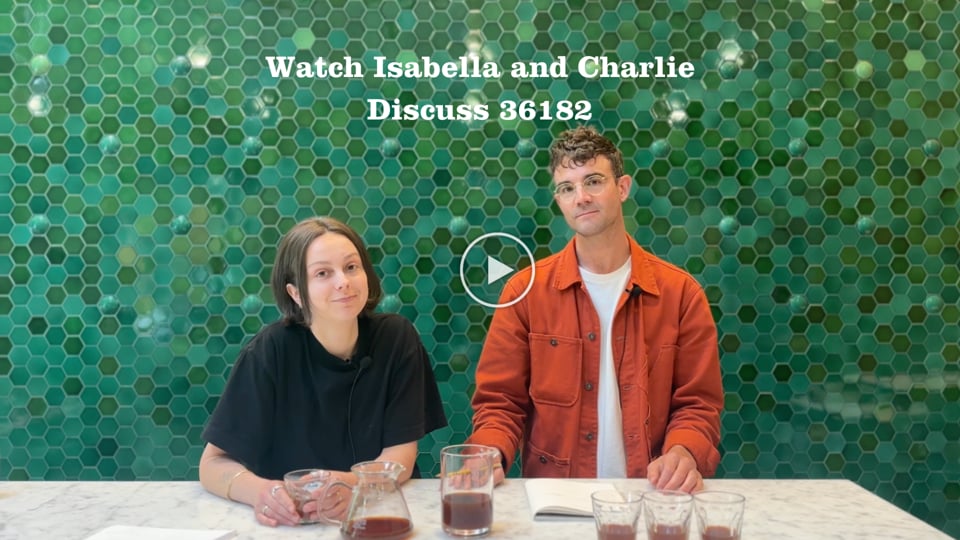
A quintessential representation of a natural, this coffee has bright fruit flavors and a touch of funk when it is amped up on espresso. When adding milk, you’ll get a plum and strawberry milkshake goodness. At The Crown this coffee is paired with the Desta Gola on bar (which is still available here) and we are loving the contrast of a classic washed Ethiopian coffee to this natural Costa Rica.
It’s pretty straight ahead in terms of flavor notes but this coffee is a standout for sure. A bit rambunctious as espresso, makes for a perfect pairing with milk into a strawberry milkshake delight. We get lots of dark berries, blackberry lemonade, orange zest and hazelnut.
Bryan Rivera is working on a small lot of land, four hectares, two he inherited from his family and two which are adjacent to property he purchased. He is a member of an organization based in San Ramon with almost 4,000 members that specialize in a range of quality. Bryan’s family contributes to the work needed to be done during the harvest season and they also hire 10 pickers during the busy season.
A small operation, Bryan and his team have done some incredible work to curate this Bourbon cultivar from the lush hills of the Tarrazú región. They have created a coffee that is lush, clean and structured. It is sure to stand out on espresso, pour over, or really whatever your heart desires.
Source
Source Analysis by Charlie Habegger with Chris Kornman
This natural process microlot comes to us from a family farm only four hectares in size, whose coffee is processed by a local specialty exporter. In the cup the coffee is clean and soft with sugared hazelnut, chocolate, raisin, and orange blossom.
This is our first year working with Bryan Rivera’s coffee as a distinctive microlot, and its first appearance as a Crown Jewel on our menu.
Finca Santa Rosa & Café De Altura de San Ramón Especial
Bryan Rivera inherited two hectares of land from the previous generation of his family. With time, he purchased another two hectares adjacent to the property. Four hectares in total may seem small, but thanks to Costa Rica’s well-equipped cooperatives, amenities for members like Bryan include state of the art processing infrastructure and rigorous quality analysis to help small farms’ coffees achieve their best. In addition to family members’ contributions to harvest work, Bryan employs 10 laborers each year for picking, which is a concentrated effort: harvest at Finca Santa Rosa only lasts about 8 weeks.
Bryan is a member of Café de Altura de San Ramón Especial, a producer organization based in San Ramon, Alajuela, with a membership of over 3,800 farmers. The group started in 2004 and produces a huge variety of qualities. Small volume, excellent naturals like this one are a regular feature.
To produce this microlot, cherry from Bryan’s farm was transported to San Ramon’s central processing plant, where it was washed clean to eliminate any impurities on the exterior. Afterward, the cherry is transferred to drying greenhouses, where the drying process takes almost an entire month thanks to lower ambient temperatures and soft, even airflow inside the structures. Once the cherry reaches 10.5% humidity, it’s moved to storage for a conditioning rest of at least six weeks, to allow the water content to stabilize and flavors to develop further.
Costa Rica, Tarrazú, and Alajuela
Costa Rica’s history with coffee dates to the late 18th century, with seedlings brought from Cuba and Jamaica. After years of repackaging as Panamanian or Chilean, a shipment direct to England caught international attention and secured British investment which included funding for European study. Revenue funded the country’s first railroads and gave rise to a coffee elite.
An export tax funds ICAFE, est. 1933, which invests in scientific research, marketing, industry oversight, and provides a guarantee of farmgate pricing based on the FOB price, unique among these types of organizations. ICAFE developed some of the country’s modern hybrid cultivars, including Costa Rica 95 and ICAFE 95, catimors.
The most famous coffee producing regions are known to American buyers as Tarrazú (San José Province, in the center of the country), where Bryan Rivera’s farm is located, and the West Valley (aka Alajuela, in the northwest bordering Nicaragua) where the coffee was processed at Café de Altura de San Ramón.
Green
Green Analysis by Isabella Vitaliano
Above average density for this Costa Rican, coupled with average moisture content, wide screen specs and above average water activity make it a breeze to roast and delicious to taste. There are lots of fruit flavors in this natural and lots of acidity to explore. A little bit rambunctious on espresso, it makes for a fun mix up for your fall/winter menu.
Loring
Loring Falcon Analysis by Doris Garrido
This natural Costa Rican coffee has been a star on The Crown espresso menu for a few days now. As I write this, I’m enjoying a tiny cortadito (shout out to Isabella for this pour). The flavor is incredibly appealing—soft and buttery, with an underlying applesauce note that brings acidity. This blends perfectly with the chocolate undertones, ending in a syrupy texture with hints of hazelnut chocolate, perfect for a foggy day on the Bay.
Since this coffee was chosen to be part of the menu weeks ago, I have done the first roast on the Loring Falcon. In this roast I have centered the focus on the caramelization mainly because I found the sweetness of the natural process to be great to showcase.
After reviewing the roast I’ve done so far, I can see that my theoretical approach worked, as it’s tasting fantastic as an espresso. Nevertheless, a roast can always be improved, so I’ll share what I have done and what I may do in the future roast.
I’m using 54.5% of the Loring capacity, with a charge of 443F. For the burner percentage, I started by adding 70% at the first minute of roasting, then went to 100% for less than three minutes, and then began dropping it by 10% at a time, starting at 360F until the end of the roast.
The results of this roast were very clean on the cupping table with notes of pure chocolate, acai, canned pears, cacao nibs and buttery pastry finish. I perceived acidity to be plummy tangy—not overwhelming for this natural coffee but enough to make it vibrant. Anyway, I decided to filter a cup on a V60 as I wanted to experience how it tastes on this preparation method. As it was hot, cacao nibs were my first impression, pastry like, crisp acidity and a lighter body. I let it sit for about an hour, and the cold version was stunningly tasty: buttery vanilla ice cream, a lot of texture, tangy yogurt, and I am liking it better this way!
But even with this result I am sure that the sweetness can be improved and I don’t understand why I was happy with an almost 9-minute roast only for this Costa Rica—too short, I feel. Now, I am convinced that less burner energy on this roast can reward the profile with a longer drying and a longer Maillard, passing the 9-minute roast which will help us to acquire nicer caramelization. This coffee has a lot more fruitiness to explore and I haven’t quite squeezed it out yet.
Aillio
Aillio Bullet R1 IBTS Analysis by Evan Gilman
We use the RoasTime app and roast.world site to document our roasts on the Bullet. You can find our roast documentation below by searching on roast.world, or by clicking on the link below. Take a look at our roast profiles below, as they are constantly changing!
It has been a minute since I’ve had the privilege of roasting a Costa Rica natural. While I’m used to seeing these on the menu for Q Courses and Calibrations, having one to roast for analysis is a true pleasure. On Doris’ suggestion, I decided to take my leisurely time with this roast.
Starting with a lower charge temperature of 437F for this 500g batch, I wanted to spend a good amount of time in both Green and Maillard phases to make drinking this coffee a sweet and mellow experience. With P8 power and F2 fan, my other starting parameters were also on the gentler side. Around peak rate of change, I reduced heat to P7 and increased fan to F3, then increased fan a little more after yellowing. Awaiting the pivotal point of around 365F, I planned to reduce heat to P6, then to P5 at First Crack. To really stretch out my post-crack development, I increased fan to F5 and awaited temperatures just below 400F.
The result was almost two minutes of post-crack development on this roast that finished at 10:25 / 398F.
This cup was super silky chocolate all the way through, with delicious dried fruit (fig, date, strawberry) notes and berry cobbler. Coffee like this is what I call ‘desserty’ because you can drinking it by itself as a dessert, or pair it with your pie of choice. Dale Cooper would have you choose cherry pie, but I’m here to tell you that this coffee is going to go with sweet potato, pecan, or even a kahlua pudding pie. The mellow but sweet acidity here is going to cut through that creaminess and add a whole ‘nother dimension to your end-of-meal hedonism.
Or, you can have dessert for breakfast. Who’s counting? Treat yourself.
You can follow along with my roast here at roast.world: https://roast.world/egilman/roasts/nHJrrTtMenVT8snJceMOI
IKAWA
Ikawa Pro V3 Analysis by Isabella Vtitaliano
Our current Ikawa practice compares two sample roast profiles, originally designed for different densities of green coffee. The two roasts differ slightly in total length, charge temperature, and time spent between color change in first crack. You can learn more about the profiles here.
The high density roast of this coffee had lots of blueberry pastry with clean flavors. It was bright with dark berries and had a zippy texture to it. Low density version of this coffee had lots of blackberry lemonade, a little bit of dark chocolate and a lot of sweetness.
I preferred the high density roast because of the bright flavors and the low density as well—just maybe a touch too toasty for my taste.
You can roast your own by linking to our profiles in the Ikawa Pro app here:
- Roast 1: Low Density Sample Roast
- Roast 2: High Density Sample Roast
Brew
Brew Analysis by Tim Tran
Our newest punchy natural coffee comes to us from a microlot out of Finca Santa Rosa in Costa Rica, and it’s a coffee that packs quite the flavor intensity! A fun coffee to brew and its flavor expression makes for an exploration in brew methods. This was a coffee that presented high acid that showcased itself interestingly across different extractions.
Generally, I found at higher extraction percentages, the brews presented a very structured acid-forward cup, with fairly dominant balsamic and tartaric acidity. By targeting slightly lower extraction percentages with moderate water-to-coffee ratios, I found my favorite brews.
The standout brew to me was made on a flat-bottomed brewer, with a moderate dose of coffee on a finer grind setting. This brew yielded a 1.33 TDS with an 18.84% extraction that proved to balance some of the bright acid with incredibly deep sweetness, bringing out a marmalade/jam flavor profile, with notes of raspberry, cacao, and dark cherry. The sweetness of the brew was complemented by the slightly weightier body, which helped with both a chocolatey and lemongrass-forward finish. A fun cup to sip on with an experience that changed throughout the drinking experience!
My second favorite brew was made on a flat-bottomed brewer, with a high dose of coffee on a moderate grind setting. This brew yielded a 1.41 TDS with a 17.77% extraction. This brew brought forward a lot more cacao and baker’s chocolate, almost like drinking a chocolate-dipped strawberry. Surprisingly, despite the higher TDS, this cup had a lower perceived weightiness in the texture.
Overall, I recommend brewing this coffee at a slightly finer grind setting with a moderate dose on a flat-bottomed brewer. The coffee strikes complex balance points with its bright acidity, we hope you have as much fun as we did digging into this excellent microlot!
Espresso
Espresso Analysis by Marie de Courcy
This coffee from Finca Santa Rosa is a wonderful example of everything great about Costa Rican coffees. Floral aromatics, sweet fruity notes, and deep chocolate and nutty flavors make for a wonderful shot of espresso. There’s plenty of space to make recipes that lean in either direction of fruity and floral or bold and chocolatey.
The first recipe uses a dose of 19g, a 44g yield, and pulled out at 29 seconds. This shot had notes of orange creamsicle, almond frangipane, and jasmine tea. It had a light body and was fairly juicy with caramelly sweetness.
The second recipe had an 18g dose, a 36g yield, and pulled out at 23 seconds. This recipe has a more classic profile, bolder nuttier and more chocolatey. Notes of pineapple salsa, butter toast, orange zest, and roasted hazelnut were present. The shot was still fairly sweet and would be perfect under some milk.
This coffee is fairly versatile. It’s able to be bright punchy and juicy with a higher dose and yield, or bold chocolatey and savory with a more traditional ratio. Plenty of fruit and juiciness is present in this natural process with more classic flavors to spare.
Related Coffee
Tomato, caramel, orange, lime, and tropical fruit
Oakland 10 Boxes
Crown Jewel Kenya Washed Ngomano Factory
45KF0153 – 38302-1 – SPOT RCWHSE
Tomato, caramel, orange, lime, and tropical fruit
Spot
10 Boxes
$207.57 per box

Coconut, piña colada, mango, upside down pineapple cake, floral
Oakland 1 Box
Crown Jewel Colombia Carbonic Honey Mango/Coconut Co-Ferment Pedro Nel Salazar
38870-1 – SPOT RCWHSE
Coconut, piña colada, mango, upside down pineapple cake, floral
Spot
1 Box
$392.02 per box
Cherry, grapefruit, apricot, floral, and lime
Oakland 33 Boxes
Crown Jewel Colombia Washed SL-28 Juliana Guevara & Wbeimar Lasso
38868-1 – SPOT RCWHSE
Cherry, grapefruit, apricot, floral, and lime
Spot
33 Boxes
$259.91 per box
Orange, vanilla, mandarin, cocoa, chocolate
Oakland 1 Box
Crown Jewel Timor Leste Organic Washed Café Brisa Serena
38840-1 – SPOT RCWHSE
Orange, vanilla, mandarin, cocoa, chocolate
Spot
1 Box
$188.47 per box