
Crown Jewel Colombia Circasia Edwin Noreña Lychee Coferment
34633-1 – SPOT RCWHSE
Boxes 0
Warehouses Oakland
Flavor Profile Lychee, candy, caramel, jasmine, and orange
Out of stock

Overview
Overview
This is a high intervention cofermented coffee, processed with lychee fruit and multiple fermentation stages from Quindío, Colombia, produced by none other than “El Alquemista” Edwin Noreña on Finca Campo Hermoso.
The flavor profile is delicate and sophisticated, and by far the most approachable coferment we’ve tried. It tastes like coffee cofermented with lychee fruit, and has flavors reminiscent of white tea and jasmine-like botanicals, sweet peach, and tart lemon.
Our roasters found, unsurprisingly, that a gentle approach works best for this cofermented coffee, but that it will be hard to ruin the ingenuity of Edwin Noreña’s flavor styling.
When brewed as a pour-over we liked a moderate dose and slightly finer grind, aiming for a lower extraction percentage.
Taste
Taste Analysis by Isabella Vitaliano
You’ll be shocked and delighted by the newest addition to the Crown Jewel menu. As experimental as it is refined, Edwin Noreña knows what he’s doing when it comes to processing coffee.
Lychee – yes of course – is in the cup. The team also found lots of peach, lime, guava, caramel, and graham cracker. If you could see the flavor of this coffee in the form of a color, it would be a soft pink. It’s distinct but approachable in the best way and has a tea-like essence to it.
Complex and chuggable are often words used in these taste analyses, but not often all in one go. This cup has both of those qualities. Sweetness comes in the form of brown sugar that gives it that chuggable quality. Lychee is present in the cup, but there is way more to discover underneath that main element.
Sightings of Bob Fulmer, the founder of Royal Coffee are few and far in between. As are his emails. If you talk to anyone at the company, you will know we all aspire to be like Bob (and so should you). He sent one of those rare emails to highlight this coffee and its 90 cup score when it arrived at our main QC lab. If you don’t take it from me, you should take it from Bob how good this coffee is.
If you are a roaster looking to ease your customers into the world of coferments, this is the coffee for you. And if you are a roaster looking to show off a sophisticated example of coferments to your well-informed customers, again, this is the coffee for you! Happy tasting.
Source
Source Analysis by Charlie Habegger
Edwin Noreña is one of Colombia’s true processing obsessives. Known among friends as “El Alquimista” (the alchemist), Edwin has dialed in a wide repertoire of fermentation profiles, often using multiple fermentations in sequence to achieve a desired expression. This microlot was processed using three distinct fermentations and the addition of a custom fermentation solution suffused with dehydrated lychee fruit. The process is complicated, but the resulting coffee is deliciously sweet and balanced, with zesty citrus fruits, peach candy, papaya, apple, and indeed a cool, juicy character reminiscent of lychee and rambutan.
Quindío Department and Finca Campo Hermoso
For such a naturally gifted department as Quindío, it tends to receive less recognition than others for its coffee. Quindío is Colombia’s second-smallest department by size, making up only about 0.2% of the national territory. Its location, however, right on the central cordillera of Colombia’s vast Andes divide, and centrally between the country’s largest and most influential cities (Bogotá, Medellín, and Cali), give it a high volume of tourist traffic, coffee industry, airline commuters, and idyllic getaways in the form of brightly painted mountain towns, natural reserves, and high elevation tropical landscapes throughout. Almost the entire department is mountainous, its lowest elevations still over 1000 meters, and many parts are dense with coffee plantations, from the small to the large and ambitious.
Finca Campo Hermoso is a 15-hectare farm outside of Circasia, only a few kilometers north of Quindío’s capital city, Armenia. Its owner, Edwin Noreña, is an agroindustrial engineer by trade with graduate-level studies in biotechnology. Edwin is a well-connected and highly aspirational coffee producer who focuses on cultivating very specific varieties paired with very specific processing methods designed to express the most surprising, memorable, and delicious coffees possible within his resources. Finca Campo Hermoso concentrates on growing a wide variety of coffee cultivars, including pink bourbon, yellow bourbon, yellow caturra, bourbon sidra, gesha, and Cenicafé 1, a resistant hybrid developed by Cenicafé, Colombia’s national coffee research institute. The resulting coffees are often marketed under “El Alquimista”, Edwin’s personal brand for his microlots, which have featured in barista competitions and choosy roasters around the world (and Royal Coffee’s own inventory from time to time).
Edwin is a third-generation coffee grower and agricultural engineer. Processing, particularly the fermentation step, always interested him because of its potential to transform raw coffee seeds into a remarkably unique sensory experience for coffee drinkers. A breakthrough moment for him was realizing that the sugary, residual liquid produced during whole cherry fermentation could be used again in subsequent fermentations to add natural sugars, and also serve as a solvent for flavoring agents. Over the years Edwin has co-fermented with chilis, ginger, brewers hops, and, in this case dehydrated fruit, to develop unique flavors in his microlots.
Lychee Process Honey
You know you’re writing about a complicated process when you need to start with an abstract. Here goes. Edwin’s processing for this particular lot involved three distinct fermentations: one of purely fresh whole coffee cherries; a second “classic washed” fermentation of depulped parchment; and a final fermentation of the parchment submerged in a carefully formulated solution of coffee cherry must (a biproduct of the first fermentation) and dried lychee. Each stage adds a particular bit of uniqueness to the final coffee, so that by the end the coffee is truly one of a kind in the world.
The first fermentation was with fresh coffee cherry only, carefully hand-sorted for ripeness and consistency, washed clean, and immediately moved into sealed tanks to ferment for 96 hours. During this first fermentation the fruit becomes dramatically softer, sweeter, and more acetic, while also leaching out a concentrated sticky, sugary runoff, or “must”, not unlike the must from freshly smashed grapes and skins in winemaking.
After the first 96 hours were complete, the fermented cherry was depulped and moved back into the tanks for 48 hours. A classic anaerobic “fully washed” fermentation. During this time, the must runoff from the cherry fermentation was also fermented, on its own, and infused with dried lychee, creating a flavoring solution for the final fermentation stage.
The final fermentation was of the parchment coffee, submerged 30% in the lacto-fermented coffee-lychee must, for 48 hours. Once this was complete the parchment was moved directly to raised beds in Edwin’s solar dryer, where it dried for 10 days.
The fully dried coffee is then conditioned for 8 days in a warehouse, allowing for humidity to stabilize inside the seeds, and then moved into GrainPro bags for long-term storage, where it is cupped numerous times over the next few weeks for quality analysis.
Edwin used high quality cultivars here but still very common ones—Castillo is a government-created resistant hybrid with a checkered reputation for quality, red bourbon is a well-known standard and pink bourbon is starting to have a unique following but is still widely grown with mixed results. The arabica genetics themselves are not exotic to Colombia. Rather, the achievement is in the husbandry of the trees, the harvesting, precise blend of the different cherries, and of course the very exacting processing approach created entirely by Edwin. Some “experimental” coffees scream their processes crudely in the cup; the best ones are so symphonic as to seem effortless, the way a well-made bonsai tree can be both a specimen of nature and a monument to an extraordinary amount of work, study, and concentration.
Green
Green Analysis by Isabella Vitaliano
This Lychee version of Edwin’s famous mostto style processing is for the masses. Don’t be fooled by the name; although it’s crazy, it has a profile that is rounded out to be extremely approachable.
Density sits well below average and screen size is slightly larger with a 19-17 spread. With a slightly wider screen size spread keep an eye out to make sure roasting is even across the boards. Be sure to check out the roasters notes for the best way to approach this coffee.
Caturra is a natural mutation of Bourbon with average yields and cup quality. Castillo was created in a lab in Colombia in the 80’s, with the goal to improve leaf rust resistance. It took 23 years to improve the genetic inheritance of this coffee and it was finally released in 2005. Pink Bourbon is all the rage these days in the specialty coffee world. The cherries, when ripe are pink and have a distinctive flavor profile. You might think that is from the Bourbon lineage but in fact, it is likely to have come from an Ethiopian landrace cultivar.
Diedrich
Diedrich IR5 Analysis by Doris Garrido
Here we have three carefully selected coffee cultivars, masterfully processed through triple fermentation stages made by the renowned Coffee Maker Edwin Norena. This method results in a tasting experience that leaves a remarkable and elegant aftertaste on your palate. If you enjoy co-fermented coffees, you will find his processing techniques are nothing short of spectacular. I invite you to read the source analysis to find out.
Recently I have tasted some lychee fermented coffees from different regions, and I understand why they are gaining popularity. The results on the cupping table are amazing. In this particular case, what makes this coffee fascinating to me, after cupping my roast is its balance, it may not be perfect but harmonizes the addition of the lychee, the essence of the cultivars, and the enhancements from the hours of fermentation and drying. The flavors we experience of course include the lychee and sweetness of caramel candy, sweet almonds, strawberries, watermelon, and guava, lime black tea and jasmine.
For this roast I used airflow throughout the process, increasing it as I approached the first crack. I chose a charge temperature of 395F and applied gas at 1:26 minutes into roasting at 85%, then reduced it to 70% after a minute, and to 50% the next minute. At the 7-minute mark I lowered it to 30% being at this point on the caramelization phase, reaching 3:34 minutes on yellowing and allowed it to develop for 1:13 minutes before dropping the coffee at 403F.
I went for a soft and cautious approach during this roasting, which I did not regret. I got excellent results. However, there’s no need to be overly cautious; the beans will absorb the heat well, just monitor the caramelization to maintain control of the roast and to preserve the juicy flavors.
Aillio
Aillio Bullet R1 IBTS Analysis by Evan Gilman
Unless otherwise noted, we use both the roast.world site and Artisan software to document our roasts on the Bullet. You can find our roast documentation below, by searching on roast.world, or by clicking on the Artisan links below.
Generally, we have good results starting our 500g roasts with 428F preheating, P6 power, F2 fan, and d6 drum speed. Take a look at our roast profiles below, as they are constantly changing!
How many lychee cofermented coffees can we have through our doors in 2025? I, for one, would like the number to be in the more-than-two range. 2024 is now a hallmark year for having more than one, but after tasting what they have to offer, I’d be happy to see them more often…
I had a very small sample of this coffee to work with, so I ended up starting very gently with a charge temperature of 455F, P8 power, and F2 fan. I rapidly increased fan speed to F3 at turning point, then reduced heat application to P7 a few seconds later. Due to the smaller batch size, I still hit a peak rate of change of 42F/min, but achieved a nice drop afterwards by adjusting the fan speed to F4. Anticipating a spike in rate of change at 355F, I dropped heat application to P6 and stayed the course until just before first crack. I then increased fan to F5, dropped heat to P5, and got even more air moving at F6 before dropping the (very fragrant) coffee into the cooling tray.
This coffee did want to take off at the end, but the result in the cup didn’t show any roasty or scorched notes, as I dropped at 9:08 / 397F, before they had the opportunity to develop. Lychee, of course, was the predominant note here. Plenty of wild bay leaf fragrance and caramel sweetness came through, but I’d be dishonest to call this coffee a subtle one. This is a super playful and intriguing cup that kept me coming back for more, always finding different notes. Watch the finish of your roast, and brew with confidence!
IKAWA
Ikawa Pro V3 Analysis by Isabella Vitaliano
Our current Ikawa practice compares two sample roast profiles, originally designed for different densities of green coffee. The two roasts differ slightly in total length, charge temperature, and time spent between color change in first crack. You can learn more about the profiles here.
When it comes to cofermented coffees we have found that there is a lot of leeway roasting. It’s such high intervention processing that it’s a bit hard to mess up.
This lychee cofermented coffee does well on both high density and low density profiles. On the high density, you get the expected lychee flavors but a bit more expressive and lots of pink lemonade. The low density roast had a slight toasty edge to it.
When testing it out in your ikawa roaster I recommend starting with the high density roast and see how you like those flavor notes. Happy roasting!
You can roast your own by linking to our profiles in the Ikawa Pro app here:
- Roast 1: Low Density Sample Roast
- Roast 2: High Density Sample Roast
Brew
Brew Analysis by Tim Tran
Edwin Norena’s coffee was my first introduction to cofermentation as a coffee process and so I was especially excited to dig into his most recent harvest of coffees for brew analysis. This coffee speaks loudly of sweet fruit-forward flavor bombs with the softness to really let delicate florals shine, all against the backdrop of lychee. True to the processing method, this coffee really captures the flavor complexity of lychee, very notably present in all the brews we made.
To start the brew analysis, I brewed at a fairly standard 1:16.67 ratio at a moderate grind setting on a conical dripper. As expected of coffees that have undergone high process, the coffee was fairly quick to solubilize and drawdown, with a sub-3 minute brew time, while still maintaining a fairly standard extraction percentage of 19.18%. This brew carried additional notes of mandarins, peach, and white tea. The flavor of lychee was both the sweet fruit of the lychee as well as the more floral flavor akin to lychee leaves.
Our next brew moved to a fine grind setting. At a finer grind setting, the brew had an expected increase of extraction to 19.57%, with a longer brew time of 3:15. The coffee carried a silky more rounded mouthfeel with a pronounced herbaceous note in the coffee.
The next brew was at a similar fine grind setting to help preserve the richness of the mouthfeel, but brewed on a flat bottom brewer. This coffee had a lower extraction than the previous brews but still a fairly standard extraction percentage at 18.9%. In terms of flavor profile though, this brew stood out over our previous brews with a notably sweeter berry profile, with zesty citrus notes of lemons and mandarins, against lighter white tea florals.
In an effort to explore the solubility of this coffee, I brewed a final brew at a notably lower dose, with a 1:18.75 ratio on a flat bottom brewer. This brew mellowed out the sweetness and gave notes of herbal cola, molasses, and a much more botanical profile. The coffee had a notably higher extraction presumably due to the higher coffee to water ratio.
The coffee boasts an incredibly flavor-dense profile, and as such, a slightly lower extraction percentage gave the dense flavors more room to fully unpack and express themselves. Ultimately, I enjoyed and recommend this coffee at a moderate dose with a fine grind setting, targetting a slightly lower extraction.
Related Coffee
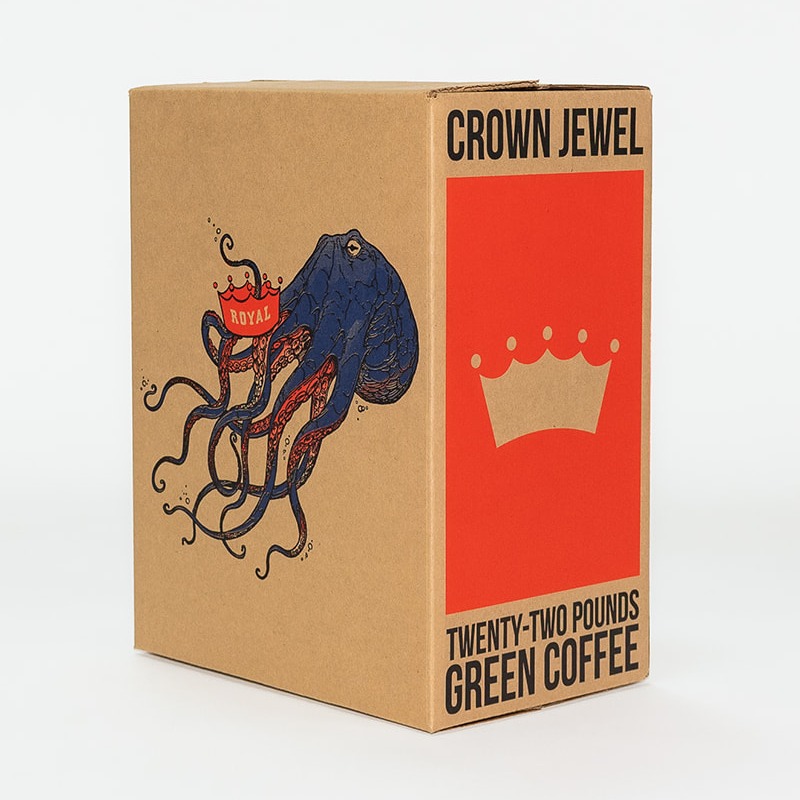
Cherry, grapefruit, apricot, floral, and lime
Oakland 7 Boxes
Crown Jewel Colombia Washed SL-28 Juliana Guevara & Wbeimar Lasso
38868-1 – SPOT RCWHSE
Cherry, grapefruit, apricot, floral, and lime
Spot
7 Boxes
$259.91 per box
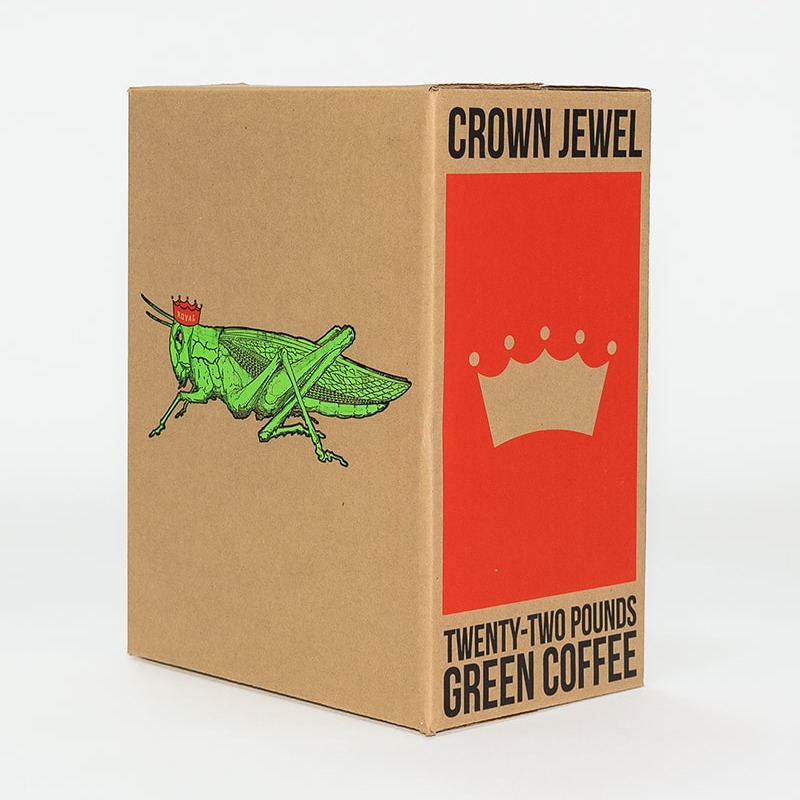
White Tea, basil, biscoff cookie, cacao, candied fruits
Oakland 34 Boxes
Crown Jewel Bolivia Organic Washed Yulissa Chambi
39122-1 – SPOT RCWHSE
White Tea, basil, biscoff cookie, cacao, candied fruits
Spot
34 Boxes
$220.94 per box
Chamomile, toffee, mandarin, cane sugar, caramel
Oakland 1 Box
Crown Jewel Ecuador Washed Sidra Juan Peña
40303-2 – SPOT RCWHSE
Chamomile, toffee, mandarin, cane sugar, caramel
Spot
1 Box
$319.05 per box

Green apple, jolly rancher, apple, mojito, apple cider
Oakland 16 Boxes
Crown Jewel Colombia Carbonic Honey Green Apple Co-Ferment Edwin Noreña
38642-1 – SPOT RCWHSE
Green apple, jolly rancher, apple, mojito, apple cider
Spot
16 Boxes
$368.24 per box