
Let’s cut to the chase: I need to issue a few corrections. Lucia Solis, of Scott Labs (not to be confused with the similarly named entity that helped develop the SL-28 variety in Kenya, for example. That Scott Labs no longer exists as such, but is now the National Agricultural Laboratories, a part of the larger Kenya Agricultural & Livestock Research Organization), recently met with me to chat about some erroneous and misleading language used in the second half of my article on mycotoxins, so I’m going to clarify a few points here, and have amended my previous article to better reflect what we know or believe to be truthful and scientifically accurate.
Broadly, I failed to adequately distinguish the relationship of between fungi and mold, once commenting “mold is fungal activity,” which is inaccurate.
- Mold is a type of fungus, not an activity, and the types of mold that produce Ochratoxin-A are mostly in the Aspergillus genus.
- Not all fungi, or even all molds, are harmful, and many are indeed helpful.
From time-to-time, I referred molds as “OTA-carrying” or similar language, which is not completely accurate.
- Mycotoxins, like OTA, are produced as a result of metabolic processes undertaken by the molds. The molds don’t carry OTA around with them like luggage.
I stated that “OTA is not considered a field contaminant, which means that the mycotoxin-carrying fungus results from post-harvest conditions like poor storage or poor drying techniques” which is not fully accurate.
- While it’s true that certain strains of OTA producing molds, like Aspergillus ochraceus and Penicillium verrucosum are not field contaminants, other strains of molds, many in the same genus of Aspergillus, are commonly found in the field.
I claimed that “fermentation is bacterial,” which is true… but not complete.
- Fermentation is accomplished by many microorganisms, mostly yeasts and bacteria. Fermentation is the conversion of sugars into ethanol, acids, and carbon-dioxide.
- Fermentation in coffee most likely is the result of yeast. Yeasts are far more capable of withstanding the significant drop in pH that occurs during microbial demucilagation.
- While it’s true that fermentation occurs, it’s not actually the main activity that breaks down the mucilage after depulping. I’m planning to write more on this in the future, hopefully with Lucia’s assistance. Stay tuned. It’s interesting stuff. The takeaway is, technically it’s not terribly accurate to call the process “fermentation” for coffee. There’s a lot more to it than that.
I stated that the notion that a producer could claim a “proprietary method of processing for eliminating OTA contamination is nothing less than an outright impossibility” which in theory could actually be possible.
- Lucia believes that by introducing controlled yeast strains during the fermentation stage in coffee processing, it’s probable that the available “food” for molds would be minimized and greatly reduce, if not eliminate, mycotoxin production. Again, more on this in a future article.
- In the weeks since my article published, some of the claims I targeted as misleading or erroneous have softened, and my original quotation no longer reflects the language used by certain members of the supply chain.

Latest Articles by Chris Kornman
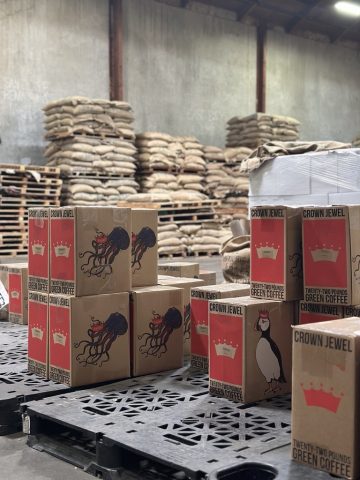
Crown Jewel Outlook: September-December 2026
Get an early look at the Crown Jewel coffees arriving through the end of 2026, from Ethiopian naturals and rare Guatemalan cultivars to Colombian co-ferments and new origins in Asia.

Why We’re Temporarily Reducing Our Coffee Drink Prices
We’ve long maintained that tariffs were not just a tax on U.S. businesses, but on the American people. We’re finding creative ways to try and pay back that debt to our customers at The Crown. What? ...
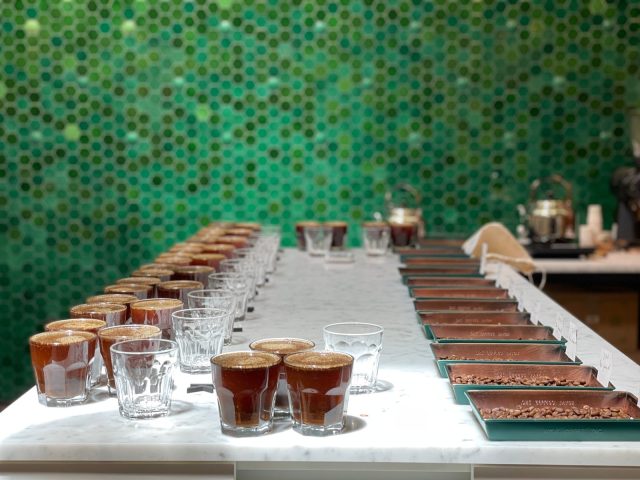
Notes Between Cups, Volume 3
Chris Kornman on the hidden biases shaping every coffee cupping: how context, neighboring cups, and ritual influence sensory evaluation — and where the SCA CVA falls short.