
Crown Jewel Sumatra Jasmine Co-Fermented & Infused Wet Hull Bener Meriah
40337-1 – SPOT RCWHSE$313.12 per box
Boxes 36
Warehouses Oakland
Flavor Profile Jasmine, floral, black tea, honeysuckle, lemon
Add to your artisan.plus account: 
 Download PDF
This is an estate-grown coffee from Aceh Province, Sumatra’s most famous and prolific for specialty wet-hulled profiles.
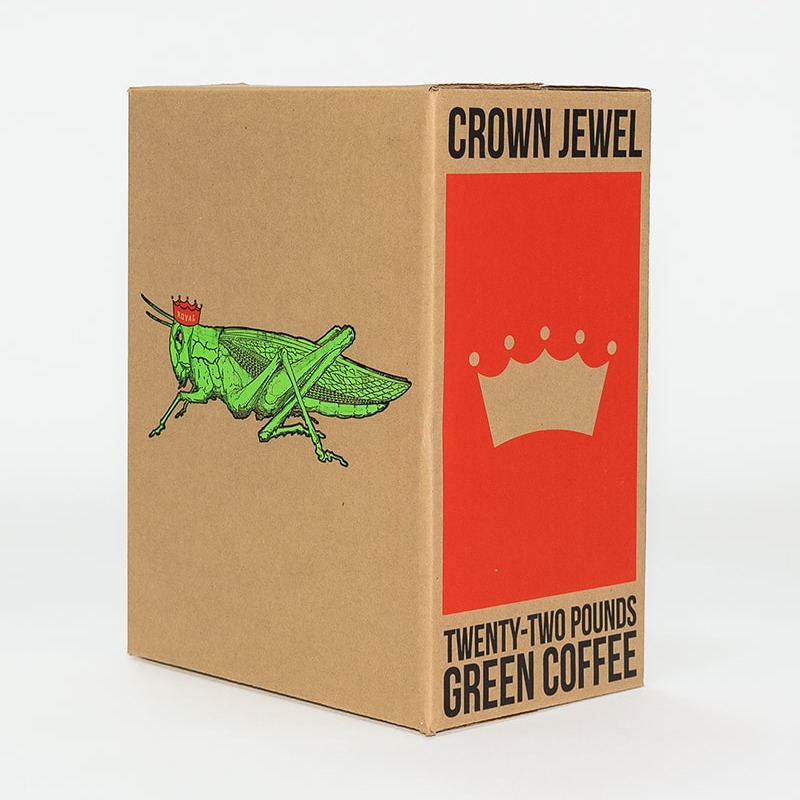
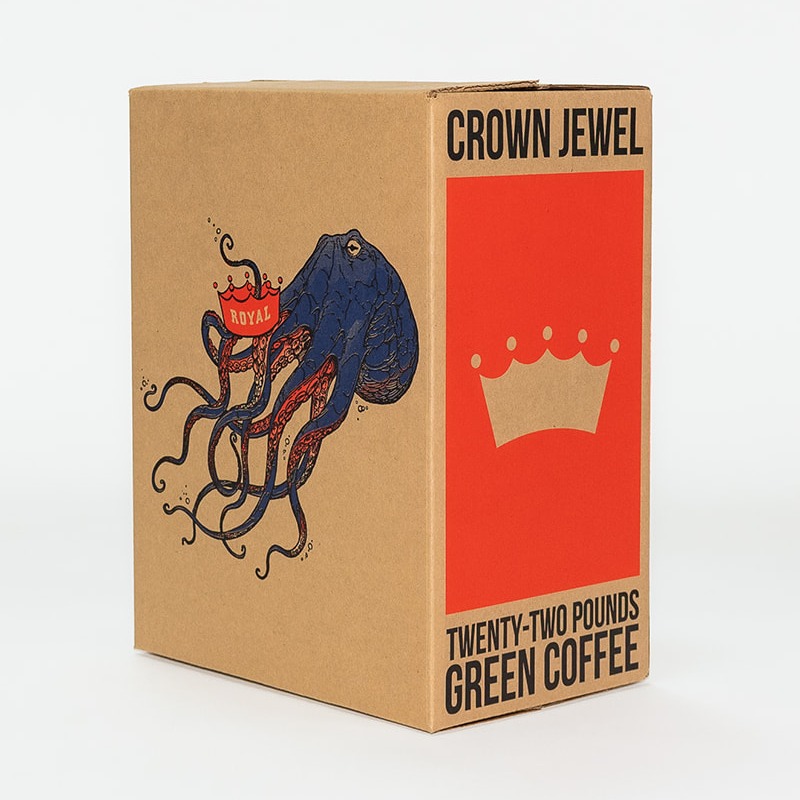
22lb Boxes
Spot

Overview
Overview
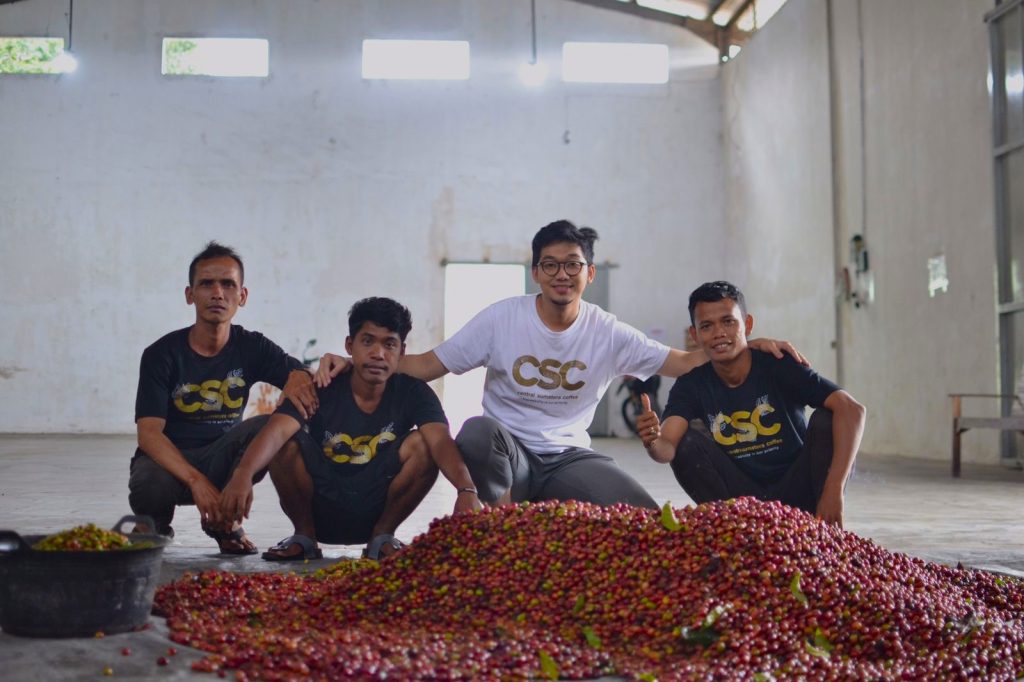
This is a high intervention flavored green coffee, both co-fermented and infused with jasmine, from Bener Meriah on the island of Sumatra in Indonesia, produced by the Central Sumatera Coffee company.
The flavor profile features jasmine as its predominant flavor note, with supporting structure of various floral undertones, some chocolate, and subtle notes of black tea under the sweet botanical flavor.
Our roasters found the coffee easy to roast and recommended a moderated approach to avoid extremes. The flavor will be unmistakable at normal roasting parameters.
When brewed, we recommend a high dose and coarse grind in conical brewers for pour-over preparation.
Taste
Taste Analysis by Chris Kornman
This coffee, as advertised, smells and tastes exactly like jasmine flowers added to a sparklingly clean Sumatran coffee. There are hints of the wet hull flavor of the coffee itself, but only in the slightest of whispers. Coffee serves as the canvas, while the brushstrokes applied by the fermentation and infusion techniques have imparted an incredibly precise aromatic profile that is unmistakable. If you’re interested in trying a coffee, altered to add flavor at origin and dialed to the resolution of “jasmine,” this is the one.
Without wading too far into the deep end, that is, the debate about propriety and transparency surrounding innovative processing techniques, we absolutely must discuss methodology, intent, and ingredients for this flavor-infused coffee. The producer has been fully forthcoming, and we will be too. This is a flavored green coffee. And we like it. A lot.
While important techniques employed include depulping, anaerobic fermentation—including inoculation with yeast and co-fermenting with powdered jasmine flowers—and wet hulling, the primary jasmine infusion comes in the form of an application of locally grown jasmine, as a homemade extract suspended in a propylene glycol solution, while the coffee is drying.
We sourced this coffee with intent. The Central Sumatera Coffee company provided us with a transparently produced, distinctly flavored coffee using jasmine as a flavoring agent. We think it is worthy of roasting and sharing with anyone curious about what excellent, boundary-pushing flavor techniques are possible in specialty coffee.
Source
Source Analysis by Charlie Habegger & Evan Gilman
This is an estate-grown coffee from Aceh Province, Sumatra’s most famous and prolific for specialty wet-hulled profiles. Unlike almost all other wet hull coffee, however, this microlot uses a unique processing style that includes multiple fermentation additives like yeast and powdered flower to achieve a totally distinct, heavily flavored coffee with marmalade sweetness and sweet, fresh, jasmine aromatics.
Coffee is grown all over Aceh and is particularly concentrated in Bener Meriah and Bener Kelipah regencies. The vast majority of it is smallholder grown and gradually consolidated through local processors and millers, blending their immediate communities or trading batches of coffee between one another until an exporter buys them up. Central Sumatera Coffee (CSC) is an exception to this. They operate a 100-hectare estate right in Bener Meriah regency, where they can control the genetics, harvesting, and post-harvest techniques to perfection. Coffees like this one, luxuriously creamy, floral, and uniquely perfumed with (you guessed it) the fragrance and flavors of fresh jasmine flowers, are only possible in the hands of exacting processors like CSC.
Sumatra’s Aceh Province
Aceh (pronounced AH-CHEY) is the northernmost province of Sumatra. Its highland territory, surrounding Lake Tawar and the central city of Takengon, is considered to be the epicenter of one of the world’s most unique coffee terroirs.
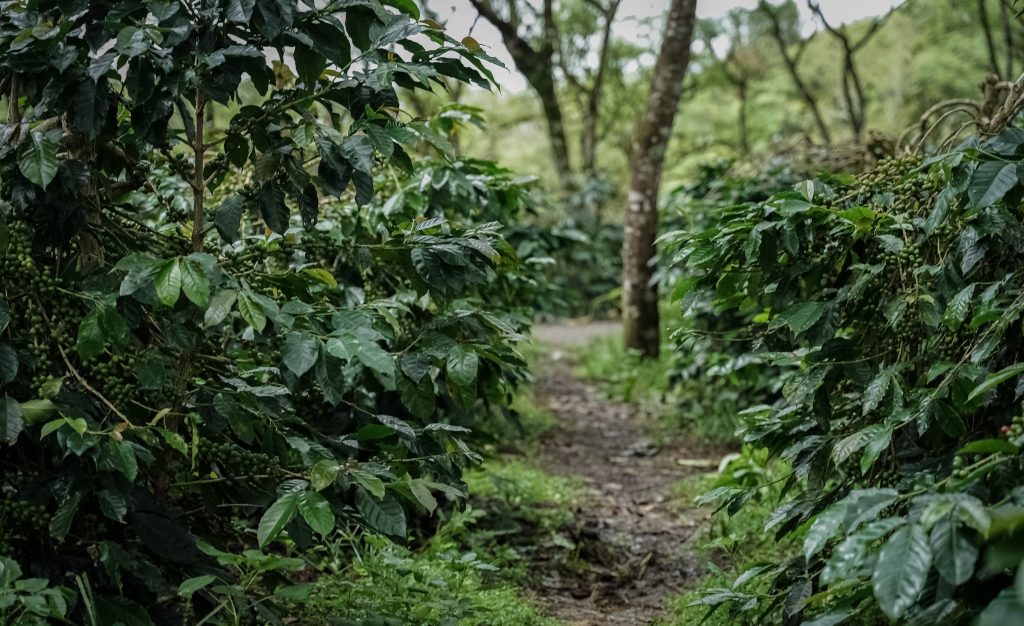
Coffee farms in this area are managed with the experience of many generations of cultivation, while also harmoniously woven into their surrounding tropical forests. The canopies are loud and fields are almost impenetrably thick with coffee plants, fruit trees, and vegetables, all of which are constantly flushing with new growth. Year-round mists and rain showers never cease, farm floors are spongy and deep with layered biomass, and almost every square meter of the region seems to exude life. Nothing is ever still. Including coffee ripening, which occurs ten months out of the year.
Central Sumatera Coffee
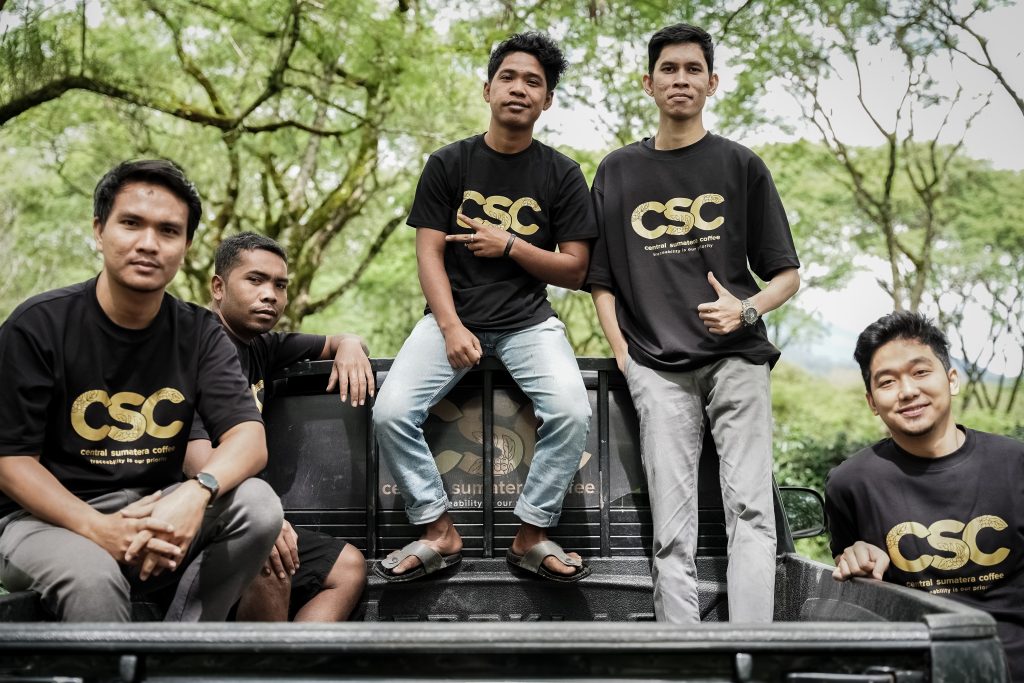
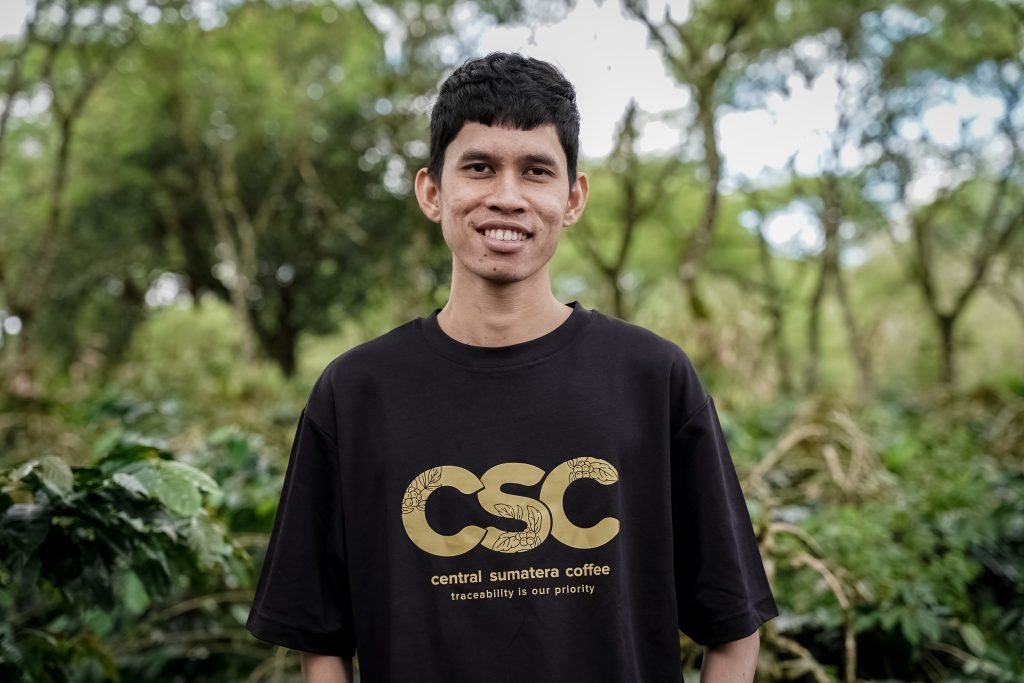
Central Sumatera Coffee (CSC) is a young group, with young leadership. It was originally founded in 2015 by Enzo Sauqi Hutabarat, an urban university student. Aware of the growing demand across greater Indonesia for Sumatra’s best coffees, he gravitated toward Aceh as a culture and potential business environment. Until 2020 CSC only sold coffee domestically, but starting in 2021 they began to export as well, selling bits of coffee to the Middle East, Europe, Asia, and finally, in 2024, the United States, via Royal Coffee, for the first time.
CSC buys coffee from smallholders like a typical processor does. However, CSC also operates three large estates of about 100 hectares each: one in Bener Meriah, where this lot was produced; as well as two others in North Sumatra province, near Lake Toba, and one in Bali. Their farms are organized varietally, allowing them to maintain unique genetic separations during harvest and processing.
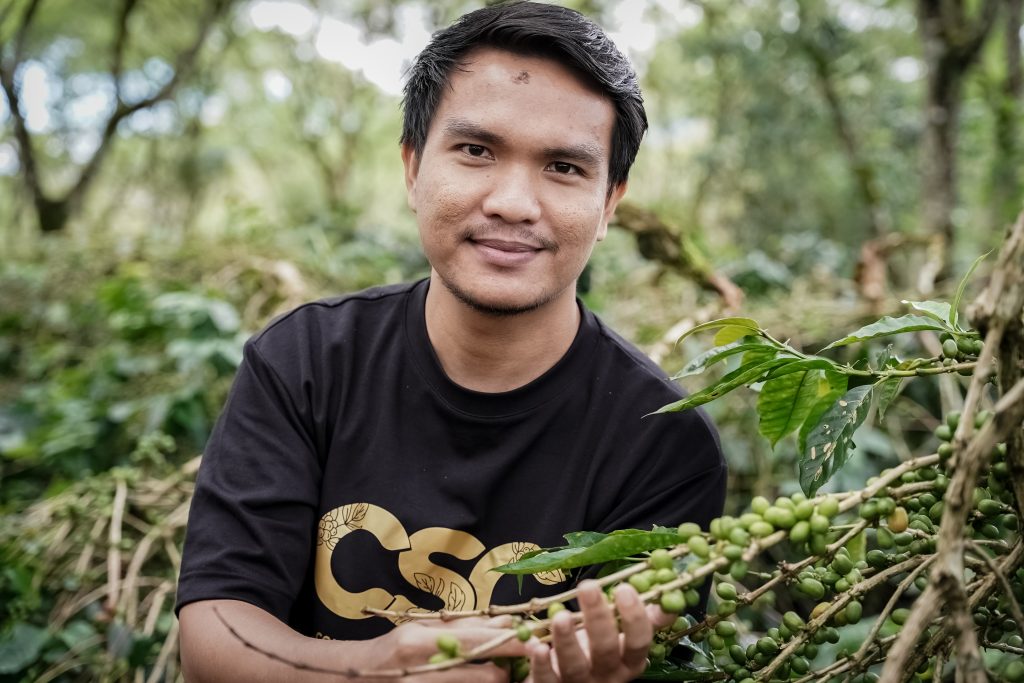
Typical smallholder coffee in Aceh tends to be a blend of cultivars, most of which are catimor hybrids, and this gives much of the area’s coffee a set of common characteristics that can be hard to transcend for a single producer. In CSC’s case, they have the genetic isolation, and the volume from such a large estate, to help them produce something unique. Even with similar processing styles as the collectors and coops around them. This estate in particular is planted with newly planted Abyssinia seedlings (most likely the AB7 or “Rambung” variety), and what’s called Gayo 2 or “Borbor”, a poorly-defined cross between Timor hybrid and Bourbon. These trees are less than six years old and are very productive.
“Jasmine Process”
CSC manages processing on their own estates. The Bener Meriah estate employs 30 pickers during harvest months, and six specialists for processing. Most of their estate coffee is wet-hulled in the traditional fashion, but this microlot received two significant additional steps, blending multiple unique fermentation techniques to augment the final cup, and ultimately processed as a semi-washed.
After picking, the cherry was first held in nylon bags for 16 hours, to allow the fruit to soften and internal sugar content to peak. After this brief cherry “maceration”, the coffee was depulped and moved to fermentation tanks. Into the tanks, CSC added yeast as an inoculating agent (Lallemand Saccharomyces cerivisiae) and powdered dried jasmine flower to co-ferment with the sticky parchment.
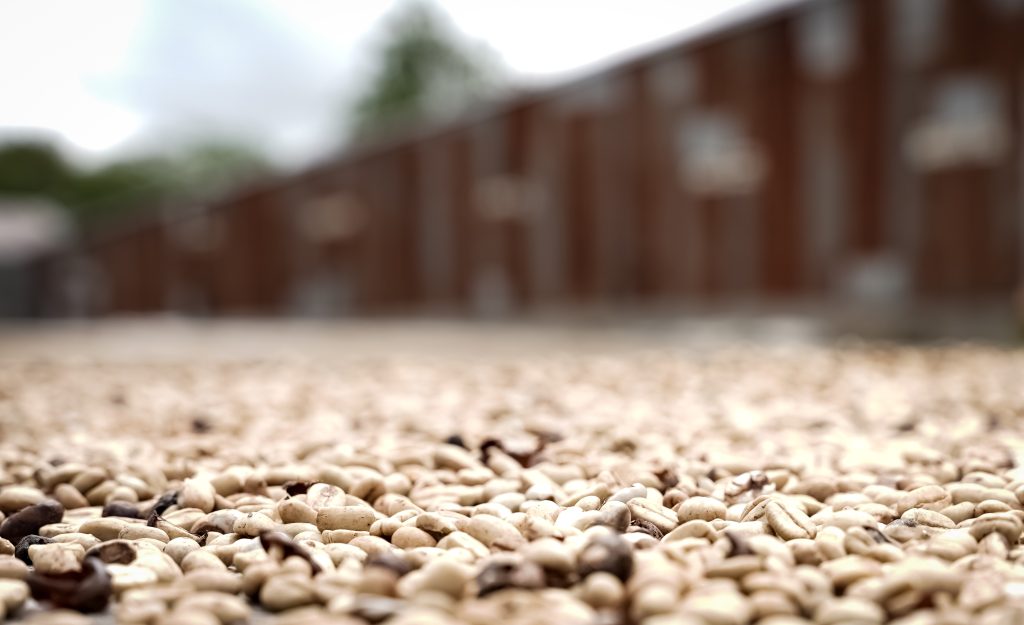
Once the blended fermentation cycle was complete, the coffee was patio-dried after being lightly coated with an infusion of powdered jasmine flower until the internal moisture reached 35%. This infusion is made with extract from real dried jasmine flowers collected from around the processing station in a solution of propylene glycol, which carries the delicate flavors of jasmine flower into the substrate of the coffee seed. The carrier is completely destroyed during roasting, leaving behind the complex jasmine aromatics. After this step, the coffee was wet-hulled and the raw beans were further dried until reaching a final 11-12% moisture content. After this, the coffee was mechanically milled, hand sorted, and bagged for export.
Green
Green Analysis by Isabella Vitaliano
This is a typica that’s not so typical. Although this coffee is going through extremely high intervention, it is well controlled during processing and harvesting. Moisture content is a touch higher than average, and density is a little bit below average with water activity above average ranges. Due to the higher moisture content and water activity, be careful during the last stages or roasting as water causes coffee to brown more quickly. In the unroasted form, you’ll find this coffee distinctly smells of Jasmine as soon as you open the box. Generally, we find that these coffees have a large margin for error and the flavoring is so strong that it comes out great even with minor mistakes.
Diedrich
Diedrich IR5 Analysis by Doris Garrido
Florals in coffee are my absolute weakness – I love them and constantly pursue them in the roaster. In this case, because the coffee was infused during co-fermentation, my approach was similar to the lychee roast: I wanted to strike a careful balance, yielding a calm, elegant floral cup rather than an overpowering one.
To achieve this, I loaded 5.5 lbs. into the Diedrich IR-5 at a charge temperature of 415.3°F. After a short soak, I applied Gas 70 at 01:40 (175.7°F) to build smooth heat momentum through the drying phase. Color change occurred at 05:19 (301.2°F), giving me a 05:19 drying phase. Shortly after, at 05:37 (310.9°F), I dropped the heat to Gas 30 to gently stretch the Maillard phase out to 3:23. Right in the middle of the run during the Maillard phase, I increased airflow to 100% at 07:30 (361.3°F) to sweep away chaff, keep smoke out of the drum, and slow the pace as the roast approached First Crack. First Crack sounded at 08:42 (384.3°F), and I dropped the batch at 10:08 at a final temperature of 401.8°F. This allowed for a restrained 01:26 development time and a perfect 11% weight loss as I wanted to keep it in the light area.
The final cup was an absolute pleasure to taste. The jasmine aromas are clear but wonderfully balanced alongside a buttery texture and a soft, fruity sweetness. Very clean throughout, this roast ended up being my favorite on the cupping table and remarkably peaceful to drink.
Aillio
Aillio Bullet R1 IBTS Analysis by Evan Gilman
We use the RoasTime app and roast.world site to document our roasts on the Bullet. You can find our roast documentation below by searching on roast.world, or by clicking on the link below. Take a look at our roast profiles below, as they are constantly changing!
Considering its intensive list of high-intervention processing techniques, this coffee was remarkably easy to roast and enjoy. Perhaps all the work was done at origin, leaving us only to roast this coffee towards its intended flavor profile? It certainly seems so.
After years of roasting Sumatran wet hulled coffees, I’ve come to a general approach that seems to work well. Starting with a medium-high charge temperature of 464F, I knew I’d need to move this coffee quickly through green/drying in order to focus on the Maillard and post-crack development portions of the roast. I hit the coffee with P9 power and F2 fan until turning point, then ramped down to P8 power. For fan speed, I started with strong airflow early on, and opted for F4 to accomplish slower development through Maillard. At yellowing I reduced heat to P7, but kept airflow going at the same rate until later in the roast, when I would toggle between F4 and F5, really enhancing airflow in order to mellow out the infused jasmine nature of this coffee. Before first crack, I was already at P6 and F5, which in other coffees would yield a crash. Not so in a wet hulled coffee. After first crack, I even hit P5 and F6 to really slow down the roast and eke out more post-crack development.
The gambit was successful, and I spent 40% of the roast in Maillard and over 20% in post-crack development. The coffee held the jasmine note, but also had a nice juicy mouthfeel and an Assam black tea sort of finish. This coffee would perform amazingly with milk as a cafe au lait, or simply as a filter drip amuse-bouche for a flight of uniquely processed coffees. One technique I’ve increasingly seen in Indonesia with infused coffees is to include them in a small proportion in a blend, where they give unexpected top notes to an otherwise sweet and unremarkable coffee. There are just so many use case scenarios for this coffee, and I think you’re going to find it to give a very clear, yet flexible flavor profile. Use it with confidence!
You can follow along with my roast here at roast.world: https://roast.world/egilman/roasts/IHx7KmGwEZ6Ps0cZAz48K
Brew
Brew Analysis by Marie de Courcy
Over the last couple of years, the world of co-ferment coffees is starting to grow and expand seemingly every month. We are constantly receiving samples and serving excellent offerings in the cafe, but this jasmine co-ferment from Bener Meriah stands out. The experimental processing of this coffee really imparts flavor in a way that feels novel and exciting to serve in a cafe context. Flavor forward and full of complexity, this coffee will be a wonderful pour-over option.
For my first recipe I went a little heavy; a 19g dose brewed on the V60 with a slightly coarse grind setting. This cup was punchy, full-bodied, and the flavors were rich. We tasted notes of jasmine green tea, rose water, red wine, and marzipan. The brew was intense with a juicy mouthfeel and lots of flavor density.
For my second recipe, I wanted to try leaning into the more delicate floral characteristics of this coffee. I dosed down to 17.5g and brewed on the Kalita Wave instead. This cup was much less in your face and much sweeter; with notes of rosehip, maple butter, and strawberry jam. I maintained a coarse grind with this recipe, and it seemed to work in my favor even considering how drastically the dose was changed.
This coffee is very versatile, full of flavor complexity and flexible in its profiling. You’d think by the nature of the process that this coffee would just taste like jasmine tea however you decided to brew it, but it really can do so much more than that. I feel we don’t typically think of Sumatran coffees outside of the realm of dark roast drip coffee, so this co-ferment stands as another example of a deconstructing of our preconceived notions about origin and flavor profile. This coffee likes a coarse grind setting, with a high dose for a punchy and bright cup, and a low dose for something more floral and sweet.
Related Coffee

Black Tea, caramel, lemongrass, passion Fruit, apricot
Oakland 6 Boxes
Crown Jewel Burundi Honey Peaberry Heza Washing Station
38863-1 – SPOT RCWHSE
Black Tea, caramel, lemongrass, passion Fruit, apricot
Spot
6 Boxes
$255.49 per box
Banana Bread, plum, rosemary, cacao Nib, and toffee
Oakland 34 Boxes
Crown Jewel Yemen Anaerobic Natural Sharqi Haraz Cooperative
39818-1 – SPOT RCWHSE
Banana Bread, plum, rosemary, cacao Nib, and toffee
Spot
34 Boxes
$660.00 per box
Orange blossom, red wine, baker's chocolate, and black tea
Oakland 13 Boxes
Crown Jewel Yemen Washed Sharqi Haraz Cooperative
39817-1 – SPOT RCWHSE
Orange blossom, red wine, baker's chocolate, and black tea
Spot
13 Boxes
$580.58 per box
Lemon, floral, hibiscus, rosemary, and apple
Oakland 43 Boxes
Crown Jewel Ethiopia Anaerobic Natural Rue Co-ferment Banko Chelchele
40654-1 – SPOT RCWHSE
Lemon, floral, hibiscus, rosemary, and apple
Spot
43 Boxes
$358.51 per box