
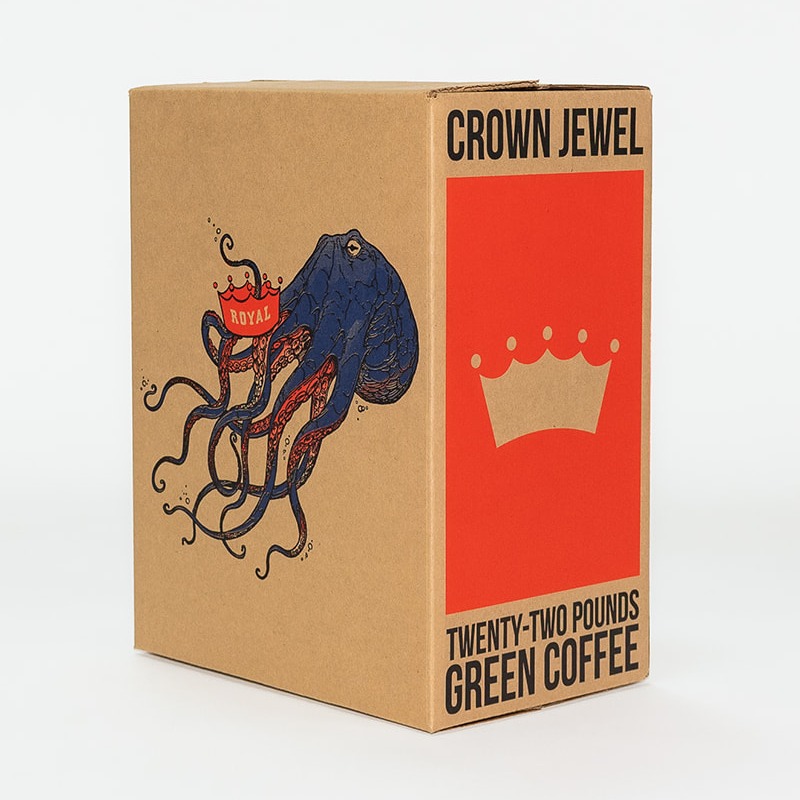
Crown Jewel Honduras Anaerobic Natural Parainema Nelin Guzman
38638-1 – SPOT RCWHSE
Boxes 0
Warehouses Oakland
Flavor Profile Pineapple, green apple, kombucha, sweet, bright
Out of stock
Overview
Overview
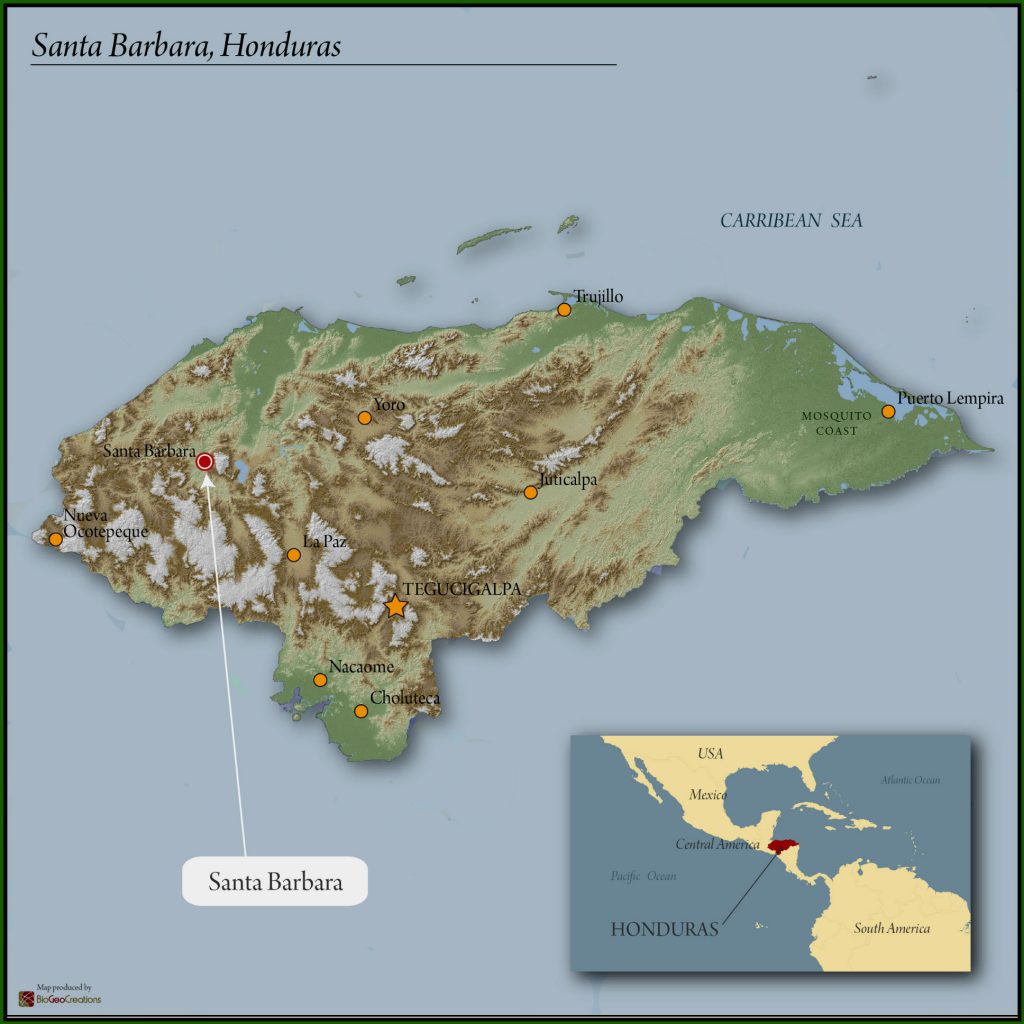
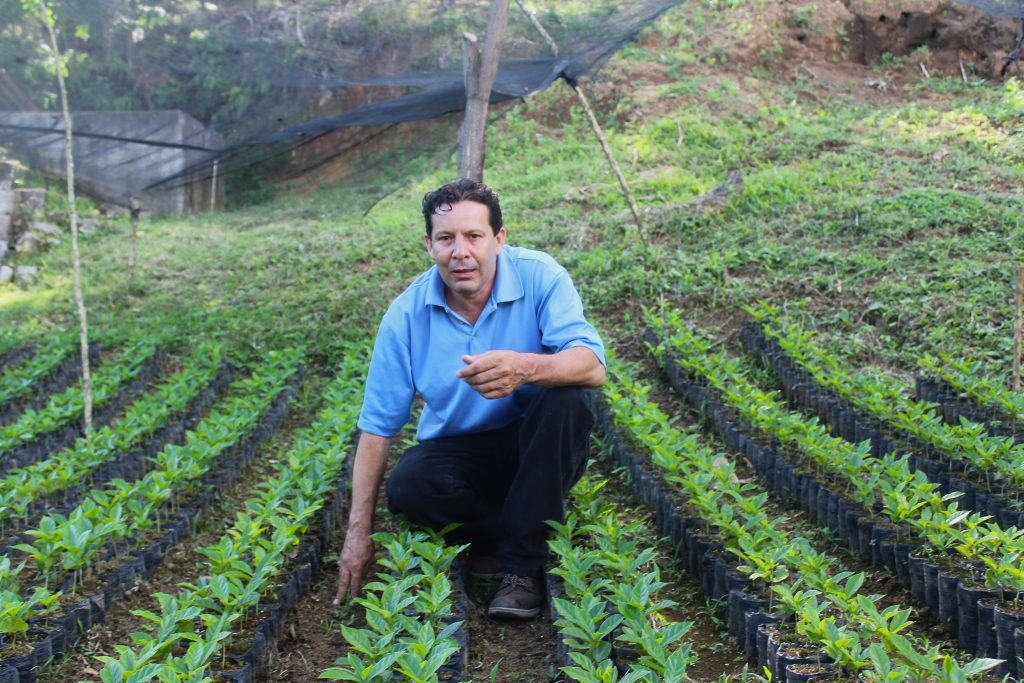
This is a moderate intervention anaerobic natural coffee from the El Cielito village in Santa Bárbara, Honduras, produced by Nelin Yovani Guzman Muñoz on his farm, Los Zorzales.
The flavor profile is fruit-forward without bombast, and includes some subtle hints of fermentation, botanicals and spice. We tasted cherry, pineapple, caramel, sage, and peppercorn.
Our roasters caution that a little restraint on the heat will pay dividends in the cup, and encourage a low rate of rise in post crack development to prevent over-roasting.
When brewed, the coffee showed versatility as a pour-over in multiple brew devices. Our barista team enjoyed the bright punchiness of a V60 at a moderate to lower dose and a medium grind, and the sweeter, milder character in a flat-bottomed brewer with a coarser grind.
Taste
Taste Analysis by Isabell Vitaliano
Honduran Anaerobic Natural is a rare breed. So much so that we almost missed releasing this coffee. Santa Bárbara has been on the rise for the past 10 years or so, a lush area on the Western side of the country.
Countries located in the Northern hemisphere usually pick fruit beginning in late October and ending in January or so. Climate change brings a change in weather patterns that create unpredictable cherry ripening and increases the cost of labor having pickers year-round. The team found that this late comer is as fresh as can be with botanical suave and poised fruit tones.
Caramel contributes a good chunk of the base of this coffee, with botanical notes of sage, lemongrass and orange zest taking up another large portion of the profile.
During processing the coffee was fermented in whole cherry for 72 hours and then dried in a solar drier for 15-20 days. We find that it doesn’t create a fruit bomb like you might expect, but rather bright tones of green apple, dried fig, and mango.
Doris and I noticed lots of peppercorn in this coffee, both pink and regular peppercorn. A spicy undertone that wraps everything up in a nice little bow. On the brew analysis Josh and Marie uncovered stone fruit, balsamic, smores, cherry cola and fudgy date elements.
This is a dynamic coffee ready to shine on all brewing methods. Pick your choice of pour over, espresso, drip or cold brew; you really can’t go wrong.
Source
Source Analysis by Chris Kornman
Our final Crown Jewel entry for the 2025 calendar year, this small lot of anaerobically fermented Honduran natural coffee was imported from a little beneficio and exporting organization called San Vicente, a company run by Benjamin Paz. Paz is something of a coffee celebrity, his own coffee having taken first prize on multiple occasions at the Cup of Excellence competition and has been featured in champion barista routines.
The brand recognition and marketability of such personalities in recent years have become increasingly common worldwide, spawning networks of impressive coffee cultivation and production under watchful guidance and with improved access to roasters hungry for fancy coffee of particular provenance.
Paz, and San Vicente’s increasing influence on the region, could be credited with putting Santa Bárbara on the map for specialty coffee roasters. Production volumes out of departments like nearby Copán and Ocotepeque remain among the highest in the country, Marcala in the La Paz department has long been recognized for its high quality, and Lempira and El Paraíso have longstanding name recognition among coffee traders, but Santa Bárbara was a bit of a sleeper until the last decade or so. The department enjoyed a streak of representation in recent years as the region’s dramatic topography and natural beauty are matched by uncommon and delicious flavors produced therein, by producers like Benjamin and his neighbors… neighbors like Nelin Guzman.
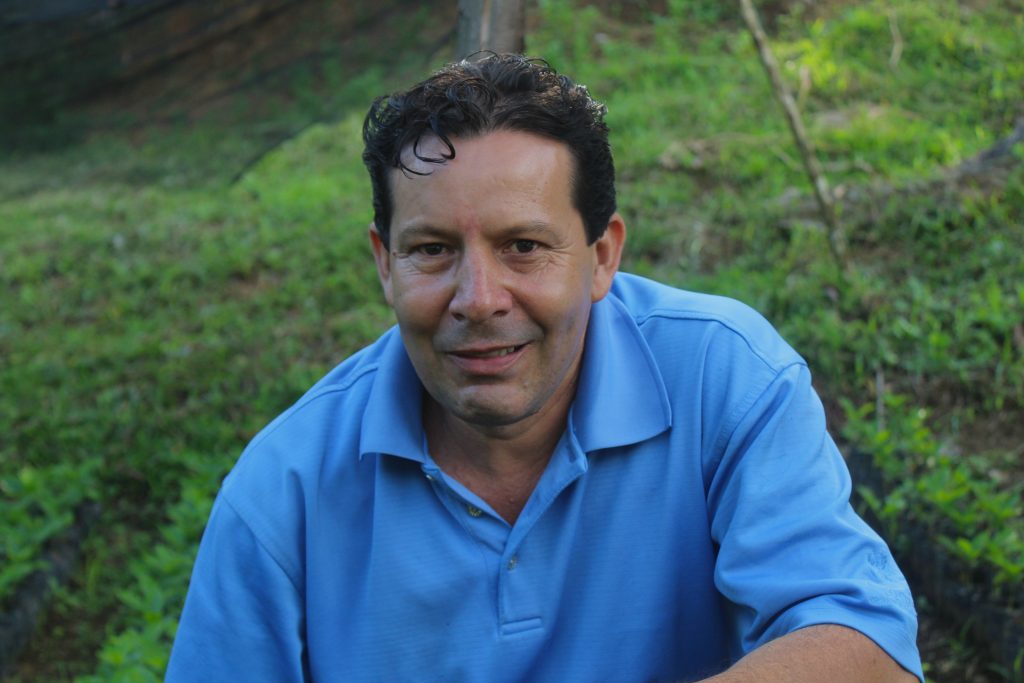
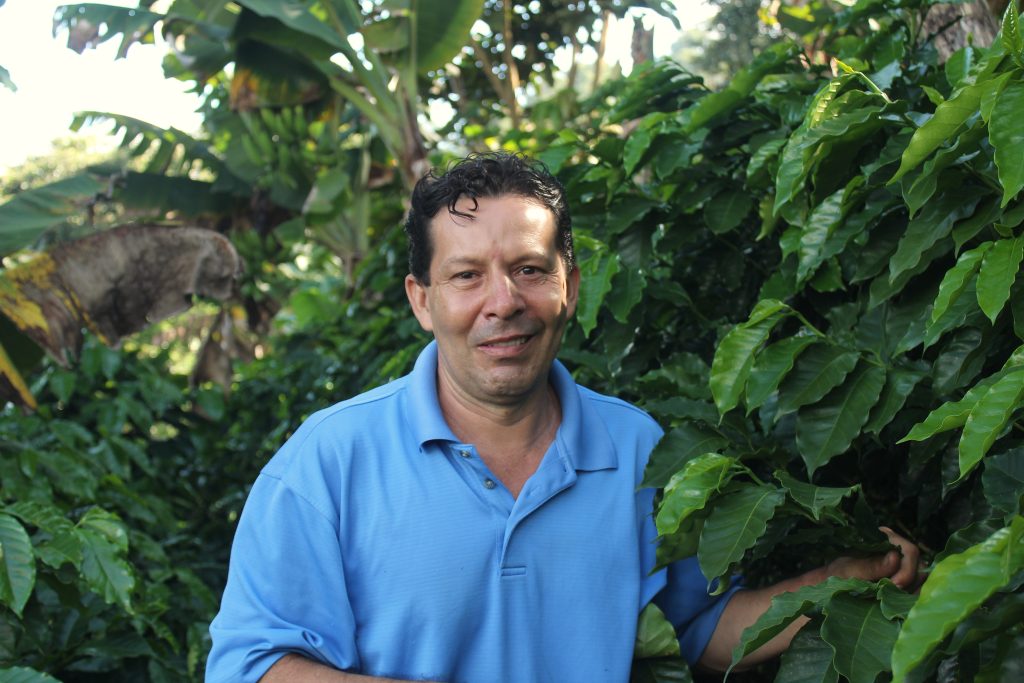
Nelin Yovani Guzman Muñoz is a second-generation coffee farmer who inherited his farm, Los Zorzales, in 1995 at the age of twenty. Recognizing local competition for specialty grade coffees, Guzman began improving his production efforts in 2017 and has consistently been creating top-tier coffees since. This year, his coffee placed 5th in the Parainema category of the Cup of Excellence competition, selling for an impressive $21.60 per pound at auction.
The Parainema cultivar has been featured in numerous Honduran Crown Jewel releases this year. It’s a locally created Sarchimor, first selectively bred by the Honduran Coffee Institute (IHCAFE) in the El Paraíso department to withstand nematodes (hence the name). Beyond its resistant properties, it is distinguished by large, oblong bean shape and favorable cup profiles, as evidenced by multiple high-profile appearances in quality competitions, often showing its best characteristics when processed as a natural. In this case, Nelin Guzman has undertaken an additional step of 72-hour anaerobic whole-cherry fermentation in low-tech plastic bags, followed by a long drying period under protective parabolic shade.
“With my work, I have raised my children, giving them education and well-being for my family. It has not been easy, but God has given us strength. It is a challenge every year, due to the innovations in the coffee drying process to obtain a better score and quality. This is how we have overcome and advanced in each harvest and our daily life this year,” Guzman told the Alliance for Coffee Excellence, who manages the COE competition and auction.
Guzman also shared with us that he has ongoing concerns about the high cost of inputs and the lack of available labor to harvest coffee. Costs for coffee producers continue to rise, regardless of the movements of the “C” price for commodity coffee, and this year we saw unprecedented numbers on that marketplace (driven upwards by supply gaps and tariffs) motivate erstwhile specialty producers to abandon their production values.
The work of creating incredible tasting coffee—and subsequently finding roasters wiling to both embrace and pay fairly for it—has never had higher stakes. With ongoing wonder and gratitude for folks like Nelin and Benjamin, and for the roasting community who support them, we proudly present this delectable anaerobic natural coffee from the slopes of the Santa Bárbara mountains in western Honduras as punctuation mark at the end of the sentence of 2025.
Green
Green Analysis by Isabella Vitaliano
This coffee comes a bit later than our usual Honduras coffees and Royal was lucky to get our hands on it. Like the Sudan Rume, Parainema has been featured a couple of times this year on the CJ menu. Not yet as notable as the Sudan Rume but on its way to becoming as popular.
The cultivar has a dwarf stature, slightly longer bean size and producers favor it because of its very high yield potentials and high resistance to both nematodes and coffee leaf rust. Developed in Honduras by IHCAFE, it has both Sarchimor and Timor genetics.
On the screen size we found the coffee in the range between 18-16 screen size. The density of the coffee is on the higher side with standard ranges of both moisture content and water activity. Be sure to see the roasters notes on how to best handle this cultivar that is on the brink of popularity.
Diedrich
Diedrich IR5 Analysis by Doris Garrido
As a grandson of a Timor hybrid, there are many things about this Honduran cultivar that I find fascinating. Coming from the Sarchimor family, it inherits traits I deeply appreciate: a high potential for caramelization and a specific herbal personality that gives it immense character.
During my sample roast, I must have blinked (excuses, I know) right after the first crack and ended up with a darker roast than intended. During the cupping, I knew what I had done and prepared myself for a “toasty” cup. Instead, I perceived an herbal bitterness, and I wasn’t sure if it was from the extra development or the bean itself. Suddenly, a song popped into my head: “The Girl from Ipanema.” I know it’s cheesy, but that song reminded me of the Parainema cultivar, and sure it was Honduras Parainema on the label. Behind the toasty finish of my roast sat a lemon acidity and incredible sweetness. With that information in hand, I moved to my first production batch on the Diedrich.
Last year, I helped select a similar coffee from a different producer, and I learned a lot from roasting it. Based on that, I previously looked to caramelize it as I would its “grandpa” Timor. But for this specific roast, I decided to build all my energy during the drying phase to shape its herbal personality. My goal was to reach Maillard quickly so the lemony acidity could shine, while still maintaining the ability to slow down the caramelization process later.
I have been telling my trainees lately: the Diedrich builds extra energy because of the radiant heat from its ceramic panels. This allows you to build energy in specific areas of the roast in a way that differs from other drum roasters. I hope this distinction helps translate my findings to other machines.
In this case, roasting a Parainema Natural, I wanted to build energy during drying to allow for a longer caramelization period. I was careful with the gas at the start because I knew these beans absorb energy quickly. (Grown in Santa Barbara at Finca El Cielito, 1450 masl, with a density of 699 g/L, which I consider a “medium average”). Because the beans are large (like a long Gesha) I was afraid of scorching. I chose to increase the gas in stages, “testing the water” as I added it, ensuring I pushed toward Maillard without over-pressuring the bean.
On the roast, I started with a batch size of 4.5 lbs. and a charge temperature of 411F. Gas adjustments of 70% at 1:00, and 100% at 2:00 minutes. Dropping the burners at 3:30minutes as it was getting hot, ending up killing the burners for a full minute and was a hair’s breadth away from a roast crash. Fortunately, I rode it out well; I just had to be patient and wait for the first crack.
Post development: First crack arrived with a Rate of Rise (RoR) of 19°F/min. This isn’t usually too high, but for this coffee, it was. After the crack, the coffee wanted to run, so I dropped the burners again and allowed it to develop for 1:22. Despite a high end-temperature (411°F) and a ground ColorTrack reading of 58.8, I expected to taste toastiness again. Surprisingly, I didn’t. I’ve found that Naturals often give higher color readings but taste cleaner than Washed coffees at those same numbers.
In the cup the herbal side showed lemongrass, kale, orange zest, sage, and pink peppercorn. On acidity: Bright green apple, lemonade, mango, and nectarine. Soft caramel, dried fig, and a very buttery finish with milk chocolate on the sweetness.
This is a truly beautiful coffee from Honduras, with an elegant shape and great sweetness. As a bonus, I am gifting every roaster my official soundtrack for roasting Parainemas: ‘The Girl from Ipanema’ preferably the version in Portuguese.
Feliz Navidad!
Aillio
Aillio Bullet R1 IBTS Analysis by Evan Gilman
We use the RoasTime app and roast.world site to document our roasts on the Bullet. You can find our roast documentation below by searching on roast.world, or by clicking on the link below. Take a look at our roast profiles below, as they are constantly changing!
Sometimes a late-season coffee drops, and it ends up being one of the tastiest. I didn’t know much about this coffee going into the roast lab, but after speaking with Doris and Chris and learning that the arrival sample tasted just as good (nay, better) than the preshipment sample, I was ready to take a dive. Parainema too is not on my radar as far as coffee varieties are concerned, but that may change after my experience with this coffee. Certainly, it has a notable herbal profile, but what I noticed most was the clean and juicy fruits that came through in this jammy natural process coffee.
Heading into the roast, I started with a middling charge temperature of 446F, after hearing Doris speak on the softness of this coffee in the roaster. That’s not to say it isn’t a solid coffee – far from it. But a gentle approach has always worked well for me when approaching natural process coffees. With P8 power and F2 fan the roast was in line with many previous roasts, but I quickly ramped down to P7 power and F3 fan just after turning point. I kept this up until 5:25 / 338F, when I lowered power further to P6, opting to keep fan at F3 for a bit longer. This roast was going to roll nice and slow into first crack if I could manage it. At 8:25 / 378F I knew crack was approaching, and I increased airflow to F4 to pull out some air, create some differential in the moisture-saturated environment of the drum, and cause crack to get popping. At crack, I shifted to P5 and F5 in an effort to draw out post-crack development, but only got 1:12 into PCD before I decided it was time to drop the coffee into the cooling tray.
The flavors in this coffee were simultaneously wild and just the right amount of ‘classic natural’. Huge cherry pie and date flavors provided rich deliciousness, and a zesty lime or tangerine top note left a crisp finish on my palate. This coffee reminded me of some of my favorite experiences with natural coffee, and I found this to be a pleasurable cup even first thing in the morning. Quaff with confidence.
You can follow along with my roast here at roast.world: https://roast.world/egilman/roasts/r0CiExwwJSbgvS8Husciq
IKAWA
Ikawa Pro V3 Analysis by Isabella Vitaliano
Our current Ikawa practice compares two sample roast profiles, originally designed for different densities of green coffee. The two roasts differ slightly in total length, charge temperature, and time spent between color change in first crack. You can learn more about the profiles here.
On the high density roast we found that although the fruit flavors were there, the coffee didn’t feel as complete as it could be. The low density roast, with the slightly longer development time, procured more caramel notes that brought density and body to the fruit notes and botanical undertones.
I recommend trying the low density profile on this coffee!
You can roast your own by linking to our profiles in the Ikawa Pro app here:
- Roast 1: Low Density Sample Roast
- Roast 2: High Density Sample Roast
Brew
Brew Analysis by Marie de Courcy
I haven’t seen a Honduran coffee in the cafe in a while, and it was refreshing to get to dive into brewing this one. I’ve never seen an anaerobic natural coffee from the region, and Nelin Guzman really produced something wildly interesting and special. I started out on the V60, a dose of 18.5 ground at 10 on the EK. This cup was deep in flavor, fruity and bright, a little funky and boozy, and a really smooth mouthfeel almost reminiscent of an Old Fashioned. I tasted notes of Luxardo cherry, roasted marshmallow, whiskey, and rose petals.
My next couple brews were interesting, showing the deeper complexities that exist in this coffee. I did one brew on the Slow Pour Supply UFO dripper, with the same parameters as my previous brew on the V60. I found that a lot of the funk/booziness fell to the back and let some of those sweeter notes shine stronger. Milk chocolate, ripe pear, chamomile tea, and kettle corn were some of the notes we found. I did one final brew on the Kalita Wave and it further solidified this coffee’s range, showing off even deeper sweetness and a really juicy mouthfeel. The dose remained at 18.5g, ground at 10.5 instead and a slightly quicker brew time of 2:30. Some of that funk came back in a very pleasant way with a pleasant juicy mouthfeel and sweetness. Notes of pomegranate juice, root beer, dates, and pickled carrot were present in this cup.
This coffee is an excellent offering with plenty of room to experiment with different flavor profiles. For something slightly more acidic and funky, use a V60 or another cone-shaped brewer, a moderate to lower dose, and a medium grind. For something sweet, juicy and a little milder, try a Kalita or another flat-bottomed brewer with a coarser grind.
Espresso
Espresso Analysis by Tim Tran
The final Crown Jewel to round out 2025 – an exciting anaerobic natural Parainema from Honduras! Digging into anaerobic coffees with no prior information is always a fun and welcome surprise. This neat coffee from Nelin Guzman was a treat that gave chocolatey funk on the nose but exercised a bit more restraint on the tongue, presenting some delicious bright fruit that was well balanced with notes of spices and a persistent creaminess in texture that made its way across a number of different recipes.
My favorite recipe was 18 grams of coffee to 38 grams of espresso, extracted in 29 seconds. Definitely punchy on first sip, this shot really hit the taste running with notable fruit-forward brightness, like an intense cherry syrup. The fruitiness quickly gave way to notes of dark chocolate and a rich creaminess. Some of our team noted it akin to maple syrup.
In diving into some of the bright fruitiness of the coffee and seeing how it expressed itself across different recipes, I landed on my second favorite recipe, which opted for a slightly higher extraction. My second favorite recipe was 20 grams of coffee to 40 grams of espresso, extracted in 32 seconds. The higher dosing and brew time of this recipe seemed to mellow out a lot of the initial bright fruit notes, but still preserved a warmer fruitiness, almost in the vein of figs or dates. The interplay with these warmer fruit notes and the chocolate-caramel sweetness was almost seamless and made for an incredibly cohesive, tasty shot of espresso.
A fun last coffee to round out the 2025 year of Crown Jewels! I would recommend this coffee be brewed at a moderate to high dose, with a fairly moderate extraction time. Texturally and flavor wise, this coffee tended to serve best on fairly standard 1:2 ratios. We hope you enjoy and have as much fun sipping as we did!
Related Coffee

Caramel, chocolate, lemon, apricot, brown sugar
Oakland 61 Boxes
Crown Jewel Honduras Washed Ebin Castillo
Lot 64 – 41042-1 – SPOT RCWHSE
Caramel, chocolate, lemon, apricot, brown sugar
Spot
61 Boxes
$165.00 per box

Black Tea, caramel, lemongrass, passion Fruit, apricot
Oakland 7 Boxes
Crown Jewel Burundi Honey Peaberry Heza Washing Station
38863-1 – SPOT RCWHSE
Black Tea, caramel, lemongrass, passion Fruit, apricot
Spot
7 Boxes
$255.49 per box
Banana Bread, plum, rosemary, cocoa Nib, and toffee
Oakland 34 Boxes
Crown Jewel Yemen Anaerobic Natural Sharqi Haraz Cooperative
39818-1 – SPOT RCWHSE
Banana Bread, plum, rosemary, cocoa Nib, and toffee
Spot
34 Boxes
$710.39 per box
Orange blossom, red wine, baker's chocolate, and black tea
Oakland 15 Boxes
Crown Jewel Yemen Washed Sharqi Haraz Cooperative
39817-1 – SPOT RCWHSE
Orange blossom, red wine, baker's chocolate, and black tea
Spot
15 Boxes
$580.58 per box