
Crown Jewel Ethiopia Natural Lalesa
Lot 20 – 36703-1 – SPOT RCWHSE
Boxes 0
Warehouses Oakland
Flavor Profile Blueberry, plum, lemongrass, rose, green tea
Check out our Guide to Ethiopian Coffee Grades
Out of stock


Overview
Overview
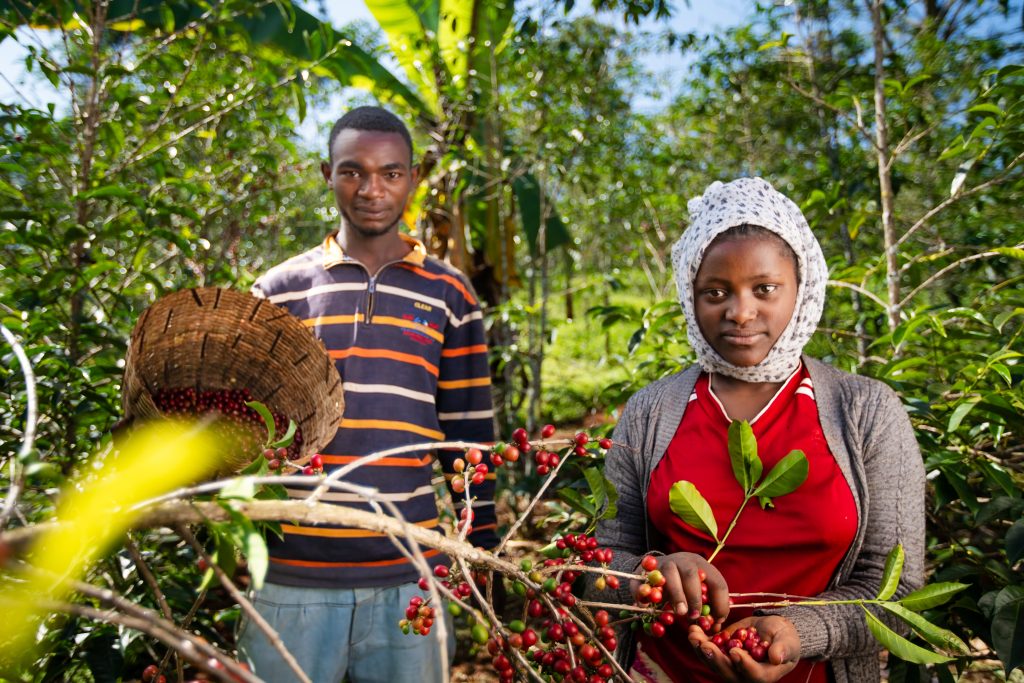
This is a minimal intervention natural coffee dried in a greenhouse, from Gedeo, Ethiopia, produced by smallholders organized around the Lalesa processing site, managed by Ephtah Specialty Coffee.
The flavor profile is winsomely complex, densely fruited, and compelling. We taste lemongrass, blueberry, mango, and baker’s chocolate.
Our roasters took different paths to the same peak, noting the persistence of berry-forward characteristics. Perhaps the most important takeaway from roasting and cupping was to give the coffee a few days to really open up and settle into its dense, lush flavor profile.
When brewed, we preferred up-dosed pour-overs with coarse grinds.
taste
Taste Analysis by Isabella Vitaliano
Women produced, slow-dried, delicious – really the only adjectives you need to know for this coffee. It’s an excellent cup with the weeks-long drying period nurturing flavors of kiwi, rhubarb, boysenberry, blueberry and bergamot. Dancing between stone fruit, orange and even some green apple jolly rancher creates a really lively cup that will get everyone in the cupping room, roastery, café and beyond excited about the flavors.
Just adjacent to these sweet fruit notes there are flavors like fennel, baker’s chocolate, lemongrass and rose. A touch of florals, a touch of chocolate – you really get the whole spectrum of flavors merging in a cohesive way. Both Doris’ and Evan’s roasts were a little bit different but both great expressions of this coffee. Doris’ had more grapefruit, peppercorn and milk mango notes while Evan’s slightly longer roast had cooked strawberries, swiss miss and honeycomb. A lot to explore in the sweetness, this coffee seems to like a little bit longer development time to make it super expressive. But don’t take my word for it, be sure to check out the roasters’ notes.
Source
Source Analysis by Charlie Habegger
This is a centrally processed, greenhouse-dried natural from the very south of Yirgacheffe. The exporter of this coffee, Ephtah Specialty Coffee, is a very new women-founded and led group that brings years of former industry experience to a new venture. Lalesa, where the processing site is located, is part of the greater Gedeb district, known for its gifted processing climate and exquisite coffees, both washed and naturals.
Lalesa Drying Station & Processing
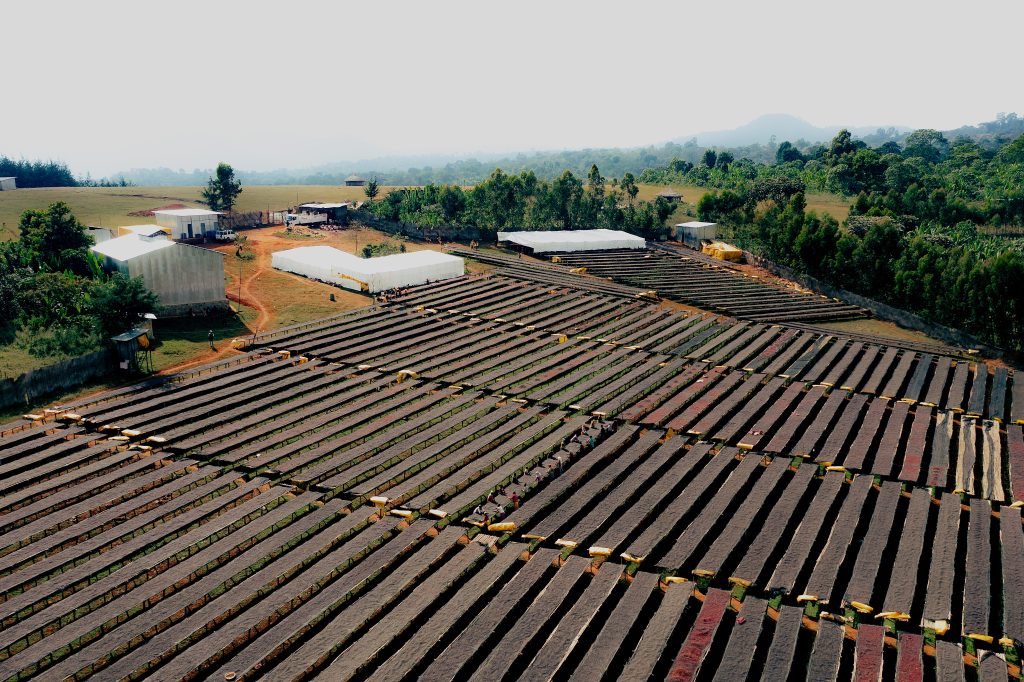
Lalesa was vacant land when Ephtah purchased the site in 2023. Between the time of their acquisition and the 2024-25 harvest, Ephtah installed nearly 400 drying tables and a warehouse. Their head of sourcing, Malesachew, oversees management of the site and is personally responsible for this small lot of coffee, a selection of the best locally harvested coffee cherry.
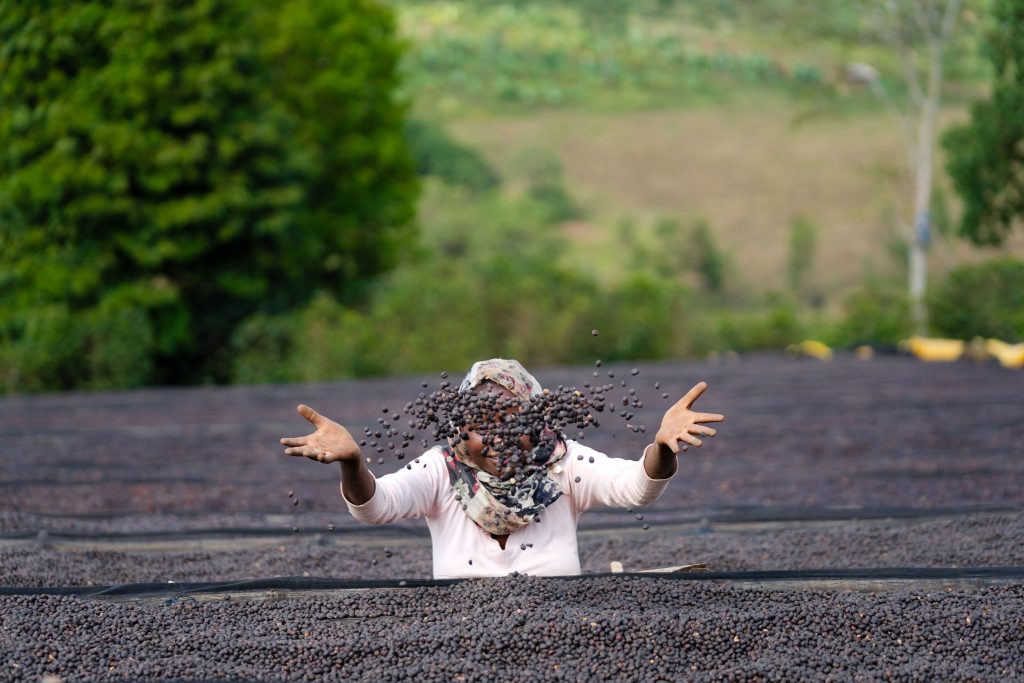
The station employs over 350 individuals during harvest time to manage all processing and financial operations. During harvest, cherry is received every day. Upon intake it’s inspected for ripeness and uniformity, washed clean of debris, and then moved immediately to one of the station’s many drying beds.
In the case of this lot, the unusual step of greenhouse drying is undertaken, extending the drying time by about a week. The result is an immensely unique flavor profile, at once reminiscent of iconic Yirgacheffe flavors and yet clearly something distinctive. The cup is fruit forward with berry notes and stone fruits in harmonious composition, blackberry soda and grilled peaches come to mind, alongside rarer flavors of Dubai chocolate and held together by a distinctive white-wine-like minerality.
Gedeb and Its Coffee
The district of Gedeb takes up the south-eastern corner of Ethiopia’s Gedeo Zone—a narrow section of plateau dense with savvy farmers whose coffee is known as “Yirgacheffe”, after the zone’s most famous district. Gedeb, however, is a terroir, history, and community all its own that merits unique designation in our eyes. Coffees from this community, much closer to Guji Zone than the rest of Yirgacheffe, are often the most explosive cup profiles we see from anywhere in Ethiopia. Naturals tend to have perfume-like volatiles, and fully washed lots are often sparklingly clean and fruit candy-like in structure.
Gedeb is a remote but impressively industrious area for coffee production. Half of its territory is planted with coffee. Until recently coffee exports were allowed only limited channels and the vast majority of coffee grown in this area was sold by the Yirgacheffe Coffee Farmers Cooperative Union (YCFCU), consolidated under the wide-reaching Worka Cooperative, or sold anonymously through the Ethiopia Commodity Exchange (ECX). Today, however, there are increasing numbers of single farm owners and independent companies who are processing and exporting direct.
The city of Gedeb itself is a is a bustling outpost that links commerce between the Guji and Gedeo Zones, with an expansive network of processing stations who buy cherry from across zone borders. These processors (and we would agree) would argue their coffee profiles are not exactly Yirgacheffe, but something of their own. The communities surrounding Gedeb reach some of the highest growing elevations for coffee in the world and are a truly enchanting part of the long drive into Guji. Banko Gotiti is a large agricultural area East of Gedeb and includes union cooperative members that are cooperative-affiliated, as well as independent washing stations of various types, many of which, like this one, are simply named after the municipality in which they’re located.
Ephtah Specialty Coffee
The Lalesa processing site is owned by Ephtah Specialty Coffee, a newly-founded exporter managed by Wubit Bekele and a small team of other ambitious and talented women with many years of coffee industry experience between them. Wubit was raised in Nekempte, a well-known coffee area, and after working many years for a large exporter as a university graduate, decided to start her own company. Ephtah has relationship-based sourcing now in West Arsi, Sidama, Gedeo, and Guji zones, ranging from central processors to single farmers with only a few hectares of land.
Ephtah’s sustainability is focused on interpersonal strength and includes the following pillars: women inclusion and empowerment; community engagement; and boosting production and improving quality. Women, especially, are recognized by Ephtah as the “underappreciated pillar” of Ethiopia’s coffee industry, who deserve to be competitive in the industry, profitable, and who should be thriving in a way that inspires young women to start their own businesses.
Green
Green Analysis by Isabella Vitaliano
Moisture content is above average with the water activity sitting above average as well. This is within normal ranges but be sure to seal it tightly to make sure it stays as fresh as possible. The cultivar on this lot is comprised of local indigenous landraces and heirloom cultivars. The term landrace is used to indicate selections from wild populations cultivated spontaneously. Be sure to check out the blog on ‘A New World History & Geography of Arabica Coffee Cultivars’ and ‘A Roasters guide to Understanding Coffee Plant Types’.
Smaller beans paired with high density common from Ethiopia and this cultivar type. Think about exploring a faster roast with high heat or extending the development time. Be sure to check out the roasters’ notes for more details.
Diedrich
Diedrich IR-5 Analysis roasted by Doris Garrido, words by Chris Kornman
A great example of higher flavor intensity natural coffee, the result of careful processing and the attention to quality and detail under the guidance of our export partner, Ephtah.
The density on this lot is pretty high, but paired with an elevated moisture content there might be a few idiosyncrasies as compared to more standard Ethiopian naturals.
Doris, taking these physical measurements into account, employed a modified verison of her standard Ethiopia natural roast style, using a moderate charge temperature and, while still pulling no punches on the burner setting, used a fully open airflow setting throughout the duration of the roast.
At color change, Doris dropped the burner to minimum, and allowed the roast to continue un-intervened until the last few moments of development after first crack, when she shut the burners off completely and coasted to a nearly-10-minute roast time, with about 1:25 of development.
This delicious, expressive coffee needs a day or two extra to rest to really become expressive. Our initial cupping, less than 24 hours after roasting, was distinctively berry-like but a little subtle with some unusual herbal notes. However, with a couple extra days on the shelf, the true character began to shine, and we tasted striking blueberry flavors – the kind roasters of a certain age lament the absence of in modern Ethiopia naturals – with elegant accompaniment of lemongrass, plum, rose, and (for those following flavor trends) Dubai chocolate.
Roast with confidence, and don’t judge too harshly if cupping immediately. Give the coffee a little space to settle into its lush, rich flavor profile.
Aillio
Aillio Bullet R1 IBTS Analysis by Evan Gilman
We use the RoasTime app and roast.world site to document our roasts on the Bullet. You can find our roast documentation below by searching on roast.world, or by clicking on the link below. Take a look at our roast profiles below, as they are constantly changing!
Another week, another fabulous Ethiopia natural landed. This is also a brand new producer for us, and I was super interested to try out a new coffee. Especially a bright and lively natural Ethiopia.
This coffee has pretty high moisture content for the origin, so I knew I needed to hit it with consistent and steady heat – not blasting it right out of the gate, and not keeping the heat on too long, either. So I took this roast fairly gently and started with a low charge temperature of 446F, P8 power, and F2 fan that I ramped up to F3 just after peak rate of change. This was a super low-intervention roast, and it worked out very well that way. Midway through the roast I lowered heat application to P7, and increased fan to F4 shortly after. Just before first crack, I lowered power to P6, then let the coffee roll slowly through crack, adding F5 at the very end. I dropped the coffee at 9:44 / 398F.
The result was a complex berry bomb of a coffee. I am super surprised that Josh got the same Syrah note as me, and I think this carries through the entire cup. My particular roast tasted more like the Syrah grapes that I picked the weekend prior than it did the wine I drank afterwards, but the comparison definitely stands. There’s also some deep sweetness like date and fig here, with bright huckleberry tartness on the finish. Not just blueberry muffin and compote here; this is a berry connoisseur’s coffee.
Chug boldly, dear roasters.
You can follow along with my roast here at roast.world: https://roast.world/egilman/roasts/xu-yA_8mC8oe7RAAmbQdC
Ikawa
Ikawa Pro V3 Analysis by Isabella Vitaliano
Our current Ikawa practice compares two sample roast profiles, originally designed for different densities of green coffee. The two roasts differ slightly in total length, charge temperature, and time spent between color change in first crack. You can learn more about the profiles here.
Flavors like blueberry, lemongrass and barkers chocolate are all in the cup. The density is on the higher side and I was curious if it would follow the usual expectations for east African coffees and roasting style
I found on the roast of the hd I found that it was a touch more delicate and had a slight preference for it. Both are very fruit forward with intricate details that you can explore in different brewing methods and roasting style.
You can roast your own by linking to our profiles in the Ikawa Pro app here:
Roast 1: Low Density Sample Roast
Roast 2: High Density Sample Roast
Brew
Brew Analysis by Tim Tran
An incredible slow-dry natural coffee that brings to mind some of the iconic Yirgacheffe coffee that so many coffee professionals look back to with fond nostalgia! This coffee coming to us from the Lalesa drying station was an absolute treat to brew and served a strong reminder of some of the amazing cups that first opened my eyes to flavor depth and spectrum in coffee.
This coffee, like many other Ethiopian coffees, proves to be incredibly delicious at higher coffee to water ratios. My favorite brews had fairly high doses of coffee, which in the cup gave lovely fruit-forward berry notes and some more delicate tea notes, carried through by a rich, buttery texture in the cup.
My favorite brew was made at a 1:15.79 ratio of coffee to water, made with a moderately high dose and a moderately coarse grind setting, on a flat-bottomed brewer. This cup had a moderate extraction percentage and a 1.48 TDS. In terms of flavor, this cup was light, fruity, and sweet, with flavor notes of blueberry, rose, green tea, and honey. It was incredibly easy to drink and continued to sweeten as it cooled!
My second favorite brew was also at a fairly high dose of coffee, at a ratio of 1:15, on a fairly coarse grind setting, on a flat-bottomed brewer. This brew highlighted an incredibly rich body that gave the coffee a long-lasting, herbal finish of lemongrass. This cup of coffee highlighted a little more citrus acidity, bringing forward notes of lime to accompany the lemongrass and maintained some fruity blueberry sweetness. This brew had a TDS of 1.44 with an 18.07% extraction.
A few additional brews explored lower doses with longer coffee-to-water ratios and finer grind settings. These brews were also quite tasty, highlighting much lighter green tea florals and herbal root notes to background the persistent fruity blueberry notes.
Overall an excellent natural coffee that I had a lot of fun brewing and tasting! My recommendation would be to target a higher dose with a coarser grind on a flat-bottomed brewer. We hope you enjoy!
Related Coffee

Lemongrass, blueberry, jammy, marzipan, nectarine
Oakland 26 Boxes
Crown Jewel Ethiopia Anaerobic Natural Lemongrass Co-ferment Banko Chelchele
40655-1 – SPOT RCWHSE
Lemongrass, blueberry, jammy, marzipan, nectarine
Spot
26 Boxes
$351.68 per box
Chocolate, strawberry, stone fruit, baking spice, and strawberry
Oakland 98 Boxes
Crown Jewel Kenya Natural Ndiaini Factory Nyeri
16TY0014 – 39976-1 – SPOT RCWHSE
Chocolate, strawberry, stone fruit, baking spice, and strawberry
Spot
98 Boxes
$248.35 per box

Black Tea, caramel, lemongrass, passion Fruit, apricot
Oakland 16 Boxes
Crown Jewel Burundi Honey Peaberry Heza Washing Station
38863-1 – SPOT RCWHSE
Black Tea, caramel, lemongrass, passion Fruit, apricot
Spot
16 Boxes
$255.49 per box
Lemon, floral, hibiscus, rosemary, and apple
Oakland 65 Boxes
Crown Jewel Ethiopia Anaerobic Natural Rue Co-ferment Banko Chelchele
40654-1 – SPOT RCWHSE
Lemon, floral, hibiscus, rosemary, and apple
Spot
65 Boxes
$358.51 per box