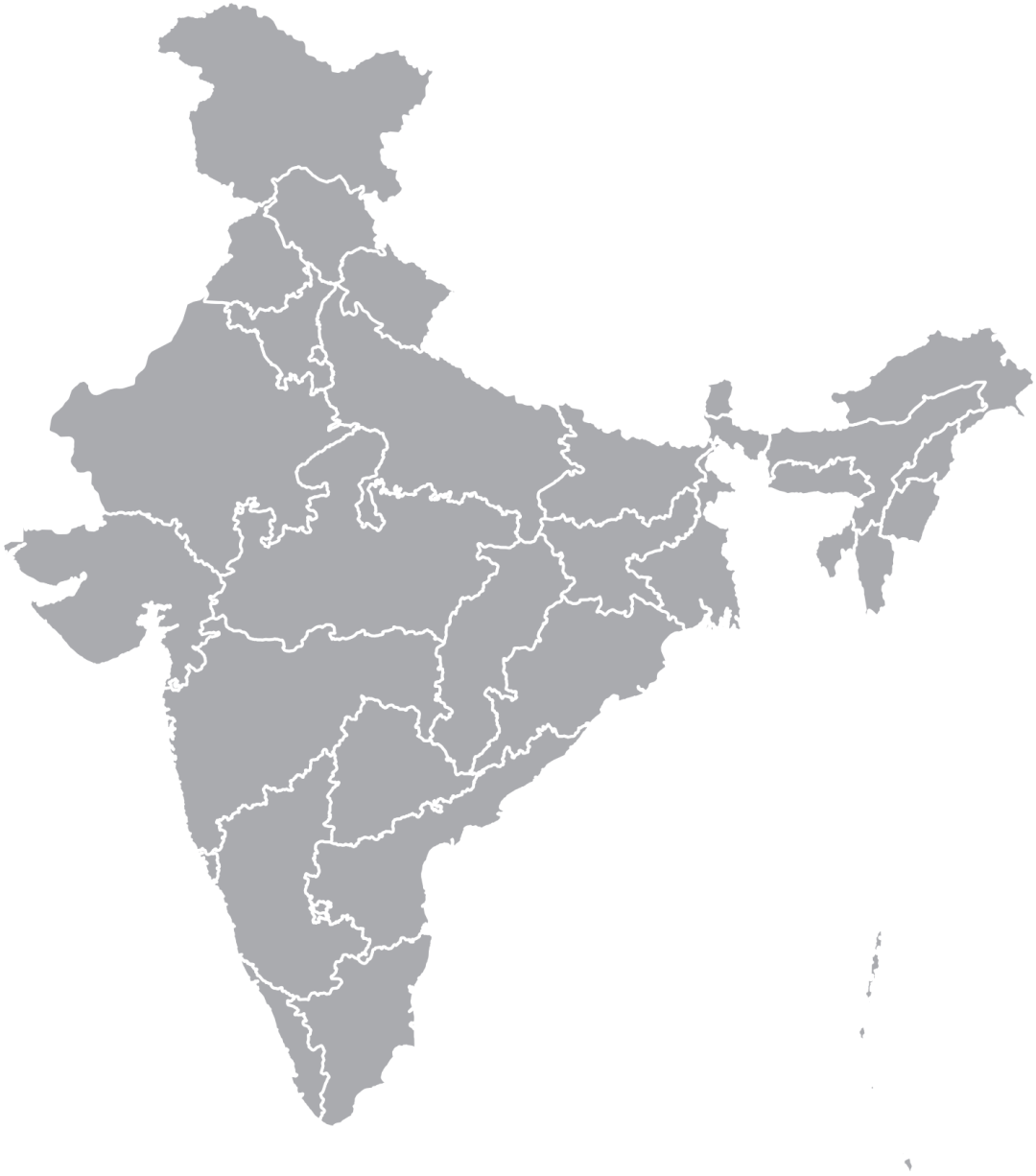
There is an alternate—or perhaps parallel—story of coffee’s journey to India’s Karnataka hills, albeit less formally documented. Legends persist that the Sufi monk Baba Budan, on hajj, stowed away seven coffee seeds on his return to his home country. Budan’s journey would have predated van den Broecke’s by a century or more. The hills in Chikmalagur, Karnataka, where Budan’s seeds were planted are still dotted with coffee trees, and bear his name to this day.
Our earliest written record of coffee consumption in India dates to 1616 in the court of Emperor Jehangir, where the Rev. Edward Terry reported it by name, and noted it to be “more wholesome than pleasant.” While coffeehouses began to emerge in the late 18th century, Indian coffee’s international relevance would hardly be noticed prior to colonization. India’s Malabar coast supplied the Dutch with trees to plant Java and eventually throughout the rest of Indonesia. However, it would be the infamous dominion of the British raj, which would dramatically escalate coffee production in the mid 19th century following the collapse of the East India Trading Company. Coffee scaled up from smallholder plots to state-run plantations, particularly in the country’s southwestern regions.
India’s coffee production survived significant setbacks throughout the British raj’s century-long colonial rule. Ceylon (now Sri Lanka) was ground zero for the world’s first coffee leaf rust epidemic, and India was hit hard in the late 19th century. In response, the country began planting robusta due to its genetic resilience.
As British influence waned in first half of the twentieth century and independence movements grew, and as World War II cut off trade relationships briefly with much of Nazi-occupied Europe, coffee production was backburnered. However, new domestic consumption trends began emerging. The India Coffee House chain, operated by the India Coffee Board, began popularizing “Indian filter coffee” or “Madras filter coffee,” a brew of finely ground coffee and chicory, often with boiling milk and sugar added.
India’s presence as a center of coffee research, spurred by the Central Coffee Research Institute has been of utmost importance in the 20th and 21st century, particularly in the study of genetic resilience, climate change, and crop care. Production volumes have steadily increased in India over the past few decades, fueled largely by consumption in Europe (especially Italy, Germany, and Belgium), Japan, and the Middle East. It remains relatively niche in the US market.