
Crown Jewel Sumatra Lychee Co-Fermented & Infused Wet Hull Bener Meriah
40338-1 – SPOT RCWHSE$313.12 per box
Boxes 47
Warehouses Oakland
Flavor Profile Lychee, honey, orange zest, black cherry, black tea
Add to your artisan.plus account: 
 Download PDF
This is an estate-grown coffee from Aceh Province, Sumatra’s most famous and prolific for specialty wet-hulled profiles.
22lb Boxes
Spot


Overview
Overview
This is a high intervention flavored green coffee, both co-fermented and infused with lychee, from Bener Meriah on the island of Sumatra in Indonesia, produced by the Central Sumatera Coffee company.
The flavor profile very lychee forward, with a little bit of sweetness and floral notes that elevate the profile even more. We tasted honey, some rose water, and subtle notes of black tea under the jammy lychee flavor.
Our roasters found the coffee easy to roast and recommended a moderated approach avoiding extremes. The flavor will be unmistakable at normal roasting parameters.
When brewed, we recommend a high dose and coarse grind in conical brewers for pour-over preparation.
Taste
Taste Analysis by Chris Kornman
This coffee, as advertised, smells and tastes exactly like lychee fruit added to a sparklingly clean Sumatran coffee. There are hints of the wet hull flavor of the coffee itself, but only in the slightest of whispers. Coffee serves as the canvas, while the brushstrokes applied by fermentation and infusion techniques have imparted an incredibly precise aromatic profile that is unmistakable. If you’re interested in trying a coffee, altered to add flavor at origin and dialed to the resolution of “lychee,” this is the one.
Without wading too far into the deep end, that is, the debate about propriety and transparency surrounding innovative processing techniques, we absolutely must discuss methodology, intent, and ingredients for this flavor-infused coffee. The producer has been fully forthcoming, and we will be too. This is a flavored green coffee. And we like it. A lot.
While important techniques employed include depulping, anaerobic fermentation—including inoculation with yeast and co-fermenting with powdered lychee fruit—and wet hulling, the primary lychee infusion comes in the form of an application of homemade lychee extract suspended in a propylene glycol solution while the coffee is drying.
We sourced this coffee with intent. The Central Sumatera Coffee company provided us with a transparently produced, distinctly flavored coffee using lychee as a flavoring agent. We think it is worthy of roasting and sharing with anyone curious about what excellent, boundary-pushing flavor techniques are possible in specialty coffee.
Source
Source Analysis by Charlie Habegger & Evan Gilman
This is an estate-grown coffee from Aceh Province, Sumatra’s most famous and prolific production area for specialty wet-hulled profiles. Unlike most coffee in the area, which is traditionally grown by hundreds of smaller farmers and gradually consolidated through processing, collection, and milling, Central Sumatera Coffee operates a 100-hectare estate right in Bener Meriah regency, where they can control the genetics, harvesting, and post-harvest techniques to perfection.
This is a super unique processing style that uses anaerobic fermentation, yeast inoculation, co-fermentation with powdered dried fruit, and infusion to achieve a totally distinct, heavily flavored coffee with perfume-like fragrances and sweet, fresh, lychee fruit.
Sumatra’s Aceh Province
Aceh (pronounced AH-CHEY) is the northernmost province of Sumatra. Its highland territory, surrounding Lake Tawar and the central city of Takengon, is considered to be the epicenter of one of the world’s most unique coffee terroirs.
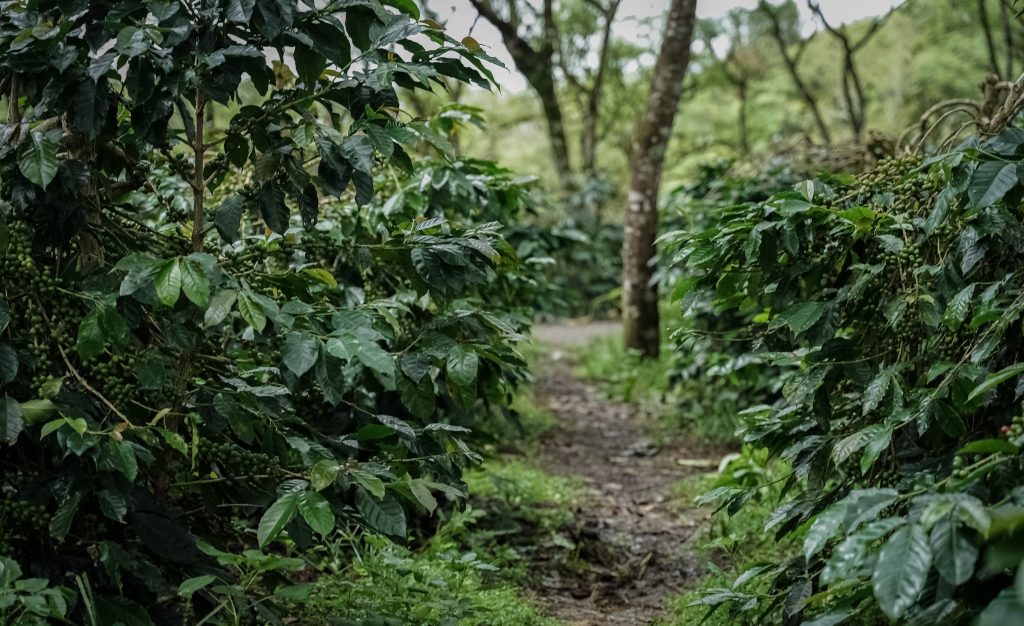
Coffee farms in this area are managed with the experience of many generations of cultivation, while also harmoniously woven into their surrounding tropical forests. The canopies are loud and fields are almost impenetrably thick with coffee plants, fruit trees, and vegetables, all of which are constantly flushing with new growth. Year-round mists and rain showers never cease, farm floors are spongy and deep with layered biomass, and almost every square meter of the region seems to exude life. Nothing is ever still. Including coffee ripening, which occurs ten months out of the year.
Central Sumatera Coffee
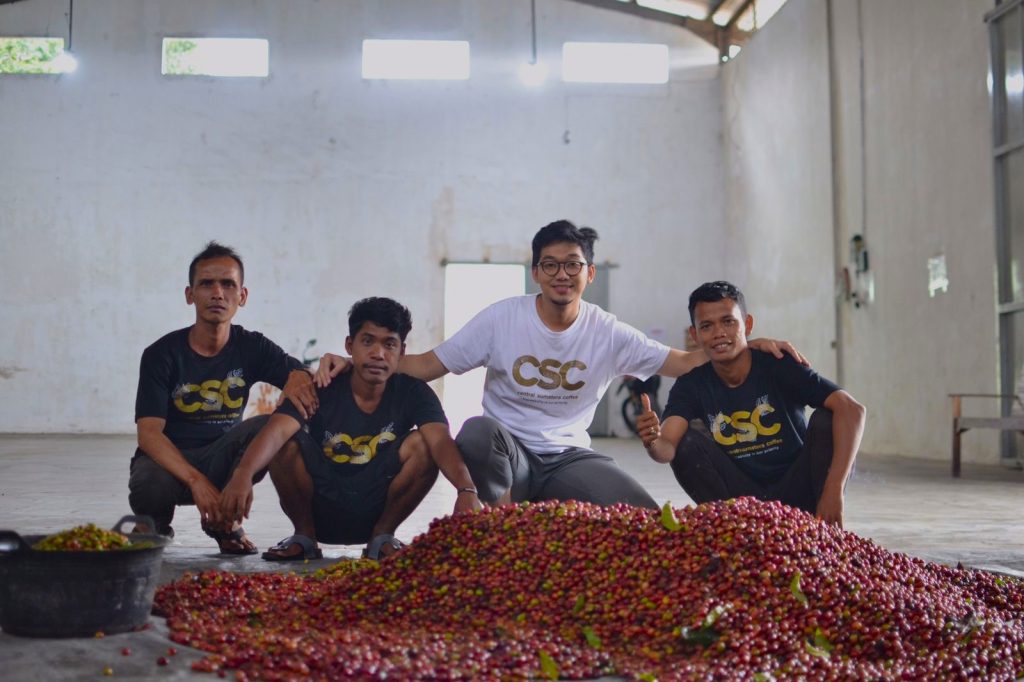
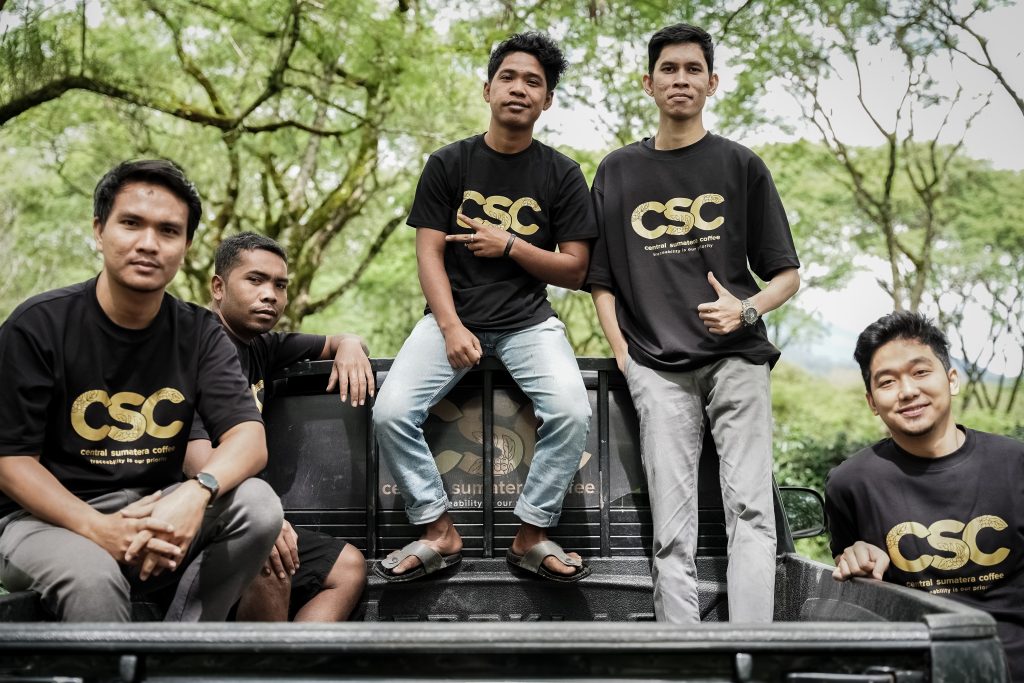
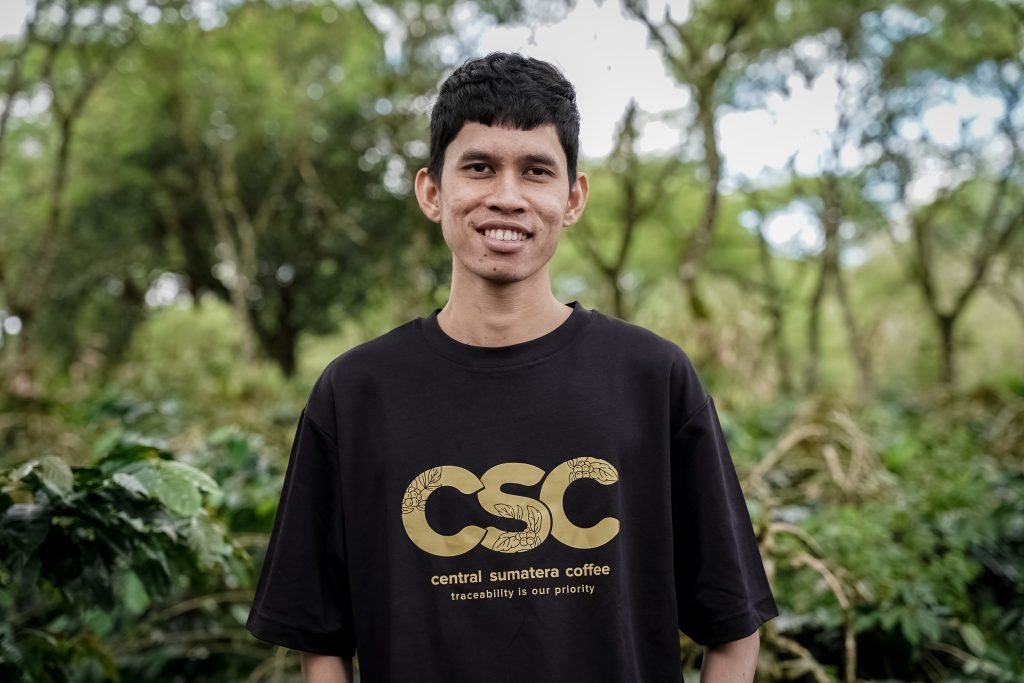
Central Sumatera Coffee (CSC) is a young group, with young leadership. It was originally founded in 2015 by Enzo Sauqi Hutabarat, then a University student with family ties to Bener Meriah. Aware of the growing demand across greater Indonesia for Sumatra’s best coffees, he gravitated toward Aceh as a culture and potential business environment. Until 2020 CSC only sold coffee domestically, but starting in 2021 they began to export as well, selling bits of coffee to the Middle East, Europe, Asia, and finally, in 2024, the United States, via Royal Coffee, for the first time.
CSC buys coffee from smallholders like a typical processor does. However, CSC also operates three large estates of about 100 hectares each: one in Bener Meriah, where this lot was produced; as well as two others in North Sumatra province, near Lake Toba. Their farms are organized varietally, allowing them to maintain unique genetic separations during harvest and processing.
Typical smallholder coffee in Aceh tends to be a blend of traditional heirloom cultivars, most of which are catimor hybrids, and this gives much of the area’s coffee a set of common characteristics that can be hard to transcend for a single producer. In CSC’s case, they have the genetic isolation, and the volume from such a large estate, to help them produce something unique. Even with similar processing styles as the collectors and coops around them.
“Lychee Process”
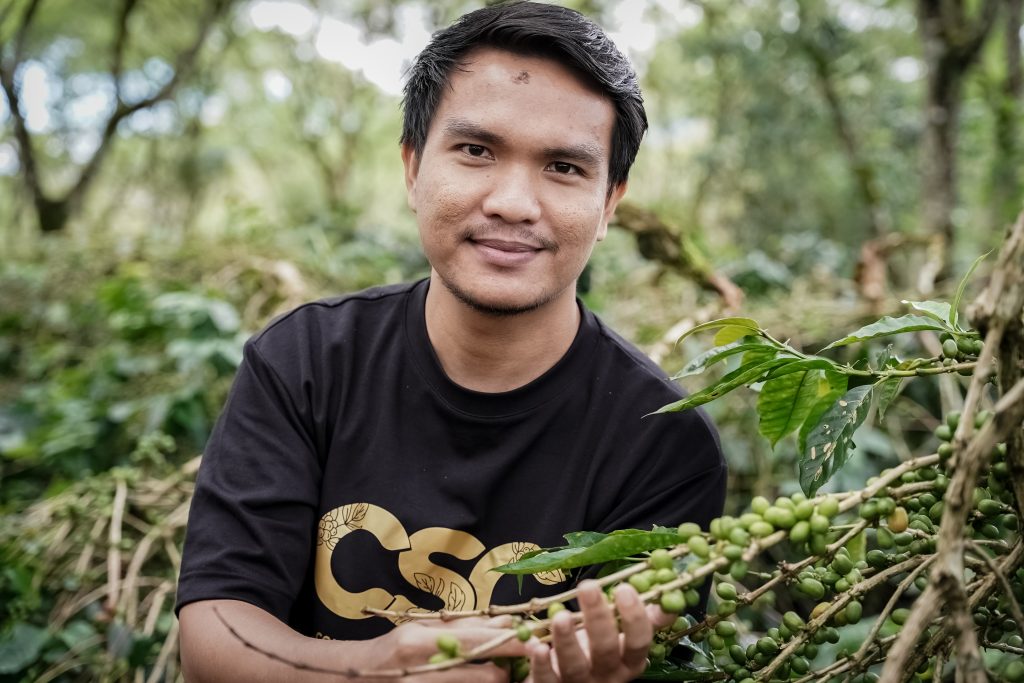
CSC manages processing on their own estates. The Bener Meriah estate employs 30 pickers during harvest months, and six specialists for processing. Most of their estate coffee is wet-hulled in the traditional fashion, but this microlot took an entirely different route, blending multiple unique fermentation techniques to augment the final cup, and ultimately processed as a semi-washed.
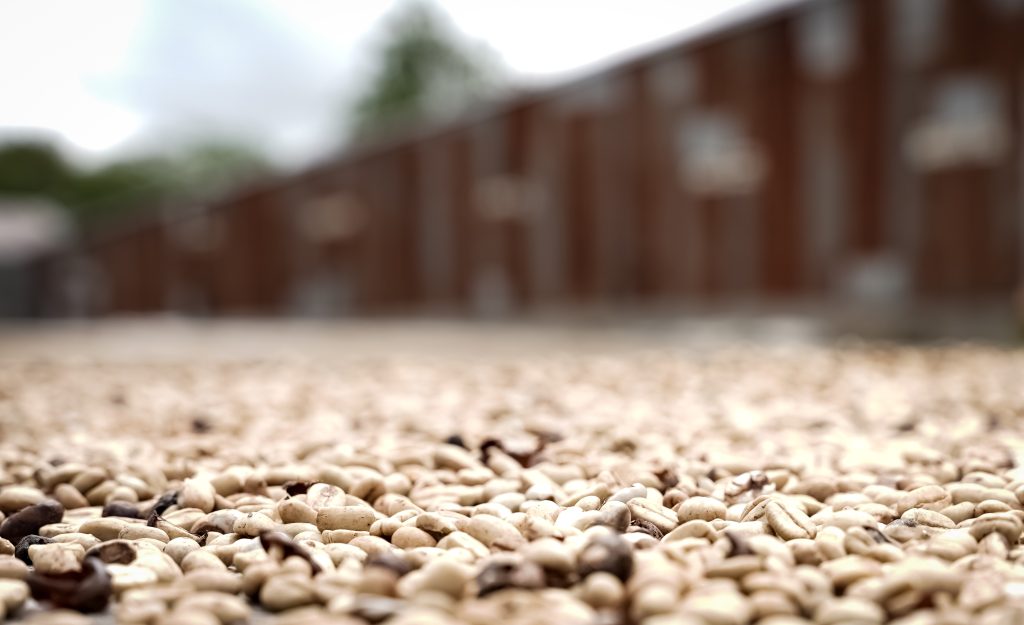
After picking, the cherry was depulped and fermented anaerobically in sealed containers with the addition of Lallemand Saccharomyces cerivisiae, for a total of 48 hours. Once the first fermentation cycle was complete, the containers were opened, dried lychee fruit powder was added, then resealed for another 12 hours. After the full multi-stage 60-hour fermentation, the containers were opened, the parchment washed clean and moved directly to raised screen tables and lightly coated with an infusion of powdered lychee while drying. This infusion is made with an extract of real dried lychee in a solution of propylene glycol, which carries the delicate flavors of lychee into the substrate of the coffee seed. The carrier is completely destroyed during roasting, leaving behind the complex lychee aromatics. Once the parchment dried to 35% moisture content it was de-hulled (this is the wet-hulled part) and allowed to finish drying as a raw seed on the raised tables.
Green
Green Analysis by Isabella Vitaliano
Although this lychee infused coffee is one of the crazier coffees to cross our paths, the green specs are well within normal ranges. A testament to the hard work of the Central Sumatera Coffee team. Density is slightly below average with moisture content and water activity in the little bit above average ranges. Screen size is evenly spread out from 17-20, which is on the larger side. While this coffee has some of the highest intervention available to coffee, it is well taken care of every step of the way. Even in its unroasted form you can smell a distinct lychee flavor coming from the coffee.
Diedrich
Diedrich IR5 Analysis by Doris Garrido
There is always a distinct joy in roasting a coffee with immense flavor potential and finding your own unique way to showcase it. Co-fermented Sumatran coffees are particularly forgiving and fun to roast—you can experiment with multiple variables and still end up with a great cup. However, my goal for this roast was balance: I wanted the distinct lychee co-ferment character to be expressed, but I also wanted to highlight the core character and body texture that this coffee naturally has.
To achieve this balance, I adjusted my approach to fit the processing. On the Diedrich IR-5, I charged a 5.5 lb batch at 401.1°F and soaked with no gas for the first minute. At 01:09, I applied 100% gas to drive momentum through the early drying phase. Rather than maintaining high heat all the way through, I made stepped gas reductions, stepping down to Gas 60 at 04:01 (261°F) and then to Gas 30 at 04:45 (290.2°F), just before Color Change at 04:59 (298.6°F). This step-down approach allowed for a steady 4:59 drying phase and a 3:47 Maillard phase, giving me fine control over caramelization while softening the lychee taste to balance out the overall flavors.
As the roast approached First Crack, I increased airflow to 50% at 07:20 (360.9°F) and then opened it fully to 100% at 07:51 (370.8°F) to clear residual smoke and keep the cup clean. First Crack occurred at 08:46 (386.8°F), and I dropped the roast at 10:26 at 404.5°F. The development time ended at 01:40, which was just enough to round out the sweetness and body while preserving the delicate, vibrant lychee florals and bright fruit acidity. I am more than happy with the results: the bright acidity of the lychee is very present yet beautifully rounded and not at all overwhelming, revealing a soft, creamy texture that makes for an excellent cup.
Aillio
Aillio Bullet R1 IBTS Analysis by Evan Gilman
We use the RoasTime app and roast.world site to document our roasts on the Bullet. You can find our roast documentation below by searching on roast.world, or by clicking on the link below. Take a look at our roast profiles below, as they are constantly changing!
As I knew that I’d get plenty of lychee flavor from this coffee, my goal was to influence the texture of the coffee as much as possible. Sometimes a counterpoint to predominant flavors ends up making the entire experience more compelling, so I wanted to emphasize the creamy body typically found in Sumatran coffees rather than the light and juicy profile that was already plainly in full effect.
I started with 455F, P6 power, and F2 fan to do a slight “soak” on this coffee, before increasing power to P8 for a bit. At peak rate of change, I increased fan speed to F3 (a little on the early side). I continued the more gentle trajectory through Maillard by reducing power to P7 before yellowing, and increasing fan to F4 at yellowing proper. I reduced heat further to P6 halfway through Maillard, and increased fan to F5 at first crack to really draw this coffee slowly through the last stage of development. Dropping at 10:48 / 398F, this was one of my longer roasts in recent memory.
The result in the cup was super creamy texture and huge lychee and rose top notes. With all these florals on top of a milk chocolate base, the coffee is absolutely phenomenal as a drip coffee, just by itself. If you’re looking to make the flavor more subtle, you can also add this to a blend in small proportion for a deliciously fruity and floral top note.
You can follow along with my roast here at roast.world: https://roast.world/egilman/roasts/tQ_V0WV05dKoXNahuD5d8
Brew
Brew Analysis by Akiko Scott
Finding out about this Sumatran lychee coferment made me excited to do this brew analysis. My experience with Sumatran coffee has been much more traditional. This coferment is very lychee forward and floral. I feel very grateful to the people of CSC for bringing such a treat to us here at Royal.
We started with the dose at 18g and a coarse grind on the V60 brew device. This gave our first brew a very light profile that was bursting with that sweet lychee flavor. There were some floral and sort of savory notes hiding underneath the surface like dill, and long steeped jasmine tea. This brew gave me this sort of enveloping mouthfeel that was pretty dry and reminiscent of a communion wafer.
For the next brew we decided to up the dose to 19.5 and coarsen the grind. We found that this gave the coffee an extremely smooth and delicate taste. Unlike the first brew, we were able to get some notes of black cherry, orange candy, and this really refreshing, sweet and jammy lychee deliciousness.
Overall, this coffee is great for someone looking to experience a more experimental side of coffee that provides an incredibly sweet and floral reward. We recommend a higher dose with a coarser grind, brewed on a conical brewer. The lychee coferment upended my perspective of coffees coming from Sumatra and has served as a helpful reminder to continue to challenge the ways we look at coffee. I’m excited to learn more about how coffees are developed from the folks over at Central Sumatera Coffee.
Related Coffee
Jasmine, floral, black tea, honeysuckle, lemon
Oakland 36 Boxes
Crown Jewel Sumatra Jasmine Co-Fermented & Infused Wet Hull Bener Meriah
40337-1 – SPOT RCWHSE
Jasmine, floral, black tea, honeysuckle, lemon
Spot
36 Boxes
$313.12 per box

Black Tea, caramel, lemongrass, passion Fruit, apricot
Oakland 6 Boxes
Crown Jewel Burundi Honey Peaberry Heza Washing Station
38863-1 – SPOT RCWHSE
Black Tea, caramel, lemongrass, passion Fruit, apricot
Spot
6 Boxes
$255.49 per box
Banana Bread, plum, rosemary, cacao Nib, and toffee
Oakland 34 Boxes
Crown Jewel Yemen Anaerobic Natural Sharqi Haraz Cooperative
39818-1 – SPOT RCWHSE
Banana Bread, plum, rosemary, cacao Nib, and toffee
Spot
34 Boxes
$660.00 per box
Orange blossom, red wine, baker's chocolate, and black tea
Oakland 13 Boxes
Crown Jewel Yemen Washed Sharqi Haraz Cooperative
39817-1 – SPOT RCWHSE
Orange blossom, red wine, baker's chocolate, and black tea
Spot
13 Boxes
$580.58 per box