
Ethiopia Guji 1 Anaerobic Natural Hambela
40116 – GrainPro Bags – ETA: Sep 10, 2026 – RCWHSE


Grower
Smallholder farmers organized around the Hambela processing station

Altitude
2095 to 2122 masl

Variety
Local arabica landraces and heirloom cultivars

Soil
Vertisol

Region
Hambela Woreda, Guji Zone, Oromia Region, Ethiopia

Process
Full natural and dried on raised beds

Harvest
November - January

Certification
Conventional
Coffee Background
Naturals from Hambela, one of Guji’s most western and accessible high-elevation districts, are produced by local smallholder farmers and dried at central processing stations in the area. Sundried naturals from Hambela have become widely beloved over the past 10 years for their articulate fruit juice flavors, balanced acids, and overal cleanliness compared to other well-known regions in Ethiopia.
Brief History & Flavor Profile
Ethiopia’s Guji zone is a distant and heavily forested swath of land stretching southeast through the lower corner of the massive Oromia region. Guji is heavy with primary forest thanks to the Guji tribe, a part of Ethiopia’s vast and diverse Oromo nation, who have for generations organized and legislated to reduce mining and logging outfits in their area, in a struggle to conserve the land’s sacred canopy. Compared to other coffee-heavy regions, large parts of Guji feel like prehistoric backwoods. Coffee farms in many parts of Guji begin at 2000 meters in elevation and tend to climb from there. The highland farming communities in this part of the country can be at turns Edenic in their natural purity, and startlingly remote.
Guji’s coffees, when well-produced, are often juicier and jammier in balance than nearby Yirgacheffe, which is known for more floral or herbaceous and lemony coffees. High elevation naturals here in particular can be well-defined and hard candy-like in balance with flavors of berry or stone fruit, red wine, and rose.
Tracon Trading PLC and Processing
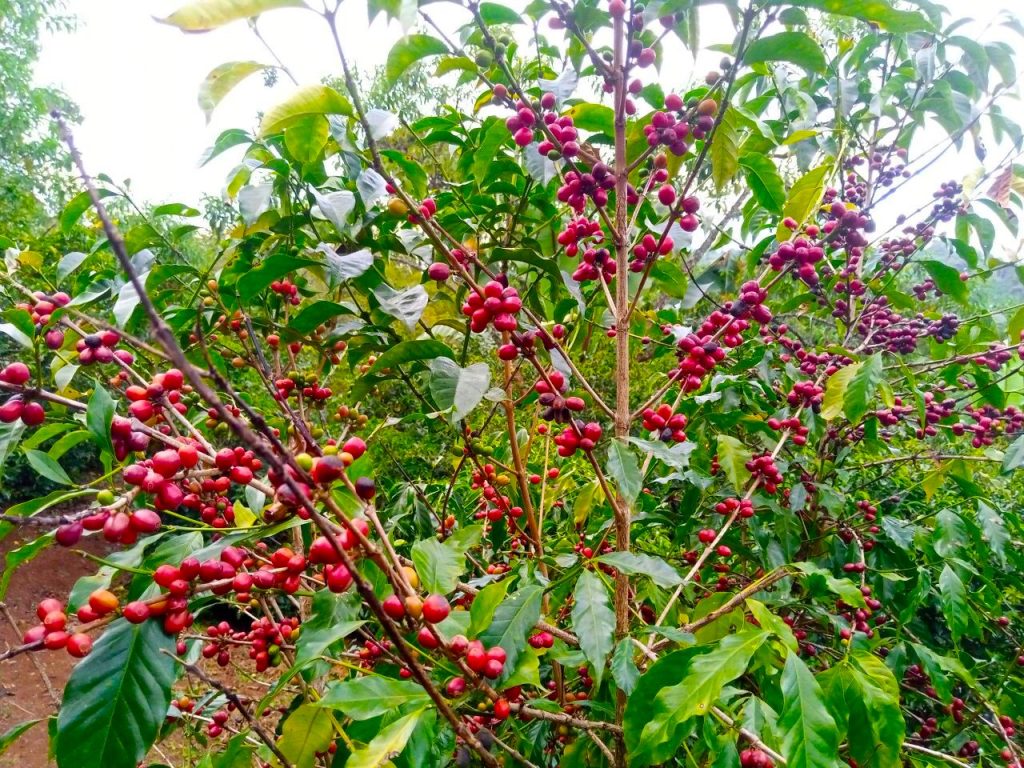
Tracon Trading is an independent processor, exporter, and estate owner that works in many of Ethiopia’s key producing zones, including Gedeo and Guji. A few hundred individual smallholders contribute to Hambela washing station, each averaging 1.3 hectares of coffee which typically shares the land with enset—a fruit-less relative of the banana tree whose pulp is scraped and packed into cakes, fermented underground, and then toasted as kocho, a staple starch in the area.
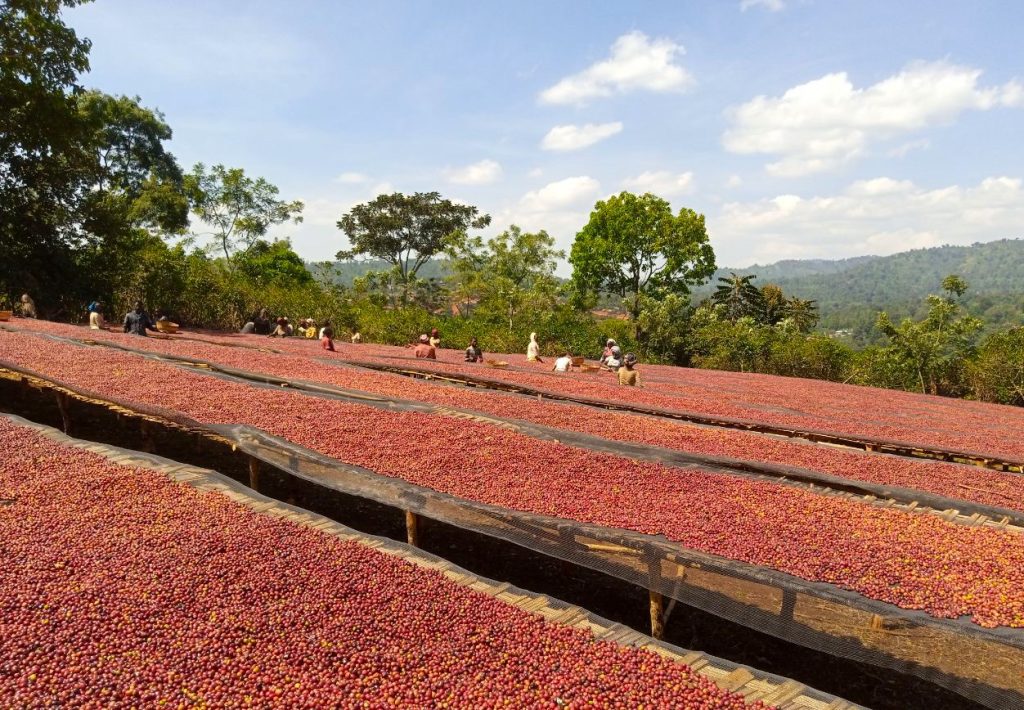
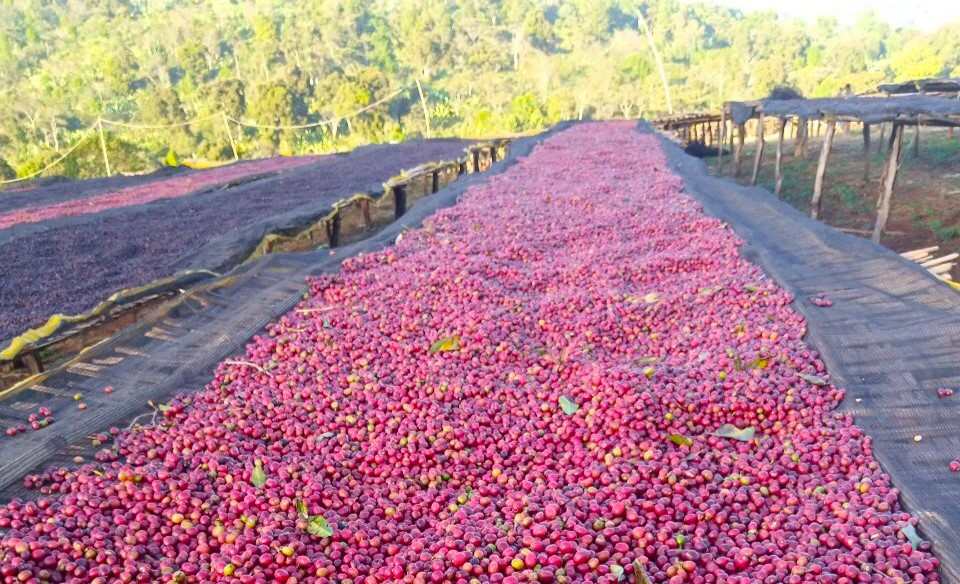
Naturals are processed simply and with great attention to detail at Tracon’s Banko Hambela site. Fresh-picked cherry is delivered each day by contributing farmers and hand-sorted upon arrival for uniformity and ripeness. This particular anaerobic lot received a unique twist: fresh cherry is first vacuum sealed in stainless steel canisters for 4-5 days, creating an environment deprived of oxygen and increasingly pressurized by the carbon dioxide emitted in the fermentation of the fresh fruit. Once the vacuum fermentation is complete, the cherry, now pale yellow from loss of pigment, is transferred directly to raised beds to sun-dry for 15-21 days until the moisture is reduced to the level of a typical complete natural.
Oxygen-deprived, or “anaerobic” fermentation environments like the above have gained traction among processing wonks in coffee for the unique flavors and tanginess they can add, as well as creating exaggerated characteristics in the cup compared to what we’re used to. In this case, Tracon has created a distinctly intense and tropical fruit-dominant natural profile with soft acids and a structure that is both creamy and juicy. It is a unique digression from the mainstream for sure, and an objectively successful result.
During the drying period the coffee is constantly rotated during the day and covered at night to prevent the area’s humidity from settling on the cherry’s skin. Fully dried cherry pods are then stored for multiple weeks to stabilize moisture content and water activity, then hulled locally and transported to Addis Ababa for final milling and export.
Related Coffee
Peach, lemonade, mint, brown sugar, jasmine
Oakland 32 Bags
Peach, lemonade, mint, brown sugar, jasmine
Spot
32 Bags
$6.32 per pound

Cup notes available upon arrival
Oakland 3 Bags
Tanzania Ngorongoro Finagro Gaia Estate SL 28 Washed
Lot 158 – 39893 – Agroz Bags – SPOT RCWHSE
Cup notes available upon arrival
Spot
3 Bags
$7.98 per pound
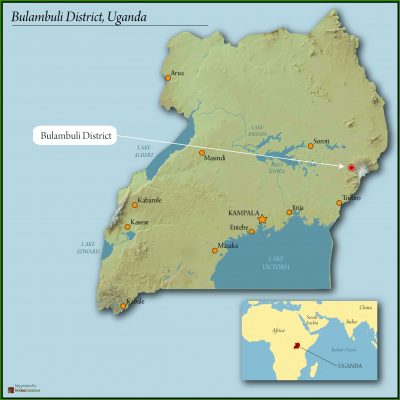
Plum, mango, apple juice, honey, hops
Oakland 12 Bags
Uganda Mountain Harvest Kajere Yellow Honey
39909 – GrainPro Bags – SPOT RCWHSE
Plum, mango, apple juice, honey, hops
Spot
12 Bags
$6.97 per pound
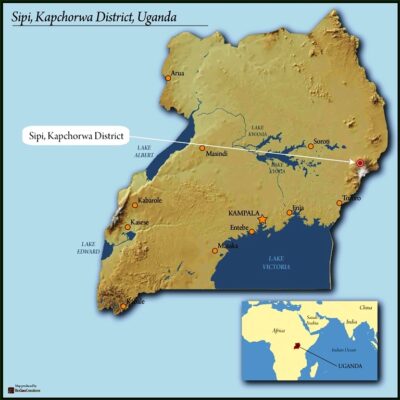
Plum, pear, lemongrass, cocoa
Oakland 14 Bags
Plum, pear, lemongrass, cocoa
Spot
14 Bags
$5.79 per pound