
Kenya Nyeri Othaya Ichamama Peaberry
09TY0007 – 39972 – GrainPro Bags – SPOT RCWHSE$5.84 per pound
Bags 6
Warehouses Oakland
Add to your artisan.plus account: 
 Printer Friendly PDF
Ichamama is regularly one of the best, most straightforward Kenyas we buy.
132.08lb Bags
Spot


Grower
1126 coffee producers organized around the Ichamama Factory

Altitude
1700 - 1890 masl

Variety
SL28, SL34, Ruiru 11, and Batian

Soil
Volcanic loam

Region
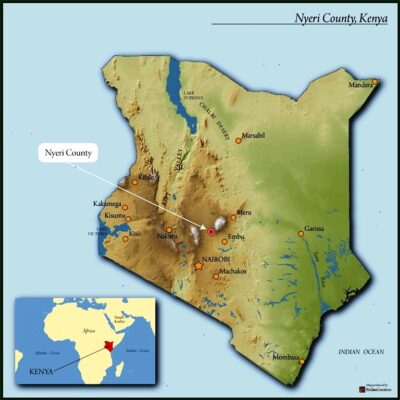
Nyeri County, Central Province, Kenya

Process
Fully washed and dried on raised beds

Harvest
October-December

Certification
Conventional
Ichamama is regularly one of the best, most straightforward Kenyas we buy. We usually select just a single outturn or two from many, looking for the hallmark mandarin sweetness, roasted grape tomato, and zesty structure that we love. Ichamama is not a small "factory” (washing station), intaking about half a million tonnes of cherry and producing well over a thousand exportable bags each year. Its farmers themselves certainly are, however, each contributing enough cherry for only 1-3 of those bags.
Coffee this distinctively bright may feel like a birthright to outsiders, since so many Kenyas are good in this way. Anyone who has visited the country’s supply chains, on the other hand, knows the outcome is thanks to a huge amount of physical labor and a massive structure of refinement that puts thousands of small lots like this one into the marketplace, year after year, tasting their very best.
Welcome to Nyeri
Mt. Kenya, at the helm of Kenya’s Central Province, is the second tallest peak on the continent of Africa and a commanding natural presence. The mountain itself is a single point inside a vast and surreal thicket of ascending national forest and active game protection communities.
The central counties of Kenya extend from the center of the national park, like six irregular pie slices, with their points meeting at the peak of the mountain. It is along the lower edge of these forests where, in wet, high elevation communities with mineral-rich soil (Mt. Kenya is a stratovolcano) many believe the best coffees in Kenya are produced.
Nyeri is perhaps the most well-known of these central counties. Kenya’s coffee is dominated by a cooperative system of production, whose members vote on representation, marketing and milling contracts for their coffee, as well as profit allocation.
Ichamama Factory & Processing
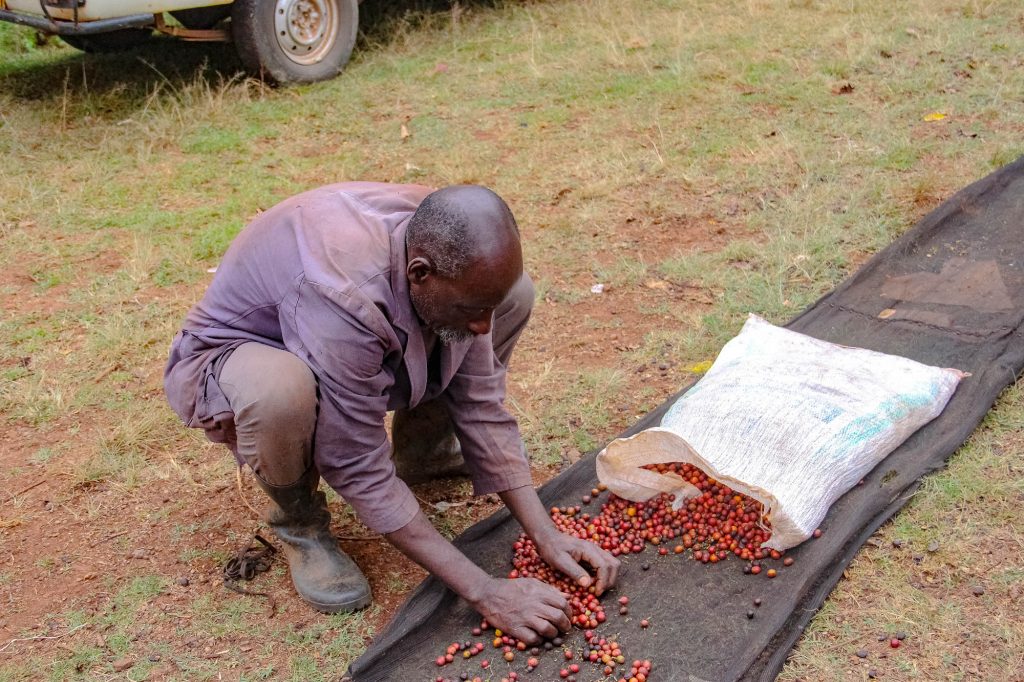
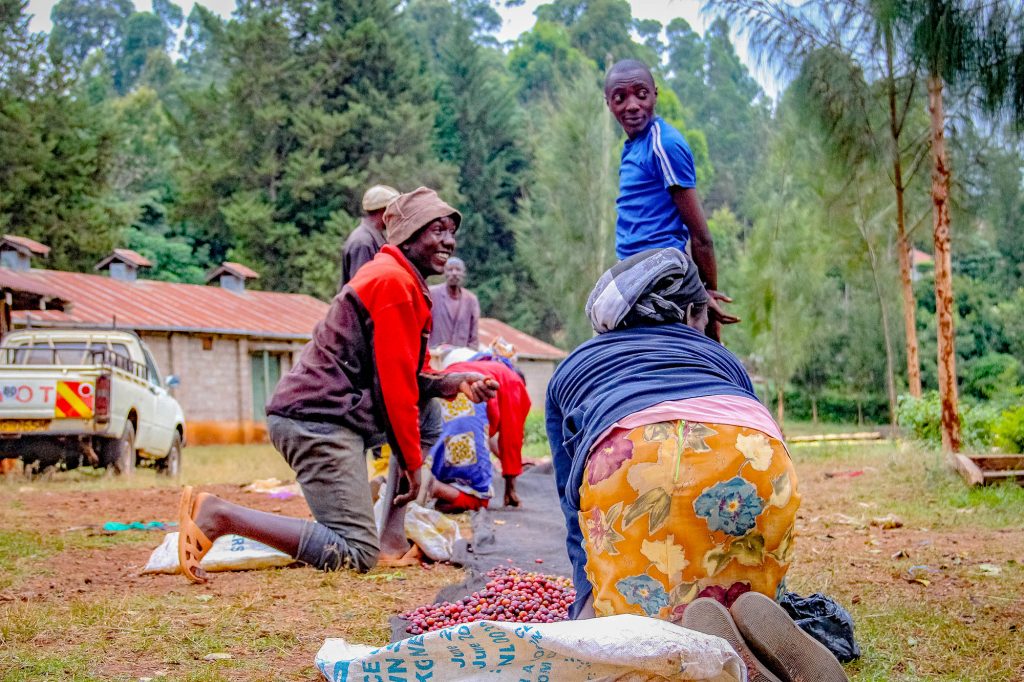
Ichamama factory membership is primarily 1-acre farmers, less than half a single hectare. Coffee is a most critical cash crop among them but is not the only thing grown—farmers tend to have legumes and vegetables, and occasionally livestock or tea as well. Farmers deliver cherry weekly or more during the harvest month, handpicking and transporting everything themselves or with the help of small amounts of local labor.
As cherry comes to the factory it is hand-sorted on intake to eliminate any imperfections and then weighed and logged under the contributing farmer’s name. At the end of each receiving day the cherry is blended and depulped, and then fermented in water for 24 hours. Once fermentation is complete, clean water is used to rinse and wash the parchment clean, after which the parchment is moved to raised beds for drying. The drying phase is typically 2-3 weeks with the parchment only exposed directly to sun for about 4 hours each day, favoring indirect warmth and airflow to dry; doing so minimizes uneven dehydration or the potential cracking of the brittle parchment skin. Finally, fully dried parchment is rested in large, perforated bins on site, a process that allows the bean’s internal moisture to stabilize for the long transit and shelf life ahead.
The established milling and sorting by grade, or bean size, is a longstanding tradition and positions Kenya coffees well for roasters, by tightly controlling the physical preparation and creating a diversity of profiles from a single processing batch.
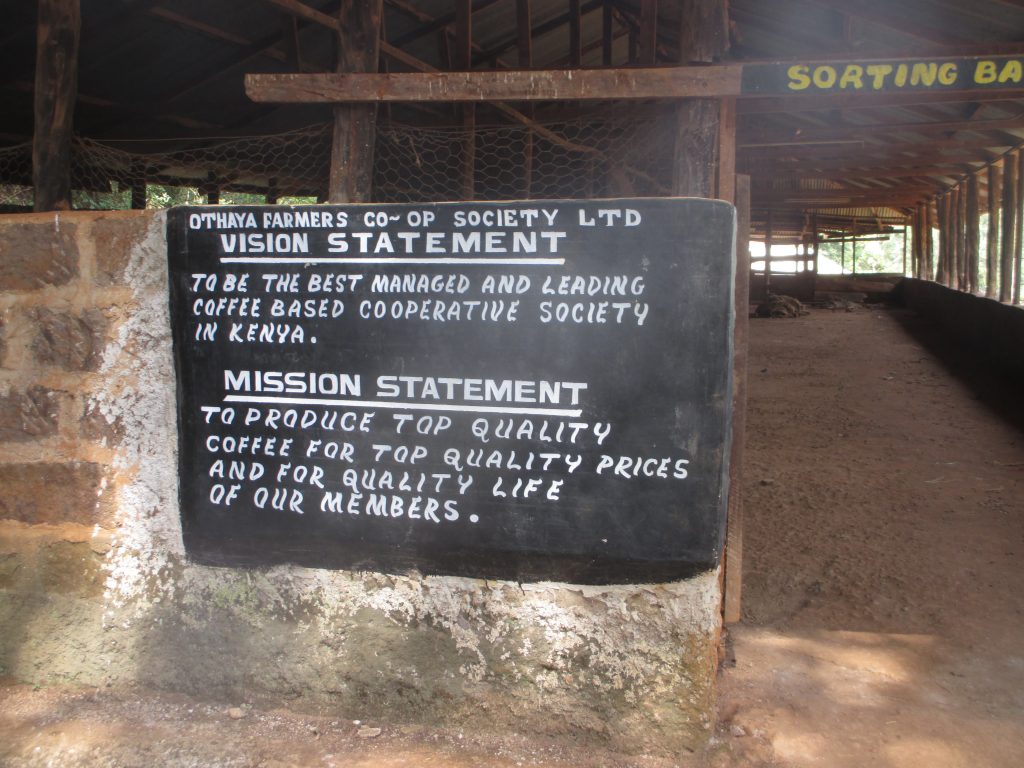
Othaya Farmers Cooperative Society
Othaya Farmers Cooperative Society, the umbrella organization that includes Ichamama, is one of Kenya’s larger societies, with 19 different factories and more than 14,000 farmer members across the southern Nyeri region. Othaya is a part of the Kenya Cooperative Coffee Exporters KCCE is an historic organization comprised of many individual coop societies. The group was formed in 2009, with the express goal of managing marketing and exporting operations cooperatively, as opposed to contractually with third parties. In addition to coffee production, KCCE oversees a cooperative network of millers and a domestic roasted coffee brand sold nation-wide in Kenya.
The economics of smallholder systems are consistently difficult everywhere in the world, and in Kenya in particular the number of individual margins sliced off an export price before payment reaches the actual farms is many, leaving only a small percentage to support coffee growth itself. And most often this arrives many months after harvest. KCCE, by managing more of the value chain itself, can capture a greater margin on behalf of the farms.
Related Coffee

Fig, dried lemon, floral, sweet
Oakland 186 Bags
UGANDA FT-FLO ORGANIC FRIENDS OF MOTHERS WOMEN’S COFFEE A+
39591 – GrainPro Bags – SPOT RCWHSE
Fig, dried lemon, floral, sweet
Spot
186 Bags
$5.27 per pound
Blackberry, kiwi, mango, mint, white wine
Oakland 5 Bags
Kenya Nyeri Gura Peaberry
14TY0025 – 39969 – GrainPro Bags – SPOT RCWHSE
Blackberry, kiwi, mango, mint, white wine
Spot
5 Bags
$5.84 per pound

Grapefruit, grilled pineapple, brown sugar, dark chocolate
Oakland 3 Bags
Kenya Nyeri Othaya Ichamama AB
09TY0007 – 39970 – GrainPro Bags – SPOT RCWHSE
Grapefruit, grilled pineapple, brown sugar, dark chocolate
Spot
3 Bags
$5.97 per pound
Guava, lemon, berry, herbaceous, juicy, sweet
Oakland 4 Bags
Kenya Kibugu Kathakwa Peaberry
12IM0070 – 40236 – GrainPro Bags – SPOT RCWHSE
Guava, lemon, berry, herbaceous, juicy, sweet
Spot
4 Bags
$6.08 per pound