
Crown Jewel Colombia Washed Chiroso Evelio Lasso
38505-1 – SPOT RCWHSE
Boxes 0
Warehouses Oakland
Flavor Profile blood orange, guava, sweet lemon curd, floral
Out of stock

Overview
Overview
This is a low intervention washed Chiroso cultivar coffee from Nariño, Colombia, produced by Evelio Audias Lasso Bolaños on his farm, Los Guayacanes.
The flavor profile is bright and structured with notes of blood orange, guava, sweet lemon curd, floral aromatics, and a rich finish of toasted coconut, plum, and dark chocolate.
Our roasters found that shorter drying, controlled Maillard airflow, and restrained development produced a bright yet composed cup, highlighting fruit-forward complexity while preserving balance and structure.
When brewed, we recommend a coarser grind and a flatbed brewer as this coffee seems to be quite soluble and can get heavy.
Taste
Taste Analysis by Isabella Vitaliano
Ethiopian landrace coffees continue to infiltrate our taste buds in various forms of cultivars. With continuous genetic testing on coffee plants, an up-and-coming cultivar, Chiroso, was recently discovered to be part of this lineage. With its regal background, it has a profile that most green buyers are after tart, clean, and sweet.
The range the profile has to offer is quite infinite, but we noted blood orange, guava, sweet lemon curd and floral aromatics. On some brew analyses there were flavors of blood orange, toffee, tamarind, marzipan, and lemon verbena.
Our supplier for flowers at The Crown is a local, Sigrid Hubbel of Bouquet Improv. Everything is from her garden just a few blocks away from our location, hyper-local and often California native plants. Not only do we use her plants to decorate the space, but we also use her garden for our fermentation program. Of course everything is seasonal, and the one item that blows my mind every time is the oregano she grows. It is a specific type of oregano I cannot recall the name, but the aromatics are incredible, nothing like a dried oregano. Its floral, almost lilac and an elevated herby taste. That exact flavor is present in the cup for me.
Less abstract descriptors also include toasted coconut, molasses, plum, and dark chocolate. A favorite tasting note we got from Chris for this coffee was maple bacon donut. Kind of crazy (and maybe don’t put this on your roasted coffee bags) but what he’s getting at is buttery flavor, salty aromatics, and syrupy flavors. A merge of salt, sweet, and texture.
This coffee pairs nicely with flaky pastry dough, dark chocolate, and fresh oranges; but really, there are so many flavors this profile can pair with. Happy tasting!
Source
Source Analysis by Charlie Habegger
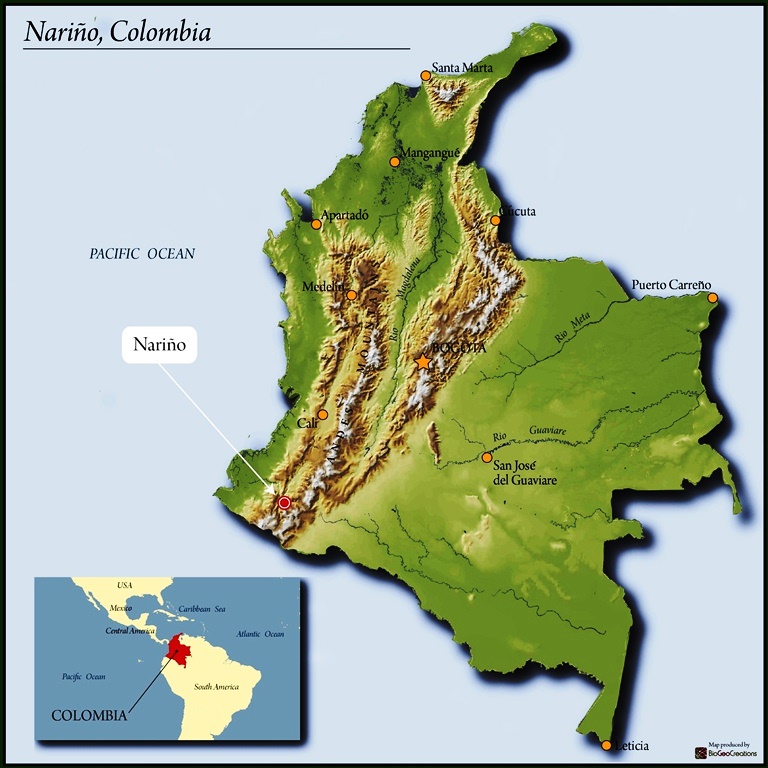
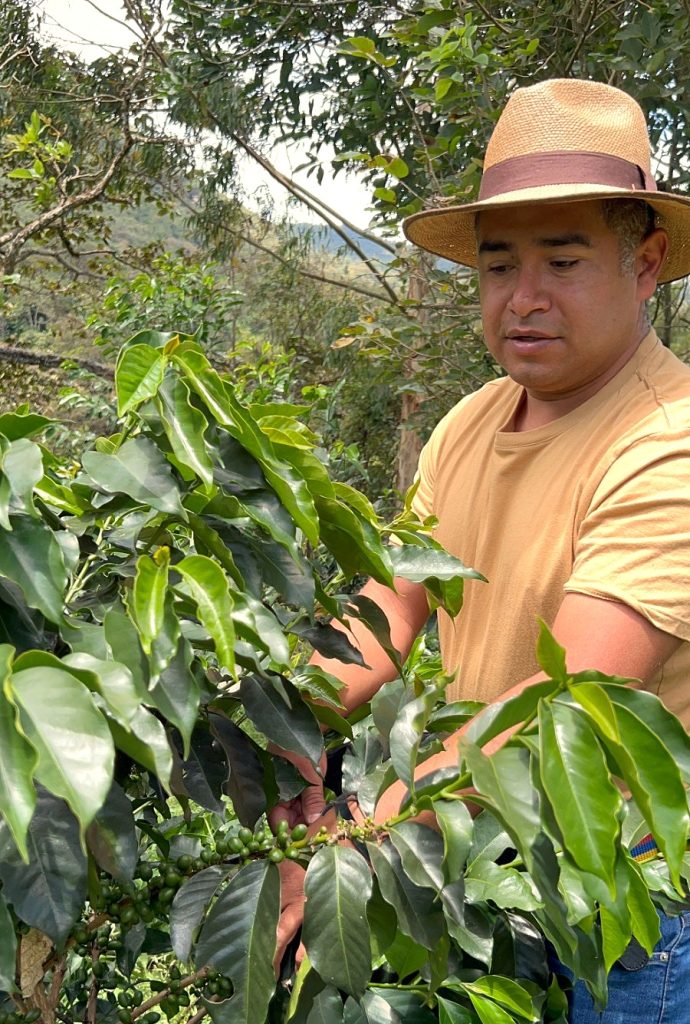
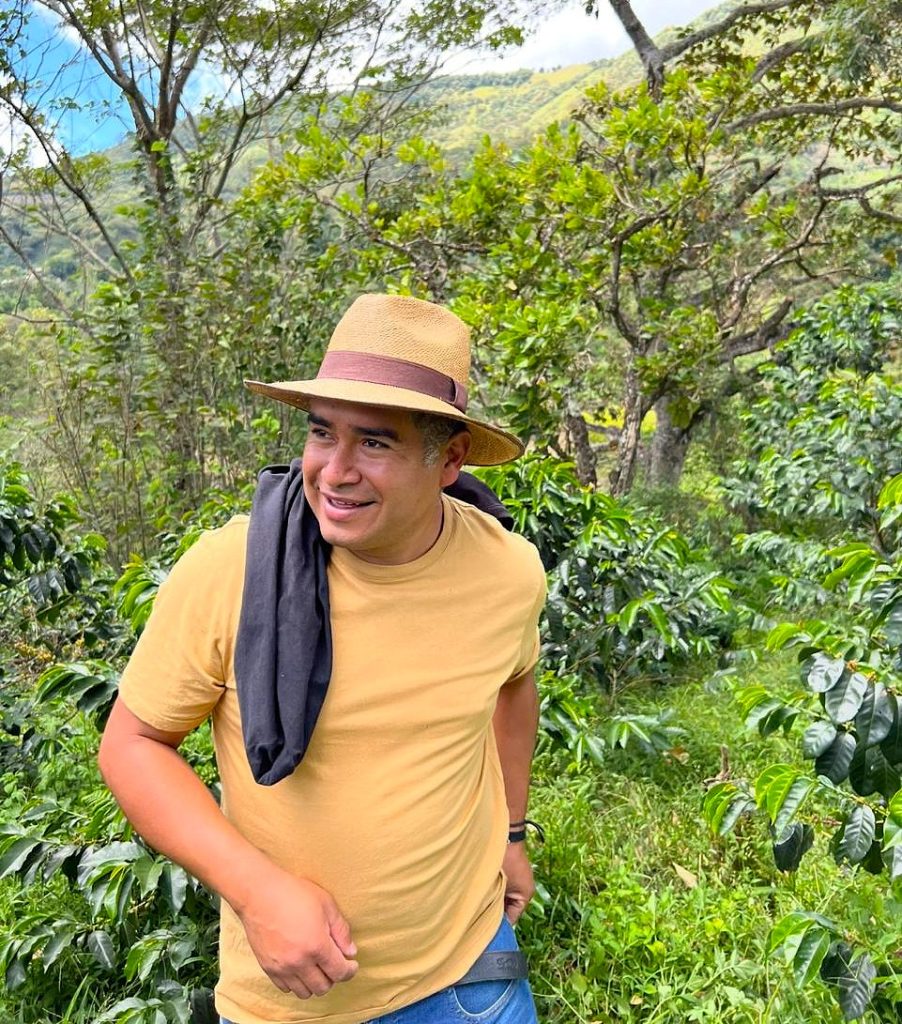
Evelio Lasso manages a 3.5-hectare farm at a staggeringly high altitude in northern Nariño, one of Colombia’s most remote and dramatically mountainous departments. Aside from an extended parchment fermentation, this microlot is a low-intervention fully washed coffee. That means all the delicate honeycomb and vanilla-like esters, the intense clarity of the acids, the creamy cup structure, and the bright flavors—apricot, pineapple, tomato—are coming right from the coffee seed itself.
Chiroso translates to something like “tattered” or “shabby” in Colombian Spanish. The unique phenotype, with a slightly elongated fruit shape and a scrappy, unkempt-like plant structure, was first spotted in the Antioquia department and originally believed to be a kind of Caturra—thus the name. RD2 Vision, a bio-research project that maps the genetic fingerprints of many of the world’s arabicas, has linked the “Chiroso” genotype directly to an Ethiopian landrace, with no other crossings. If true, this would be a far cry from Caturra lineage, since Caturra itself is part of the bourbon group.
Alas, another delicious coffee, another hazy genealogy. Some cuppers and Colombian coffee roasters have started referring to the plant as “Colombian Gesha”, given its direct link to Ethiopian genetics. And why not! What matters is that Evelio and his good friend Nature produced this, and we are loving it.
Northern Nariño & Terra Coffee SAS
The municipality of San Pedro de Cartago is just south of La Unión, a very well-known part of Nariño for its big-bodied and sweet coffees. The border with the Cauca department isn’t more than a few kilometers north, but here in Colombia’s southern Andes the landscape seems to explode outward in scale compared to the tightly-wound slopes of Huila or the plateaus of Cauca. Northeastern Nariño is uniformly high altitude, dense, and rugged, with elevations surpassing 2400 meters. From La Union south to the enormous Galeras volcano, whole cities are perched on narrow ridgelines and the valleys seem to have no bottom.
Terra Coffee SAS is a local producer group, established in 2016 by Weimar Lasso and Juliana Guevara. These are the same owners of the beloved La Terraza farm in Huila, from whom we buy a number of microlots every year. The small company manages one single producer association in each department where they work, “Ecoterra” in Nariño, with 140 producer partners, and “Terra Verde” in Huila, with 120.
For Terra Coffee SAS, quality is seen as a direct pathway to well-being for volume-limited, small coffee farming families. Driving their business model is an understanding that quality results from small harvests have direct impacts on not just the farm owner, but the many dependents on each small farm, including young children, older adults, and the women of the household performing essential labor that often goes unpaid. By increasing quality and placing microlots in the market, Terra Coffee SAS plans not only to increase prices to growers and their families, but also increase their sense of pride in the details of their work.
Microlots like Evelio’s are selected through the same R&D processes as Weimar and Juliana’s own coffees from La Terraza. In this particular case, Evelio himself has 18 years of cupping experience in renowned Colombian labs, so is no stranger to the process.
Processing
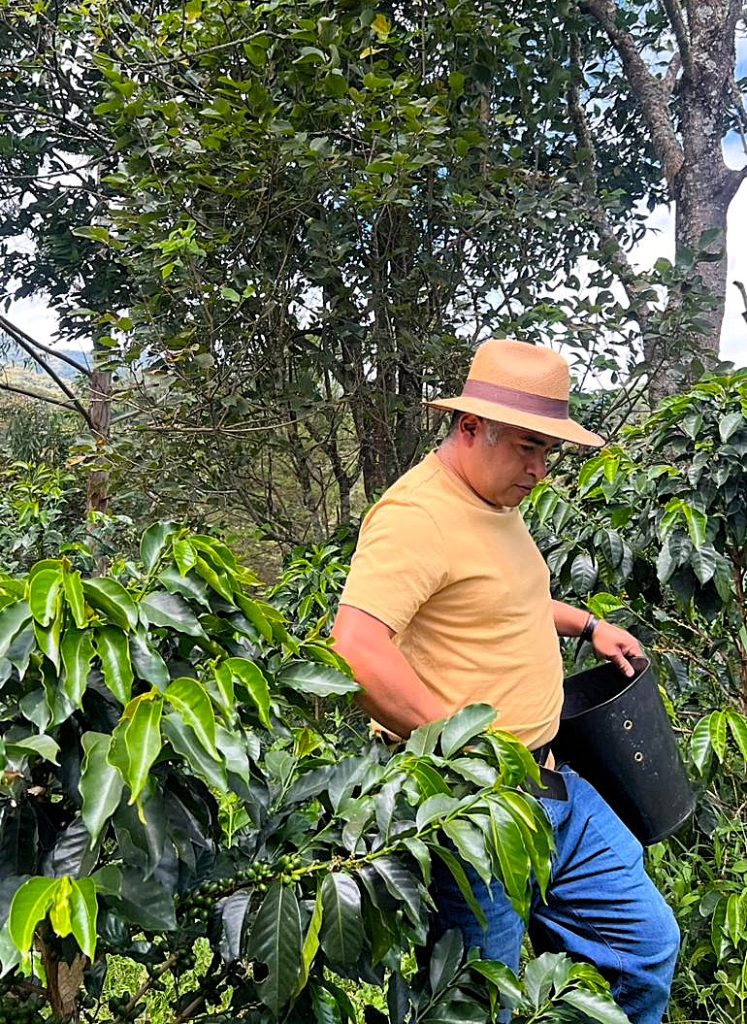
Chiroso cherry for this lot was picked by hand by Evelio’s annual pickers—personnel that stay with him from harvest to harvest and are well-calibrated with his high expectations. All pickings for this lot were depulped every harvest day in the evening, and left to ferment “dry” (without any water) for 50-60 hours. Such a long fermentation period is partly by design and partly by necessity, due to the cold alpine temperatures that greatly retard the process. Once fully broken down the mucilage was washed completely off the parchment with fresh water, and the parchment was moved to dry in two stages: first in a single layer for 36 hours until dry to the touch; then in a slightly higher pile in Evelio’s parabolic dryer, where the coffee is rotated regularly over the next 25-30 days.
Low, and slow: those of us present for earlier waves of microlot coffee when terroir, not processing, was the main differentiator, were taught over and over the positive potential of alpine climates on coffee quality. Slower cherry maturation, lower fermentation temperatures and longer drying times naturally occur in cold, challenging conditions, and naturally beget dense, bright, complex coffees. The study of these conditions over the past decade have led to some great alpine mimicry techniques in processing like thermal shock or cold storage, and in one producer’s case in Bolivia, transporting cherry to 3,000 meters to process it in the extremities of the altiplano. Farms like Evelio’s have become a kind of template of desirable processing environments which, although painstakingly slow (this microlot took 33 days on the farm to finish), are capable of the kind of washed coffees that we have marveled at for decades.
Green
Green Analysis by Isabella Vitaliano
Chiroso is often grown in Quindío, Colombia. This elongated bean is commonly mistaken as related to Caturra, but through genetic testing researchers have found it is not related to the Bourbon-Typica group, but likely an Ethiopian landrace-related cultivar. Known as an Ethiopian landrace, it has the distinguished very high density at 745 g/L on the Sinar. Moisture content and water activity are both little bit above average but in normal ranges.
Diedrich
Diedrich IR5 Analysis by Doris Garrido
Lately, when I started paying attention to coffee genetics, specifically as related to roasting, a whole window opened for me. I’m not sure why I hadn’t focused on it before, but that’s how I discovered that Chiroso is actually an Ethiopian Landrace.
So, I learned that Chiroso’s lineage traces back to the Berbere region of Oromia, Ethiopia, and somehow made its way to the Urrao Valley in Antioquia, Colombia. For a roaster, that is an amazing piece of information to have. After checking its green metrics, I pictured their ancestors’ coffee trees and decided to roast them with that heritage in mind.
I know Chiroso can produce distinctive bright lemony notes, but I realize now that those notes have turned sour on some of my roasts in the past. For this one, my plan was to treat it like an Ethiopian: short drying phase, plenty of airflow during Maillard, and lower temperatures during development. To start, I preheated the roaster to 450F. I ran a couple of cycles to stabilize the thermal mass using 50% airflow. Once stable, I charged the beans and immediately cranked the gas to 70%. I hesitated to go to 100%, but I went for it right as I hit the turning point, as I noticed my drop was a bit low. Maillard started when I dropped the gas by 30%. Then Color change began seconds later.
At that point I increased the airflow as I was looking to clean up all smog as much as possible since I was getting close to caramelization. A minute before first crack I switched the airflow to 50% and dropped the burners. I needed to drop the rate of change without crashing it, so kept the air low but steady, avoiding temperatures spike at all costs. The coffee cracked and got development for 1:30 minutes with a final temperature of 391F.
I cupped right off the cooling tray and got hit with its pink lemonade acidity, grapefruit, and hints of spice. The next day, Chris and Isabella pulled notes of dried cherry aroma, toasted coconut, lemon curd, honey, pomegranate, plum, spiced apple, dark chocolate and even a maple bacon donut.
Overall, this was the most intentional Chiroso roast I have ever done. In previous years, I noticed a harsh finish and an overly “zesty” mouthfeel. This time, I achieved a much cleaner cup that truly showcases the coffee’s bright fruitiness
Aillio
Aillio Bullet R1 IBTS Analysis by Evan Gilman
We use the RoasTime app and roast.world site to document our roasts on the Bullet. You can find our roast documentation below by searching on roast.world, or by clicking on the link below. Take a look at our roast profiles below, as they are constantly changing!
Akin to Doris, I knew that this coffee would have ample brightness and plenty of textural nuance. This is not only because of its reputation, but also because of the prior cuppings we did with this coffee included. While I’m no Chiroso connoisseur (say that three times fast), I’m fairly certain this is one of the best I’ve tasted.
I started off similarly to the Java, with a 464F charge temperature, a lower power of P6, and F2 fan. Since I knew this coffee had plenty of acid, I didn’t feel the need to emphasize that characteristic, focusing on the textural and sugary components instead and expecting the acidity to come along for the ride. At turning point, I increased power to P8, then increased fan to F3 once I hit what I determined to be peak rate of change (34F/min). I marked the transition into Yellowing/Maillard, decreased power to P7, then increased fan to F4 shortly after in what was an earlier adjustment than usual. At first crack, which came a bit early, I lowered power further to P6, and halfway through post-crack development, I increased fan to F5 to abate smoke and slow the roast down further yet.
The result was 39% spent in both Green and Maillard, and 20% spent in post-crack development. The result was also a delicious cup. The texture here was like a phenomenal velvety chocolate mousse, and the aromatics weren’t far behind with a candy-like lemonheads zest. The acidity wasn’t a sharp lemon, but rather a navel orange or maraschino liqueur juiciness. When hot, I thought I tasted a snow pea-like sweetness, but this aromatic vanished quickly on cooling.
I would drink this coffee any day of the week, in any format. Espresso made with a light roast of this coffee is going to yield an amazingly aromatic shot that will cut through milk readily. A medium- to dark roast will imbue any cappuccino with a rich chocolatey flavor and tons of juicy aftertaste. Along with the Java, this is one of my favorite coffees in recent memory! Get some soon.
You can follow along with my roast here at roast.world: https://roast.world/egilman/roasts/VaCWXs-CxXo7glnXUTfXg
IKAWA
Ikawa Pro V3 Analysis by Isabella Vitaliano
Our current Ikawa practice compares two sample roast profiles, originally designed for different densities of green coffee. The two roasts differ slightly in total length, charge temperature, and time spent between color change in first crack. You can learn more about the profiles here.
The low-density roast had lots of persimmon, pineapple and deliciously sweet and romantic undertones. Subtle but really sweet, and with how high the density is, I was surprised at how good this was. The high-density roast was also good with deep plum, apricot – stone fruit heavy – with savory herbal notes. I recommend using the high-density roast but if you find that you happen to go off course during a production roast, no sweat, it will taste delicious.
You can roast your own by linking to our profiles in the Ikawa Pro app here:
- Roast 1: Low Density Sample Roast
- Roast 2: High Density Sample Roast
Brew
Brew Analysis by Katie Briggs
I started brewing with a 19-gram dose, at a grind of 10 on a V60 cone brewer. I did an initial pulse of 50 grams of water and let it bloom for 40 seconds. I then did a second pulse of water up to 200 grams, and then to 300 for the final pulse. I really liked this brew from the first attempt. It was savory and very reminiscent of a Kenyan coffee. We got notes of sweet cherry tomatoes, sage, orange peel and graham cracker, and the body was very buttery. I did feel it was a bit heavy, so for the next brew I wanted it to be a little softer.
I did the same brew as above but changed the grind to an 11 to hopefully make it a bit softer. This worked well! I liked this brew a lot more. It had a lot more sweetness. We got notes of caramel, peaches, sweet cherry tomatoes, still with that nice buttery texture.
The last brew was very tasty, but still felt a tad heavy, so I did one last brew with the same specs but on the Kalita wave flatbed brewer to try and take out a bit of that heaviness. This brew was great! All the sweetness from the last brew, with a lighter body. We got notes of apricot, concord grapes, caramel, and Sungold tomatoes.
All in all, this is a super tasty Colombian coffee that tastes like a Kenyan. Every brew was tasty in its own way, but I would recommend a coarser grind and a flatbed brewer as this coffee seems to be quite soluble and can get heavy. Enjoy playing around with it, but I’m sure you will enjoy every cup!
Espresso
Espresso Analysis by Joshua Wismans
The genetics say Ethiopia, but the palate screams its southern neighbor, Kenya. This washed Chiroso from Evelio Bolaños boasts an incredible amount of juicy flavor, giving you lots of options for how you’d like to profile this espresso.
Our first recommended profile highlights juicy acidity, delicate herbal notes, and that unctuous savoriness that we love from Kenyan coffees. We used a 17g dose with a 42g yield, really stretching this coffee out and letting all the fruit notes breathe. The brew time was moderately 25 seconds. We got notes of blackberries, lemon verbena, raisins, and Sungold tomatoes.
Our second recommended profile leans into the depth and sweetness of this coffee, serving up a wallop to the palate. While our first profile is delicate, this profile is loud and in your face. We used a 19.5g dose with a 36g yield. The brew time was slightly longer at 30 seconds. You’ll find notes of blood orange, toffee, raspberry, and tamarind.
Like most truly delicious coffees, it’s hard to pull a bad shot, but for a few sure-fire profiles, go with a low dose and high yield at moderate brew time, or with a high dose and low yield with a slower brew time.
Related Coffee
White Tea, basil, biscoff cookie, cacao, candied fruits
Oakland 12 Boxes
Crown Jewel Bolivia Organic Washed Yulissa Chambi
39122-1 – SPOT RCWHSE
White Tea, basil, biscoff cookie, cacao, candied fruits
Spot
12 Boxes
$220.94 per box

Black Tea, caramel, lemongrass, passion Fruit, apricot
Oakland 14 Boxes
Crown Jewel Burundi Honey Peaberry Heza Washing Station
38863-1 – SPOT RCWHSE
Black Tea, caramel, lemongrass, passion Fruit, apricot
Spot
14 Boxes
$255.49 per box
Banana Bread, plum, rosemary, cocoa Nib, and toffee
Oakland 42 Boxes
Crown Jewel Yemen Anaerobic Natural Sharqi Haraz Cooperative
39818-1 – SPOT RCWHSE
Banana Bread, plum, rosemary, cocoa Nib, and toffee
Spot
42 Boxes
$710.39 per box
Orange blossom, red wine, baker's chocolate, and black tea
Oakland 23 Boxes
Crown Jewel Yemen Washed Sharqi Haraz Cooperative
39817-1 – SPOT RCWHSE
Orange blossom, red wine, baker's chocolate, and black tea
Spot
23 Boxes
$580.58 per box