
Ethiopia Gedeb 1 Natural Lalesa
39082 – 30.0 kg GrainPro Bags – SPOT SHANGHAI


Grower
Smallholder farmers organized around EDN Ethiopian Coffee

Altitude
1900 – 2200 masl

Variety
74110 and 74112 local landraces

Soil
Vertisol

Region
Banko Lalesa municipality, Gedeb District, Gedeo Zone, Ethiopia

Process
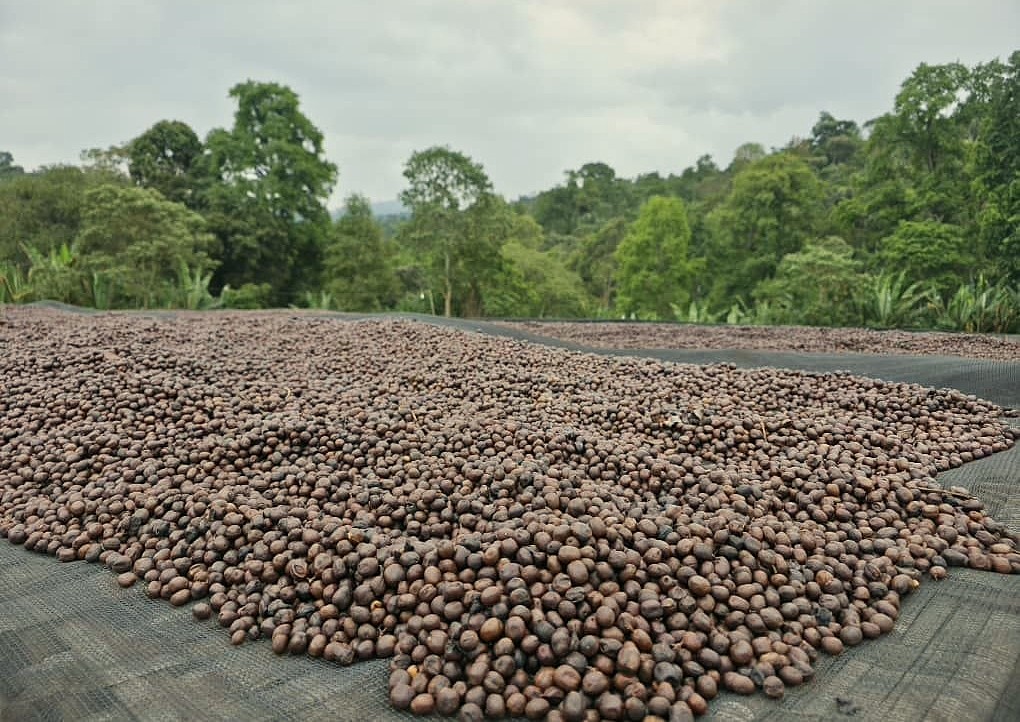
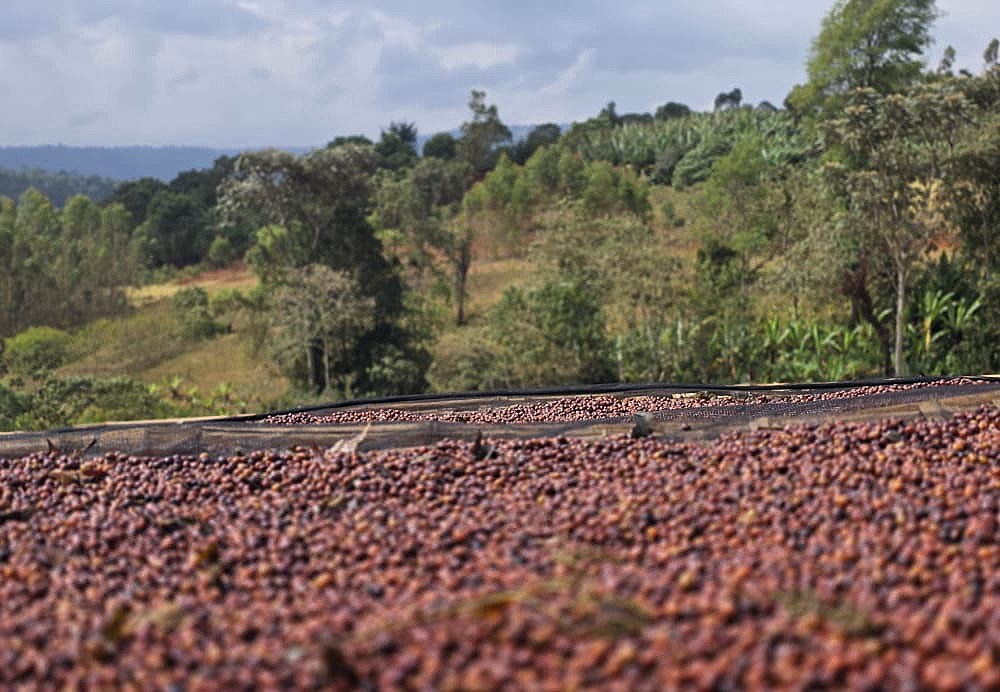
Full natural and dried on raised beds

Harvest
October – December

Certification
Conventional
This is a smallholder-grown, centrally processed natural from Ethiopia’s Gedeb district. This corner of Yirgacheffe (officially the Gedeo Zone) is well-known for being dense with processors and having a uniquely heady, perfume-like terroir that sets it apart from the rest of Yirgacheffe. Lalesa, where the processing site is located, is part of the greater Gedeb district, known for its gifted processing climate and exquisite coffees, both washed and naturals.
Gedeb and Its Coffee
The district of Gedeb takes up the south-eastern corner of Ethiopia’s Gedeo Zone—a narrow section of plateau dense with savvy farmers whose coffee is known as “Yirgacheffe”, after the zone’s most famous district. Gedeb, however, is a terroir, history, and community all its own that merits unique designation in our eyes. Coffees from this community, much closer to Guji Zone than the rest of Yirgacheffe, are often the most explosive cup profiles we see from anywhere in Ethiopia. Naturals tend to have perfume-like volatiles, and fully washed lots are often sparklingly clean and fruit candy-like in structure.
Gedeb is a remote but impressively industrious area for coffee production. Half of its territory is planted with coffee. Until recently coffee exports were allowed only limited channels and most of the coffee grown in this area was sold by the Yirgacheffe Coffee Farmers Cooperative Union (YCFCU), consolidated under the wide-reaching Worka Cooperative, or sold anonymously through the Ethiopia Commodity Exchange (ECX). Today, however, there are increasing numbers of single farm owners and independent companies who are processing and exporting direct.
The city of Gedeb itself is a is a bustling outpost that links commerce between the Guji and Gedeo Zones, with an expansive network of processing stations who buy cherry from across zone borders. These processors (and we would agree) would argue their coffee profiles are not exactly Yirgacheffe, but something of their own. The communities surrounding Gedeb reach some of the highest growing elevations for coffee in the world and are a truly enchanting part of the long drive into Guji. Banko Gotiti is a large agricultural area East of Gedeb and includes union cooperative members that are cooperative-affiliated, as well as independent washing stations of various types, many of which, like this one, are simply named after the municipality in which they’re located.
EDN Ethiopian Coffee & Processing
EDN Ethiopian Coffee is an independent processor and exporter of coffee with processing sites in Guji, Gedeb, and Sidama. The Banko Lalesa site services the coffee produced by 350-400 hundred outgrowers, each with an average of 1-2 hectares of diversified farmland. While not certified organic, farming methods among smallholders here have traditionally favored organic and regenerative practices, and all produce subsistence crops for the families who live on site.
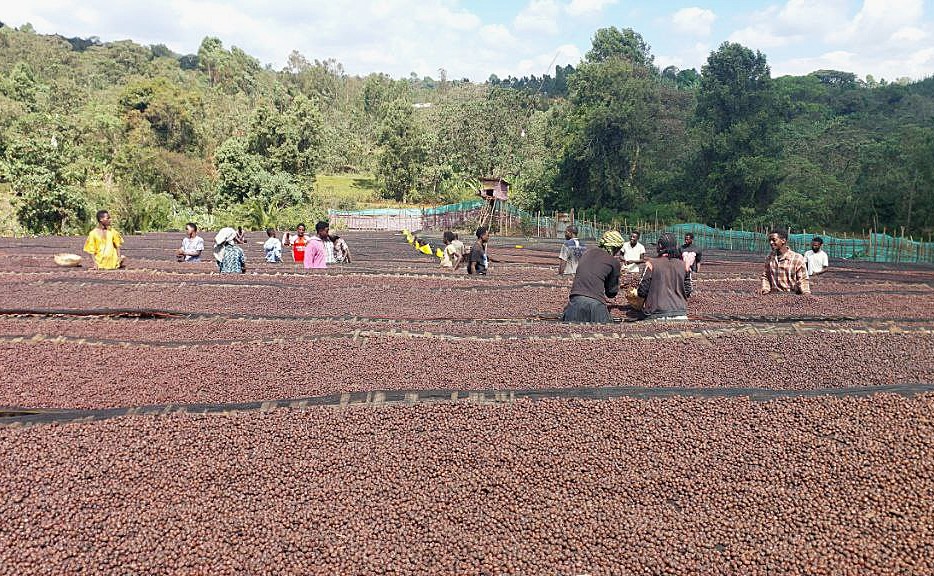
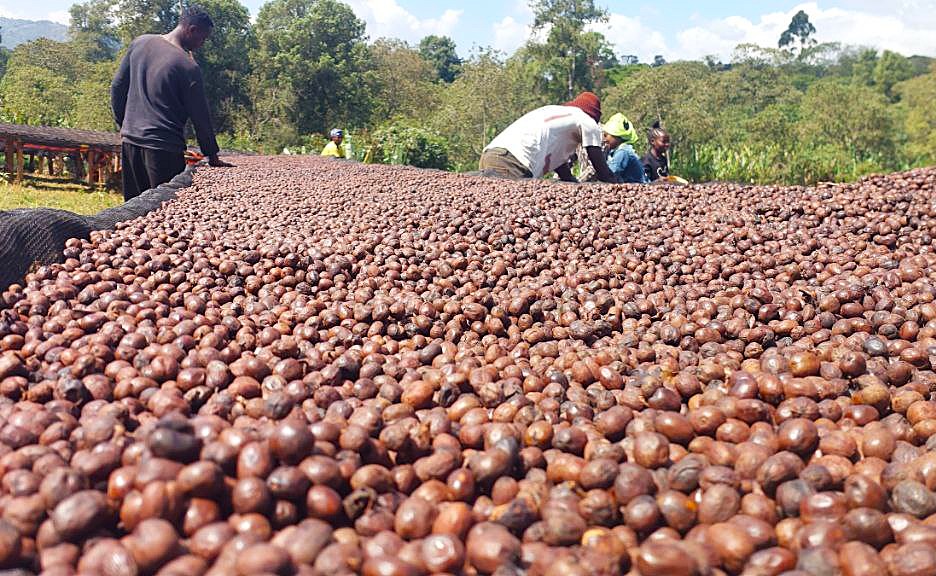
Banko Lalesa employs over 150 individuals during harvest time to manage all processing and financial operations. During harvest, cherry is received every day. Upon intake it’s inspected for ripeness and uniformity, washed clean of debris, and then moved immediately to one of the station’s special covered drying beds, located beneath a kind of greenhouse roof that blocks direct sun and slows the drying process significantly. Depending on the immediate climate, drying naturals this way typically takes 14-28 days, during which cherry is continuously rotated and monitored for any signs of uneven drying, defect, or damage. After the coffee is fully dried, it is transported to a local warehouse where it is rigorously assessed for quality and conditioned until it can be transported to Addis Ababa for final milling and export.