
Ethiopia Yirgacheffe 2 Natural Hirut
Lot 1 – 36717-1 – GrainPro Bags – SPOT COSEATAC
Bags 0
Warehouses Seattle
Flavor Profile Strawberry, chocolate, bright, sweet
Please Note This coffee landed more than 8 months ago.
Check out our Guide to Ethiopian Coffee Grades
Out of stock



Grower
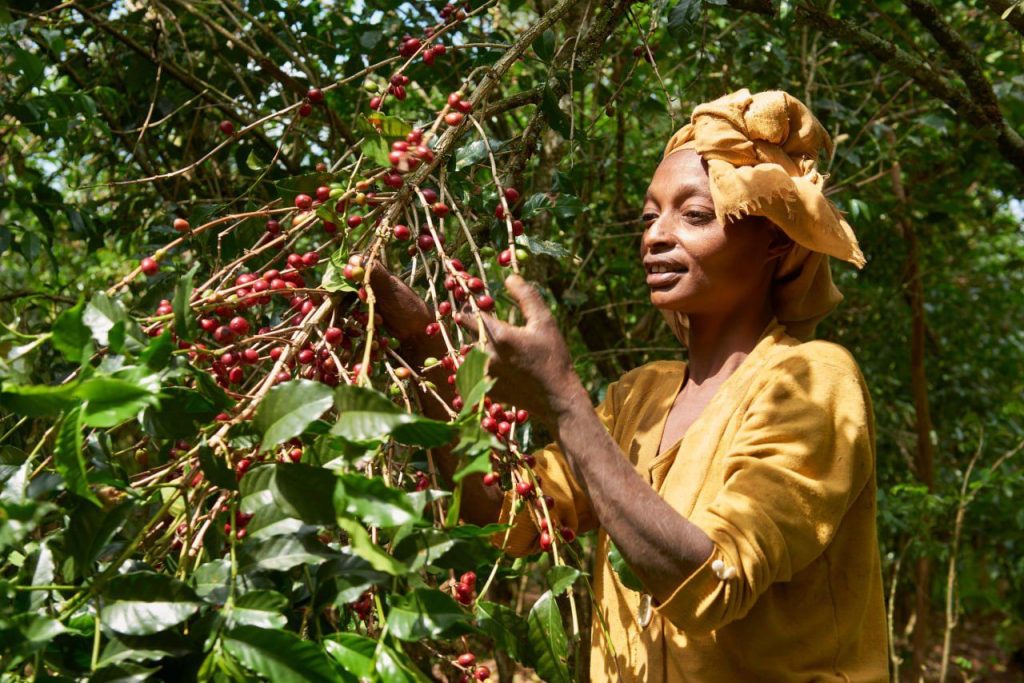
232 smallholder farmers organized around the Hirut Birhanu wet mill

Altitude
1900 - 2200 masl

Variety
Indigenous landraces and local heirloom cultivars

Soil
Vertisol

Region
Yirgacheffe district, Gedeo Zone, Southern Nations, Nationalities, and Peoples’ Region, Ethiopia

Process
Natural, sundried on raised beds

Harvest
October-January

Certification
Conventional
Dumerso works in the heart of Yirgacheffe—not just the Yirgacheffe zone (actually called Gedeo) but in the Yirga Chefe woreda, or district, after which the entire terroir gets its name.
This part of Ethiopia is fiercely competitive. The population of coffee growers is so dense that most have less than a single hectare of land. Processors are everywhere, and with the government's increasing permissiveness of independent exporters, over the last few years many new companies, started by farmers, former QC managers, and businesspeople with adequate funding, have fought to establish themselves here.
This is a very clean natural lot with many of the hallmark jammy flavors associated with the center of Yirgacheffe: blackberry, strawberry, stone fruit, lavender, and citrus zest.
Dumerso Industrial Trading PLC
Dumerso is a processing and export company owned by Hirut and Mahder Berhanu, sisters with years of experience in coffee processing and logistics. Including, for Hirut, 5 years with the Ethiopian Commodity Exchange (ECX), where she was a member and gained experience in Ethiopia’s grading and export marketplace.
Hirut originally acquired the processing station in 2010. The station had been an established processing site since 1998, but it had never been fully operational. Within 3 years of purchase Hirut had the station completely transformed, and 2013 was the first year it opened for business.
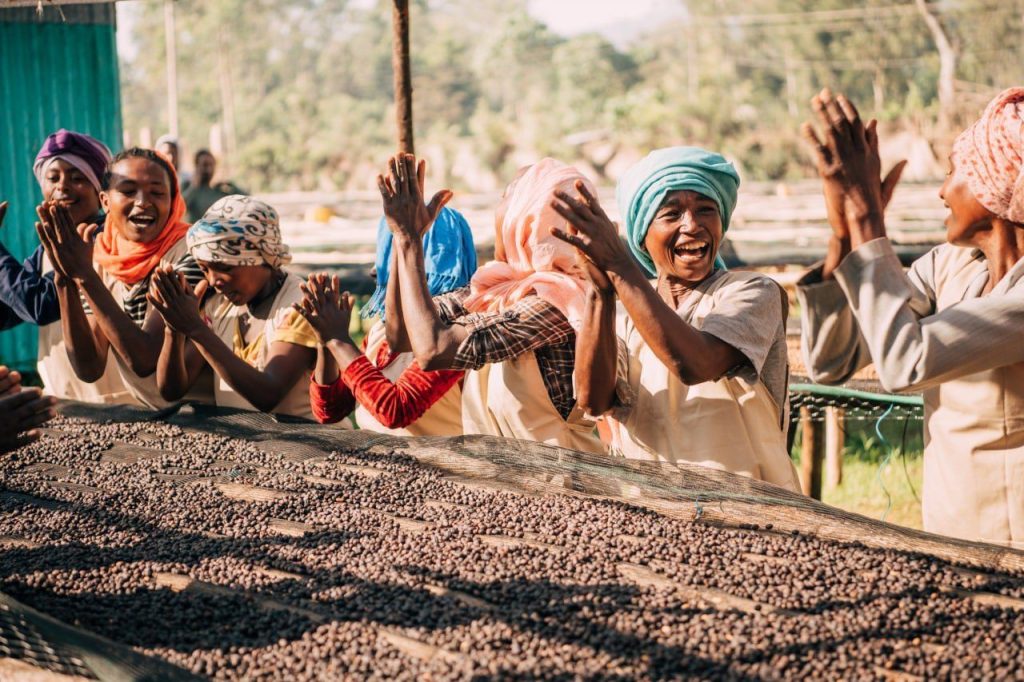
The station, now officially known as “Hirut Birhanu Processing Station”, often shortened to simply “Hirut”, now employs over 400 individuals during harvest season, 95% of whom are women. There is also a site manager and QC specialist, Abenet Alemu, who is responsible for maintaining the cup quality the Yirgacheffe area is famous for. Abenet was born and raised in Yirgacheffe, so his knowledge of local coffee systems and traditions is deep. As a result, in addition to his task of optimizing local quality through processing, he has a critical role to play in community relations on behalf of the station.
In 2014 Hirut and her sister, Mahder Berhanu, formulated Dumerso Industrial Trading PLC, a milling, roasting, and exporting business that could export all the coffee they were processing. Royal has been a longtime buyer.
Processing at Hirut
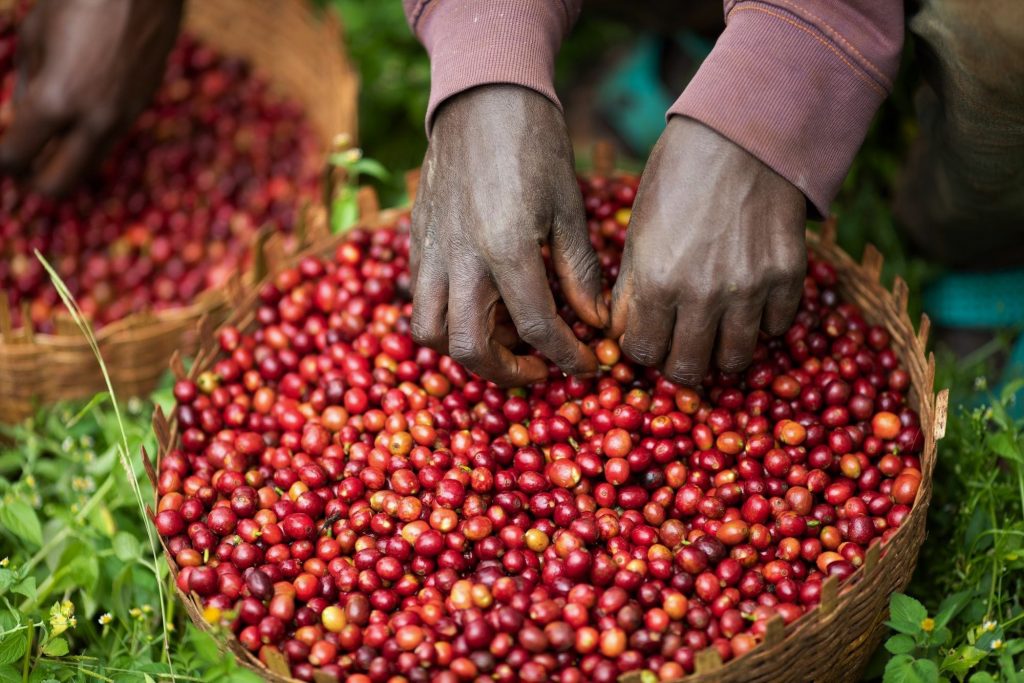
Natural processing at Hirut is very simple. Local growers deliver their fresh-picked cherry daily, typically in the late afternoon, and after the cherry is inspected and weighed upon intake, it is blended and moved directly to raised beds to dry in the direct sun. In this part of Ethiopia cherry needs to be rotated continuously by hand to maintain an even airflow, avoiding extreme heat or humidity buildup between them. They are also typically covered with shade nets and tarps during the most searing hours of midday sun to prevent damage, and at night to keep off the accumulating humidity. Drying typically takes 10-20 days.
Once coffee processing and exporting became a well-run operation, the team at Dumerso Industrial Trading PLC set their sights on farmer benefits. In the past few years they have achieved both organic and Rain Forest Alliance certification for the station, and they are currently undertaking a project to establish a local plant to convert coffee parchment into a kind of pressed firewood, as a way of boosting income for the station to distribute to growers and to help local farmers rely less on local forests for their daily source of fire. They have also financed the installation of local power equipment that supplies most of the electricity to local residents. Hirut and Mahder also provide financial loans and healthcare for permanent staff, and lodging and accommodations for all seasonal washing station workers.
Related Coffee

Apple, cherry, toffee, milk chocolate
Seattle 122 Bags
Honduras Siguatepeque Cerro Azul SHG EP
38657 – SPOT COSEATAC
Apple, cherry, toffee, milk chocolate
Spot
122 Bags
$4.51 per pound

Baked apple, caramel, brown sugar, dark chocolate
Seattle 108 Bags
Costa Rica La Palma SHB EP
39219 – SPOT COSEATAC
Baked apple, caramel, brown sugar, dark chocolate
Spot
108 Bags
$4.75 per pound
Green grape, bran muffin, baker's chocolate
Seattle 256 Bags
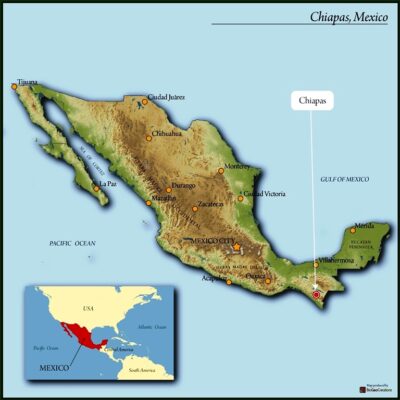
MEXICO ORGANIC CHIAPAS SHG EP
38437 – SPOT COSEATAC
Green grape, bran muffin, baker's chocolate
Spot
256 Bags
$4.94 per pound
Mandarin orange, peat, herbaceous, spiced, sweet
Seattle 79 Bags
SUMATRA ORGANIC TAKENGON ATU LINTANG IKA MANDHELING GRADE 1
39462 – SPOT COSEATAC
Mandarin orange, peat, herbaceous, spiced, sweet
Spot
79 Bags
$5.59 per pound