
Colombia Huila Yellow Bourbon Double Fermentation
36014-1 – 70.3 kg GrainPro Bags – SPOT COMIDWEST
Bags 0
Warehouses Midwest
Please Note This coffee landed more than 8 months ago.
Out of stock


Grower
15 small family farms organized around Terra Coffee SAS

Altitude
1600 – 1900 masl

Variety
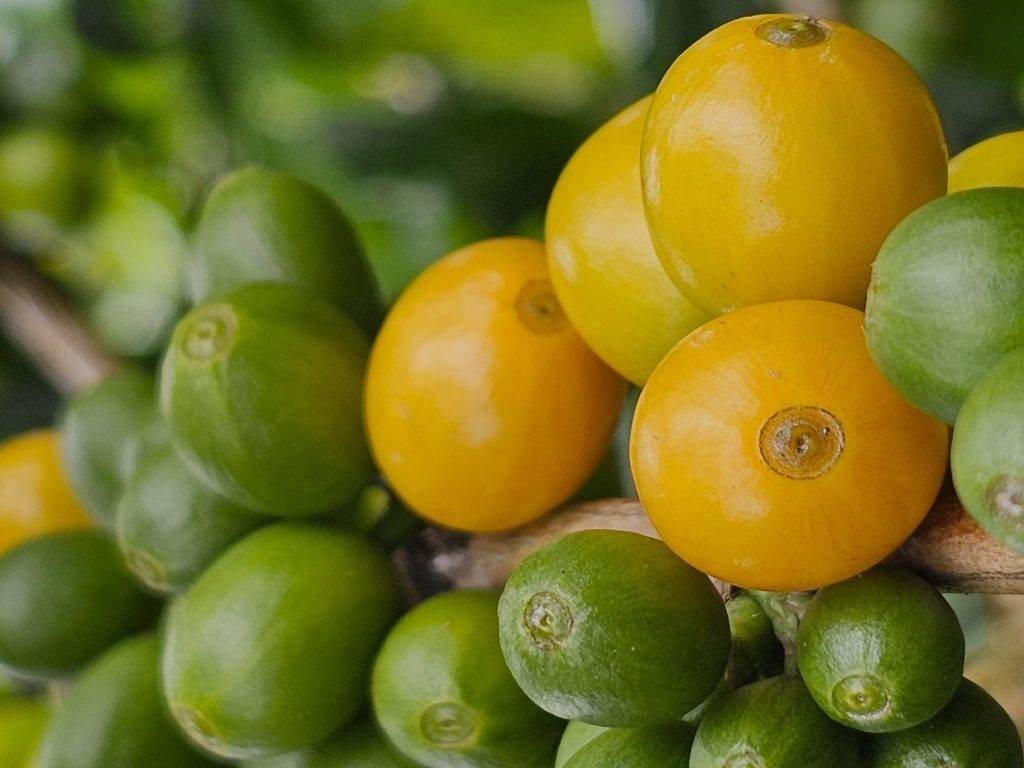
Yellow Bourbon

Soil
Volcanic loam

Region
Palestina, Saldoblanco, La Argentina municipalities, Huila Department, Colombia

Process
Whole cherry fermentation followed by fully washed fermentation and dried in the sun

Harvest
November - January | April - August

Certification
Conventional
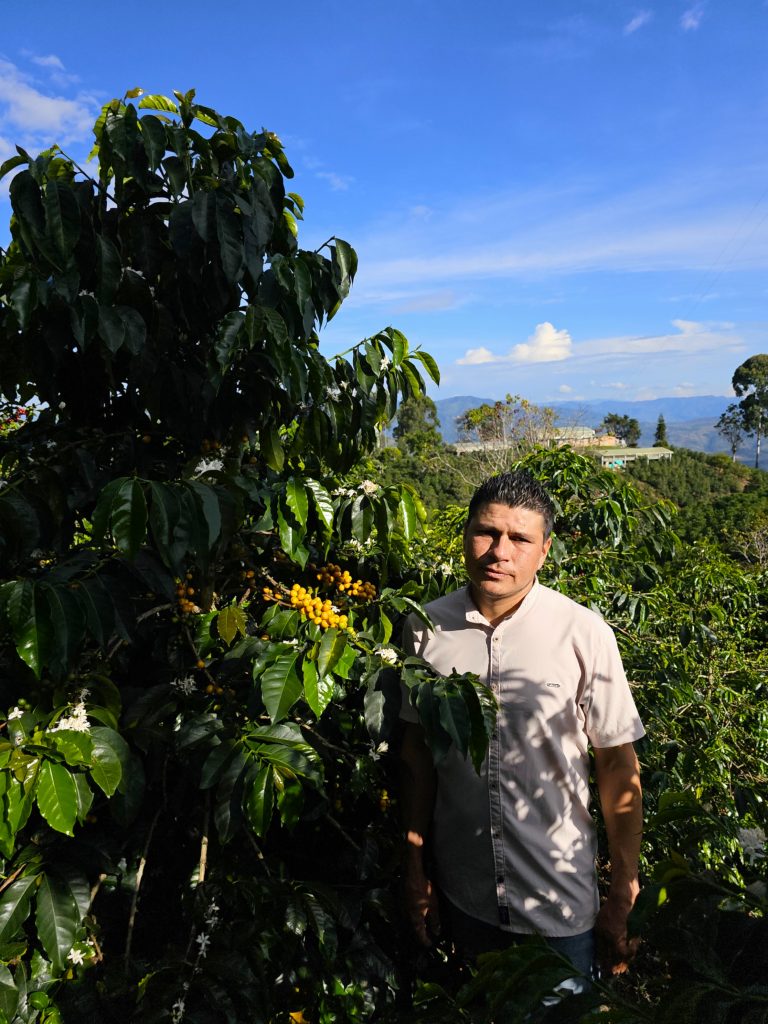
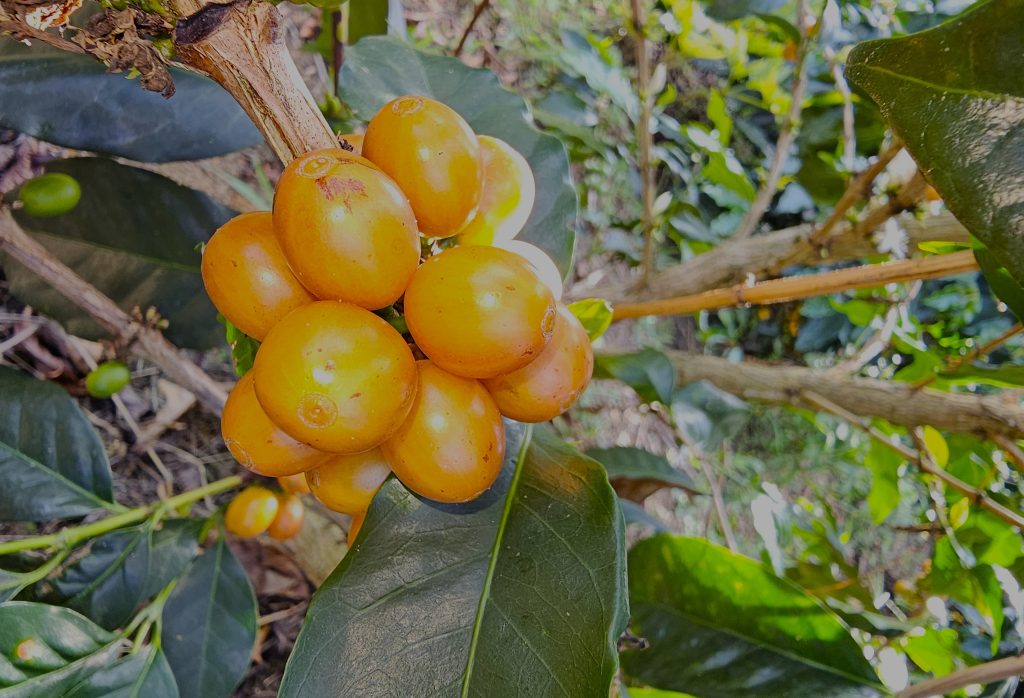
Yellow bourbon is increasingly rare just about anywhere, but especially so in Colombia. Prior to Colombia’s huge national effort to replace the country’s heirloom cultivars with more resistant, lab-derived hybrids, the country was more synonymous with caturra—a bourbon descendent—rather than the original bourbon, which was always more common in Central America and in parts of Peru. In Colombia, caturra’s replacement with castillo or “Colombia” hybrids was at the time quite controversial. Hybrids have by now become widely accepted, making past generations of bourbon-caturra genetics something of a nostalgia for older buyers.
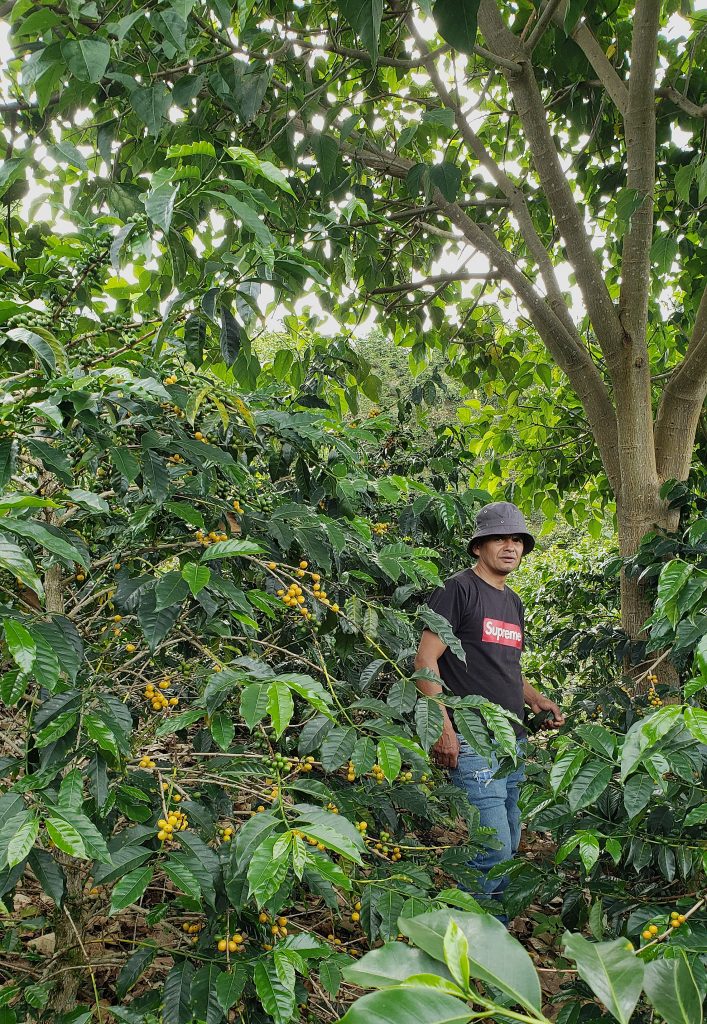
Once in a while we get a coffee like this, that some would say give us a glimpse into the “old” varieties that Colombia used to widely grow. Not exactly of course, but it’s a nice thought. This is a yellow bourbon lot compiled from 15 small family farms in southern Huila. It’s a small feat of micro-logistics to combine tiny day lots from this many growers—one of the things that make this coffee, and it’s producers, so fun to work with.
Southern Huila
Huila is arguably Colombia’s best-known department for top microlots. Huila’s geographical accessibility, dense population of knowledgeable farmers, warm and subtropical forests, high elevations, and microclimate diversity have for many years sustained one of specialty coffee’s most beloved regions. The fact that most of the department is harvesting coffee almost every month of the year, means that fresh coffee is always available.
Huila is a long and narrow valley that follows a winding gap between two large cordilleras of the Andes. Uphill from the valley’s lush and picturesque lower slopes (Colombia’s 950-mile long Magdalena river has its source in southern Huila and has shaped the agriculture here for centuries) are a diverse array of coffee producing communities, often dramatically steep, and each with their own unique climate and history.
Saldoblanco and Palestina are communities in the vicinity of Pitalito, located in the southern end of Huila’s central valley. La Argentina, the third community of contributing growers, is much further north and on the other side of the valley, closer to Huila’s border with Cauca. All areas, being Huila, are rugged and densely tropical landscapes. When many roasters think of Huila, they think of the communities in this region.
The Farms & Processing
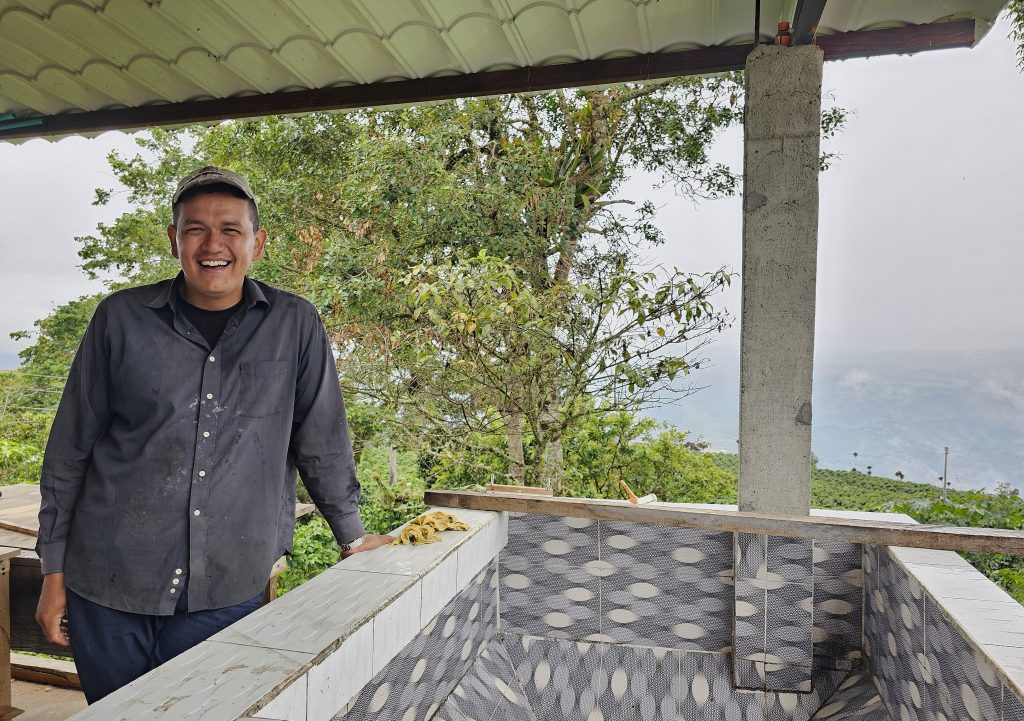
Terra Coffee SAS is a young producer group, established in 2016 by husband and wife Wbeimar and Juliana, of Finca La Terraza. Terra Coffee has a narrow focus on developing high quality coffees collaboratively with select producers in the Huila and Nariño departments, and sharing them with the world. The small company manages one single producer association in each department where they work: “Ecoterra” in Nariño, with 140 producer partners, and “Terra Verde” in Huila, with 120.
For Terra Coffee SAS as a whole, quality is seen as a direct pathway to well-being for volume-limited, small coffee farming families—quality has a direct impact on not just the farm owner, but the many dependents on each small farm, including young children, older adults, and the women of the household performing essential labor that often goes unpaid. By increasing quality and placing microlots in the market, Terra Coffee SAS aims to both increase prices to growers and their families and increase their sense of pride in the details of their work.
While there are slight variations on each farm that contributed their sidra to this lot, processing was very consistent. Each producer’s yellow bourbon coffee was hand-picked and fermented first in whole cherry for 18-40 hours depending on each grower’s immediate climate, a step that helps develop uniquely tart and expressive aromatic compounds and acidity in the final coffee. After the cherry fermentation, the coffee was depulped and fermented again in traditional open tanks, between 18 and 36 hours. Once the second fermentation was complete, the parchment was washed completely clean and moved to raised beds to dry, typically for 8-15 days.
Related Coffee

Red apple, cherry, peach, caramel, hibiscus flower
Midwest 15 Bags
Colombia Excelso EP
40264 – 69.9 kg Bags – SPOT COMIDWEST
Red apple, cherry, peach, caramel, hibiscus flower
Spot
15 Bags
$4.90 per pound
Lemon, cherry, caramel, spiced
Midwest 263 Bags
Colombia Excelso EP
40460 – 69.9 kg Bags – SPOT COMIDWEST
Lemon, cherry, caramel, spiced
Spot
263 Bags
$4.90 per pound
Citrus, honey, almond, cookie-sweet
Midwest 3 Bags
Brazil Natural NY2 SS FC 17/18
41008-3 – SPOT COMIDWEST
Citrus, honey, almond, cookie-sweet
Spot
3 Bags
$4.94 per pound

Barbecue sauce, nutty, beef, cocoa
Midwest 17 Bags
Decaf Brazil 14/16 Royal Select Water Process
39832-5 – 59.0 kg Bags – SPOT COMIDWEST
Barbecue sauce, nutty, beef, cocoa
Spot
17 Bags
$5.53 per pound