
Kenya Nyeri Ndiaini AA
18TY0007 – 28496-1 – GrainPro Bags – SPOT CCARGO
Bags 0
Warehouses Madison
Flavor Profile Lemon/lime, orange, green grape, herbal tea
Please Note This coffee landed more than 8 months ago.
Out of stock


Grower
315 smallholder farmers organized around the Ndiaini Factory

Altitude
1815 masl

Variety
SL28, Ruiru 11 and Batian

Soil
Volcanic loam

Region
Nyeri County, Kenya

Process
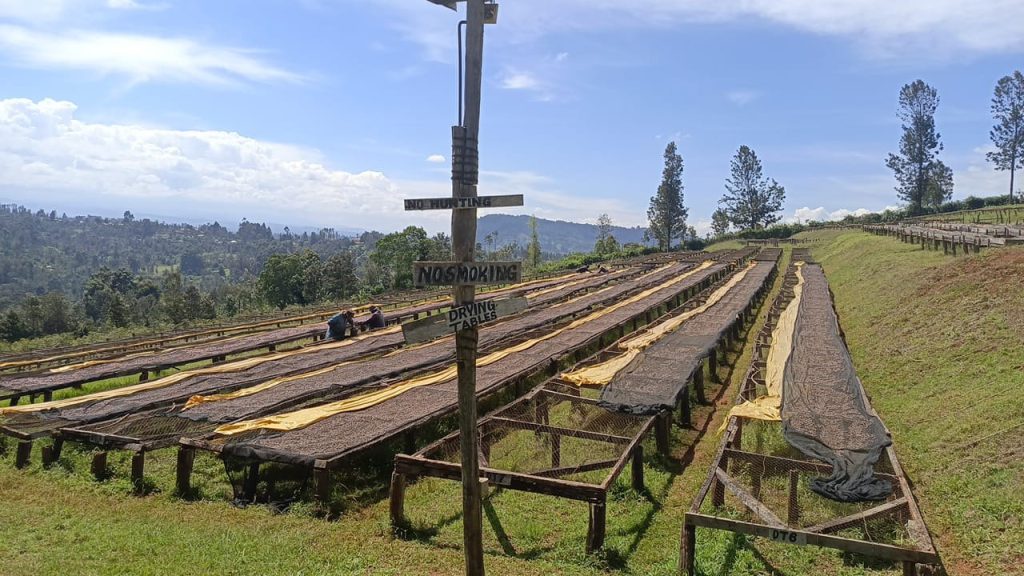
Fully washed and dried on raised beds

Harvest
October – January

Certification
Conventional
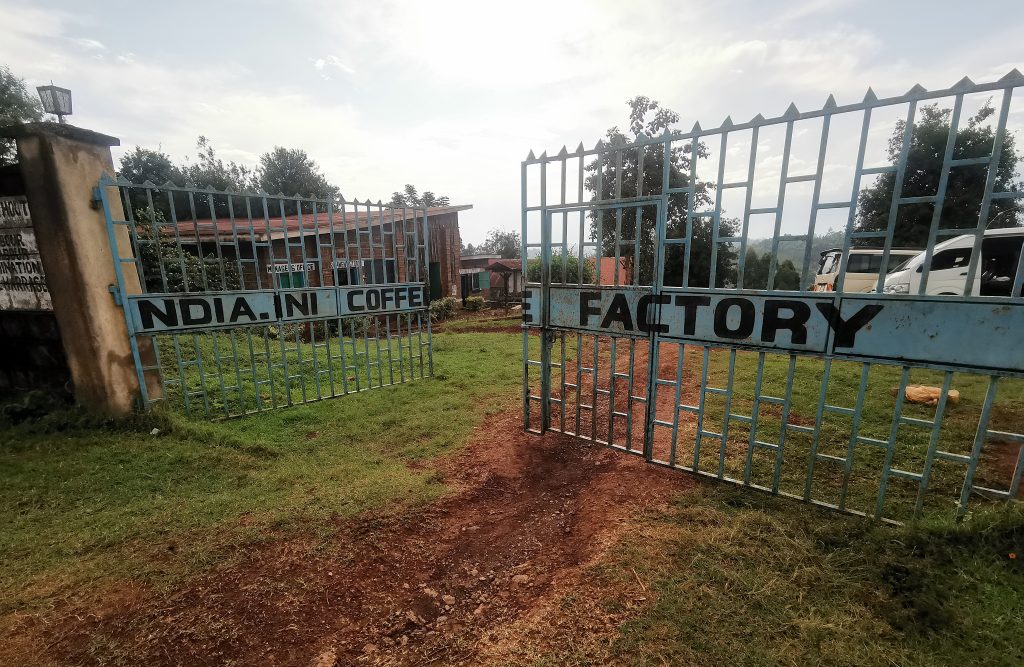
This is a citrusy, sugary and peachy outturn from the Ndiaini factory, a longstanding processing site in Nyeri that was first established in the 1970s. These days Ndiaini is part of Rumukia Farmer Cooperative Society (FCS), a small but well-known producer organization in Nyeri County.
Central Kenya & Nyeri County
Mt. Kenya, at the helm of Kenya’s Central Province, is the second tallest peak on the continent of Africa and a commanding natural presence. The mountain itself is a single point inside a vast and surreal thicket of ascending national forest and active game protection communities. The central counties of Kenya extend from the center of the national park, like five irregular pie slices, with their points meeting at the peak of the mountain. It is along the lower edge of the forests where, in wet, high elevation communities with mineral-rich soil (Mt. Kenya is a stratovolcano) many believe the best coffees in Kenya, often the world, are crafted. Nyeri is perhaps the most well-known of these central counties.
Rumukia FCS and Processing Style
Kenya’s coffee is dominated by a cooperative system of production, whose members vote on representation, marketing and milling contracts for their coffee, as well as profit allocation. Rumukia Farmers Cooperative Society (FCS) is an umbrella organization that represents 8 total factories (centralized wet mills), including a ones that Royal has bought before: Thunguri, Maganjo, Kiawamururu, and Gatura. The cooperative society is headquartered outside the town of Karatina, close to the border with Kirinyaga county.
Of Ndiaini’s 315 contributing farmer members, 96 are women. Farmers average 0.5-1 acre of farmland each, most of whom grow subsistence crops in addition to coffee itself. Regardless of farm diversity, coffee of course remains the central source of income.
Kenya is of course known for some of the most meticulous at-scale processing that can be found anywhere in the world. Bright white parchment, nearly perfectly sorted by density and bulk conditioned at high elevations is the norm, and a matter of pride, even for generations of Kenyan processing managers who prefer drinking Kenya’s tea (abundantly farmed in nearby Muranga county) to its coffee. Ample water supply in the central growing regions has historically allowed factories to wash, and wash, and soak, and wash their coffees again entirely with fresh, cold river water.
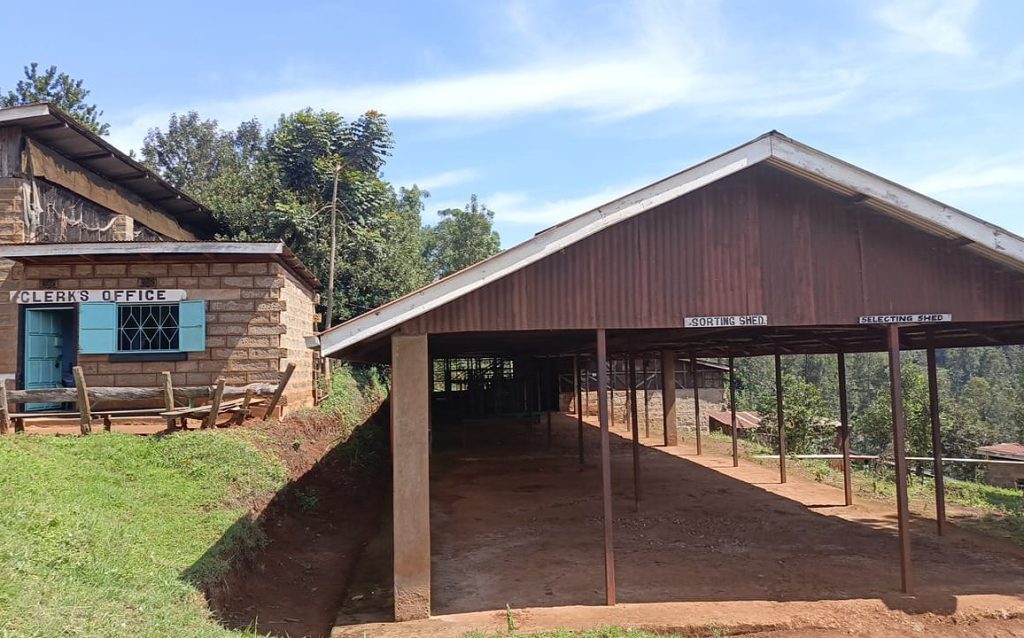
At the factory, Ndiaini collects cherry from members daily throughout the harvest months. The cherry is sorted on arrival for ripeness and consistency and then blended together for processing: coffee is depulped and fermented overnight, washed in fresh water and moved to raised screen tables to dry, a process that takes 2-3 weeks depending on local climate and ambient temperatures.
After drying is complete the coffee is conditioned in large perforated bins on site to allow moisture to stabilize, preparing the coffees for transit and a long shelf life. The established milling and sorting by grade, or bean size, is a longstanding tradition and positions Kenya coffees well for roasters, by tightly controlling the physical preparation and creating a diversity of profiles from a single processing batch.
Kenya's Outturn System
“16TY00018” in the title refers to this coffee’s “outturn” number. Outturn numbers are unique microlot codes that are given to each and every batch of parchment delivered to dry mills from individual factories or estates anywhere in Kenya, and are the units on which Kenya’s entire microlot export system is built. Outturns in Kenya are tracked with a shorthand code that places the specific batch of parchment coffee in time, place, and sequentially with other coffees. Outturns are stylized as an 8 or 9-character code, including a 2-digit “coffee week” number, a 2-letter mill code, and a 3 or 4-digit intake number for the coffee’s delivery. So, this particular lot was delivered in harvest week 16, to the Rumukia Farmers Cooperative Society (FCS) (code “TY”) and was the 18th delivery that week.