
ETHIOPIA YIRGACHEFFE 2 WASHED FT-FLO/USA ORGANIC HARU
LOT 04 – 31711 – GrainPro Bags – SPOT SEAFORTH
Bags 0
Warehouses Vancouver
Please Note This coffee landed more than 8 months ago.
Check out our Guide to Ethiopian Coffee Grades
Out of stock


Grower
Smallholder farmers organized around the Haru Coffee Farmers Multi-Purpose Primary Cooperative

Altitude
1800-2300 masl

Variety
Indigenous landraces and regional heirloom cultivars

Soil
Vertisol

Region
Haru community, Yirga Chefe woreda, Gedeo Zone, Southern Nations, Nationalities and Peoples’ Region, Ethiopia

Process
Washed

Harvest
November - December

Certification
Fair Trade (FT FLO/USA) | Organic
First established in 1979, the Haru cooperative is one of Yirgacheffe’s original washing stations. Haru, and a handful of other processing sites, were literally the first wet mills in Ethiopia and gave buyers worldwide a taste of Ethiopia’s first fully washed coffees. This group of processors helped establish a reputation, not only for Yirgacheffe but the entire Gedeo zone, as the source of the best and cleanest quality coffee that could be found anywhere in the country.
Yirgacheffe and its Coffee
Ethiopia’s Gedeo zone is a narrow section of the country’s southern highland plateau. It is dense with savvy farmers and fiercely competitive processors whose coffee is known the world over as “Yirgacheffe”, after the Yirga Chefe district, where the area’s coffee first gained its repuation for quality. The Gedeo region is named after the Gedeo people who are indigenous to this area. As a coffee terroir, the entire zone, and especially Yirgacheffe itself, has for decades been considered a benchmark for beauty and complexity in arabica coffee—known for being beguilingly ornate and jasmine-like when fully washed, and seductively punchy and sweet when sundried--and hardly requires an introduction.
Coffee farms here reach some of the highest elevations for arabica coffee anywhere in the world (Haru itself is located at 2140 meters in elevation). Despite the high elevations and corresponding climate, there are coffee growers aplenty: Gedeo zone is one of Ethiopia’s most densely populated areas after its capital city, Addis Ababa. Coffee farms are small and forested, with production often divided between spacious, lofty coffee trees, other fruits, root vegetables or legumes, and enset, a fruitless cousin of the banana plant whose pulp is packed into cakes, fermented underground, and then toasted as a staple starch. This common pair of crops satisfies unique and separate needs: coffee for economic livelihood; and enset for nutrition.
Haru Cooperative and Processing
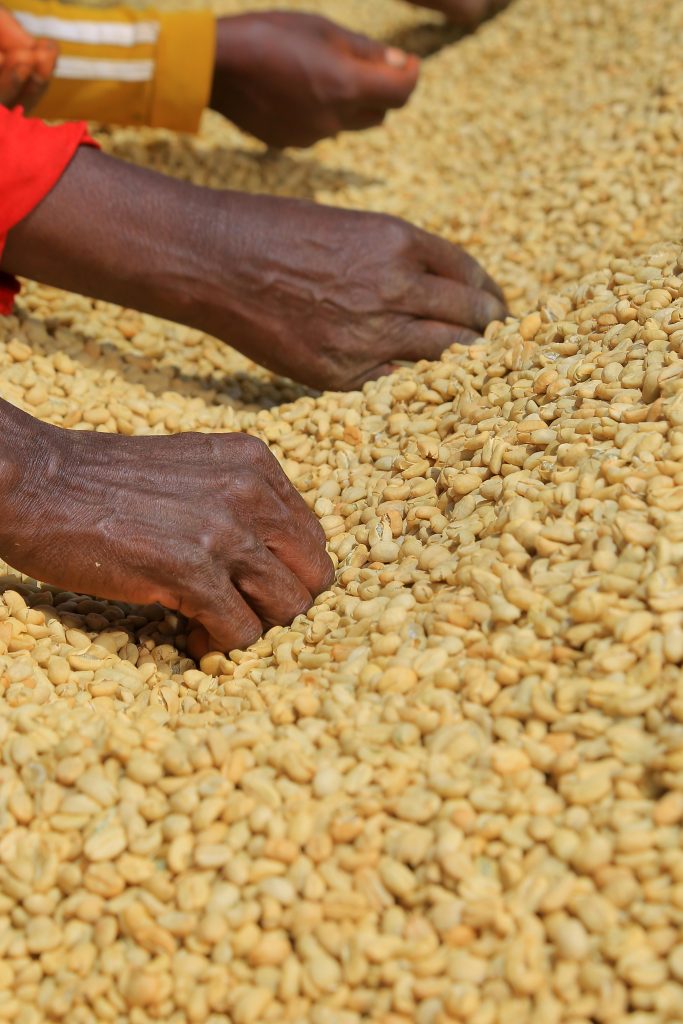
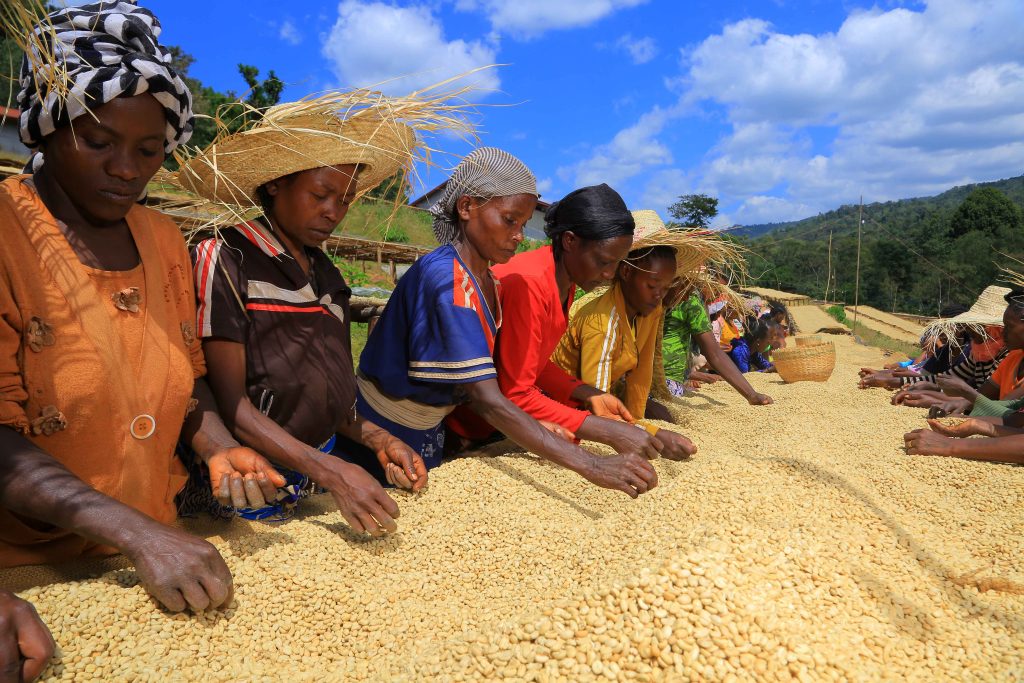
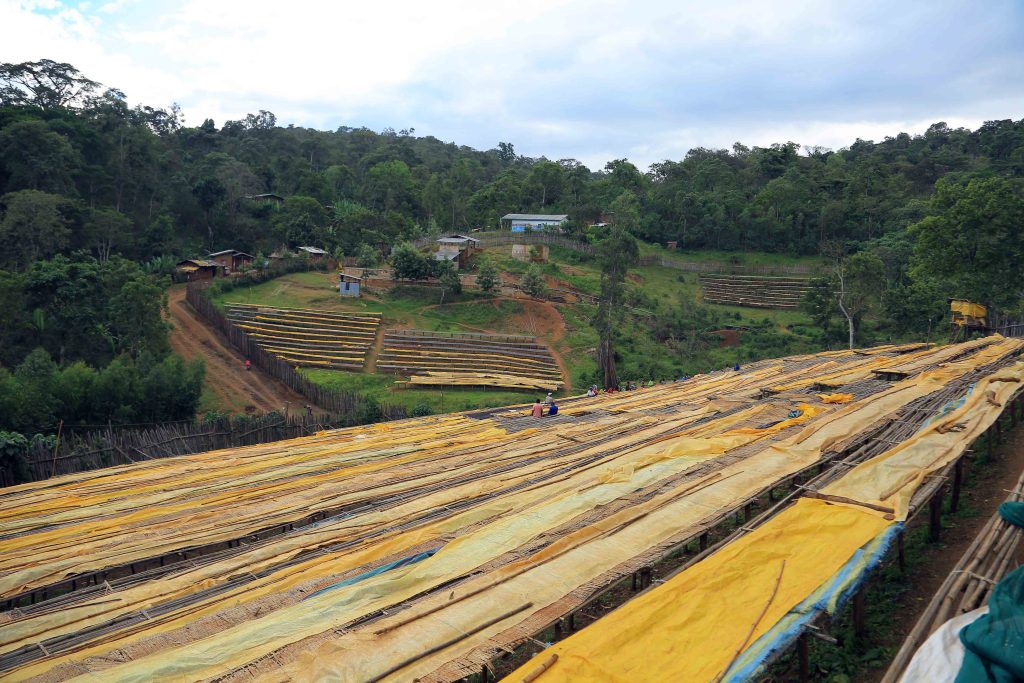
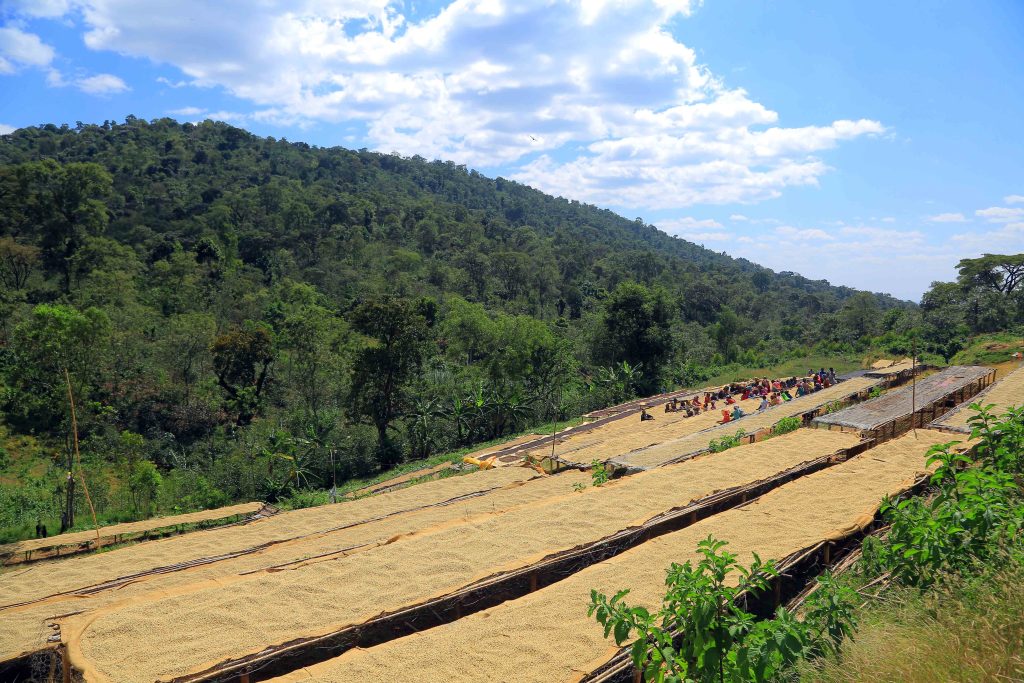
Haru cooperative began with only 50 farmer members; today there are over 1,150 farmers spanning 1200 hectares of coffee production—about 1 hectare apiece on average. Washed coffee is produced very straightforwardly at the coop. Cherry is picked daily during harvest and delivered to the coop by individual farmers. All cherry is sorted on arrival for imperfections and uniform ripeness. Coffee is depulped and fermented overnight in open tanks, and then washed clean and soaked in fresh water before being transferred to the raised drying tables. The parchment coffee dries in the sun for an average of 2 weeks, after which it is brought into the local warehouse for storage, prior to being transported to Addis Ababa for final dry milling and export.
The Yirgacheffe Union
Haru is one of the primary cooperatives in the Yirgacheffe Coffee Farmers Cooperative Union (YCFCU). The Union, first established in 2002, has more than 45,000 individual farmer members and 28 different cooperatives across Gedeo Zone, almost all of which are Fair Trade certified. The members of each primary cooperative elect their own executive committee which makes decisions about investments like new equipment and tree maintenance, but also creates plans for member social services, school support, public health, infrastructure, and how to structure payments to the coop members. YCFCU also appoints professional managers for each primary cooperative to oversee harvest and processing procedures, who are accountable to the members and the executive committee.
Related Coffee

Cola, Floral, Lime, Satsuma
Vancouver 10 Bags
RWANDA FT-FLO ORGANIC DUKUNDE KAWA MBILIMA WOMENS COFFEE
37776-1 – GrainPro Bags – SPOT SEAFORTH
Cola, Floral, Lime, Satsuma
Spot
10 Bags
$6.25 per pound
Lime, orange, cola, chocolate
Vancouver 18 Bags
RWANDA FT-FLO ORGANIC DUKUNDE KAWA MBILIMA
37051-1 – GrainPro Bags – SPOT SEAFORTH
Lime, orange, cola, chocolate
Spot
18 Bags
$6.20 per pound

Mild fruit, nuts
Vancouver 234 Bags
ETHIOPIA GUJI 4 NATURAL ORGANIC
37971 – GrainPro Bags – SPOT SEAFORTH
Mild fruit, nuts
Spot
234 Bags
$5.05 per pound
Cherry, raisin, chocolate, candy-sweet, juicy
Vancouver 8 Bags
Kenya Oaklands Natural
46KF0082 – 38759 – GrainPro Bags – SPOT SEAFORTH
Cherry, raisin, chocolate, candy-sweet, juicy
Spot
8 Bags
$6.85 per pound