
SUMATRA FT-FLO/USA ORGANIC BENER MERIAH BUANA MANDIRI MANDHELING GRADE 1
31666 – SPOT CCARGO
Bags 0
Warehouses Madison
Flavor Profile Lemon verbena, peat, leather, full-bodied
Please Note This coffee landed more than 8 months ago.
Out of stock




Grower
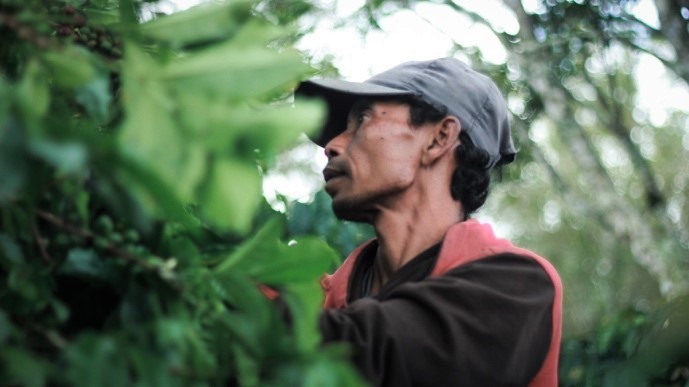
Smallholder farmers organized around Koperasi Buana Mandiri

Altitude
1330 - 1400 masl

Variety
Tim-tim, Catimor

Soil
Volcanic loam

Region
Bener Meriah Regency, Aceh Province, Sumatra, Indonesia

Process
Wet-hulled

Harvest
June - July

Certification
Fair Trade (FT FLO/USA) | Organic
This is a classic wet-hulled coffee from the Aceh province. It's earthy, complex, and has a cedar-like briskness, along with baker's chocolate and sweet tobacco. Royal has been purchasing coffee from CV. Gayo Mandiri for over 10 years.
Sumatra's Aceh Province
Aceh (pronounced AH-CHEY) is the northernmost province of Sumatra. Its highland territory, surrounding Lake Tawar and the central city of Takengon, is considered to be the epicenter of one of the world’s most unique coffee terroirs.
Coffee farms in this area are managed with the experience of many generations of cultivation, while also harmoniously woven into their surrounding tropical forests. The canopies are loud and fields are almost impenetrably thick with coffee plants, fruit trees, and vegetables, all of which are constantly flushing with new growth. Year-round mists and rain showers never cease, farm floors are spongy and deep with layered biomass, and almost every square meter of the region seems to exude life. Nothing is ever still. Including coffee ripening, which occurs ten months out of the year.
CV Gayo Mandiri
Gayo Mandiri is a family-operated exporter based in Bener Meriah, a broad district that encompasses the mountains along the north shore of Lake Tawar. Gayo Mandiri works with local cooperatives, operates a central dry mill, and promotes a relationship-based sales model with their buyers. Royal has been purchasing coffee from Gayo Mandiri since 2013.
Buana Mandiri is one of the cooperatives represented by CV. Gayo Mandiri. Founded in 2014, they now represent almost 4,000 hectares of land between their members, most of whom farm on less than a single hectare with only immediate family members to help with the labor of farming and harvesting. In addition to coffee most farmers in this area also produce rice, vegetables, and avocados.
CV Gayo Mandiri, along with many local industries in the region, identifies itself as “Gayo”, after the Gayonese ethnic group which has long made Aceh their home, and which comprises a vast majority of farmer members.
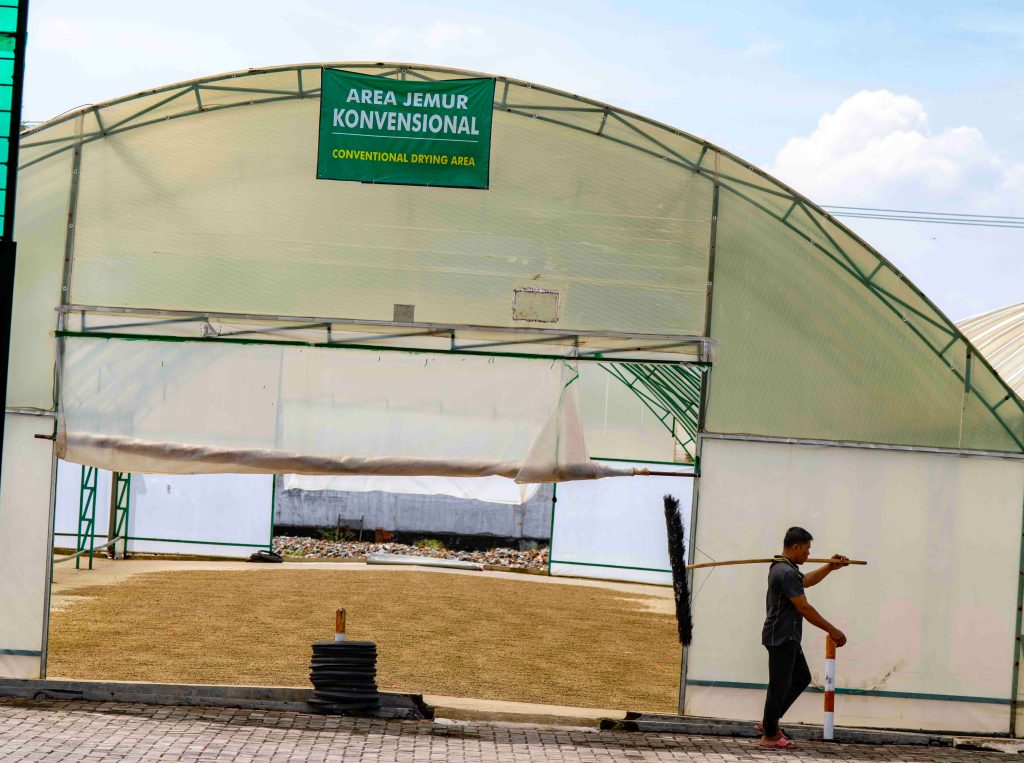
Regional coffee nomenclature in Sumatra, especially "Mandheling", is malleable, and it is often difficult to pinpoint a coffee’s exact origin without direct partnerships that allow buyers to trace the entire value chain themselves. So, it is helpful to work with exporters that have a local supply chain of their own. Gayo Mandiri operates in the highlands and is personally invested in their community’s success. Gayo Mandiri regularly distributes farming tools and cash dividends to cooperative members, as well as invests in drying tents for their central operations to reduce the risk of coffee spoilage.
Wet-Hulled Processing
Sumatra’s smallholder supply chain is a complicated process. Notably, processing is typically not overseen by a single individual or team; instead, coffee moves task by task through different parties before reaching its final, fully dried, state.
Coffee farms in Bener Meriah average 0.5-2 hectares each. Every village with cooperative members has a collector (or more) who receives fresh-picked cherry for washed processing each day. Once a batch of coffee has been depulped, fermented overnight, washed clean, and then sun-dried to the touch, each collector then delivers the batch to one of the cooperatives local hulling stations. It is here where the coffee is mechanically hulled of its parchment, leaving behind just the soft, high-moisture coffee bean (thus earning the term “wet-hulled”), all of which is spread out on large patios and tarpaulins to continue drying until the coffee reaches an internal moisture content of 12-13%. Each handoff is orchestrated by the cooperative, and the members’ coffee is traced throughout each step of the chain. Final, dried coffee is winnowed by machine and repeatedly hand-sorted to Grade 1 standards prior to export.