
Crown Jewel Colombia Honey Gesha Familia Lasso Guevara Vereda Las Águilas
36001-1 – SPOT RCWHSE
Boxes 0
Warehouses Oakland
Flavor Profile Mint, honey, fig, orange blossom, and jasmine
Out of stock

Overview
Overview
This is a moderately low intervention fermented honey Gesha coffee from Huila, Colombia, produced by Wbeimar Lasso and Juliana Guevarra on their farm, La Terraza.
The flavor profile is floral and sweet, with a lovely vanilla ice cream sweetness and body. We tasted fresh ginger, cantaloupe, mint, orange blossom, and fig.
Our roasters found this coffee required a nuanced approach to bring out its best characteristics. We especially favored short development times with low end temperatures, hot charge temperatures, and found some flexibility with Maillard stage length.
When brewed, the team found conical brewers will yield a crisper cup, while flat bottom brewers will highlight the creamy body and subtle florals.
Taste
Taste Analysis by Isabella Vitaliano
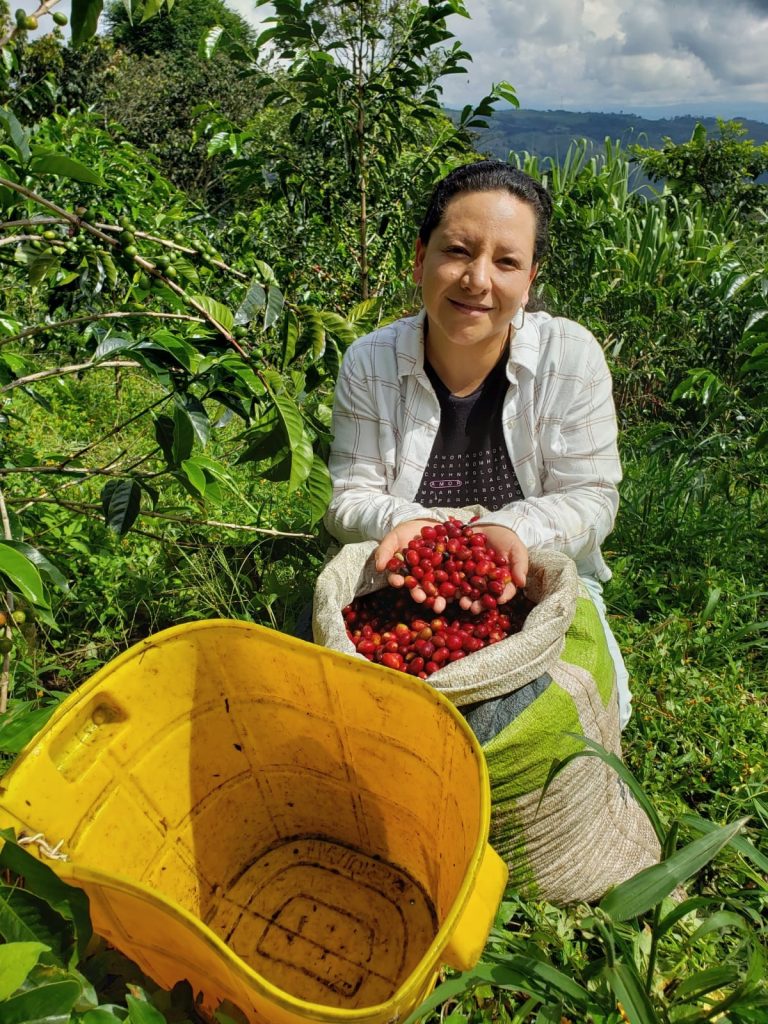
Terra Coffee SAS is an exporter group that has a very holistic view of coffee quality and its impact on the larger community that produces it. They are firm believers in the quality that comes out of small lots and the greater impact it has on the people dependent on these small farmers. This Gesha lot comes from La Terraza, a farm run by Juliana Guevara and Wbeimar Lasso.
On the nose, you’ll notice this coffee is lightly floral, with hints of apricot and sweet cherry notes. Once brewed, the team found soft peach, peony, fresh ginger, black tea, and cantaloupe. It’s strong in its softness and needs a delicate hand in the roaster to really nurture those floral notes. In the different roasts we brewed, there were variations of botanicals from peppermint to honeysuckle, peony, and rose water.
Flavors like Rhye, hibiscus, kumquat and vanilla ice cream bring an interesting contrast of depth and lightness. There is a sort of quiet rhythm to follow with this coffee as it cools and transforms, and you just have to make sure you go along for the ride.
This coffee can be a little bit finicky in the roaster, so make sure to look at the Bullet and production analysis to get the most out of its flavors.
Source
Source Analysis by Charie Habegger
As lauded as southern Huila is with roasters all over the world, a true gesha separation from this part of Colombia is still exceedingly rare. This microlot comes from La Terraza, a high elevation family farm a few kilometers south of La Plata. Although it’s depulped and fermented like a washed coffee, the parchment spends the entire process, drying included, encased in its own sticky mucilage, which the producers are careful not to disturb, giving the final cup a delicate but distinct cake-like sweetness, alongside the subtle powdery florals that Panama geshas are known for.
Southern Huila
Huila is arguably Colombia’s best-known department for top microlots. Huila’s geographical accessibility, dense population of knowledgeable farmers, warm and subtropical forests, high elevations, and microclimate diversity have for many years sustained one of specialty coffee’s most beloved regions. The fact that most of the department is harvesting coffee almost every month of the year means that fresh coffee is always available.
Huila is a long and narrow valley that follows a winding gap between two large cordilleras of the Andes. Colombia’s 950-mile long Magdalena river has its source in southern Huila and has shaped the agriculture here for centuries. Uphill from the valley’s lush and picturesque lower slopes are a diverse array of coffee producing communities, often dramatically steep, and each with their own unique climate and history.
Finca La Terraza
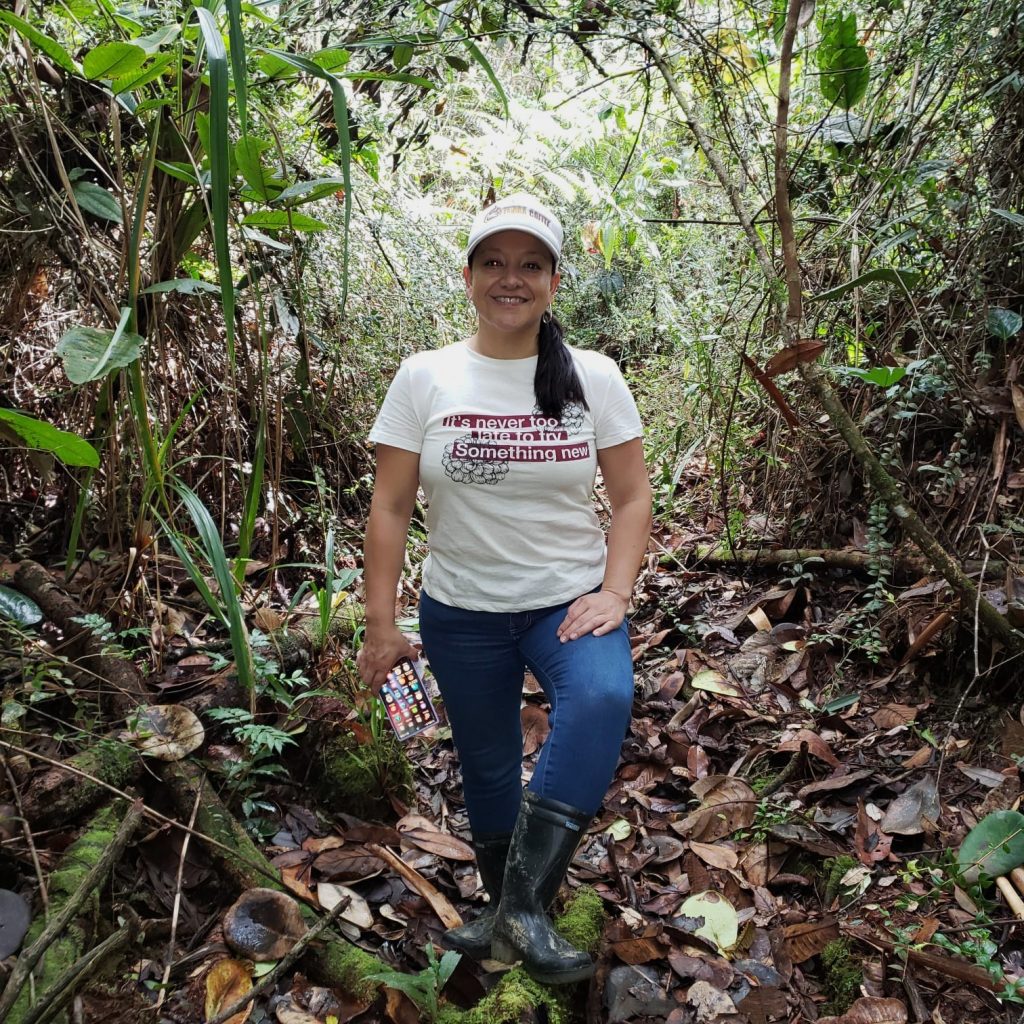
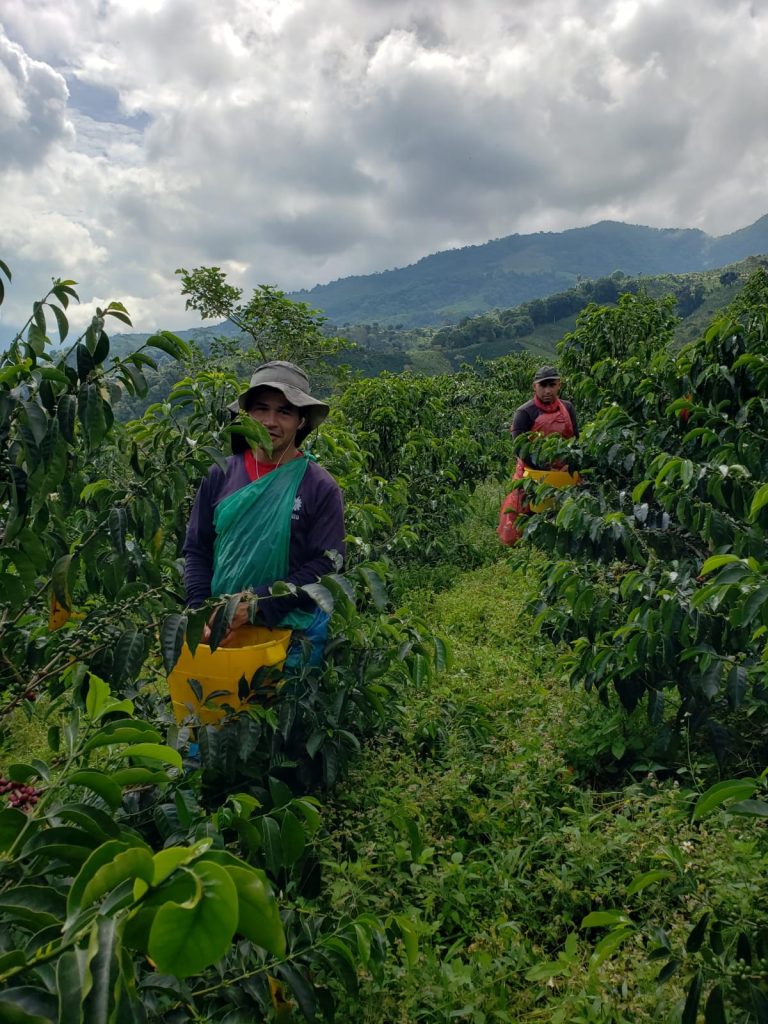
Terraza is the name for the farm owned and managed by Juliana Guevara and Wbeimar Lasso, the duo behind the processor group Terra Coffee. The farm is very passionately run (with a delightful and educational Instagram account no less, @Fincalaterraza). Finca La Terraza resembles countless farms in this part of Colombia, being only a few hectares in size and in a very specific microclimate that encourages coffee trees to fruit nearly the full calendar year—requiring constant monitoring and harvesting in small quantities. This is the second time we have featured their washed gesha as Crown Jewel.
Wbeimar Lasso, a Colombian Cup Tasters Champion, agro-industrial engineer and third generation coffee producer, is also a bit of a tinkerer with processing. He has become notorious at Royal for multi-fermentation stages coordinated across small farms in Huila, delivering us some of our most unique and interesting coffees from this area.
La Terraza has a number of separated varieties, including pacamara, yellow Colombia, and gesha. The farm’s elevation means a cool climate with particularly frigid nights, which retards everything in coffee production that is temperature dependent, including the maturation of cherry on the tree, fermentation, and the drying of parchment. Indeed, this lot took 25 full days to dry on raised beds.
A Fermented… Honey?
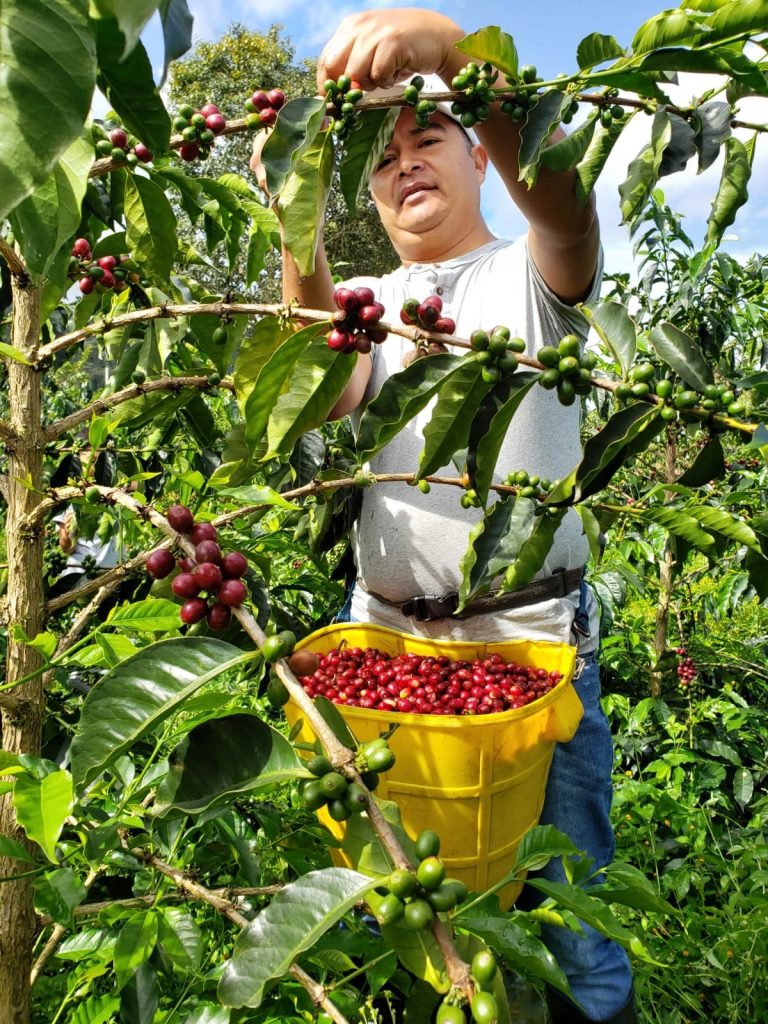
The gesha selected for this microlot was carefully hand-picked and sorted for ripeness and consistency beyond the typical high standards of the farm, allowing only for top quality cherry and highest sugar levels to enter the lot.
Unlike honey processing as we know it, this coffee was depulped and then fermented in plastic tanks for 48 hours. When complete, the mucilage was broken down but not fully, and it was not rinsed or scrubbed away from the parchment like a washed coffee would have it. Instead, the parchment, and all its fermented mucilage, were moved together to the family’s solar drier, where it was spread in a very thin layer to avoid any contamination from fungus, mold, or bacteria (at this point the mucilage is so voluminous, wet, and warm, that the risk is high and needs to be avoided with precise technique). After the first 5 days of drying the mucilage coffee has shed much of its outer moisture and can then be safely piled much thicker; slowing the drying and allowing for a much longer period of evaporation and moisture equilibration. The total drying time is 25 days.
Once complete, the whole lot is moved into a storage facility. From there, the Terraza team withdraws a sample, which is allowed to rest for 15-20 days before roasting and cupping, to help the coffee shed some of its edgy flavors and better represent a rested offer sample to Royal.
Terra Coffee SAS – Beyond La Terraza
Terra Coffee SAS is a local producer group, established in 2016 by Wbeimar and Juliana, with a narrow focus on developing high quality coffees alongside select producers in the Huila and Nariño departments, and sharing them with the world. The small company manages one single producer association in each department where they work, “Ecoterra” in Nariño, with 140 producer partners, and “Terra Verde” in Huila, with 120.
For Terra Coffee SAS as a whole, quality in coffee is very rationally understood as a direct pathway to well-being for volume-limited, small coffee farming families. Driving their business model is an understanding that quality results from small harvests have direct impacts on not just the farm owner, but the many dependents on each small farm, including young children, older adults, and the women of the household performing essential labor that often goes unpaid. By increasing quality and placing microlots in the market, Terra Coffee SAS plans not only to increase prices to growers and their families but also to increase their sense of pride in the details of their work.
Green
Green Analysis by Isabella Vitaliano
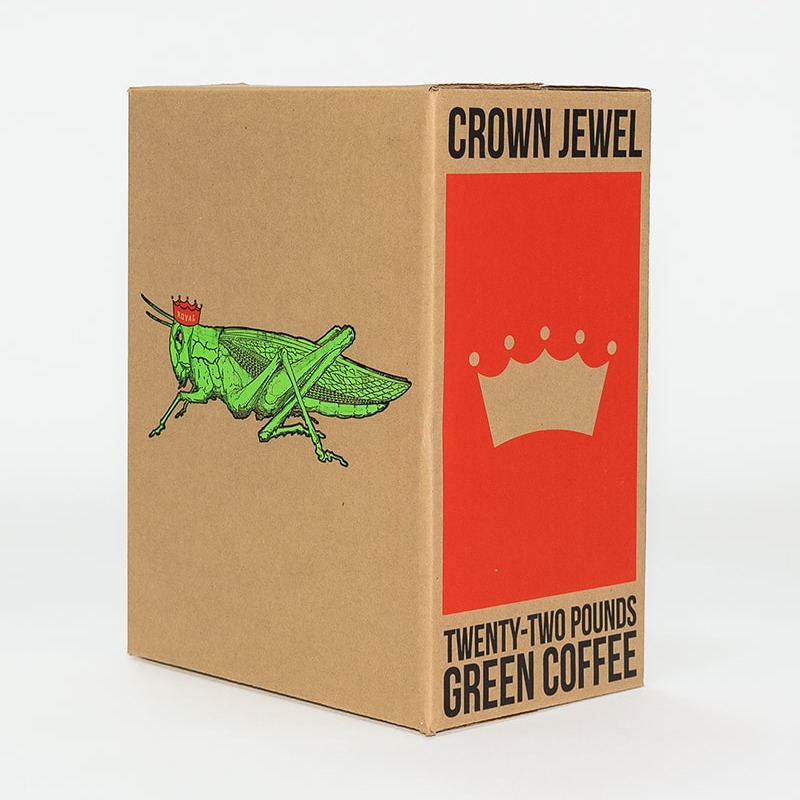
The Gesha cultivar is typically on the larger size, and we see that here with the screen size condensed in the 16-18 range. The moisture content is above average at 12.3%, and the Rotronic reading is well above average. Crown Jewel boxes come in Ecotact bags, which provide more than enough protection to ensure the coffee does not stale quickly.
Diedrich
Diedrich IR5 Analysis by Doris Garrido
When roasting Geshas, there’s certain characteristics I look for, and generally, I have a clear approach. However, this particular batch presents a special challenge. The coffee arrived with 12% moisture, which allowed me to give special attention to the Maillard phase. On my first roast, I initially chose a slow drying approach, but the results weren’t my favorite.
Later I tasted Chris Kornman roast on the bullet and his approach was way better, so it gave me new ideas for the drying phase. For this roast I implemented a fast drying, slowing down before the color changes and extending the yellow phase as much as possible. The results were a clean and brighter cup, featuring soft cantaloupe sweetness with a buttery finish, a touch of basil and lemony acidity, a very soft rose water, and subtle floral notes.
I started the batch at 420F with 100% gas from the first minute, aiming for a drying time just under four minutes, though it extended by a few seconds. To stretch the yellowing phase, I lowered the gas before the color changed. Airflow was initiated halfway through this point and immediately set to full to further extend this area, resulting in a 3:31 minute duration. For development I spend 1:29 minutes, beginning this phase with a rate of change of 17 degrees per minute. While I thought this was a good pace, I reduced the burner in the middle of development to avoid high temperatures at the end.
Overall, the Ikawa roast of this coffee became my favorite since it allowed the coffee to show more of the floral notes I enjoy on this coffee, but I am very happy with the sweetness I got in this roast.
Aillio
Aillio Bullet R1 IBTS Analysis by Chris Kornman
We use the RoasTime app and roast.world site to document our roasts on the Bullet. You can find our roast documentation below by searching on roast.world, or by clicking on the link below. Take a look at our roast profiles below, as they are constantly changing!
This coffee really gave Doris and me a run for our money this week. With a slightly higher moisture and water activity level than we anticipated, somewhat low density, and the added wrinkle of fermented honey processing on top of being a fancy Gesha cultivar, we had our work cut out for us.
I tried two radically different light roast approaches with some interesting results. Both employed a hot charge (482F IBTS / 350F standard thermocouple) for 500g batches, starting with P7/F2/D4, with no drum speed adjustments.
My first roast was characterized by a short drying phase, a long Maillard stage instigated by a fan speed adjustment (F5) at color change, and two-part development where the first half used a burst of quick heat to push the coffee into first crack, while the second half nearly flatlined at the end. It was a relatively long roast for the light color, at a little over 12 minutes in total duration.
The second roast was a little more standard, with gradual stepped reductions in power and fan speed throughout. First crack began at 8 minutes and the roast finished just a few seconds past 9:30 in total time.
Cupping with both Isabella (the day after roasting) and Doris (the following week) we had favorable opinions of both roasts, with mixed preferences. Doris and Isabella preferred the longer roast (jasmine, oolong tea, cantaloup, elderflower, fresh ginger, vanilla ice cream), while I liked the shorter (fresh fig, hibiscus, lime, marzipan, peony, white peach, nougat). We felt the floral elements were more noticeable on the shorter roast, but the soft sweetness and delicate fruits of the longer roast were very enjoyable.
This is a fairly subtle Gesha in a lot of its flavors, and it benefits from some careful attention to detail when roasting. We preferred short development times with low end temperatures, hot charge temperatures, and found some flexibility with Maillard stage length, overall preferring to stretch it a little more than might be characteristic of a style tuned for a classic washed southern Colombia light roast.
You can follow along with my roasts here at roast.world:
IKAWA
Ikawa Pro V3 Analysis by Isabella Vitaliano
Our current Ikawa practice compares two sample roast profiles, originally designed for different densities of green coffee. The two roasts differ slightly in total length, charge temperature, and time spent between color change in first crack. You can learn more about the profiles here.
On the high-density roast of this coffee, we got lots of tangy, plum, and caramelized tomato. The light-density roast brought out more flavors of flora, spice, botanicals, and complexity. It really stood out to us on the table, and we highly recommend you test batching it with this profile.
You can roast your own by linking to our profiles in the Ikawa Pro app here:
- Roast 1: Low Density Sample Roast
- Roast 2: High Density Sample Roast
Brew
Brew Analysis by Joshua Wismans and Tim Tran
Juliana and Wbeimar year after year have been a source of incredible coffees for the Crown Jewel program, and it’s always exciting when we get to feature them at The Crown. Last year’s washed Gesha was a crowd favorite, and I have no doubt this pristine honey Gesha will be received similarly.
Our initial brews at a moderate grind setting with the V60 ended up yielding a fairly concentrated cup, indicating to us that this coffee is quite soluble.
Adjusting the grind to a very coarse setting and lowering the dose to a 1:16.67 ratio gave us what we were looking for though. We utilized the V60 to highlight the really crisp acidity of this coffee. We ended up with flavor profile of blood orange and honeydew with creamy rich mouthfeel. Really really delicious.
We also explored brewing this coffee on the Kalita Wave to lean into the the creamy mouthfeel of this coffee. Using a slightly finer grind than our v60 brew (still coarse though!) and the same dose gave us a cup that gave us lots of toffee and florals with a sweeter citrus acidity.
This coffee is super soluble, so make sure to grind coarse and dose slightly down. Conical brewers will yield a crisper cup, while flat bottom brewers will highlight the creamy body and subtle florals.
Espresso
Espresso Analysis by Asha Wells
One of a couple of coffees I’ve worked with from the Huila region, I was not disappointed. Yes, everybody loves a Gesha, but I was even more intrigued by this particular honey processing and how it might play as an espresso. The results are in, and she’s a star on the espresso stage. I felt wined and dined by this impactful coffee: elegant and floral, with a creamy, satisfying body that cannot be understated.
For my first trick, with a dose of 17.5g, yielding 34g and clocking in at 26 seconds, this shot was poised and balanced, toeing the line between delicate fruit notes, white peach, Meyer lemon, and decadent, full-bodied flavors like chocolate ganache and macaroon.
The next shot I fell for, I mean really fell for, was dosed at 18.5g, yielded 37g and took all of 22 seconds (I guess you can rush perfection). The medley of flavors within this shot was almost unbelievable; it reminded me of Willy Wonka’s 3-Course Dinner chewing gum. At the start, it seemed simple, notes of starfruit and banana on the nose, upon tasting it unfolded around me, grapefruit and tonic water on the tip of the tongue, followed by an acid umami that reminded me of steak sauce, all surrounded by a full body the likes of brown butter and flaky puff pastry.
All in all, there’s one thing I can say for sure, this coffee has so much character, so much to show, and a whole lot to enjoy.
Related Coffee
White Tea, basil, biscoff cookie, cacao, candied fruits
Oakland 39 Boxes
Crown Jewel Bolivia Organic Washed Yulissa Chambi
39122-1 – SPOT RCWHSE
White Tea, basil, biscoff cookie, cacao, candied fruits
Spot
39 Boxes
$220.94 per box
Chamomile, toffee, mandarin, cane sugar, caramel
Oakland 10 Boxes
Crown Jewel Ecuador Washed Sidra Juan Peña
40303-2 – SPOT RCWHSE
Chamomile, toffee, mandarin, cane sugar, caramel
Spot
10 Boxes
$319.05 per box

Chamomile, toffee, mandarin, cane sugar, caramel
Oakland 2 Boxes
Crown Jewel Ecuador Washed Sidra Juan Peña
40303-3 – SPOT RCWHSE
Chamomile, toffee, mandarin, cane sugar, caramel
Spot
2 Boxes
$319.05 per box

Green apple, jolly rancher, apple, mojito, apple cider
Oakland 32 Boxes
Crown Jewel Colombia Carbonic Honey Green Apple Co-Ferment Edwin Noreña
38642-1 – SPOT RCWHSE
Green apple, jolly rancher, apple, mojito, apple cider
Spot
32 Boxes
$368.24 per box